


Kitchen planning feels complete once the refrigerator fits inside the allotted corner. Weeks later, boxes sit on top of the fridge, a cloth runner hangs over the sides, and the cabinet has moved closer to the wall during cleaning.
Together, these changes can reduce airflow or interfere with door movement. Sensible refrigerator placement comes as the right solution, as it accounts for the heat leaving the appliance, not just its footprint. It leaves enough refrigerator ventilation space for heat to escape and keeps the doors, controls, and service points accessible.
This need for open space also determines whether covering the appliance is advisable.
Can You Cover a Refrigerator?
Most people ask, “Can we cover a refrigerator?”Not completely while it is running. Fabric or plastic can cover ventilation openings and keep warm air near the cabinet, making heat harder to release.
A handle cover or small decorative panel may be used if it stays away from vents, controls, hinges, sensors, and door seals. Check the care instructions before attaching the cover.
Why Does Ventilation and Clearance Matter?
A refrigerator transfers heat from inside the cabinet to the room. Therefore, air must move around the parts that release it. This process becomes less efficient when the appliance is pushed against a wall or enclosed on all sides.
Clearance matters, as it keeps the plug reachable, allows shelves and drawers to come out, and leaves access for future service. However, you must consider the recommended gap:
Recommended Gaps (Sides, Back, and Top)
There is no single refrigerator clearance space for every design. A Haier guide uses roughly 2–5 cm at the sides and back for planning; separate installation guidance suggests around 5–10 cm behind a refrigerator. The exact model’s manual takes priority and will also specify any top clearance.
For instance, the Haier Lumiere 520L 3 Star Black Glass French Door Refrigerator needs room for all four doors to open. Its convertible section responds to changing chilled and frozen storage needs, while Deo Fresh Technology absorbs odours and impurities inside. You must note that the proper external clearance remains essential.
Read More: Installation Guide – Things to Know Before Buying a Refrigerator
Clearance is one part of a product installation. It’s important to determine other factors that influence where the appliance should be placed.
Placement Dos and Don’ts
A refrigerator that fits only by width may still be uncomfortable to use. Measure the handles, door arc, skirting board, overhead cabinet, nearby counter, and delivery route. Take these points into consideration as well!
1. Keep the Fridge Away from Heat and Direct Sunlight
Keep the refrigerator away from a hob, oven, room heater, and strong afternoon sunlight. Nearby heat affects its cooling performance.
Thinking of where not to put a freezer? Rule out uncovered balconies, damp corners, and areas exposed to rain. Before using a garage, check whether its temperature and moisture remain within the appliance’s operating conditions.
Read More: 5 Ways to Keep Your Refrigerator Running Efficiently
2. Level Surface and Fridge Stands
The floor should be firm and level so the cabinet stays steady and the doors meet their seals correctly.
If you want to know, “How to elevate a refrigerator?” Begin with its adjustable feet. If more height is needed, use a purpose-built stand supporting the full footprint and rated weight. Bricks, timber pieces, and narrow platforms can be unstable.
A stand is not compulsory. It may help on a frequently washed or slightly uneven floor, provided it preserves stability and lower airflow.
3. Can You Put Things on Top of the Fridge?
People generally ask, “What can I put on top of the fridge?” As little as possible. Where the manual allows it, a light, dry, stable item may be acceptable if top clearance remains open. Keep liquids, heavy cookware, and cooking appliances elsewhere.
Leaving the top open supports ventilation and makes the surface easier to clean. The same care should be taken when adding covers, mats, or decorations elsewhere on the refrigerator.
Fridge Covers, Mats, and Decorations
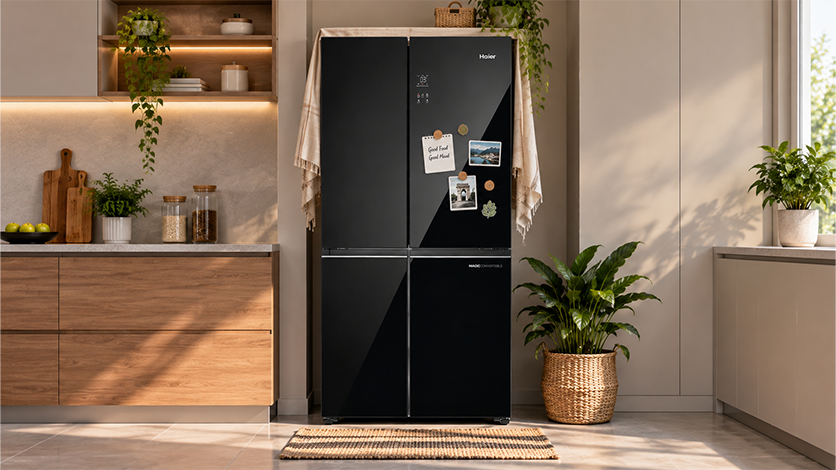
Refrigerator covers and other exterior additions should be easy to remove for cleaning and must remain clear of vents, seals, hinges, controls, and other functional parts.
Any exterior decoration should be removable for cleaning and leave functional parts untouched. Here are some insights for you:
1. Are Fridge Covers a Good Idea?
A full dust cover suits a clean, dry refrigerator that is unplugged and in storage. During operation, avoid covers over the back, sides, top vents, or control panel.
A floor mat should be firm and moisture-resistant. Soft material that bunches beneath the feet or closes lower openings is unsuitable.
2. Magnets, Stickers, and Wallpaper
People have this question: “Can I put magnets on my refrigerator?” Light magnets generally suit a compatible metal door. Keep them away from touch controls and lift rather than drag them.
If you are thinking, “Do all magnets stick to fridges?” No. Glass fronts and some stainless-steel finishes are not magnetic. Before putting anything on your refrigerator, keep this thing in mind.
Sticker adhesive may leave a mark. Use removable film only when the care guidance permits it. Never cover seals, hinges, vents, displays, or sensors. This keeps magnets on refrigerator doors decorative rather than disruptive.
Complete the Installation With a Refrigerator Placement and Ventilation Checklist
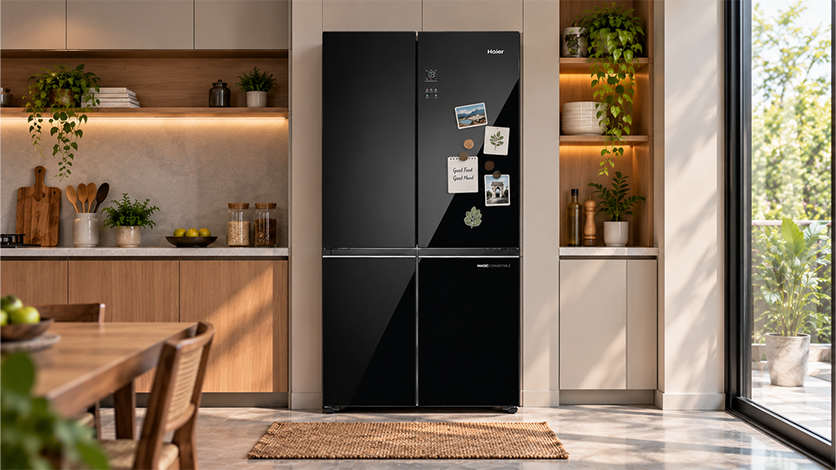
Before considering the refrigerator ready for everyday use, carry out one final check:
- The floor supports the appliance without rocking
- The manually specified gaps remain open
- Every door and drawer can move freely
- The plug is accessible without an extension lead
- Cooking heat, sunlight, rain, and persistent moisture are avoided
- Covers or decorations stay clear of working parts
A suitable refrigerator placement should allow the appliance to stay in place during routine cleaning and provide access when servicing is required. By following the model-specific clearance instructions and choosing accessories carefully, you can support efficient cooling and convenient daily use over the life of the appliance.
Explore Haier’s range of refrigerators to find a model suited to your kitchen space, storage requirements, and household routine, with authorised service support available when needed.
FAQs
Can you cover a refrigerator?
Do not cover the entire appliance while it is operating. Ventilation openings and controls must remain clear.
Is it safe to put a cover on the fridge?
A small partial cover may be used if the product instructions allow it and it does not restrict airflow.
How much space should be left around a refrigerator?
The requirement differs by model. Check its installation manual for side, rear, and top clearance.
Can I put things on top of my fridge?
Keeping the top clear is preferable. If storage is permitted, use only light and stable items without blocking ventilation.
Does a fridge need a stand?
Not necessarily. Use one only when it safely supports the refrigerator and follows the installation guidance.
Where should a refrigerator not be placed?
Avoid cooking heat, prolonged sunlight, rain, damp areas, and unventilated recesses.
Is it okay to put magnets on a refrigerator?
Yes, on compatible metal finishes. Prevent scratching and keep magnets away from controls and sensors.