
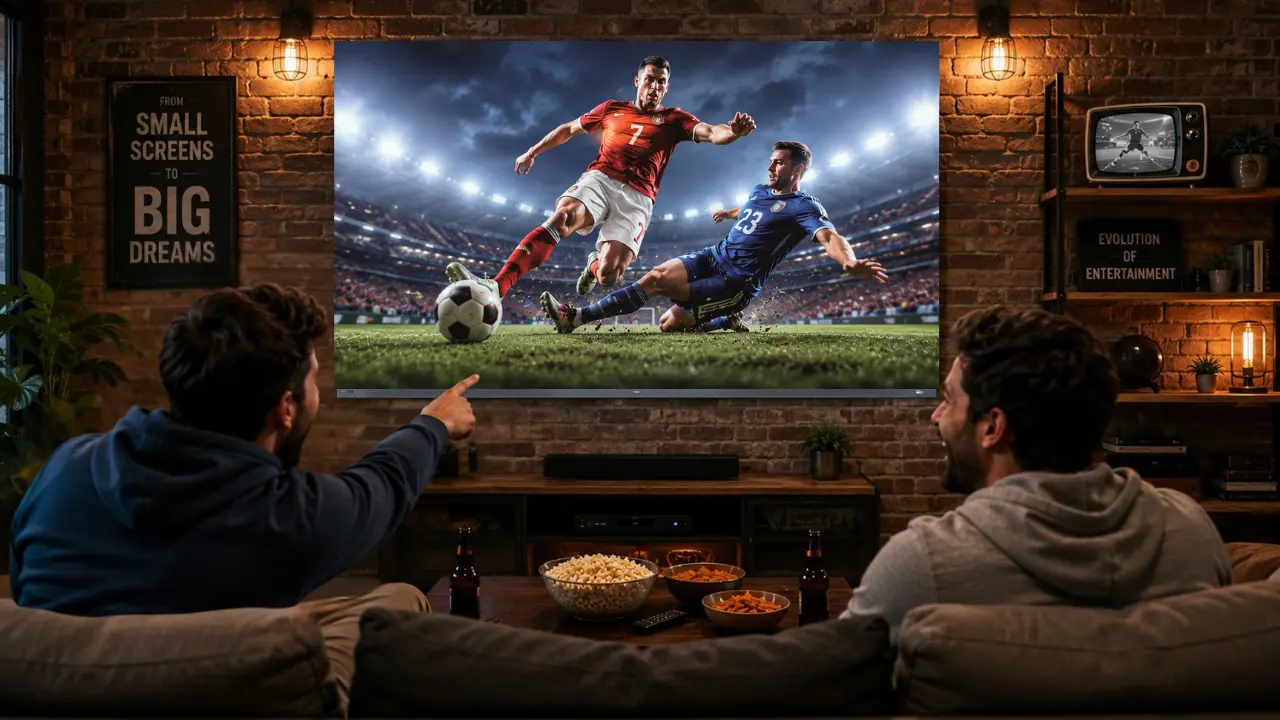

Televisions have broken one of technology’s biggest patterns.
Most gadgets become smaller over time.
Televisions did the opposite.
The screen hanging on the wall today would have looked enormous twenty years ago. Yet somehow, it feels perfectly normal in a modern Indian living room.
That change didn’t happen overnight.
It happened because the way people consume entertainment changed completely.
A television is no longer a device used for watching a few scheduled programmes. It has become a streaming hub, a gaming screen, a sports arena, a concert stage, and often the centrepiece of family entertainment.
As expectations evolved, TV sizes evolved with them.
And the journey has been remarkable.
When Small Screens Dominated Indian Homes
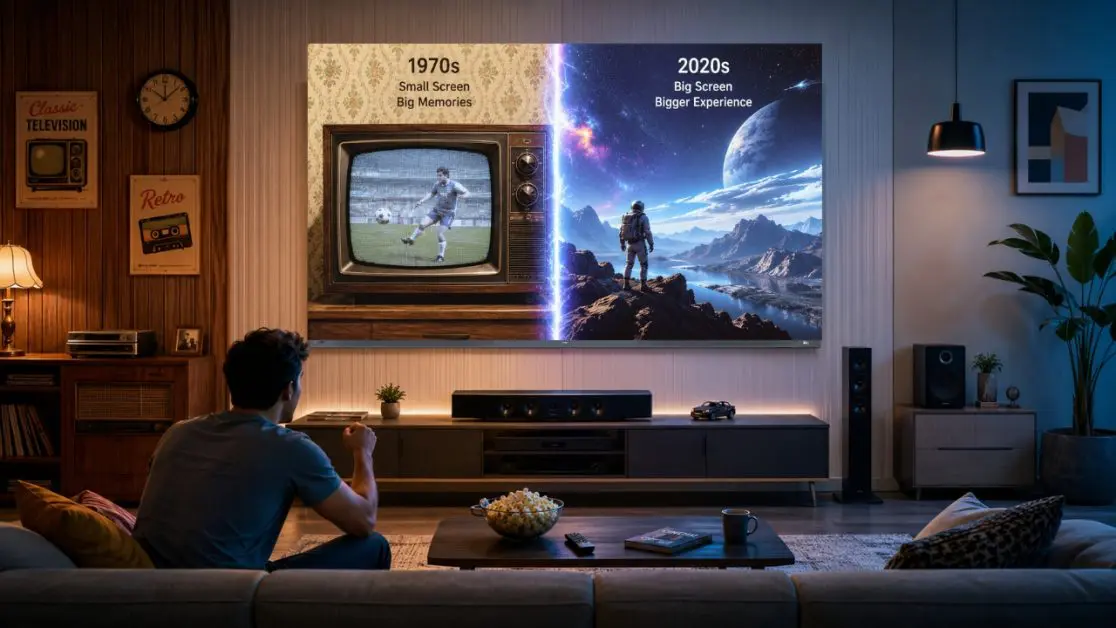
Many Indian families still remember television sets that occupied more space than the cabinet they sat on.
Back then, screen size was rarely discussed.
If the television worked and delivered a clear picture, people were happy.
The focus was on access to entertainment, not immersion.
Typical television sizes during that era ranged from:
| Period | Popular TV Size |
| Early CRT Era | 51cm – 74cm |
| Late CRT Era | 74cm – 81cm |
| Early Flat Panel Era | 81cm |
| LCD & LED Adoption Phase | 101cm – 109cm |
| Smart TV Growth Period | 125cm – 140cm |
| Current Premium Segment | 189cm – 254cm |
What changed?
Not the room.
The content.
The Flat Screen Era Made Bigger TVs Practical
The arrival of LCD and LED televisions transformed home entertainment.
Suddenly, consumers could own larger displays without filling half the room with hardware.
Televisions became thinner.
Lighter.
More elegant.
And because the physical footprint reduced dramatically, larger screen sizes became practical.
People who once viewed a 81cm television as large started upgrading to 109cm models.
Then 140cm.
Then 165cm.
Today, many homeowners are confidently exploring televisions measuring 189cm and beyond.
The perception of what qualifies as a “big TV” has shifted significantly.
Why Television Sizes Continue to Grow
The answer is surprisingly simple.
Modern content demands larger displays.
Consider how households use televisions today:
- Streaming movies in 4K
- Watching live cricket tournaments
- Playing console games
- Following OTT series
- Viewing concerts and sporting events
- Video streaming across multiple platforms
A larger screen allows viewers to experience details that would otherwise go unnoticed.
The expressions on an actor’s face.
The movement of players across a cricket field.
The environmental detail inside a game.
The difference becomes obvious once people experience premium large-screen viewing.
The Rise of the 189cm Television Category
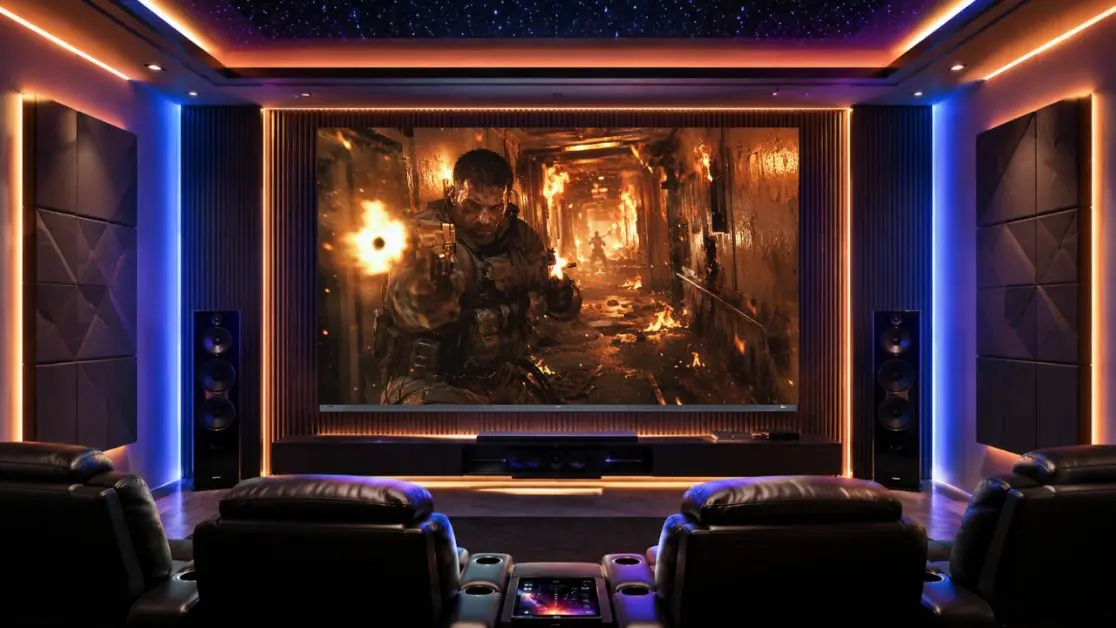
For many premium Indian households, 189cm televisions have emerged as an ideal balance between immersion and practicality.
Large enough to create a theatre-like atmosphere.
Versatile enough for most modern living rooms.
This is precisely where the Haier M80F Mini LED 189cm Google TV (H75M80FUX) fits into the evolving television landscape.
Designed around Mini LED technology, the television combines advanced picture performance with Dolby Vision, Dolby Atmos, Sound by KEF, Google TV integration, and DLG 120Hz motion enhancement for sports, movies, and gaming. The result is a viewing experience that feels considerably larger than its dimensions suggest.
As consumer expectations increase, products like these demonstrate that television evolution is no longer only about size it is equally about experience.
Why 215cm Televisions Are Becoming More Popular
Not long ago, televisions measuring 215cm belonged almost exclusively to luxury home theatre installations.
Today, the story is different.
Consumers increasingly view large televisions as long-term lifestyle investments.
The larger display enhances:
- Family movie nights
- Cricket viewing sessions
- OTT marathons
- Multiplayer gaming
- Live event streaming
The Haier M80F Mini LED 215cm Google TV (H85M80FUX) reflects this shift exceptionally well.
Featuring Mini LED technology, Dolby Vision, Sound by KEF, Dolby Atmos, Google TV, hands-free voice control, Solar Remote, and DLG 120Hz support, it delivers a highly immersive entertainment environment designed for contemporary Indian households.
The viewing experience feels expansive without requiring a dedicated home theatre room.
The Arrival of 254cm TVs Has Redefined Home Entertainment
This is where television evolution becomes truly fascinating.
A 254cm television would have sounded excessive just a few years ago.
Today, it represents the future of premium home entertainment.
Why?
Because modern consumers increasingly want cinema-scale experiences without leaving their homes.
The Haier M96 Series 254cm QD-Mini LED AI Smart Google TV (H100M96FUX) exemplifies this next phase.
Powered by AI Ultra Sense Processor, the television integrates advanced AI capabilities across picture, sound, gaming, and entertainment experiences.
Key highlights include:
- QD-Mini LED technology
- 144Hz refresh rate
- Dolby Vision IQ
- HDR10+
- Sound by KEF
- Dolby Atmos
- 6.2.2-channel speaker system
- AI-driven picture optimisation
At 254cm, the screen transforms ordinary viewing into a truly cinematic experience.
The television no longer sits in the room.
It becomes part of the room.
Bigger Screens Need Better Technology
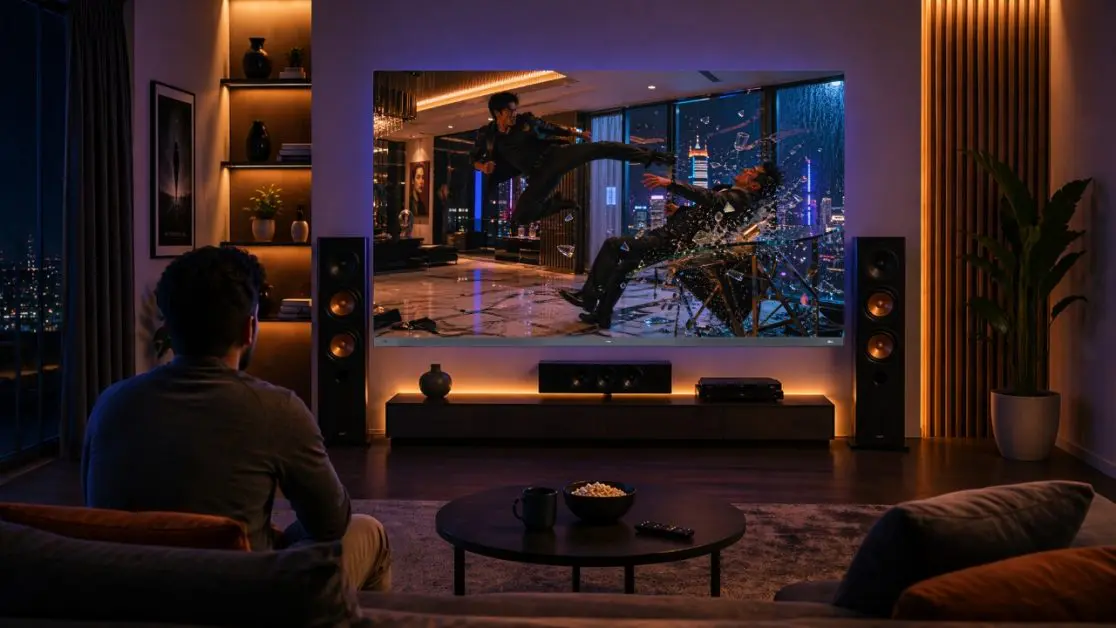
There is an important reality many buyers overlook.
Larger displays magnify everything.
The good.
And the bad.
Poor contrast becomes more visible.
Motion blur becomes more noticeable.
Weak audio feels even weaker.
That is why modern display technologies have become so important.
Today’s premium televisions rely on:
- Mini LED backlighting
- QD-Mini LED innovation
- Local dimming zones
- Dolby Vision
- HDR10+
- AI processing engines
- Dolby Atmos
- Premium audio systems
These technologies ensure that larger screens continue to deliver exceptional picture quality instead of simply larger images.
Choosing the Right TV Size for Your Home
Not every household requires a 254cm display.
Choosing correctly depends on viewing habits and room dimensions.
Consider 140cm–165cm if:
- Your living room is compact
- Viewing distance is shorter
- Streaming remains the primary use
Consider 189cm if:
- You enjoy movies and sports regularly
- Family viewing is common
- You want a cinema-inspired experience
Consider 215cm if:
- You have a spacious entertainment area
- Large-screen immersion is important
- Premium content consumption is a priority
Consider 254cm if:
- You want a flagship viewing experience
- Home theatre replacement is the goal
- You seek maximum visual impact
The Future of Television Size Is About Experience
Television evolution is no longer measured purely in centimetres.
Consumers are increasingly evaluating:
- Picture intelligence
- Audio performance
- Gaming capability
- Smart ecosystem integration
- Viewing immersion
The screen remains important.
But what happens on that screen matters even more.
That is why modern television innovation combines larger displays with AI-driven processing, premium sound engineering, advanced HDR technologies, and sophisticated Mini LED systems.
Final Thoughts
The story of television sizes mirrors the story of modern entertainment itself.
Indian households have moved from compact screens designed for basic viewing to expansive displays created for immersive experiences.
From 51cm CRT televisions to today’s 189cm, 215cm, and even 254cm Mini LED and QD-Mini LED displays, every stage of evolution has been driven by changing consumer expectations.
Whether it is the Haier M80F Mini LED 189cm Google TV, the Haier M80F Mini LED 215cm Google TV, or the flagship Haier M96 Series 254cm QD-Mini LED AI Smart Google TV, the objective remains unchanged: delivering richer, larger, and more engaging entertainment experiences for modern Indian homes.
Frequently Asked Questions
How do I know if my TV is too small for my room?
If you struggle to notice details during movies, sports, or gaming sessions from your normal seating position, a larger screen may provide a better experience.
What TV size should I buy for a compact living room?
A 140cm–165cm television is often suitable for smaller spaces where viewers sit relatively close to the screen.
Is a 189cm TV too large for an average Indian home?
Not necessarily. Many modern living rooms can comfortably accommodate a 189cm television while still maintaining a balanced viewing experience.
How far should I sit from a 215cm television?
The ideal distance depends on content resolution and personal preference, but larger screens generally require more viewing space.
Should I prioritize room size or screen size when buying a TV?
Both matter. The best choice balances viewing distance, room dimensions, content habits, and desired immersion.