
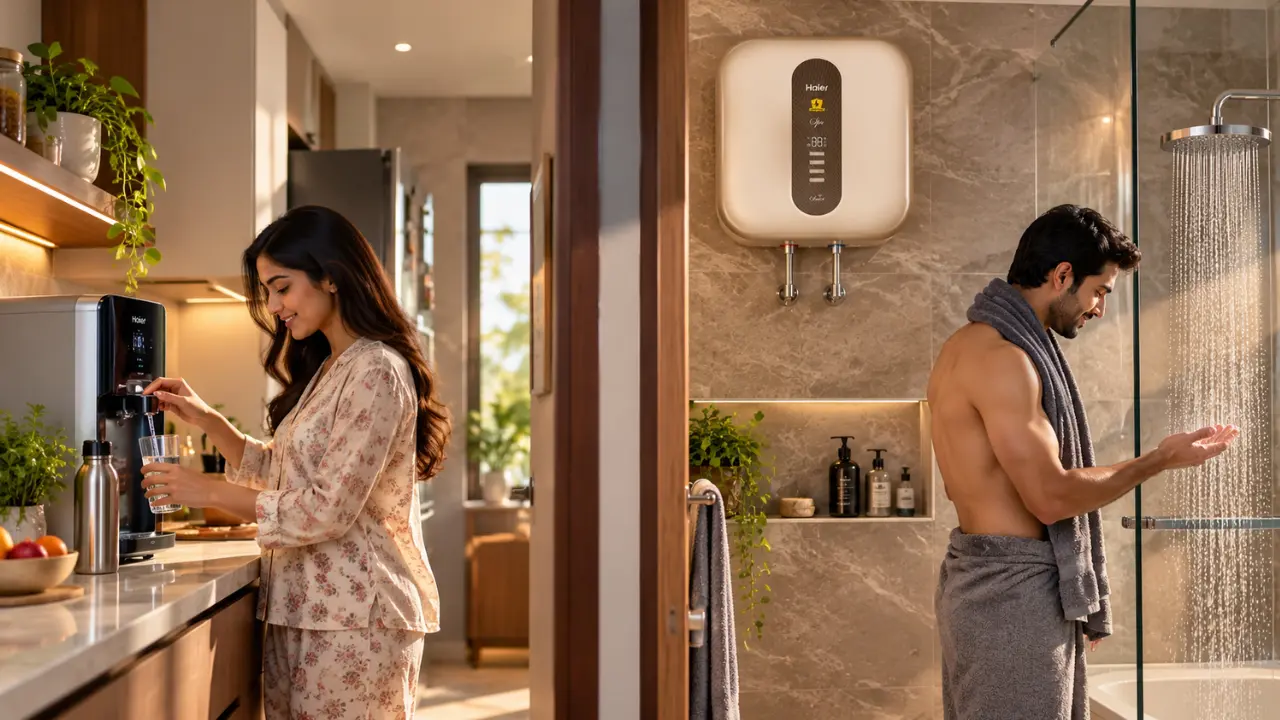

The main function of a geyser is to heat water. That may sound like a no-brainer, but it explains one of the biggest hot water myths at home.
A geyser to heat water does not make it drinkable water. Meanwhile, water from a well-installed, well-maintained water heater, can typically be used for normal bathing, provided that the water supply is appropriate for household use.
The short answer is, therefore:
For bathing? Generally, yes. For drinking? Routine use of hot water from a geyser is not recommended as it is better to use water from a source designed and treated for drinking.
The difference is important, especially in homes in India where water quality, hardness and storage facilities and plumbing vary significantly from place to place.
Why Is Geyser Water Usually Fine for Bathing but Not the First Choice for Drinking?
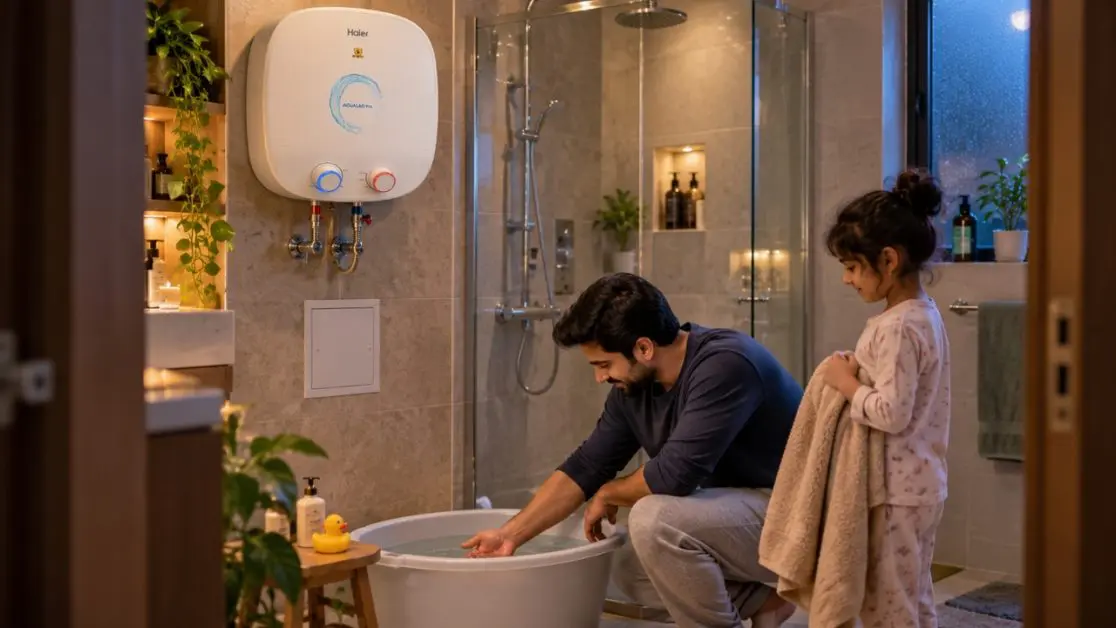
Think of the geyser as part of the heating system, not the purification system.
The quality of water entering a water heater has a major bearing on the water coming out. A geyser can raise its temperature, but heating alone does not necessarily remove dissolved salts, chemicals, heavy metals or other impurities that may already be present.
That is why two questions should be considered separately.
Can You Bathe with Geyser Water?
For normal household use, hot water from a correctly installed and properly maintained geyser is intended for bathing and washing.
What needs attention is not simply whether the water has passed through a geyser, but the complete setup:
- Quality of the incoming water
- Condition of the water heater
- Cleanliness of the plumbing system
- Water storage and circulation
- Scale or sediment accumulation
- Correct operating temperature
- Regular inspection and maintenance
There is another factor people occasionally overlook: temperature.
Very hot water can cause scalding, particularly for children, older adults and people with sensitive skin. Hotter isn’t automatically better. Mix hot and cold water appropriately and always check the temperature before stepping under a shower or filling a bucket.
Is Geyser Water Safe to Drink?
For routine drinking, hot water taken directly from a geyser is not the preferred choice.
Why? Because a water heater is not a substitute for a drinking-water purification system.
Heating can affect microorganisms at sufficiently high temperatures and exposure times, but that does not mean every possible contaminant has disappeared. Dissolved minerals, salts and certain chemical contaminants are a different matter altogether.
There is also a practical consideration. Water may spend time inside a storage tank and travel through hot-water plumbing before reaching the tap. The condition of the tank, pipes, fittings and incoming supply therefore matters.
If you want warm water to drink, a more sensible household practice is to start with water that is already considered safe for drinking and heat that water separately.
A useful rule to remember: A geyser heats water; it should not be treated as a water purifier.
Does Heating Geyser Water Kill Bacteria?
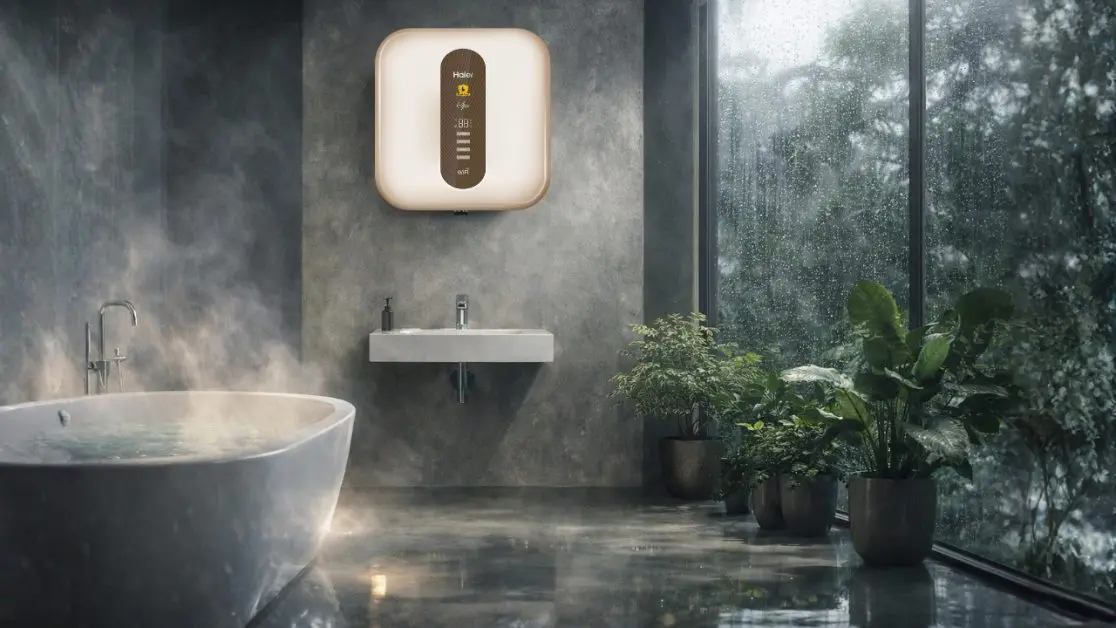
This is where the answer needs a little nuance.
Higher water temperatures can inhibit or destroy many microorganisms under appropriate conditions. However, it would be misleading to jump from that fact to the statement that “geyser water is purified”.
Those aren’t the same thing.
Some Haier water heaters, for instance, provide a Bacteria Proof System (BPS) mode that heats water to 80°C to inhibit bacteria. Haier lists this anti-bacterial function on models including the 15L Square Spa Wi-Fi and 25L Square AQUALAD PRO.
That is a useful water-heater feature, particularly from a hygiene perspective. It should still not be interpreted as certification that the water is potable. Drinking-water safety depends on the quality and treatment of the water supply as a whole.
What Can Affect the Quality of Hot Water from a Geyser?
Sometimes the water heater gets blamed when the real problem starts much earlier in the water’s journey.
1. Incoming Water Quality
Municipal supply, borewell water and water stored in overhead tanks can have very different characteristics.
Hard water, for example, contains relatively high concentrations of minerals. Over time, these minerals can contribute to scale formation inside appliances and plumbing.
If there is an unusual colour, smell or taste in the water, don’t simply assume that heating it will solve the issue. The water source and plumbing may need checking.
2. Sediment and Scale
Minerals can gradually deposit on internal components, particularly in areas with hard water.
Apart from potentially affecting heating performance, excessive deposits are a good reason not to ignore periodic appliance maintenance.
3. Stagnant Water
Water that remains stationary for extended periods is another consideration.
This is one reason water circulation and tank design deserve attention when choosing a storage water heater rather than looking at capacity alone.
Haier’s RSC U-turn Flow Technology, available on selected models, is designed to help prevent stagnant-water deposition, activate circulation and keep water fresh.
4. The Condition of the Tank
A storage water heater repeatedly holds water while dealing with heat, pressure and the characteristics of the local water supply. Tank construction therefore matters over the appliance’s working life.
Corrosion-resistant materials and protective tank designs can contribute to durability and dependable operation.
What Should Indian Households Look for in a Water Heater?
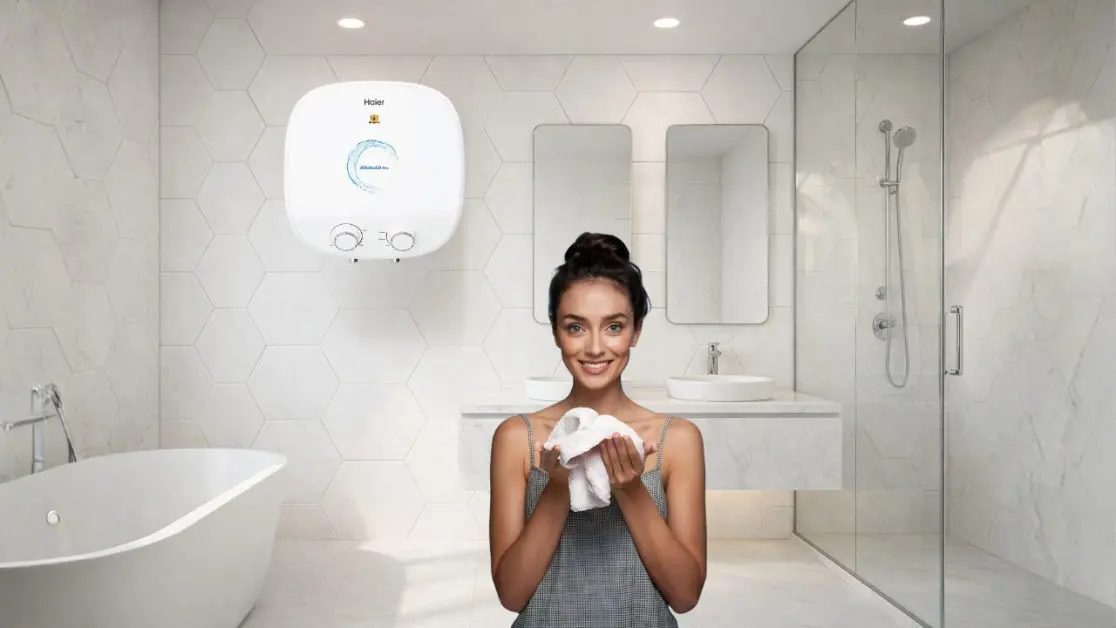
Capacity and heating speed tend to dominate buying decisions. Fair enough. Nobody wants to wait forever for a morning shower.
But safety and long-term reliability deserve equal attention.
Look beyond the litre figure and consider:
- Overheat protection
- Protection against excessive pressure
- Water-resistant construction
- Appropriate pressure rating for your building
- Tank and heating-element durability
- Anti-bacterial functionality, where available
- Good insulation in storage models
- Installation requirements
- After-sales support
High-rise residents should pay particular attention to rated working pressure because plumbing pressure can be different from what is experienced in a low-rise independent house.
Haier Water Heaters: Safety and Hygiene Built into Everyday Heating
This is where choosing the right water heater becomes more than a question of “How quickly will I get hot water?”
Haier’s water-heater portfolio includes different capacities and feature combinations for different household requirements.
Haier 3L ISI Certified Instant Water Heater
For users looking for a compact instant option, the Haier 3L ISI Certified Instant Water Heater (EI3V-PRET) combines quick-use convenience with several protective technologies.
Its Dual Thermal Proof (TTS) system provides two stages of overheat protection. According to the product specification, the heating element stops heating at 75°C during the first stage; if that protection fails and the water reaches 95°C, the thermostat automatically cuts power.
The model also offers:
- IPX4 water resistance
- MUV valve for pressure relief, anti-vacuum, non-return and drainage functions
- Bacteria Proof System
- RSC U-turn Flow Technology
- Incoloy 800 stainless-steel heating element
- Glass-lined tank
- 8-bar rated working pressure
That combination addresses several practical considerations around temperature, pressure, durability and water handling rather than focusing only on heating speed.
Want More Storage? Haier Has 15L and 25L Options Too
Different homes use hot water differently. A small instant unit and a storage geyser aren’t interchangeable choices.
The Haier 15L Square Spa Wi-Fi 5 Star Water Heater (ES15V-SD WIFI) is designed for households wanting storage capacity along with a broader feature set. It includes Shock Proof technology, a digital temperature display, BPS, Dual Thermal Proof, an MUV valve, IPX4 water resistance, RSC Technology, an 8-bar pressure rating and insulation designed to retain heat for longer. The model carries a 5-star rating.
For households requiring greater capacity, the Haier 25L Square AQUALAD PRO 4 Star Water Heater provides a 25-litre tank along with Shock Proof, overheat and over-pressure protection, BPS, IPX4 water resistance, an 8-bar working-pressure rating, a titanium heating element and RSC Technology.
The important point isn’t simply that one model is larger than another. Your choice should reflect the number of users, bathing habits, available space, water pressure and whether you prefer instant or stored hot water.
Simple Habits for Safer Geyser Use at Home
Even a well-designed water heater needs sensible use.
Have the unit installed according to the manufacturer’s requirements and avoid makeshift electrical or plumbing arrangements. Pay attention to unusual leakage, noises, odours or changes in performance rather than waiting for them to become bigger problems.
A few habits go a long way:
- Check the water temperature before bathing.
- Be particularly careful when preparing water for children or elderly family members.
- Keep the appliance and associated plumbing maintained.
- Do not ignore persistent discolouration, smell or sediment in the water.
- Follow the manufacturer’s operating and servicing guidance.
- Use drinking-quality water when preparing warm water for consumption.
- Have electrical, earthing or plumbing concerns checked by qualified professionals.
And if the geyser has been unused for a considerable period, follow the manufacturer’s instructions for bringing it back into normal use.
So, Should You Drink Hot Water Straight from a Geyser?
Preferably, no.
You like to drink the water in the morning or during winter, and want to use water that is good for drinking, so heat the water with a suitable method. The safety and hygiene equipment of a water heater cannot be mistaken for a comprehensive treatment of drinking water.
The equation is different when it comes to bathing. The combination of a good water source, properly plumbing, proper installation and the right water temperature and a well-maintained water heater make it easy to use hot water every day.
And when choosing the appliance itself, don’t stop at capacity or heating speed. Haier water heaters offer features such as BPS, Dual Thermal Proof, RSC Technology, MUV valves, IPX4 water resistance and pressure-rated designs across selected models features worth examining when safety, hygiene and dependable performance matter just as much as getting that hot shower on a chilly morning.
Frequently Asked Questions
1. Is geyser water safe for bathing every day?
Yes, hot water from a properly installed and maintained geyser is generally suitable for everyday bathing when the incoming water supply itself is appropriate for domestic use. Always ensure the temperature is comfortable before bathing, particularly for children and elderly family members.
2. Is it safe to drink hot water directly from a geyser?
It is better not to routinely drink hot water directly from a geyser. A water heater is designed to heat water, not purify it for consumption. If you prefer drinking warm water, start with water that is already suitable for drinking and heat it separately.
3. Does a geyser kill bacteria in water?
Heating water to sufficiently high temperatures can inhibit many microorganisms, but this should not be confused with complete water purification. Selected Haier water heaters feature a Bacteria Proof System (BPS), which heats water to 80°C to inhibit bacteria.
4. Can hard water affect a geyser?
Hard water can contribute to mineral and scale deposits over time. The extent varies according to local water quality and usage. Regular maintenance and following the manufacturer’s care instructions can help support dependable performance.
5. What safety features should I look for when buying a geyser?
Look for features addressing overheating, excessive pressure, water resistance and electrical safety. Depending on the model, Haier water heaters offer technologies such as Dual Thermal Proof, MUV Valve, IPX4 water resistance, Shock Proof and 8-bar rated working pressure.
6. Are Haier water heaters suitable for high-rise buildings?
Selected Haier water heaters have an 8-bar rated working pressure and are designed for use in high-rise buildings. Buyers should still select a model according to their home’s actual plumbing conditions, capacity requirements and installation specifications.