
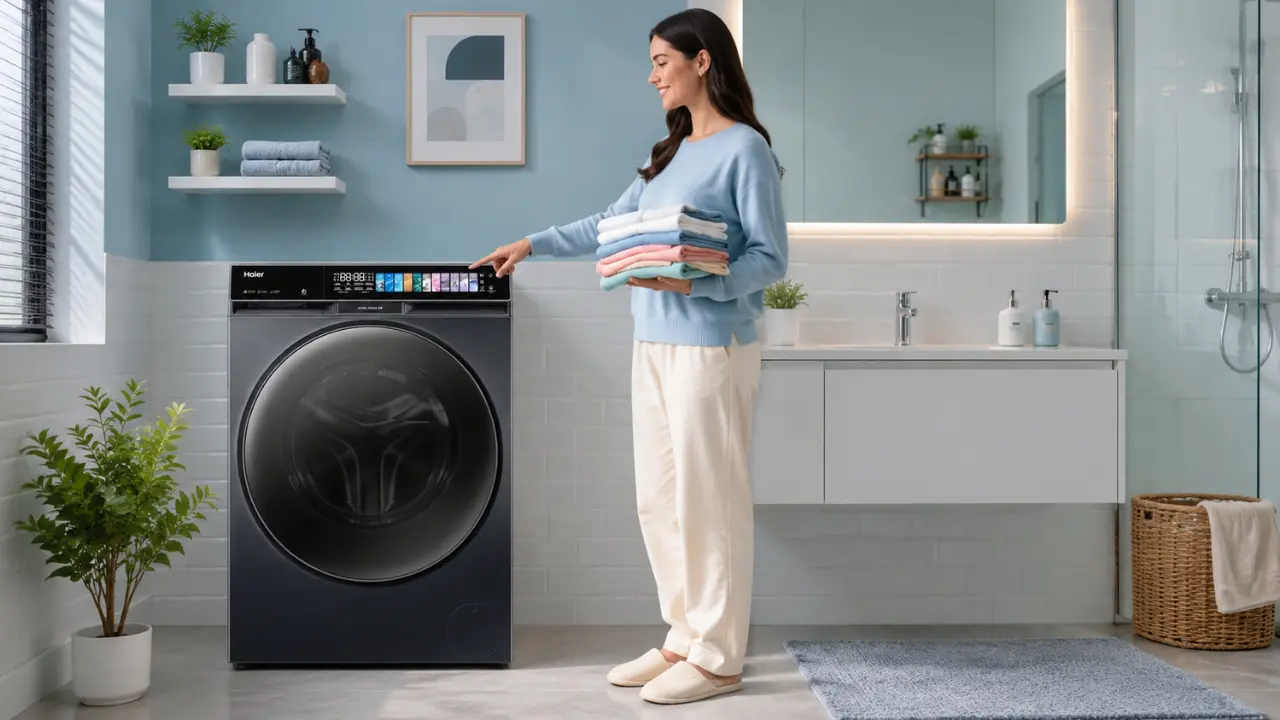

Digital panels do not just change how washing machines look. They change how people think about laundry.
A washing machine used to be mechanical. Turn the knob. Wait. Hope for the best.
Now the machine thinks with you.
Digital panels have quietly transformed laundry from a repetitive chore into a responsive system. One that adapts to fabric type, load size, hygiene needs, drying preferences, water usage, and even the unpredictability of Indian households. The real innovation is not the screen itself. It is the decision-making behind it.
Because modern homes are no longer built around routines.
They are built around interruptions.
A school uniform is needed in 40 minutes. Gym clothes are washed after midnight. Bedsheets during festival cleaning. Baby clothes separated from denim. Workwear is washed quietly while someone attends back-to-back meetings from home.
Laundry has become dynamic.
And digital panels are what make that flexibility possible.
The old washing machine asked people to adapt. Digital panels reverse that equation.
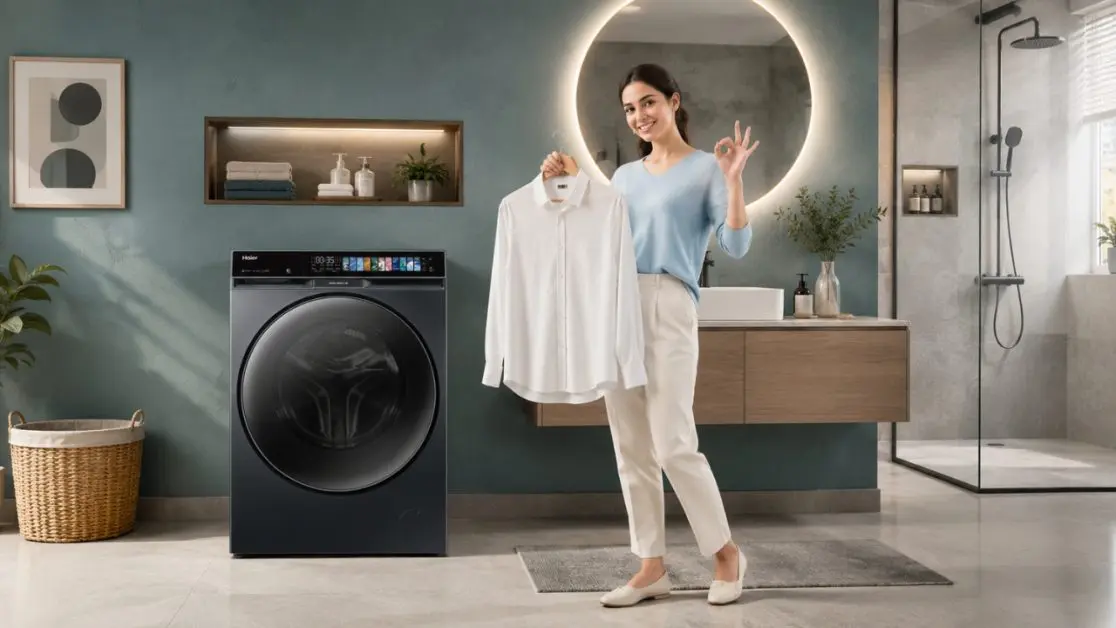
There was a time when laundry programs felt like guesses.
Cotton.
Synthetics.
Quick wash.
Three or four options. Little clarity.
Most people simply picked the shortest cycle and moved on.
But modern laundry systems understand something important: different fabrics behave differently under stress.
A silk kurta from a wedding functions differently from a cricket jersey soaked in sweat. A baby blanket carries different hygiene expectations than daily office wear.
Digital panels help translate those invisible differences into specific wash actions.
That changes everything.
A washing machine is no longer just spinning clothes. It is managing fabric behaviour.
This is where digital interfaces become surprisingly human.
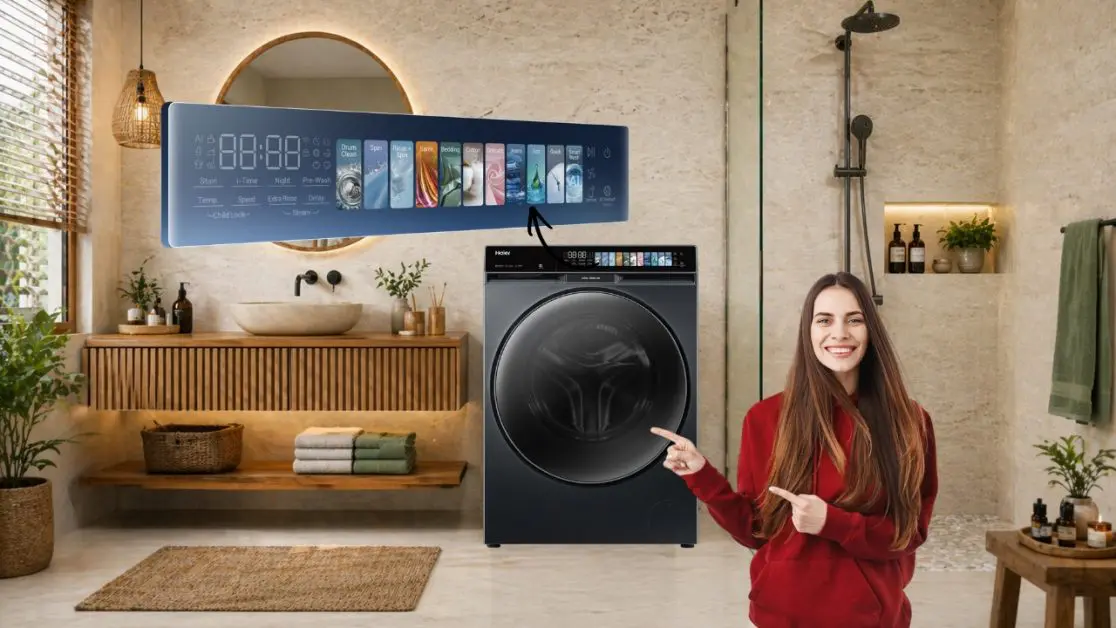
Modern front-load washing machines now allow users to:
- Adjust water temperature precisely
- Select fabric-specific programs
- Control spin speed
- Monitor remaining cycle time
- Save favourite settings
- Enable child lock and hygiene modes
- Activate quick wash cycles
- Manage wash-and-dry combinations
The interface becomes less like an appliance control board and more like a smartphone for fabric care.
And younger Indian households already understand this instinctively.
Because they grew up customizing everything.
Playlists.
Food delivery.
Streaming recommendations.
Phone settings.
Laundry was always going to follow.
Convenience is not laziness. It is friction removal.
This is the hidden system behind smart appliances.
People do not buy technology because they enjoy pressing buttons.
They buy technology because they want fewer mental decisions.
Think about weekday laundry in a dual-income household.
One person remembers the towels.
Another remembers the uniforms.
Someone forgets the delicate cycle.
Someone accidentally overwashes expensive clothing.
Small inefficiencies compound into frustration.
Digital panels reduce those micro-frictions.
A clear LED display showing exact cycle stages sounds small until you realise how often people interrupt wash cycles unnecessarily simply because they are uncertain what the machine is doing.
Clarity reduces interruption.
Interruption reduces inefficiency.
That is how thoughtful systems work.
The best technology disappears into routine
Good appliance design feels invisible after a while.
You stop thinking about it.
That is the goal.
Many modern Haier India front-load washing machines now integrate intelligent digital displays that simplify complex laundry decisions without overwhelming users. Models like the Haier 12 Kg F11 Front Load Washer & Dryer Washing Machine and Haier 10 Kg F9 Pro Front Load Washer Washing Machine reflect how laundry programs are evolving toward more intuitive, touch-based experiences.
Not flashy.
Useful.
There is a difference.
Digital panels make specialised laundry programs actually usable
Most washing machines always had advanced capabilities hidden underneath.
The problem was accessibility.
If users cannot understand features quickly, those features effectively do not exist.
Digital panels solve this by making advanced programs visible and understandable.
One-touch logic matters more than feature count
Consider the difference between these two experiences:
- Mechanical knob with unclear symbols
- Digital panel with labelled hygiene, wool, baby care, or quick refresh modes
The second system reduces hesitation immediately.
And hesitation matters.
Because people avoid features they do not fully trust.
This becomes especially important in Indian households where washing machines often handle:
- Heavy ethnic wear
- Delicate embroidered fabrics
- School uniforms
- Office formals
- Sportswear
- Winter blankets
- Mixed-family laundry loads
Different materials require different treatment systems.
Digital panels make those systems approachable.
Laundry programs now reflect real-life usage patterns
This shift is bigger than it appears.
Old washing machines treated every load similarly.
Modern machines increasingly separate laundry based on context.
One option is hygiene-focused washing for baby clothes or allergy-sensitive fabrics.
The second option is speed-focused programs for busy professionals.
The third option is fabric-care programs designed to preserve texture, colour, and softness over time.
That flexibility changes user behaviour.
People stop overwashing delicate clothing.
They stop using unnecessary water.
They stop guessing.
A good interface improves decision quality.
Not just convenience.
The rise of touch panels mirrors how Indian homes are changing
Look closely at modern Indian kitchens and living rooms.
The visual language has changed.
Minimal surfaces.
Cleaner layouts.
Integrated appliances.
Smarter lighting.
Fewer visible controls.
Appliances increasingly behave like furniture.
Digital washing machine panels fit naturally into that evolution.
Especially in urban homes where aesthetics now influence appliance decisions almost as much as functionality.
Modern appliances are becoming part of home design
This matters more than people admit.
A washing machine is often visible now.
In apartment utility areas.
Open kitchens.
Balcony laundry sections.
Compact smart homes.
The appliance becomes part of the visual environment.
Touch-based digital panels create a cleaner and more premium appearance compared to bulky mechanical controls.
But the visual upgrade is only part of the story.
The real shift is psychological.
Touch interfaces signal intelligence.
People assume a smarter system exists underneath.
Often, they are right.
Digital panels help users save more than time
Most conversations about washing machines focus on cleaning performance.
But digital programs increasingly affect:
- Electricity consumption
- Water usage
- Fabric lifespan
- Drying efficiency
- Detergent optimization
That is where long-term value emerges.
Small adjustments create large household effects
A lower spin speed preserves delicate fabric.
An optimized quick wash cycle reduces electricity use.
Temperature control prevents unnecessary heating.
Load-sensitive programming reduces water waste.
Individually, these sound minor.
Collectively, they shape monthly household efficiency.
And efficient homes are rarely built through one giant decision.
They are built through hundreds of invisible optimizations.
Laundry happens to be one of them.
The smartest appliances teach better habits quietly
This is an underrated part of good product design.
People learn from interfaces.
When a digital panel recommends lower-temperature washes or displays eco-program timings clearly, it subtly shifts user behaviour over time.
The machine becomes educational without feeling instructional.
That is how behavioural systems scale.
Quietly.
Smart laundry is becoming emotional infrastructure
Most people think appliances are functional purchases.
They are not.
They shape mood.
A noisy washing machine affects sleep.
A confusing interface creates stress.
A failed wash cycle ruins mornings.
Home appliances influence emotional energy more than people realise.
Especially during busy weeks.
Especially in Indian families where homes operate at high intensity every single day.
Good systems create calm
That is the hidden value behind digital laundry panels.
Not the display itself.
The reduction in uncertainty.
The confidence that clothes will wash properly.
The predictability of cycle timings.
The ability to customize without confusion.
Control creates calm.
And calm is becoming a luxury in modern households.
This is why newer intelligent laundry systems resonate strongly with younger buyers setting up homes for the first time. They are not just purchasing appliances. They are building environments that feel smoother to live inside.
Machines are no longer separate from lifestyle.
They actively shape it.
The future of laundry is not more complex. It is more intelligence with less effort.
People often misunderstand smart appliances.
They assume innovation means adding more features.
Usually, the opposite is true.
Real innovation removes unnecessary effort.
Digital washing machine panels represent that shift perfectly.
They take a deeply technical process involving water flow, drum movement, spin cycles, temperature management, detergent interaction, and fabric behaviour… and simplify it into intuitive choices people can trust instantly.
That is a sophisticated design.
Not because it looks advanced.
Because it removes friction without removing control.
And that may be the most important shift happening inside modern homes today.
The best appliances no longer demand attention.
They quietly give it back.
Frequently Asked Questions
How do digital panels improve washing machine performance?
Digital panels allow users to select precise laundry programs based on fabric type, load size, hygiene needs, and wash intensity. Instead of using one generic cycle for everything, the machine adjusts water levels, spin speed, temperature, and timing more accurately. This improves fabric care, cleaning efficiency, and energy usage.
Are touch panel washing machines difficult for older family members to use?
Not necessarily. Most modern digital washing machines are designed with simple layouts, clear icons, LED displays, and preset programs. In many cases, digital panels reduce confusion because users can see cycle status, remaining time, and program names clearly instead of relying on unclear knobs or symbols.
Do digital laundry programs help save electricity and water?
Yes. Intelligent laundry programs are designed to optimize washing conditions automatically. Features like quick wash cycles, eco modes, load sensing, and temperature control help reduce unnecessary water and power consumption during everyday laundry routines.
Which fabrics benefit the most from digital washing programs?
Delicate fabrics benefit significantly from digital laundry settings. Clothes like silk kurtas, woollens, activewear, embroidered garments, baby clothes, and office formals require different wash conditions. Digital programs help maintain fabric texture, colour, and softness for longer.
What is the advantage of customised wash programs in modern washing machines?
Customised programs allow users to adjust settings based on real-life laundry needs. One program may prioritise hygiene, another speed, and another gentle fabric care. This flexibility becomes especially useful in Indian households where washing requirements change daily.
Do Haier front-load washing machines include advanced digital panels?
Many modern Haier India front-load washing machines feature intelligent digital panels with multiple smart laundry programs, touch controls, LED displays, and fabric-specific settings. Models like the Haier 12 Kg F11 Front Load Washer & Dryer Washing Machine and Haier 10 Kg F9 Pro Front Load Washer Washing Machine are designed to make laundry management more intuitive for modern households.