
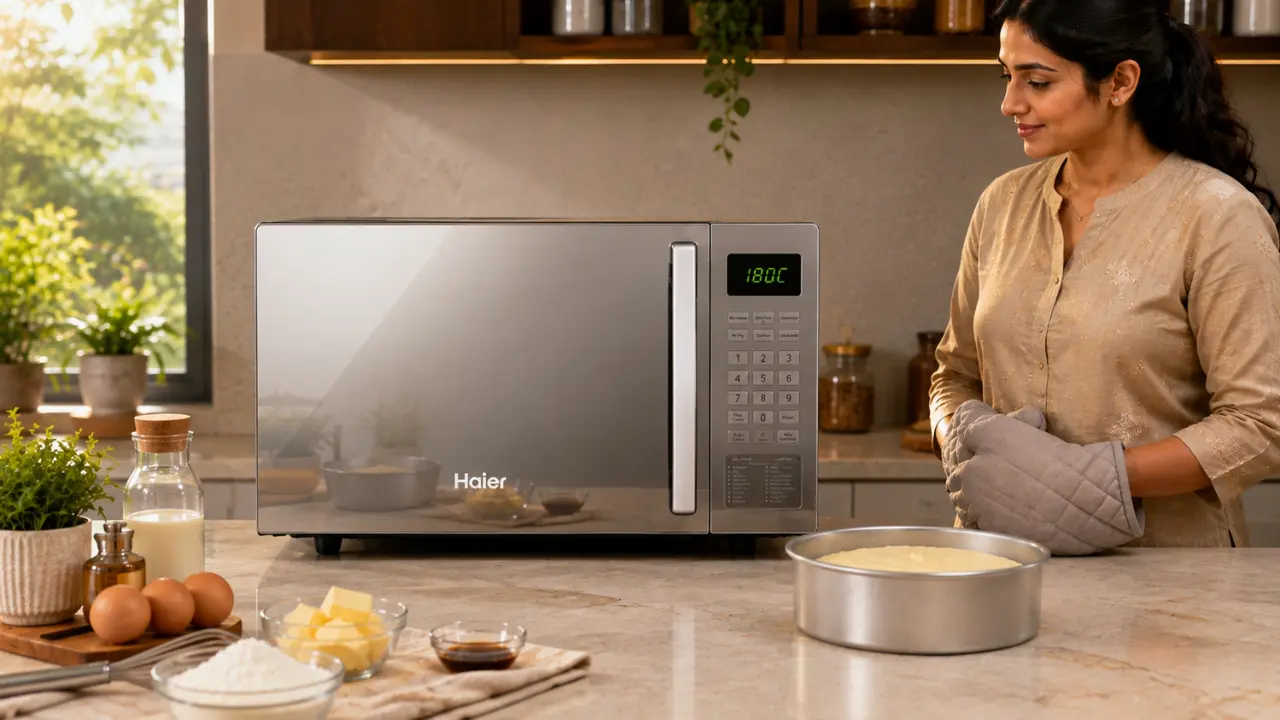

There is a small moment in baking that is surprisingly easy to dismiss. The batter is ready, the cake tin has been prepared, and everything looks set. Then the recipe says: preheat the oven.
It can feel like waiting for no real reason. Why not put the cake in straight away and allow the appliance to heat around it?
Because baking does not quite work that way.
Unlike reheating yesterday’s dinner, baking depends heavily on what happens during the first few minutes of cooking. The temperature surrounding the batter or dough influences how it rises, sets and develops its final texture. Starting in a properly heated cavity can therefore make a noticeable difference between a cake that rises evenly and one that turns out rather unpredictable.
This becomes particularly relevant when baking with a convection microwave oven, where understanding the preheat function can help home bakers get far more consistent results.
Preheating Is Really About Creating the Right Starting Point
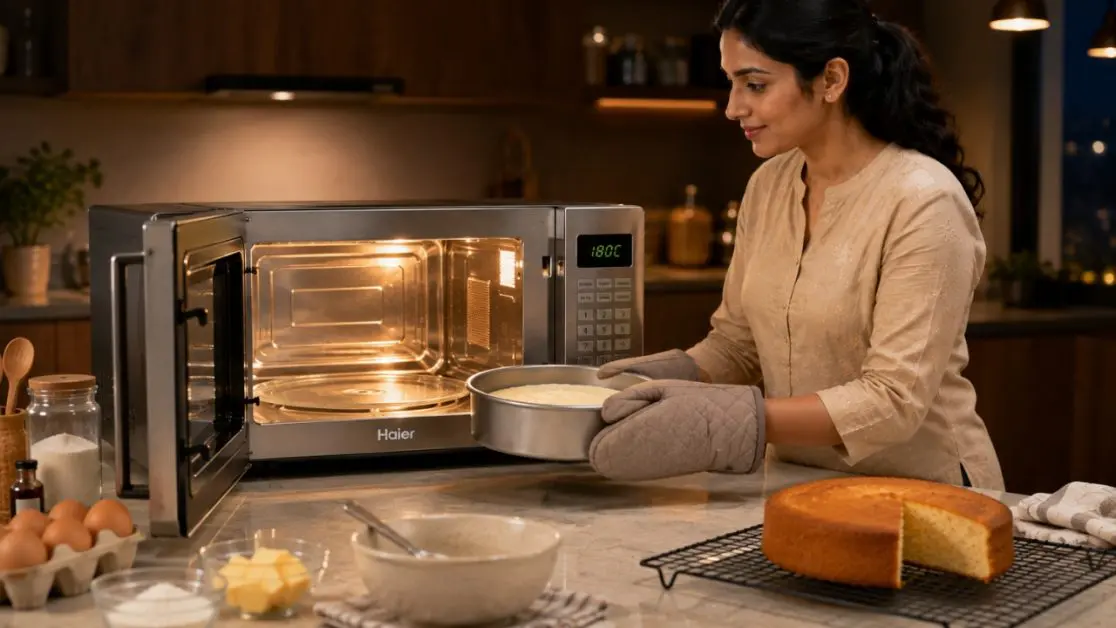
Preheating simply means bringing the cooking cavity to the required temperature before the food goes inside.
Think of making rotis on a tawa. You normally wait for the tawa to become properly hot before placing the dough on it. Put the roti on a cold surface and the cooking pattern changes immediately.
Baking follows a similar principle.
When cake batter, cookie dough or another baked preparation enters an already heated cavity, the recipe begins cooking under the intended conditions from the start. Without preheating, part of the stated cooking time may instead be spent while the cavity is still climbing towards the selected temperature.
That seemingly small difference matters.
What Actually Changes When You Preheat Before Baking?
A recipe may look simple on paper ingredients, temperature, time. Yet temperature is doing several jobs behind the scenes.
1. Cakes Can Begin Rising Under the Intended Heat
Cake batter does not simply sit there waiting for the appliance to become hot.
Once exposed to heat, several changes begin taking place. The batter starts expanding and gradually develops the structure that will hold the cake’s shape.
Starting at the intended baking temperature provides a more predictable environment during this early stage.
This is especially useful when preparing everyday favourites such as:
- Sponge cakes
- Cupcakes
- Muffins
- Tea cakes
- Brownies and similar baked desserts
Incidentally, Haier’s own guidance for baking a cake in its convection microwave ovens specifically instructs users to preheat the microwave in convection mode before placing the cake pan inside. Cooking time can vary between microwave models, which is why following the instructions for the particular appliance remains important.
2. The Outside and Inside Get a Fairer Start
Here is where baking becomes slightly unforgiving.
A cake needs enough heat for its structure to develop, but the process should happen in a reasonably controlled manner. Beginning from a cold cavity introduces an additional variable: the continuously changing temperature during warm-up.
Preheating removes much of that uncertainty.
The batter enters an environment that is already prepared for baking rather than sitting through the appliance’s entire heating-up period.
For someone who bakes occasionally, that means fewer guesses. For someone who bakes every weekend, it means something arguably more valuable: repeatability.
You want the chocolate cake that worked beautifully last Sunday to behave roughly the same way next Sunday.
3. Cookies and Other Bakes Benefit Too
Preheating is not only a cake issue.
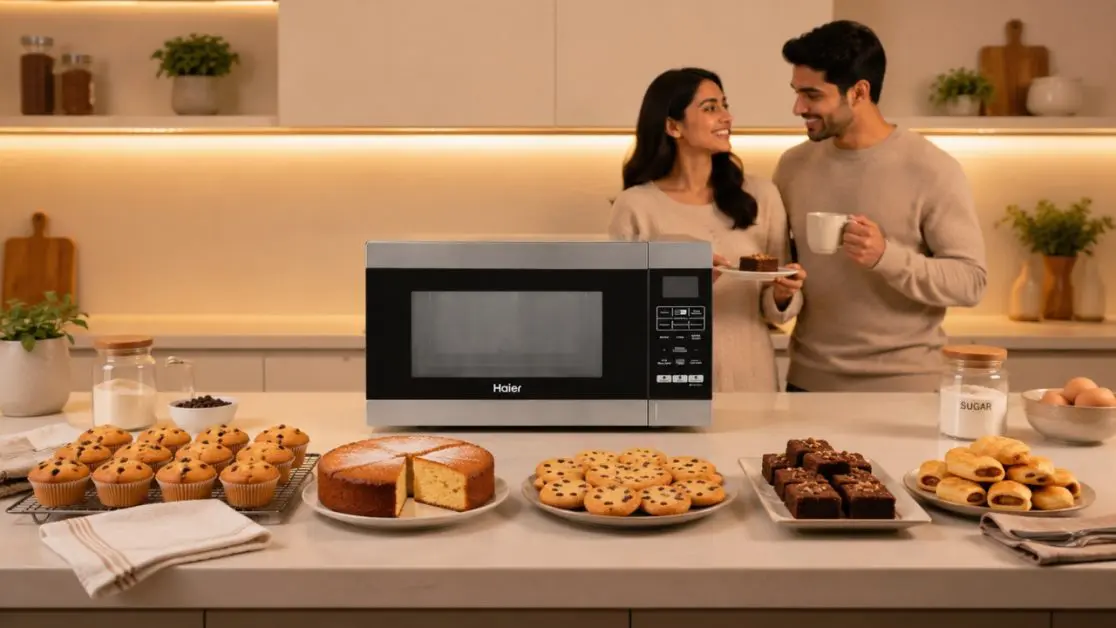
Cookies, muffins and cupcakes can also be prepared in a convection microwave oven, according to Haier’s product guidance.
Cookie dough, for example, begins changing almost immediately after it encounters heat. Fat softens, moisture starts responding to temperature, and the structure gradually sets.
Starting at the recipe’s intended temperature helps make those changes more controlled.
So if one batch of cookies spreads beautifully while another behaves oddly despite using essentially the same recipe, the starting temperature is one of the variables worth checking.
A Quick Way to Understand the Difference
| Baking factor | Without proper preheating | With proper preheating |
| Starting environment | Temperature is still increasing | Cavity begins at the selected baking temperature |
| Recipe timing | Warm-up can overlap with baking | Baking starts under intended conditions |
| Cake development | Can become less predictable | More controlled starting conditions |
| Repeat batches | Results may vary more easily | Easier to reproduce the same process |
| Home baking routine | Requires more judgement | More straightforward to follow recipes |
Preheating cannot rescue a badly measured recipe, of course. Too much flour will still be too much flour. But it removes one unnecessary variable from the process.
The Convection Mode Is the Important Part
This distinction is worth making because a microwave can perform very different cooking jobs.
Standard microwave heating uses microwave energy to heat food quickly. Convection cooking, however, is the mode relevant when the appliance is being used for conventional-style baking.
Haier’s product information makes this distinction clear: its convection microwave ovens can be used for baking as well as grilling and reheating, while its cake-baking instructions call for preheating specifically in convection mode.
So, when a recipe calls for baking, selecting the correct mode matters just as much as selecting the temperature.
Where Haier Convection Microwaves Fit Into the Baking Routine
This is where a convection microwave becomes more interesting than an appliance used only for reheating.
Take the Haier 30L Convection Microwave Oven HIL3001CBSH. Its listed specifications include 2500W convection power, while Haier describes the model as suitable for quick cooking, baking and roasting. It also includes 400 Auto Cook Menus, Bread Basket functionality, combination cooking, Home Fry menus and low-temperature cooking.
For Indian households, that breadth can be useful because the same appliance may be called upon for very different jobs during the week.
One evening it could be baking. Another day, Indian bread. Then grilling or regular microwave cooking.
The Haier 25L Convection Microwave Oven HIL2501CBSH takes a similarly versatile approach, with 305 Auto Cook Menus, Bread Basket functionality, four combination functions and a stainless-steel cavity among its listed features.
And for households looking beyond conventional microwave and convection cooking, the Haier 30L Convection Microwave with In-Built Air Fryer HIL3001ARSB brings microwave, grill, convection, air fryer and rotisserie functionality together. Haier lists 36 dedicated air-fryer menus, 305 Auto Cook Menus, five power levels and a motorised rotisserie among the model’s features.
That versatility is the bigger story. A modern convection microwave need not spend most of its life merely warming food.
Better Baking Still Depends on the Baker
Even a capable appliance cannot compensate for every mistake. A few habits remain worth following.
- Read the recipe completely before starting. Discovering halfway through that something needs to be chilled or rested is never fun.
- Preheat when the baking instructions require it. Do this before placing the prepared batter or dough inside.
- Use the correct cooking mode. For baking in a convection microwave, follow the appliance and recipe instructions for convection operation.
- Use suitable cookware. Follow the manufacturer’s guidance for cookware appropriate to the selected mode.
- Remember that models differ. Haier itself notes that cake cooking time may vary from one microwave model to another.
- Avoid treating every recipe identically. A dense cake, delicate cupcake and batch of cookies will not necessarily need the same approach.
There is some judgement involved. Baking has always been like that.
Why Consistency Matters More Than Shaving Off a Few Minutes
It is tempting to view preheating as an extra step standing between you and cake.
In practice, it is better understood as part of the recipe.
Those few minutes establish the cooking environment before the food arrives. And once baking becomes something you do regularly rather than occasionally, consistency starts mattering far more than simply getting the appliance running as quickly as possible.
That is also where a versatile appliance can earn its place in an Indian kitchen.
Haier’s convection microwave range combines everyday microwave cooking with capabilities designed for baking and other cooking styles, while individual models extend the experience through features such as Auto Cook Menus, Bread Basket, low-temperature cooking, combination cooking, Home Fry, air frying and rotisserie functions.
So the next time a cake recipe asks you to preheat before baking, don’t treat it as the boring bit before the real cooking starts.
It’s the first step in getting the bake right.
Frequently Asked Questions
1. Why is preheating important before baking?
Preheating brings the cooking cavity to the required temperature before the batter or dough is placed inside. This gives the bake a more consistent starting environment and helps recipes cook according to the intended time and temperature.
2. Do you need to preheat a convection microwave for baking?
Yes, when the recipe or appliance instructions call for it. Haier’s guidance for baking cakes in its convection microwave ovens specifically recommends preheating the microwave in convection mode before placing the cake pan inside.
3. Can you bake cakes, cookies and muffins in a convection microwave?
Yes. Haier states that convection microwave ovens can be used for baking cakes as well as cookies, muffins and cupcakes. Cooking time can vary depending on the microwave model and the recipe being prepared.
4. Which mode should be used for baking in a microwave oven?
For baking, the convection mode should be used when specified in the recipe and appliance instructions. Standard microwave heating and convection cooking work differently, so selecting the correct mode is important for the intended baking result.
5. What happens if you put cake batter into the oven before preheating?
The batter begins cooking while the cavity is still warming up, which changes the temperature conditions during the early part of baking. This can make baking time and results less predictable compared with starting at the required temperature.
6. Which Haier microwave ovens are suitable for baking?
Haier offers several convection microwave models designed for versatile cooking. The Haier 30L Convection Microwave Oven HIL3001CBSH features 2500W convection power and functions for baking, roasting and other cooking applications, while the Haier 25L Convection Microwave Oven HIL2501CBSH combines convection cooking with features such as Auto Cook Menus and Bread Basket functionality.