
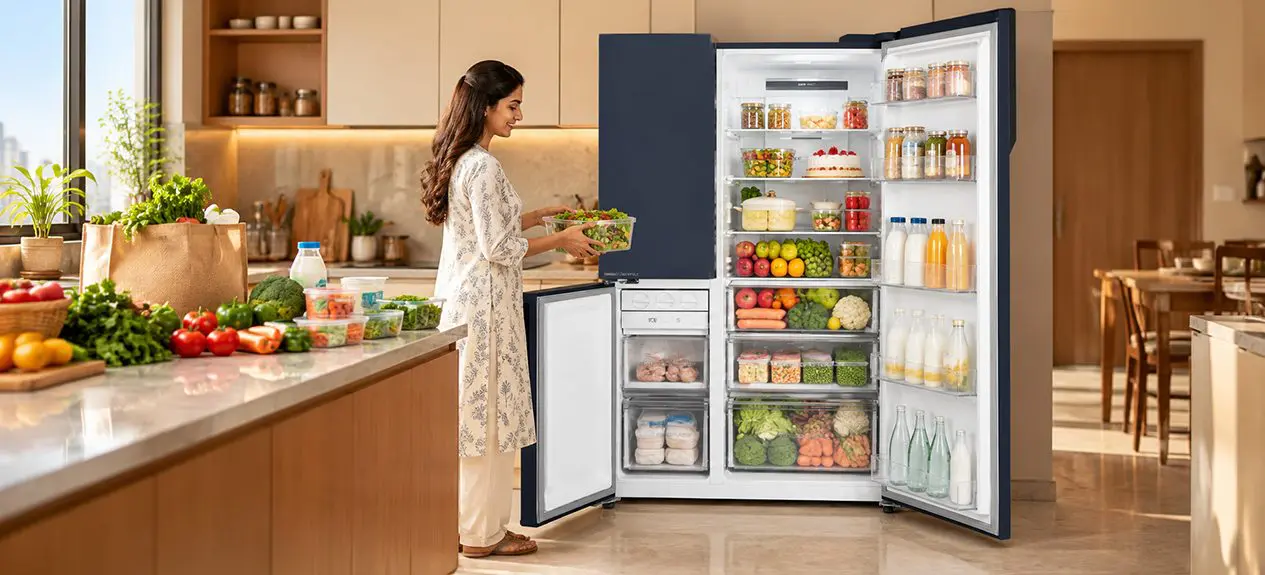

Buying in bulk has become a simple way for many families to manage their weekly or monthly shop. A visit to the grocery store can fill the kitchen with fresh vegetables, dairy, frozen foods and daily necessities for days to come.
But it is easier to get it all home than to find room for it. A refrigerator for bulk storage is handy when grocery bags are piling up, containers are fighting for shelf space, and certain ingredients are being pushed back. Where to place groceries: Storing food can be trickier than you think due to everyday circumstances.
This becomes easier to understand when you consider how larger grocery purchases influence the space and storage demands inside a refrigerator.
Why Does Bulk Grocery Shopping Change What You Need From a Refrigerator?
If you are storing up for several days or weeks at a time, you are going to need a bigger refrigerator than your normal day-to-day needs. The space needed will depend on the amount of food, the packaging of the various items used and how often you are going to use them. There are very important things to think about.
- More room on shelves for bigger packs. Bulk purchases are usually family-size dairy products, multiple bottles of beverages and larger food containers. They use more room, are larger than they look, so there is less room for other groceries.
- Food items should be easily accessible. If you add more groceries, the smaller packets and ingredients are more likely to get lost behind the bigger containers. If you’ve got everything nicely organised, you can see what you’ve got without having to keep moving things around.
- Fresh and frozen groceries fight for room. The bulk food selection is good with veggies, dairy, frozen snacks and meat substitutes. You’ll need to store them at different temperatures, so how much space you have in your fridge and freezer is an important consideration.
- Weekly storage demand varies. The fridge may be full after shopping but it will be emptying gradually as ingredients are used. The volume change can affect the convenience of using available compartments.
How Much Refrigerator Capacity Do You Need for Bulk Grocery Storage?
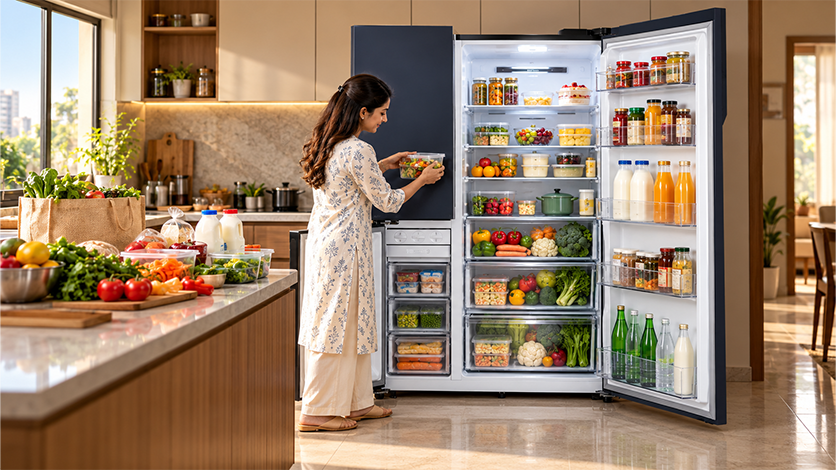
The right refrigerator size depends on the size of your household, how often you shop and how much food you usually keep refrigerated. A family that goes to the grocery store every few days doesn’t need as much storage space as a family that shops for a week. Here’s a practical guide to refrigerator capacity for different household needs.
| Household Size | Recommended Capacity | Bulk Grocery Storage Requirements |
| 1 to 2 Members | 150–250 litres | Suitable for everyday essentials, smaller grocery batches and limited frozen-food storage |
| 3 to 4 Members | 300–400 litres | Accommodates weekly groceries, fresh produce, dairy products and a reasonable quantity of prepared meals |
| 4 to 5 Members | 400–500 litres | Provides additional room for larger grocery purchases, multiple food containers and family-sized packs |
| 5+ Members | 500–650 litres or more | Better suited to substantial grocery quantities, frequent meal preparation and larger fresh-food and freezer storage needs |
What Type of Refrigerator Is Best for Stocking Groceries?
Every refrigerator is a little different and there are different ways to store your groceries, especially if you are buying for a week or so. Some of them give you easier access to ingredients you tend to use often. Others have separate compartments for organising larger amounts of food. This comparison can give you an idea of what type might suit your shopping habits.
| Refrigerator Type | Storage Advantages | Best Suited For |
| Double-Door Refrigerator | Separate fridge and freezer compartments make it easier to organise fresh ingredients, frozen foods and everyday essentials | Small to medium-sized families purchasing groceries weekly |
| Bottom-Mounted Refrigerator | The fresh-food compartment sits above the freezer, allowing easier access to vegetables, dairy products and frequently used ingredients | Households that store more fresh groceries than frozen foods |
| Side-by-Side Refrigerator | Multiple vertical shelves and separate cooling compartments help organise larger quantities of refrigerated and frozen groceries | Larger families stocking up on fresh and frozen foods |
| Four-Door Refrigerator | Multiple storage sections allow different food categories to be arranged separately, with convertible space available in selected models | Households with varied grocery requirements and changing storage needs |
What Features Should You Look for in a Refrigerator for Bulk Storage?
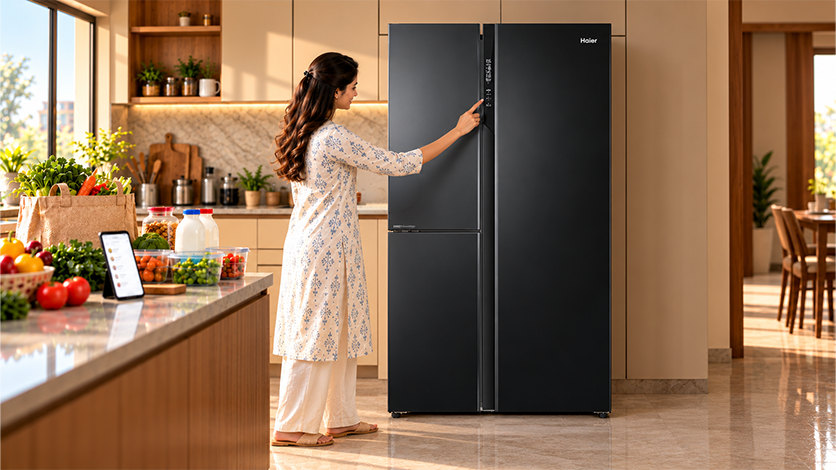
When choosing a refrigerator for bulk storage, consider the features that will be most useful to you in your day-to-day food management. Visibility, fresh management, and easy temperature changes make all the difference when groceries sit for a few days.
- Good visibility throughout all areas. The LED lights are strategically placed to give you a better view of the groceries, especially those hiding at the back of the deeper shelves. It can also cut down on the time it takes to search for ingredients.
- Temperature-controlled zones. Exclusive. Some refrigerators have separate drawers that you can adjust to the right temperature for some food. These can be good for things like dairy, drinks and other temperature-sensitive groceries.
- Smart food management. Some fridges that are connected to Wi-Fi can track what’s in your fridge and create shopping lists. This can help to stop buying things twice when you are shopping for your groceries.
- External temperature regulators. External digital display refrigerators allow the temperature settings to be seen or changed without opening the door. This is good for dealing with different cooling needs after a big grocery run.
What Should You Check Before Buying a Refrigerator for Bulk Storage?
Once you have the right type and features for your refrigerator, there are a few smaller details to consider. These may affect how easily you use the appliance after a major grocery run and whether it fits into your household’s everyday routine.
- Check the weight capacity of shelves. Bulk groceries can be heavy containers, large cooking pots and multiple bottles of beverages. Avoid overloading individual shelves by following the manufacturer’s recommended shelf load limits.
- Consider how easy they are to clean. Removable door racks, accessible corners and wipe-down-friendly surfaces can ease cleaning, particularly when there are spills or vegetable residue build-up inside compartments.
- How far out drawers will pull. The vegetable drawer and the freezer drawer should pull out far enough so you can get to things in the back. Look out for walls or kitchen counters that could hinder their movement.
- Check access for refrigerator delivery. Large fridges can be difficult to manoeuvre through narrow doorways, upstairs or in lifts. Check the delivery route beforehand and ensure the appliance can be safely delivered into your kitchen.
Confused about organising your groceries?
Read through: How to Organise Your Refrigerator for Weekly Groceries and Summer Food Storage
How Haier Refrigerators Support Bulk Grocery Storage
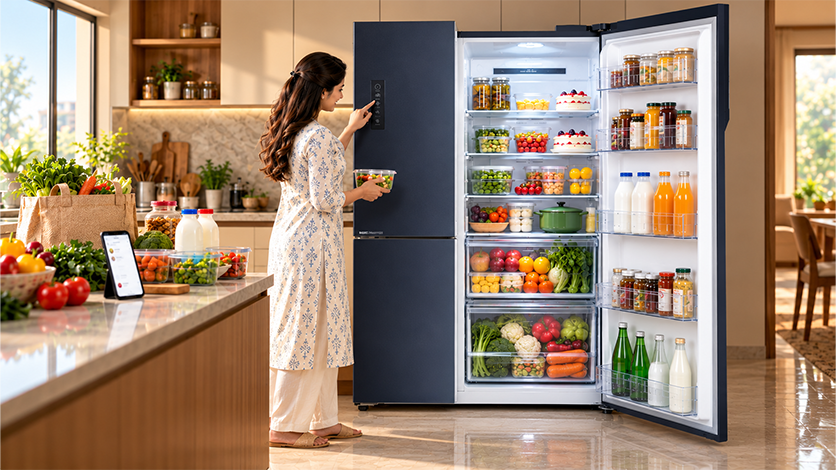
At Haier, we understand bulk grocery storage isn’t just about having room for extra food. In our refrigerator range, dedicated storage compartments, convertible technology and food management features are combined to help households organise groceries and manage changing storage requirements.
1> Our 2X Bigger Veg Box offers more space for fresh produce
In Bottom Mounted Refrigerators, we offer a 2X Bigger Veg Box for storing larger quantities of vegetables. The Haier 445L Black Glass Bottom Mount Refrigerator also comes with its own separate fruit box, so you can store different kinds of produce in their own sections. The bottom-mounted freezer makes it easier to reach fresh ingredients you use most often.
2> Our Smart Convertible Technology adjusts to different grocery loads
Smart Convertible Technology enables households to change storage space according to their needs. With our Haier 598L Black Glass 3 Door Smart Convertible Refrigerator, you can use up to 83% of the refrigerator’s capacity for refrigeration, while keeping a dedicated freezer section. This is handy if your trip to the grocery store involves more fresh ingredients than frozen foods.
3> Our Deo Fresh Technology helps to control unwanted odours
If different groceries are stored together, food odours can begin to appear after a while. Deo Fresh Technology, found in some refrigerators, helps absorb unwanted odours and keep the interior smelling fresher. This technology is a useful addition to proper packaging for everyday food storage, and is included in our Haier 598L Graphite Black 3 Door Smart Convertible Refrigerator.
4> Our Smart Food Management helps you organise your grocery planning
We introduce Smart Food Management into selected Wi-Fi-enabled refrigerators, enabling households to track stored groceries and prepare shopping lists through the Haismart app. Our Haier Lumière 630L French Door Refrigerator also lets you share shopping lists with family members. If several people pitch in to shop for the house, it helps keep grocery planning more organised.
Conclusion
The ideal fridge for stocking up on groceries is a large one, but it shouldn’t come at the expense of organisation, accessibility or cooling performance. Before choosing a size, think about how often you shop, what kind of food you like and how much space you have in your kitchen.
A good fridge layout will make it much easier to store your bulk groceries, even when the shelves are full of a week’s worth of food.
FAQs
What size fridge do I need for bulk grocery storage?
For regular bulk-buying households, a fridge of around 400-500L is a good starting point. Larger families, or those with a large amount of frozen food, may prefer a capacity of 500L or more.
What size fridge for a family of 4?
The average need for a family of 4 is 300-500L depending on how often you shop and how you store your food. The higher end might be better suited for households that shop weekly or meal prep.
Which fridge is best for stocking up on groceries?
A large bottom-mounted side-by-side or four-door fridge should do the job. Concentrate on practical shelf layouts, large produce sections and the right amount of fresh-food capacity, not just size.
Is a side-by-side fridge good for bulk storage?
Yes, side-by-side fridges have separate vertical storage areas which can help you to organise larger amounts of fresh and frozen food. But if you have a lot of wide containers, be aware of those bin widths.
How much fridge capacity does a large family need?
If you have a family of 5 or more, you might also want to consider looking at refrigerators around 500-650L or larger, especially if you shop weekly. Meal prep, freezer usage and how often groceries are restocked are the last requirements.