
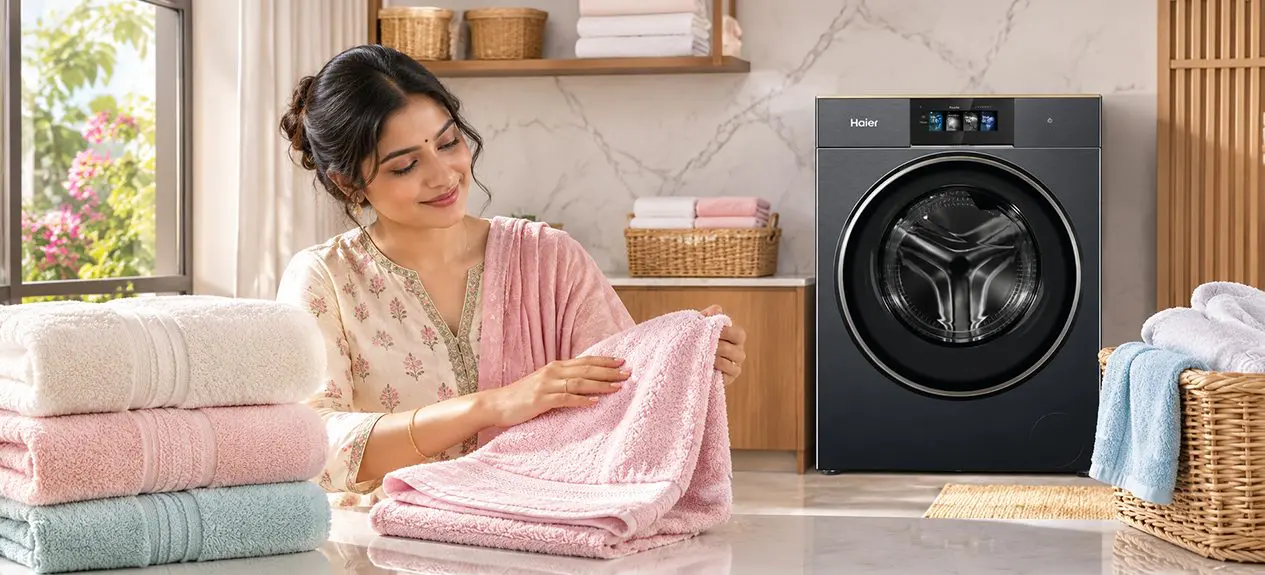

A towel can feel rough even after a fresh wash, without being worn out. The problem often lies in what remains on the fibres after washing. Excess detergent, fabric softener residue and mineral deposits from hard water can build up over time, leaving the fabric stiff and less comfortable against the skin. A few changes to your washing routine can make a noticeable difference, whether you are caring for new towels or dealing with older ones that have lost their softness. This guide explains how to keep towels soft from the first wash and restore a better feel to well-used towels.
Why Towels Turn Stiff and Less Absorbent
Towels not soft after washing usually point to residue rather than poor quality. A few common causes are worth checking:
- Extra detergent that the rinse could not clear fully
- A fabric softener film that coats the loops and slows water absorption
- Hard water minerals that settle into the fibres over repeated washes
- A drum packed so full that rinse water has little room to move through the towels
- Very hot drying, which can leave cotton fibres feeling harsh
Each of these affects how well towels hold water, so tackling them also helps to make towels absorbent again.
How to Wash Towels the Right Way
Getting the load right makes a difference to how towels feel after washing. Keep white and coloured towels in different loads to prevent colour transfer, and avoid packing the drum too tightly. Bath towels take up considerable space, leaving little room for water and detergent to circulate when the machine is overloaded. A smaller load gives the towels more room to move and allows for a more effective rinse, helping prevent residue from settling into the fibres.
- Detergent Amount and Water Temperature
Start with the quantity printed on the detergent pack, then adjust for load size, soil level and water hardness. More detergent does not give softer towels, because the extra stays behind in the loops. On temperature, the care label and the type of soiling decide. Warm water suits regularly used bath towels, and the hottest setting is not always the better one. Our heater guide lists 60°C for very dirty towels and bedsheets, where the label allows it.
- Why to Skip Too Much Fabric Softener
Fabric softener on towels feels smooth at first, but it can leave a coating that slows absorbency over time. Using less, or none at all, keeps the loops open and ready to soak water. When towels do need freshening, an extra rinse is a gentle option. Hard water areas can use a detergent made for water and keep the quantity within the pack limit.
Wondering where softener belongs in the drawer?
Read this blog: Where Does Fabric Conditioner Go in a Washing Machine?
Drying Towels for Maximum Fluffiness
Drying decides much of the final feel. Shake each towel out once the cycle ends, which lifts the loops, and hang it in a ventilated spot. Keep towels loosely spaced instead of stacked tight, and make sure they are fully dry before they go into a cupboard. During monsoon, humid air slows drying, so a breezy corner or a fan nearby helps. Heat that runs too high can leave soft fluffy towels feeling stiff, so a moderate setting gives better results on any dryer. Towels left wet inside the drum overnight can pick up a musty smell, so unloading soon after the wash is a good habit.
Reviving Old, Stiff Towels
Towels that have felt rough for months can often recover. When towels that are not soft after washing have become the usual routine, a rewash clears the residue and helps make towels absorbent again:
- Wash the towels on their own, with no softener.
- Use a little less detergent than usual, or none for one reset cycle.
- Add one cup of white vinegar to the softener compartment, if the machine manual allows it.
- Run a warm cycle around 40°C, then an extra rinse.
- Dry the towels in open air and repeat the reset only when needed.
A reset works gradually, so a few normal washes with a light detergent dose help finish the job.
How Often to Wash Towels
Bath towels generally need washing after about three to four uses, or sooner if they stay damp, smell musty or look marked. Hand towels in a busy kitchen or bathroom may need a wash more often. Keeping to that rhythm shows you how to wash towels at the right pace, since long gaps let moisture and body oils settle into the fibres.
Do’s and Don’ts
The table pairs each helpful habit with the one to ease off, starting with detergent and fabric softener on towels.
| Helpful habit (Do’s) | Habit to ease off (Don’ts) |
| Measure detergent by the pack label | Adding extra for a stiffer-feeling load |
| Use little or no softener | Regular softener in every towel wash |
| Fill the drum to a comfortable level | Packing the drum tightly |
| Shake out and dry in open air | Leaving towels damp inside the drum |
| Wash towels apart from clothes | Mixing with lint-prone fabrics |
How Haier Machines Help Towels Stay Soft
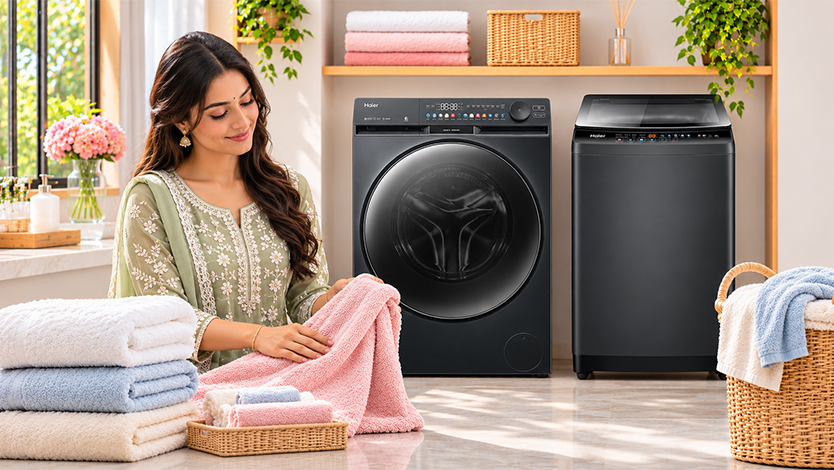
At Haier, we design our machines to rinse well and measure carefully, which is what towels need most. The F17 12 kg Washer & Dryer comes with Smart Dosing, which works out the detergent amount from load size and fabric type, and Essence Wash, which pre-mixes detergent and sprays it on the clothes. Our front-load washing machines, including the F9 10 kg, list an extra rinse function. The F11 12 kg adds Ultra Fresh Air, which blows fresh air through the drum after a wash to keep damp smells away.
For homes with hard water, our top-load washing machines include the 8 kg HWM80-H320BK, which adds an in-built heater and a Hard Water Wash that protects the heater and drum from salt and limescale. A well-rinsed, correctly dosed load gives soft, fluffy towels a good start every time.
Conclusion
Keeping towels soft comes down to a few consistent laundry habits. Use the recommended amount of detergent, limit fabric softener, avoid overloading the drum and allow towels to dry in open air. Each step helps prevent residue from building up and keeps the fibres in better condition. It also helps preserve their absorbency, so towels continue to soak up water rather than simply feeling smooth to the touch. These small adjustments make everyday washing less harsh on the fabric and help maintain the softness and performance of towels over repeated wash cycles.
Frequently Asked Questions
Why are my towels not soft after washing?
Residue is the usual reason. Extra detergent, a softener film or hard water minerals can coat the loops and leave them stiff. Using the measured dose, going easy on softener and adding an extra rinse often helps.
How do you keep towels soft and fluffy?
Wash towels apart from clothes, measure the detergent and keep the drum loosely filled. After the cycle, shake each towel out and dry it in a ventilated space so the loops stay lifted and airy.
Should you use fabric softener on towels?
Little or none works best. Softener can leave a coating that slows absorbency over time. If towels feel rough, an extra rinse and the correct detergent amount usually give a softer result without it.
How do you make towels absorbent again?
Run a reset wash on their own with no softener, a small detergent dose and a cup of white vinegar if the manual allows it. Follow with an extra rinse, then dry in open air.
What temperature should you wash towels at?
The care label decides. Many everyday bath towels do well with a warm wash, and very dirty cotton towels can take higher heat where the label allows it. The hottest setting is not always needed.
How often should towels be washed?
Bath towels usually need a wash after about three to four uses. Wash them sooner if they stay damp, smell musty or look marked. Hand towels in busy spaces may need washing a little more often.