
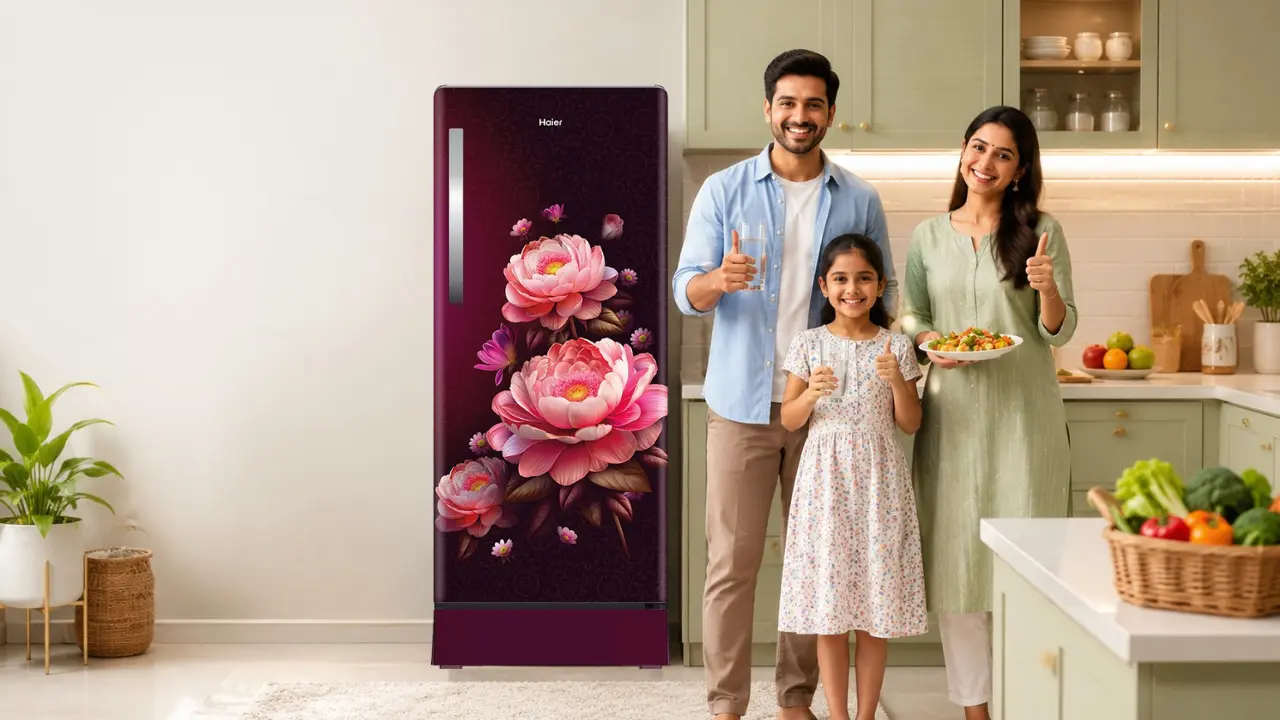

Stabilizer free operation matters because Indian homes do not experience “perfect electricity.” Voltage fluctuations are very common in India. Summers overload grids. Sudden power/electricity drops and spikes quietly damage appliances over time.
What is a stabilizer-free refrigerator?
A stabilizer-free refrigerator is designed to operate safely across a wide voltage range without requiring an external stabilizer, helping protect the compressor from common voltage fluctuations.
A stabilizer free refrigerator or AC is not just about convenience. It is about building resilience into everyday living, reducing clutter, lowering costs, and protecting appliances against the unpredictability of Indian power conditions.
There is a moment almost every Indian household recognises.
The lights flicker.
The fan slows for two seconds.
Someone in the house says, “Voltage low hai.”
And suddenly the appliance becomes a risk.
Will the fridge survive?
Will the AC trip?
Will another stabilizer need replacing?
That tiny moment reveals something bigger.
Most appliance conversations focus on features. Capacity. Design. Smart controls.
But Indian homes often operate around a more invisible system:
Electrical instability.
And once you notice that system, stabilizer free operation stops sounding like a technical specification.
It starts sounding like peace of mind.
The Indian electricity reality nobody designs their first home around
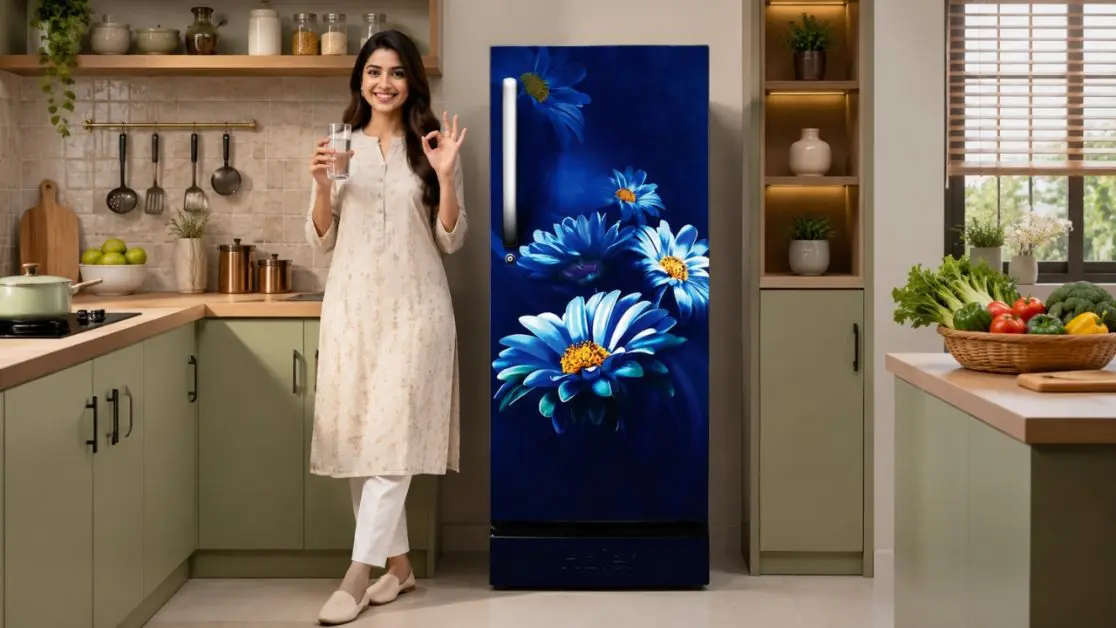
Most people setting up a new home think about furniture before power conditions.
That makes sense. Voltage fluctuations are invisible until they interrupt life.
But across India, fluctuating electricity remains deeply common, especially during:
- Peak summer months
- Monsoon disruptions
- High-load evening hours
- Semi-urban and rapidly growing residential areas
- Apartment clusters with uneven distribution loads
The result is a hidden tax on appliances.
Not immediate failure. Something slower.
Compressor stress.
Reduced cooling efficiency.
Unexpected shutdowns.
Shortened appliance life.
The stabilizer became the workaround. But workarounds create their own friction.
Extra wiring.
Extra space.
Extra cost.
Another device to maintain.
A modern appliance ecosystem should reduce dependency, not increase it.
That is the deeper shift stabilizer free operation represents.
A stabilizer solves voltage problems. Stabilizer free operation redesigns the system.
There is a difference.
One adds protection externally.
The other builds resilience internally.
That distinction matters because Indian households today are already overloaded with accessories and adapters:
- Power strips
- Inverters
- Chargers
- External stabilizers
- Cable management clutter
Modern living quietly accumulates complexity.
Good appliance design removes it.
That is why stabilizer free refrigerators and air conditioners feel increasingly relevant in urban Indian homes.
Not because stabilizers are “bad.”
But because invisible simplicity scales better than visible maintenance.
The best technology disappears into routine.
Why stabilizer free refrigerators make practical sense for Indian homes

Consider how refrigerators actually function in Indian households.
They do not switch off.
They run continuously.
Through daytime voltage dips.
Through late-night fluctuations.
Through unpredictable seasonal loads.
A refrigerator is not an occasional technology. It is a persistent infrastructure.
Which means stability matters more here than almost anywhere else.
Three hidden costs of external stabilizers
1. Space consumption
Indian kitchens already optimize every inch.
Especially in:
- Compact apartments
- Studio homes
- Nuclear family setups
- Urban rental spaces
An external stabilizer adds bulk where efficiency matters most.
2. Maintenance layers
Stabilizers fail too.
Sometimes before the appliance itself.
Dust buildup, overheating, wiring issues, relay failures. One more dependency enters the chain.
And every extra dependency increases friction.
3. Additional electricity consumption
Most stabilizers consume some electricity continuously.
Individually, the difference feels small.
Systemically, across years, it adds up.
Especially in homes already managing rising electricity bills.
The shift from “appliance ownership” to “system efficiency”
Older appliance buying decisions focused on purchase price.
Modern households increasingly optimise for lifetime friction.
That changes how people evaluate products.
Today’s buyers ask:
- How much maintenance will this create?
- How much space will this consume?
- Will this simplify daily life?
- What happens during power fluctuations?
- How many external add-ons are required?
This is especially true for millennial and Gen Z homeowners.
They grew up watching homes filled with workaround systems.
Now they prefer integrated systems.
One appliance.
Fewer complications.
Cleaner living.
That is partly why stabilizer free operation has become such an important consideration in India.
Not because voltage fluctuations disappeared.
Because people are tired of building homes around them.
How modern refrigerators are adapting to Indian power conditions
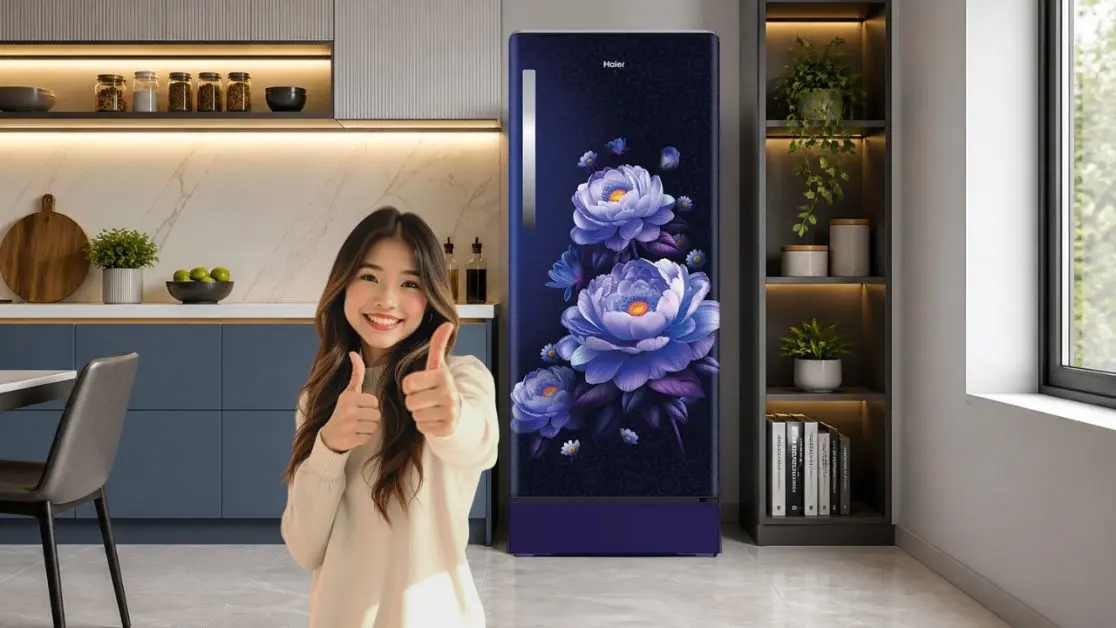
A refrigerator designed for Indian homes cannot assume electrical consistency.
That assumption breaks quickly in real-world conditions.
Modern stabilizer free refrigerators increasingly use:
- Wide voltage range operation
- Compressor protection systems
- Smart power management
- Improved circuit stability
- Energy-efficient inverter technology
The goal is not only cooling.
The goal is operational continuity.
Because interruptions affect more than convenience.
Food spoilage increases.
Cooling recovery slows.
Energy usage spikes during restart cycles.
And in Indian homes, refrigerators often store far more than groceries.
Milk for morning chai.
Leftover dal for tomorrow’s lunch.
Festival sweets.
Vegetables bought for the week.
Homemade batter.
Medicines.
The refrigerator quietly becomes household continuity infrastructure.
Which means power resilience matters.
A lot.
What stabilizer free operation says about appliance confidence
There is also a psychological layer here.
Appliances designed for stabilizer free operation communicate something important:
“We expect real-world Indian conditions.”
That matters more than marketing language.
Because people do not trust appliances based on advertisements anymore.
They trust them based on recovery behavior.
How the appliance handles:
- Heat
- Voltage instability
- Long summers
- Frequent opening
- Heavy usage
Reliability is no longer a feature.
It is the product.
The Technology Behind Haier’s Stabilizer-Free Performance
This is where brands like Haier become relevant in the conversation.
Not because stabilizer-free operation is unique to one brand, but because the feature makes practical sense in the Indian context that Haier designs for.
All Haier air conditioners and refrigerators are designed for stabilizer-free operation, which means they can handle normal voltage fluctuations without requiring a separate external stabilizer.
This adds convenience, reduces additional costs, and helps protect the appliance in areas where power supply conditions can vary.
Several Haier direct cool refrigerator models support stabilizer free operation alongside inverter-focused energy efficiency and compact urban-friendly designs.
That combination matters.
Because Indian households increasingly want appliances that solve multiple problems simultaneously:
- Energy savings
- Voltage protection
- Space optimisation
- Design aesthetics
- Daily convenience
Take compact single-door refrigerators, for example.
For young couples, students, working professionals, or smaller families, the expectation is no longer “basic cooling.”
The expectation is uninterrupted reliability without extra setup complexity.
That is a different consumer mindset entirely.
The hidden relationship between voltage stability and food freshness
Most people think freshness depends only on cooling power.
Not true.
Consistency matters more than intensity.
Frequent voltage fluctuations can interrupt compressor cycles.
Interrupted cooling creates temperature instability.
And temperature instability affects:
- Dairy preservation
- Vegetable freshness
- Ice retention
- Odour control
- Moisture balance
The refrigerator does not fail dramatically.
It performs inconsistently.
That inconsistency quietly changes food quality over time.
Which is why stabilizer free operation is indirectly connected to freshness retention too.
A stable appliance creates stable cooling.
And stable cooling protects routines.
Why this matters even more during Indian summers
Indian summers expose appliance design weaknesses brutally.
Temperatures cross 40°C in many regions.
Electricity demand surges.
Grid pressure increases.
Voltage fluctuation frequency rises.
And refrigerators suddenly work harder precisely when electrical conditions worsen.
That combination stresses compressors significantly.
Which explains why stabilizer free operation becomes more valuable seasonally.
Summer does not test features.
Summer tests systems.
Modern homes reward fewer points of failure
There is a broader principle underneath all this.
Complex systems fail more often.
Homes today already operate with enough invisible complexity:
- Internet dependency
- Multiple smart devices
- Hybrid work setups
- Continuous charging ecosystems
- Streaming infrastructure
- Backup power systems
People increasingly value products that reduce operational dependencies.
Not add more.
That is the real appeal of stabilizer free operation.
Not technical superiority.
Operational calm.
Good appliances reduce the number of things you need to think about.
And that changes daily life more than flashy features ever will.
The future of appliances in India is adaptive, not fragile
India is not becoming less demanding for appliances.
Homes are becoming denser.
Power usage is increasing.
Temperatures are rising.
Appliance expectations are expanding.
The future belongs to products designed for variability, not ideal conditions.
That includes:
- Adaptive cooling
- Energy-efficient operation
- Smart sensing
- Wide voltage tolerance
- Reduced maintenance dependency
Stabilizer free operation fits into that larger evolution.
It reflects a broader shift from reactive living to resilient living.
And perhaps that is the most important insight here.
The best appliances are not the ones that impress during demonstrations.
They are the ones that quietly survive Indian reality every single day.
Because in the end, modern comfort is not built through perfection.
It is built through systems that keep working when conditions are imperfect.
Frequently Asked Questions
Do I still need a stabilizer if my refrigerator is labeled stabilizer-free?
In most cases, no. A stabilizer-free refrigerator is designed to operate safely within a specified voltage range and can handle common household voltage fluctuations without requiring an external stabilizer.
Is a stabilizer-free refrigerator worth paying extra for?
For many Indian households, yes. It can eliminate the cost of purchasing and maintaining a separate stabilizer while offering added convenience and protection against everyday voltage variations.
What’s the biggest advantage of a stabilizer-free refrigerator?
Convenience and built-in protection. Instead of relying on an external device, the refrigerator is designed to manage common voltage fluctuations internally.
Are stabilizer-free refrigerators better for apartments?
They can be particularly useful in apartments where space is limited and residents prefer fewer external accessories and wiring setups.
Why are voltage fluctuations so common in India?
Factors such as peak summer demand, growing residential areas, grid load variations, and weather-related disruptions can contribute to voltage instability.
Can voltage fluctuations damage a refrigerator?
Repeated fluctuations can stress electrical components and compressors over time, potentially affecting performance and lifespan.
What happens when voltage drops suddenly?
Appliances may struggle to operate efficiently, shut down temporarily, or experience increased stress during repeated restart cycles.