
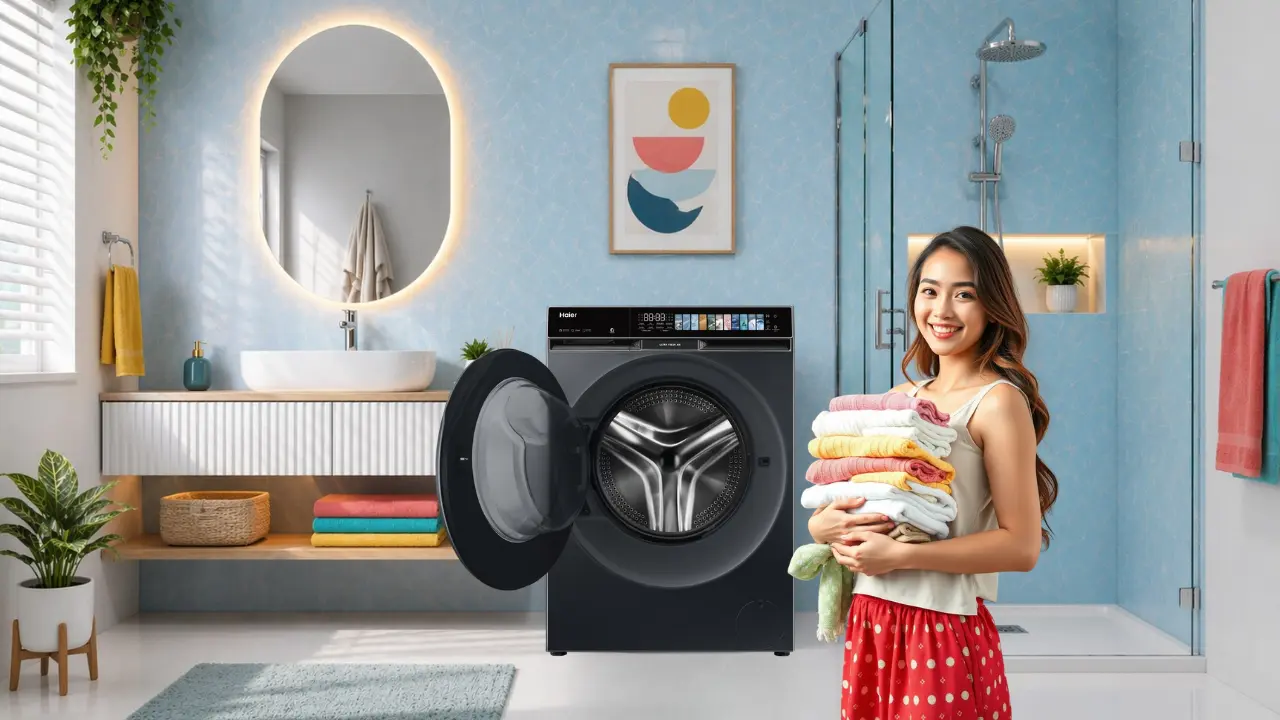

A washing machine prevents odour build up by controlling moisture, eliminating detergent residue, and maintaining airflow inside the drum even after the wash cycle ends.
Modern systems combine air circulation, intelligent rinsing, and automated cleaning cycles to stop bacteria growth before it starts, keeping clothes and the machine fresh for longer.
The problem is not washing. It is what happens after.
It is 10:30 PM.
The laundry cycle is done. You are tired. You leave the clothes inside.
Morning arrives.
The clothes smell… off.
Not dirty. Not fresh either.
That moment tells you everything.
Odour does not come from washing failure. It comes from what happens after washing ends.
Why do washing machines smell in the first place?
Most people assume odour is about poor cleaning.
It is not.
It is about a system failure.
Inside every washing machine, three invisible forces decide freshness:
- Moisture that stays trapped after the cycle
- Heat that lingers inside the drum
- Residue from detergent and dirt
When these three combine, bacteria grow fast.
Think of it like leaving a wet towel inside a gym bag.
No airflow. No escape.
Freshness needs movement.
Stillness creates smell.
The hidden system: What actually prevents odour build up
A modern washing machine does not just clean clothes.
It manages conditions.
Here are the three systems that matter:
1. Moisture control
- Removes excess water after wash
- Reduces dampness inside drum
- Prevents fungal growth
2. Residue control
- Ensures detergent dissolves properly
- Rinses out foam completely
- Avoids sticky buildup inside fabric
3. Airflow management
- Circulates fresh air post-wash
- Keeps drum ventilated
- Stops bacterial breeding
If even one fails, odour returns.
If all three work together, odour never starts.
How modern washing machines solve the odour problem
This is where things change.
Older machines stop working when the cycle ends.
New machines keep protecting your laundry after washing.
One example that shows the shift
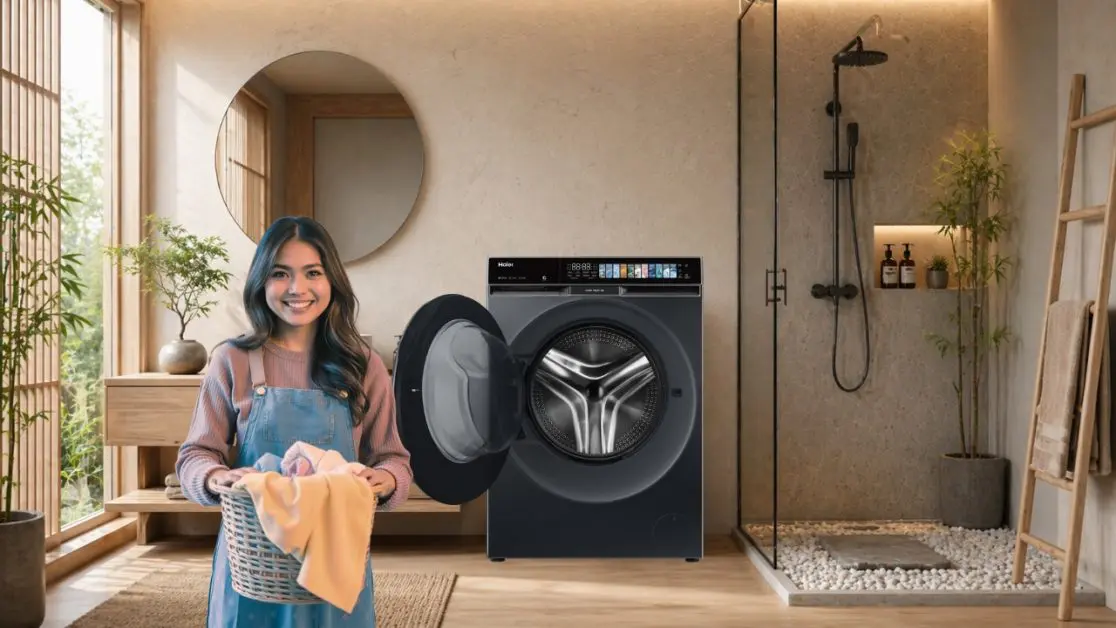
Machines like the Haier 12 Kg F11 Front Load Washer Washing Machine (HW120-DM14F11BKU1) use Ultra Fresh Air Technology, which circulates air inside the drum for up to 12 hours after washing
Every 2 minutes, fresh air moves through the drum.
That changes everything.
Instead of trapped moisture, you get continuous airflow.
Instead of bacterial growth, you get freshness preservation.
Cleaning removes dirt. Airflow protects freshness.
Three ways washing machines prevent odour build up
Let us break it down into clear choices.
One option is: Passive washing machines
- Clean clothes and stop
- No airflow after cycle
- High moisture retention
Cost: Lower upfront price
Trade-off: Higher chance of odour
The second option is: Semi-smart machines
- Better rinsing systems
- Some moisture reduction
- Limited airflow
Cost: Moderate
Trade-off: Odour reduced, not eliminated
The third option is: Fully integrated systems
- Intelligent washing
- Deep residue removal
- Active airflow post-cycle
Cost: Higher initial investment
Benefit: Long-term freshness and hygiene
You are not choosing a machine. You are choosing a system.
Why airflow is the real game changer
Let us simplify this.
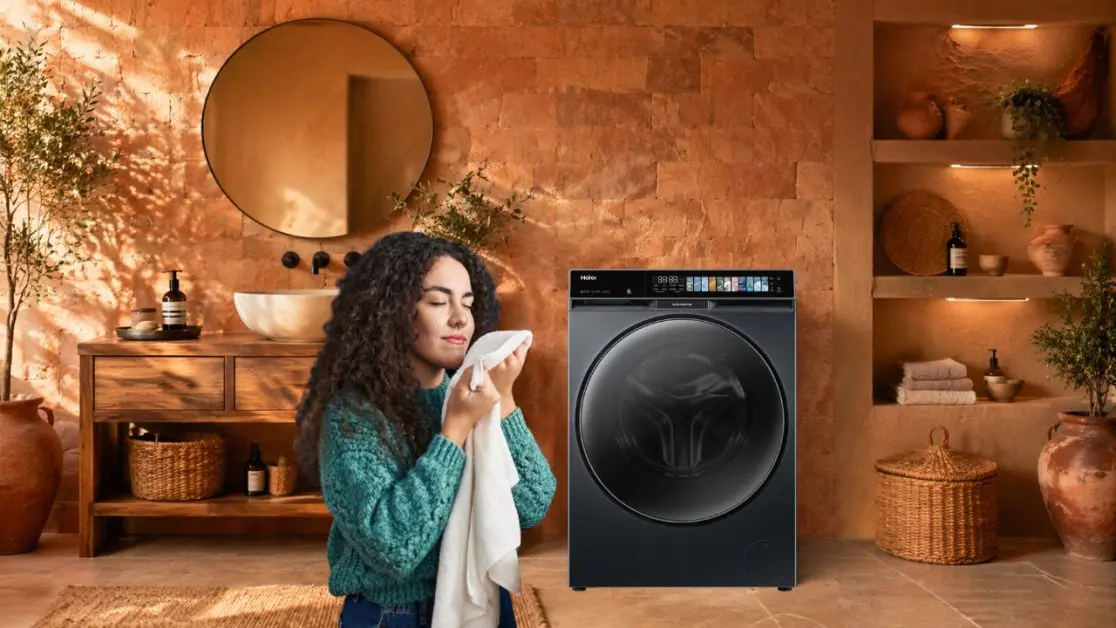
If clothes stay wet, they smell.
If air moves, they stay fresh.
That is the entire equation.
Modern washing machines now act like ventilation systems.
For example:
- Continuous air circulation cycles
- Micro-pressure airflow technology
- Timed refresh intervals
In advanced systems, air moves inside the drum every few minutes for hours
This prevents:
- Mold formation
- Musty smell
- Fabric stiffness
Airflow is not a feature. It is freshness insurance.
The role of detergent and residue in odour build up
Here is something most people ignore.
Too much detergent creates odour.
Yes.
When detergent does not dissolve properly:
- It sticks to fabric
- It stays inside the drum
- It traps dirt particles
This becomes a breeding ground for bacteria.
Modern machines solve this with systems like:
- Pre-mixed detergent spraying
- High-pressure rinse cycles
- Smart dosing features
For example, essence-based wash systems mix detergent before applying it, ensuring even cleaning and minimal residue
The result?
Cleaner clothes. Less buildup. No smell.
Quick comparison: What prevents odour and what causes it
| Factor | Causes Odour | Prevents Odour |
| Moisture | Trapped inside drum | Removed or ventilated |
| Airflow | No circulation | Continuous airflow |
| Detergent | Excess residue | Controlled dosing |
| Washing cycle | Ends abruptly | Extended freshness mode |
| Drum care | Ignored | Self-cleaning systems |
Simple.
Odour is not random. It is predictable.
Smart washing is not about convenience. It is about prevention
People think smart washing machines save time.
They do.
But that is not the real benefit.
The real benefit is decision removal.
What happens in traditional machines
- You decide detergent
- You decide settings
- You decide timing
Mistakes happen.
What happens in intelligent machines
- Machine senses load
- Adjusts water and detergent
- Optimises wash cycle
For example, AI-based wash systems in the Haier 12 Kg F11 Front Load Washer & Dryer Washing Machine (HWD120-DM14F11BKU1) detect fabric type and dirt levels automatically
This ensures:
- Proper rinsing
- Less residue
- Better hygiene
Good systems remove human error.
Daily habits that quietly cause odour build up
Sometimes the machine is not the problem.
Habits are.
Here are common patterns that lead to smell:
- Leaving clothes inside overnight
- Overloading the drum
- Using excess detergent
- Closing the door immediately after wash
- Skipping drum cleaning cycles
Each one adds friction to the system.
Together, they guarantee odour.
Simple fixes that make a big difference
You do not need complicated solutions.
Just small shifts.
Follow this system:
- Remove clothes within 1 to 2 hours
- Keep the door slightly open after wash
- Use measured detergent
- Run a drum clean cycle once a month
- Use machines with airflow features
Consistency beats complexity.
Why Indian homes face this problem more often
This is not random.
It is environmentally friendly.
Indian conditions make odour more likely:
- High humidity in many regions
- Frequent mixed laundry loads
- Longer gaps between washes
- Use of heavy fabrics like denim and towels
These conditions trap more moisture.
Which means higher risk of smell.
Modern washing machines are adapting to this reality.
Not globally. Locally.
The shift from cleaning machines to freshness systems
Here is the bigger picture.
Washing machines used to clean.
Now they manage hygiene cycles.
This includes:
- Washing
- Rinsing
- Drying moisture
- Circulating air
- Maintaining drum freshness
Machines like the Haier 12 Kg F11 Front Load Washer Washing Machine (HW120-DM14F11BKU1) and the Haier 12 Kg F11 Front Load Washer & Dryer Washing Machine (HWD120-DM14F11BKU1) combine these into one system, including airflow-based freshness for up to 12 hours after washing
That is not a feature.
That is a shift in design thinking.
The real insight: Odour is a systems problem
You cannot solve odour with fragrance.
You solve it with systems.
- Control moisture
- Eliminate residue
- Maintain airflow
Everything else is temporary.
What this means for your next decision
When choosing a washing machine, do not ask:
How well does it clean?
Ask:
How well does it maintain freshness after cleaning?
Because that is where most machines fail.
And that is where the right one stands out.
The one thing to remember
Freshness is not created during washing. It is protected after it.
And once you see that, you will never look at laundry the same way again.
Frequently Asked Questions
I’m overwhelmed with options. How do I know which washing machine actually prevents odor?
Focus on systems, not specs. Look for airflow features, smart rinsing, and moisture control rather than just spin speed or capacity.
Should I spend more on a machine with airflow features, or just manage manually?
If you often forget laundry or live in humid conditions, investing in airflow tech saves effort and prevents recurring smell issues.
Is a bigger washing machine automatically better for preventing odour?
Not necessarily. Capacity doesn’t control moisture or airflow internal systems do.
I just want clothes to smell fresh without thinking too much. What should I prioritize?
Go for fully integrated systems with auto dosing + post-wash airflow.
My clothes smell even after washing. Am I doing something wrong?
Likely not during washing. The issue is trapped moisture + poor airflow after the cycle ends.
I left my laundry overnight. Do I need to rewash it?
If it smells musty, yes. Bacteria may have started forming.
Why does my washing machine smell even when I use good detergent?
Residue buildup + moisture creates a breeding ground for bacteria inside the drum.
Is odour caused by dirty clothes or the machine itself?
Often the machine environment, not the clothes.
Do smart washing machines really prevent odour or is it just marketing?
The useful ones do especially those with airflow circulation and auto dosing.
What is airflow technology in washing machines and why does it matter?
It circulates air post-wash to prevent moisture buildup and bacterial growth.
How does AI in washing machines help with freshness?
It optimizes detergent, water, and rinse cycles reducing residue.
Is post-wash air circulation really necessary?
If you don’t remove clothes immediately, it’s one of the most effective protections.