
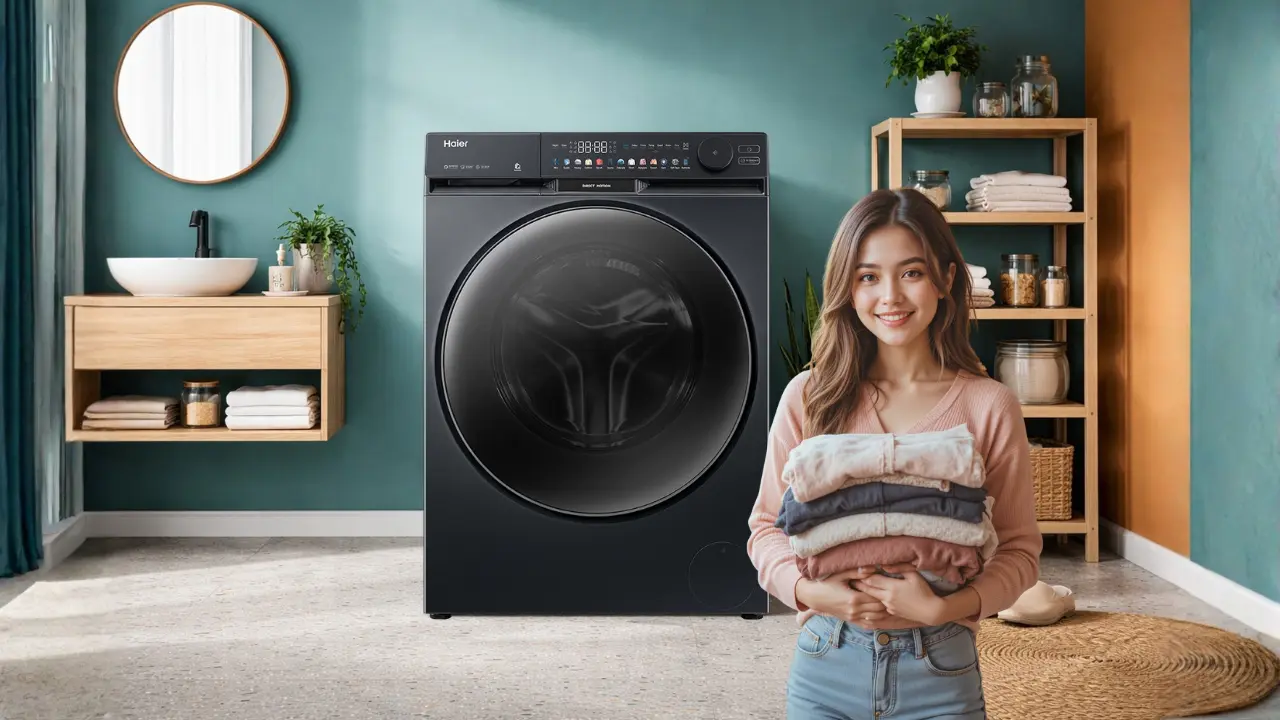

Less manual cleaning means fewer things to worry about. It is the confidence that your home stays hygienic even when you are busy living in it.
For modern Indian households, peace of mind increasingly comes from appliances that quietly manage cleanliness on their own, reduce moisture before it becomes a problem, and remove the need for constant supervision.
This is not a story about chores.
It is a story about mental space.
The invisible cleaning work every household carries.
Every home has tasks no one schedules.
The washing machine drum you wipe because it feels safer.
The rubber gasket you check for moisture after every wash.
The detergent drawer that needs attention more often than you expect.
The lingering smell you cannot trace, but cannot ignore either.
These are not hard jobs.
They are persistent ones.
And persistence drains energy.
In Indian homes today, laundry sits alongside work calls, school runs, shared living rooms, and unpredictable schedules. Cleaning is no longer something you finish. It is something you manage.
That is why manual cleaning is not about avoiding work.
It is about reducing the number of things that ask for your attention.
Why cleaning keeps coming back
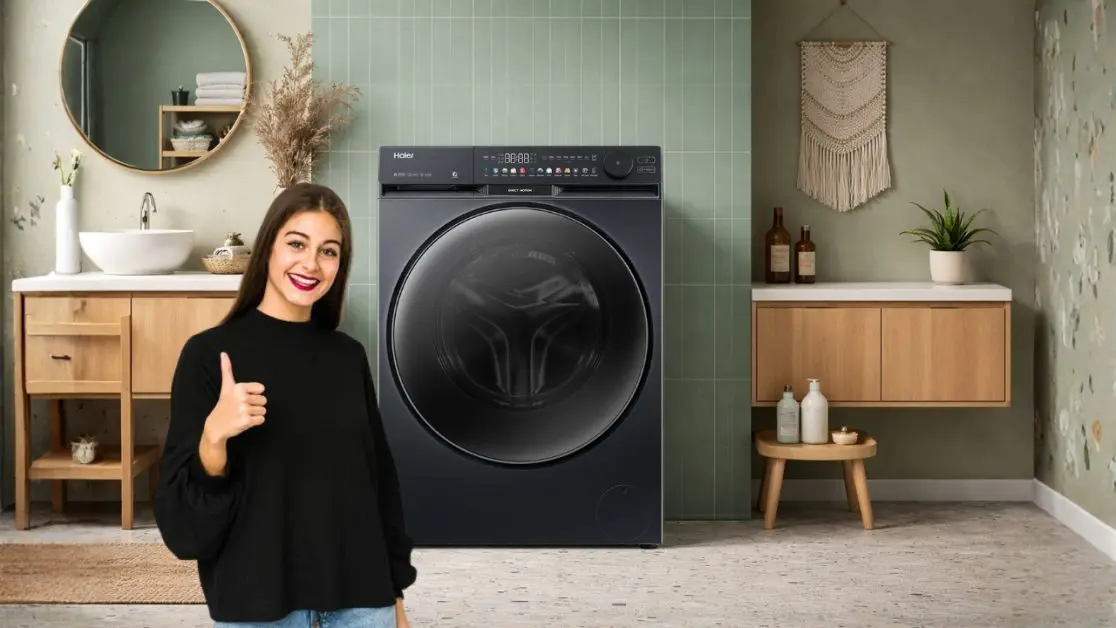
Manual cleaning repeats because the root problem remains untouched.
Most washing machines struggle with the same conditions:
- Moisture that stays trapped after cycles
- Detergent residue that settles into corners
- Warm, enclosed spaces with limited airflow
- Frequent short washes that never fully flush the system
These factors build on each other.
You clean once.
It feels better for a while.
Then the cycle restarts.
The issue is not effort.
It is that the system was never designed to prevent buildup in the first place.
Modern homes need machines that manage conditions
Homes have changed.
Apartments are more compact.
Utility areas have less ventilation.
Machines run more often.
Humidity stays longer.
Cleaning solutions need to evolve with these realities.
That is where newer front load washing machines shift the focus.
They are not just cleaning clothes. They are actively managing moisture, water flow, and residue so that problems do not form quietly between washes.
This is the difference between surface cleaning and system design.
How smarter design reduces manual cleaning
Less manual cleaning begins with leaving less behind.
Features that manage this well tend to work together, not in isolation.
For example, the Haier 10 Kg Fully Automatic Front Load Washing Machine (HW100-DM14F9BKU1) uses a Dual Spray system that rinses away detergent residue from both the drum and the door gasket after every wash.
This directly reduces the need to wipe the machine after cycles, especially in humid conditions.
Over time, this changes behavior.
You stop checking the drum.
You stop worrying about odors.
You stop scheduling extra cleaning cycles.
That is peace of mind taking shape.
Automation removes inconsistency
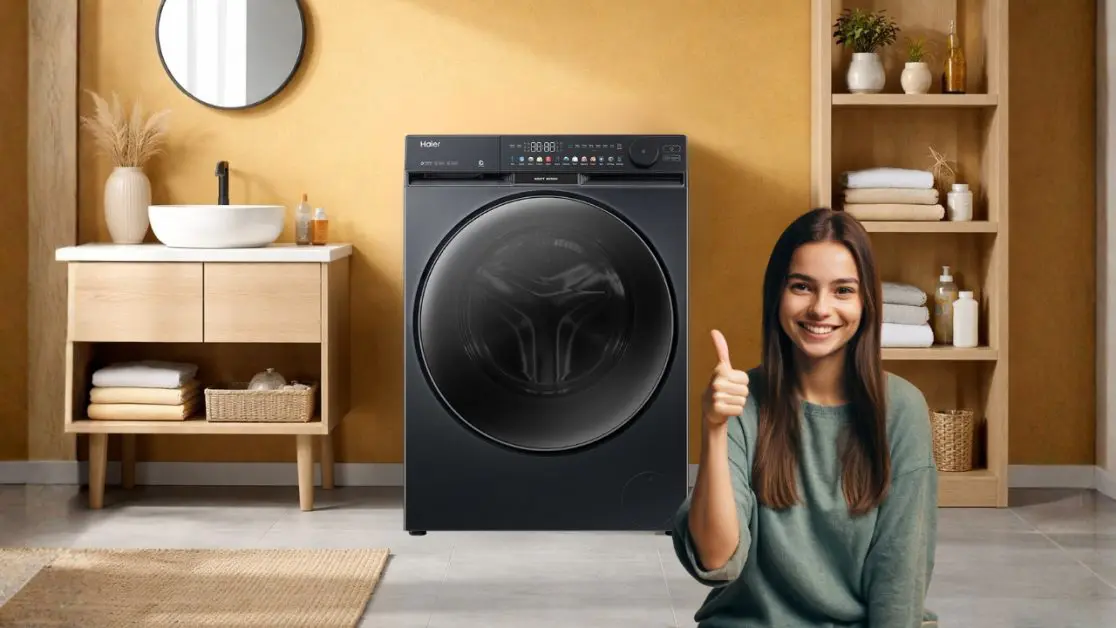
Manual cleaning depends on memory.
Automation depends on logic.
When wash settings automatically adapt to fabric type, load size, and dirt level, the chances of residue buildup drop sharply.
Incorrect water levels and overuse of detergent are two of the biggest reasons machines need frequent cleaning.
One Touch AI Wash systems remove guesswork. They deliver consistent outcomes, load after load.
The benefit is not dramatic.
It is reliable.
Consistency keeps machines cleaner for longer, without asking anything extra from you.
Why drum design matters more than it sounds
Drum shape affects everything.
Poor drum geometry traps water.
Trapped water leads to dampness.
Dampness invites odor and buildup.
Pillow shaped drums are designed to improve water movement and reduce friction points where residue settles. Combined with high spin speeds, they push out moisture more effectively.
The result is simple.
A drum that dries faster needs less attention.
Capacity quietly changes cleaning frequency
Capacity is not just about how many clothes you wash.
It determines how often you wash.
Smaller drums mean more cycles per week.
More cycles mean more moisture events.
More moisture means more cleaning.
Larger capacity machines break this loop.
The Haier 12 Kg F9 Front Load Washing Machine (HW120-DM14F9BKU1) allows households to wash fewer loads without compromising cleaning quality. Fewer cycles translate into lower moisture exposure inside the drum and gasket areas.
Over months, this reduces buildup naturally.
You clean less because the machine stays cleaner.
Quiet machines encourage better maintenance habits
Noise affects when and how people use appliances.
If a machine vibrates or sounds harsh, maintenance cycles get postponed. Night washes feel risky. Self clean programs get skipped.
Quiet operation changes this behavior.
Direct Motion Motors reduce vibration and operate smoothly, making it easier to run maintenance or late night cycles without disruption.
When upkeep fits into daily life, it actually happens.
Self clean programs work best as prevention
Self clean cycles are not a replacement for all cleaning.
They are a preventive tool.
When used regularly, high temperature drum cleaning eliminates detergent residue before it hardens and moisture before it settles. Combined with proper rinsing and moisture management, these programs dramatically reduce manual intervention.
The goal is not perfection.
It is stability.
Smart connectivity reduces uncertainty
Smart features add reassurance, not complexity.
Notifications confirm cycle completion.
Remote monitoring removes second guessing.
Saved settings ensure consistency.
When you know what your appliance is doing, you stop worrying about what it might have missed.
Certainty reduces mental load.
Manual cleaning versus system driven cleaning
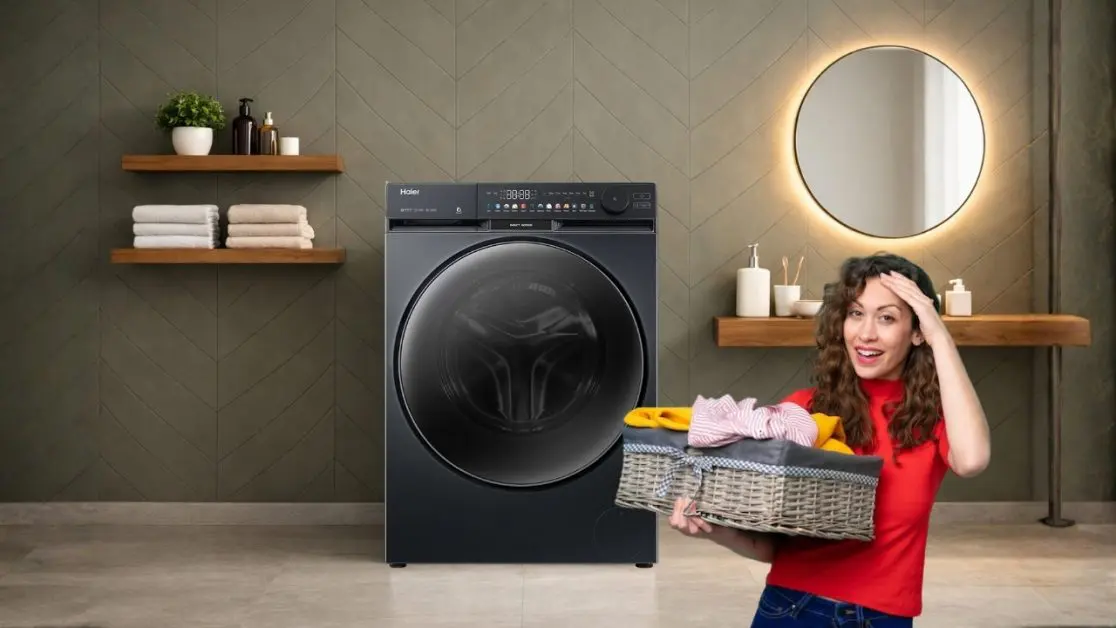
The difference becomes clear over time.
- Manual heavy homes
- Frequent wiping and deodorizing
- Visual checks after washes
- Inconsistent results
- Higher attention cost
- System driven homes
- Automated rinsing and moisture control
- Predictable hygiene
- Minimal intervention
- Lower mental effort
The shift is architectural, not behavioral.
Why this matters during busy seasons
Festive months compress time.
More laundry.
More guests.
Less breathing room.
During these periods, appliances that demand manual cleaning quickly become stress points. Machines that manage hygiene quietly become invisible allies.
Invisibility is success.
Peace of mind is built, not claimed
Trust develops slowly.
A fresh smelling drum.
A week without wiping.
A month without reminders.
Over time, confidence replaces checking.
That is how appliances earn their place in daily life.
What less manual cleaning really delivers
It delivers rhythm.
Laundry fits between meetings.
Maintenance stops interrupting evenings.
Homes feel lighter.
Less cleaning is not the reward.
More peace of mind is.
And that is what smart, well designed appliances quietly bring into Indian homes.
Frequently Asked Questions
Why does my washing machine feel like one more thing I have to “mentally manage”?
Because many machines rely on you to remember wiping the drum, drying the gasket, and running clean cycles. These aren’t hard tasks, but the constant remembering adds cognitive load especially in busy Indian households juggling work, school, and shared spaces.
I’m not lazy, so why does manual cleaning still feel exhausting?
It’s not about effort. It’s about repetition. When moisture and detergent residue keep returning, cleaning never feels “done.” That persistence quietly drains energy.
I keep wiping my washing machine drum. Does that actually solve the hygiene problem?
Temporarily, yes. Systemically, no. Wiping removes surface moisture but doesn’t address trapped water, detergent residue, or poor airflow the real causes of odor and buildup.
Why do smells come back even after I clean the machine properly?
Because the internal conditions haven’t changed. Warm, damp environments with leftover detergent allow bacteria and mold to return, even after manual cleaning.
I mostly use quick wash cycles. Could that be causing buildup?
Yes. Short washes often don’t flush detergent fully. Over time, residue settles into the drum, gasket, and detergent drawer, restarting the cleaning cycle.
Does using more detergent help keep the machine cleaner?
No. Overuse is one of the biggest reasons machines need frequent cleaning. Excess detergent creates residue that attracts moisture and odor.
How does automatic rinsing reduce the need to wipe the machine?
Features like dual spray systems rinse away detergent residue from both the drum and door gasket after each cycle. Less residue means fewer smells and less moisture retention.
Why does drum design matter for cleanliness?
Poor drum geometry traps water. Pillow-shaped drums improve water flow and push moisture out during high-spin cycles, allowing the drum to dry faster.