

The rains don’t just soak your streets. They soak your laundry too.
If you live in India, you already know the monsoon routine. Clothes take forever to dry, towels smell musty within a day, and even freshly washed shirts sometimes carry that damp, unpleasant odour.
But here’s the hidden culprit most people miss, your washing machine’s drum itself.
When humidity rises, moisture lingers inside the drum. Add lint, detergent residue, and fabric softener buildup, and you’ve got the perfect breeding ground for mould. Not just smelly. Unhygienic.
So the real question is how do you fight back?
Why mould thrives during monsoons

Think of your washing machine like a mini greenhouse.
- Warm, closed, and damp.
- Dark, with pockets of detergent residue.
- Rarely left open long enough to breathe.
In a Delhi high-rise or a Chennai independent house, the result is the same. Monsoon turns every closed drum into a breeding ground. That musty smell on your clothes? It’s not your detergent failing. It’s your drum silently struggling.
The hidden costs of ignoring it
Let’s get specific. Mould in the drum doesn’t just smell. It:
1. Ruins fabric freshness – Your favourite kurta or gym t-shirt never feels truly clean.
2. Shortens machine life – Residue clogs filters, strains motors.
3. Affects health – For kids and elders, mould spores can trigger allergies.
A neglected drum is like brushing your teeth without rinsing the brush. The tool you rely on to clean becomes the source of the problem.
The hack most Indian households miss
Here’s the good news, modern washing machines come with a drum clean mode.
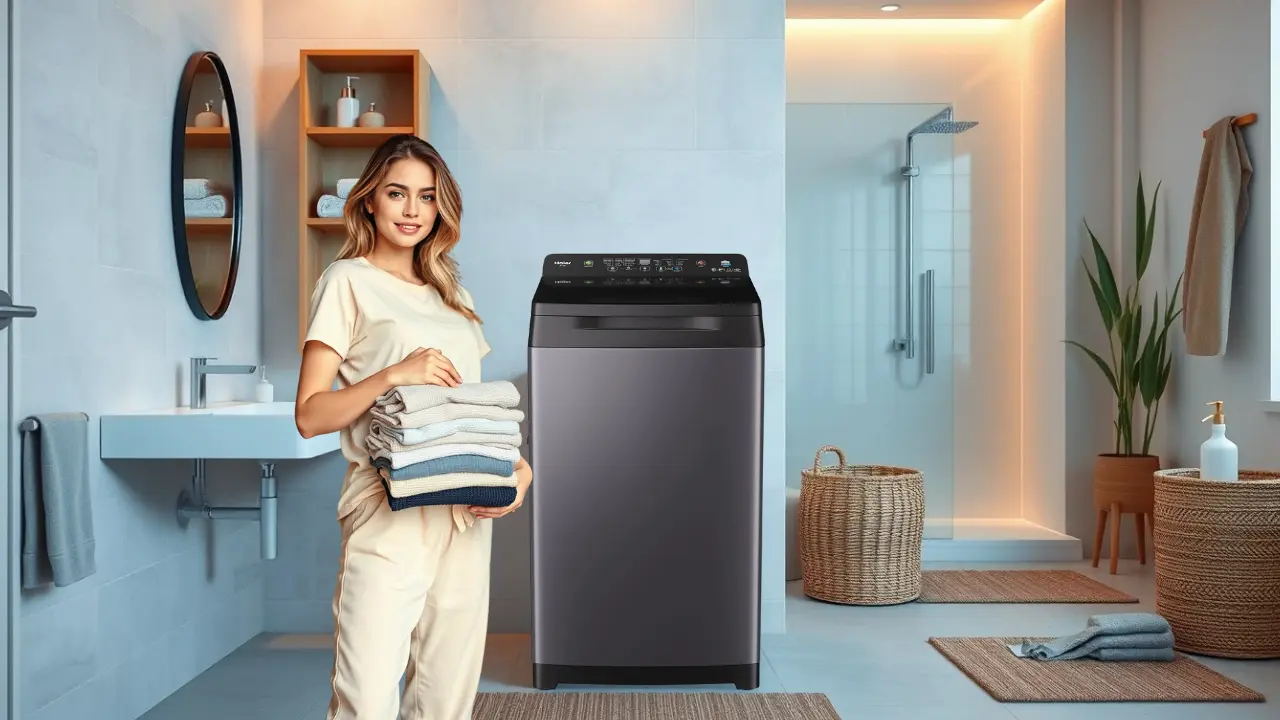
On Haier’s top-load models like the HWM80-H688BK, HWM80-316BK, HWM80-688S8, and even the 9kg HWM90-H688BK this feature is more than a button. It’s a seasonal saviour.
When activated, the drum clean cycle:
- Uses high-temperature water (via in-built heaters on select models) to dissolve hidden residue.
- Flushes out lint and detergent leftovers with powerful water flows designed to mimic natural ocean waves (Haier’s Oceanus Wave Drum).
- Keeps filters cleaner with dual Magic Filters that trap debris before it builds up.
In simple terms, it resets your machine’s hygiene. Like sending it to a spa.
Why it matters more in Indian homes
Our washing styles aren’t minimal. We don’t just wash light cotton tees. We load in jeans, bedsheets, dupattas, kids’ school uniforms all in one go.
Add to that:
- Hard water in Gurgaon flats.
- Power cuts that pause cycles midway in smaller towns.
- Humid monsoon air from Kolkata to Kochi.
A standard wash isn’t enough. Without drum cleaning, all that residue quietly lingers. Haier’s models with features like Anti-Scaling Technology and Near Zero Pressure washing are built precisely for these Indian realities.
So what’s the drum clean ritual?

Think of it as a monsoon health check for your machine.
1. Run it once a month during the rains.
2. Leave the lid open after washing let the drum breathe.
3. Wipe the gasket and glass lid tiny steps, big impact.
These micro-habits prevent the monsoon stink from ever settling in.
The bigger pattern: smart homes prevent small problems
Here’s the aphorism, A clean drum is not just about laundry. It’s about lifestyle.
We’re entering an age where appliances don’t just work, they adapt. Haier’s washing machines with in-built heaters, Oceanus Wave Drums, and soft-close lids aren’t “extras.” They’re part of a bigger system that anticipates what Indian households actually face, weather swings, water shortages, heavy fabrics, messy kids.
Monsoon mould isn’t just a laundry problem. It’s a reminder of how the smallest neglect can spiral. But with the right machine, the solution is built in.
Final thought
Every season has its ritual. Summer is for cleaning AC filters. Winter is for checking geysers. Monsoon? It’s for drum cleaning.
Because when the skies open up, your home shouldn’t smell like a damp alley. It should smell like comfort. Fresh clothes, soft towels, and a machine that quietly keeps mould at bay.
That’s not just hygiene. That’s peace of mind.