
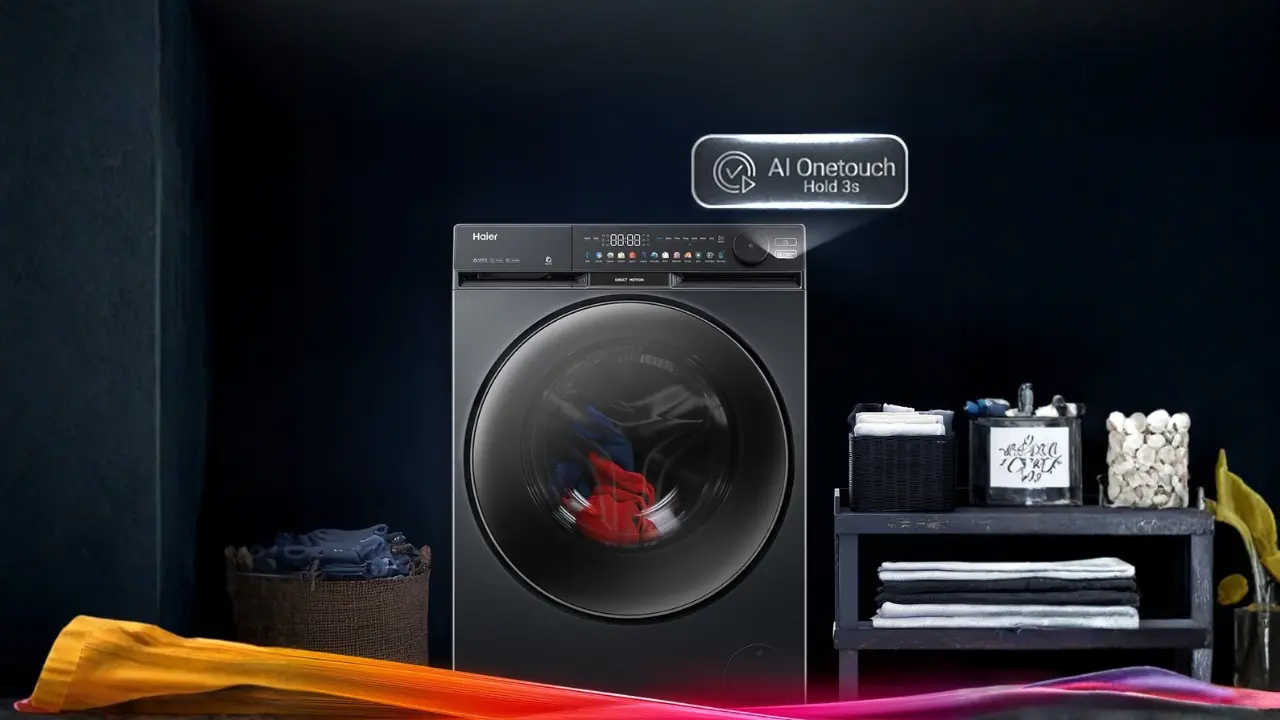

AI-powered washing machines are redefining laundry by shifting decision-making from people to systems.
With one touch, machines now sense fabric type, load size, and dirt level, then automatically set water, time, temperature, and spin.
The result is cleaner clothes, lower energy use, and far fewer everyday mistakes that quietly drain time and resources.
Laundry was never just about clothes
It is 9:40 pm.
The house finally slows down. Dinner plates are stacked. School bags are half-packed. And suddenly someone remembers the uniform that has to be ready by morning.
Laundry rarely arrives as a scheduled task.
It slips in between work calls, family messages, and tomorrow’s calendar.
This is where most washing machines struggle in Indian homes.
Not because they cannot wash clothes.
But because they demand attention when attention is already stretched thin.
Modes to decode.
Settings to second-guess.
Decisions at the exact moment your brain wants fewer of them.
This is where AI steps in. Quietly.
Why “one-touch” matters more than it sounds
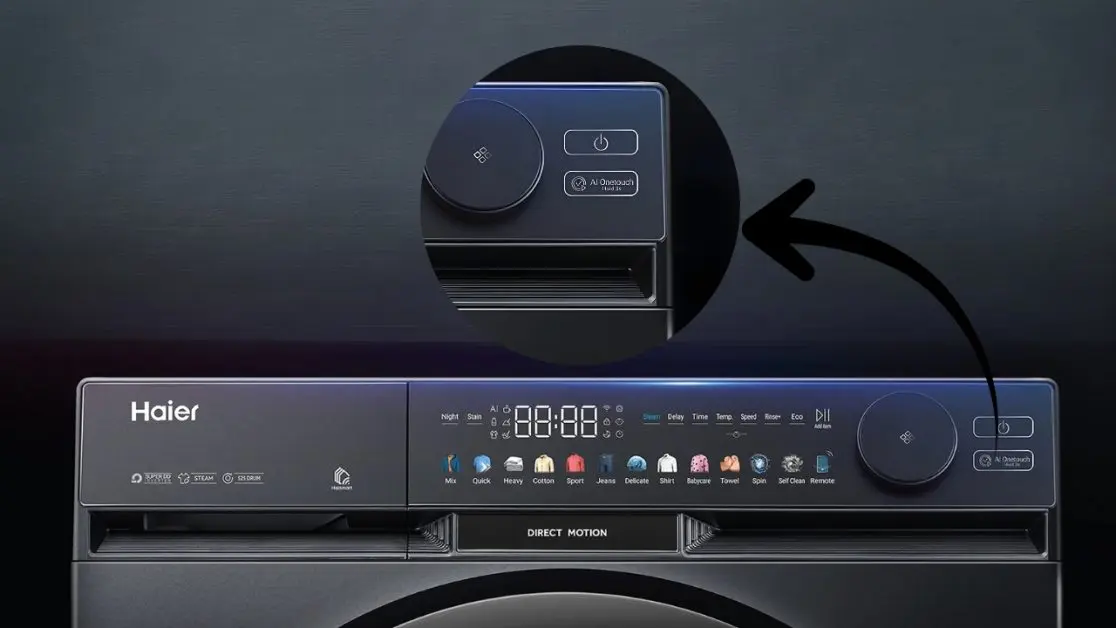
One-touch washing is not about speed.
It is about mental load.
Every choice removed from a routine task frees energy for something else. That is the invisible system most people overlook.
Traditional machines ask you to decide:
- What fabric is this?
- How dirty is it really?
- How much water should I use?
- Is this a long cycle or a short one?
AI-powered washing machines flip that relationship.
You stop explaining.
The machine starts understanding.
In models like the Haier 10 Kg Fully Automatic Front Load Washing Machine HW100-DM14F9BKU1 and the Haier 12 Kg F9 Front Load Washing Machine HW120-DM14F9BKU1, One-Touch AI Wash automatically senses fabric type, load weight, and soil level, then selects the optimal wash parameters on its own .
The implication is simple.
Good results no longer depend on perfect user decisions.
The Indian laundry reality machines must adapt to
Indian laundry is complex by default.
Cotton kurtas. Office shirts. Gym wear. Baby clothes. Bedsheets. Festive outfits. Sometimes all in one week.
Water hardness changes by city.
Electricity costs change by season.
Loads are often mixed, not sorted with textbook precision.
AI systems perform best in exactly this kind of unpredictability.
Instead of forcing people to adapt to machines, smart machines adapt to households.
That is the real shift.
What AI actually does inside a smart washing machine
AI in laundry is not guessing. It is observing and responding in real time.
Here is what happens during an AI-powered wash cycle.
1. Load sensing
The drum measures the weight of clothes to determine the right water level and cycle duration.
2. Fabric behaviour detection
Movement patterns and absorption rates help identify whether the load behaves like cotton, synthetics, denim, or delicates.
3. Dirt assessment
Water clarity and resistance data indicate how soiled the clothes actually are.
4. Dynamic adjustment
Wash time, temperature, and spin speed are adjusted during the cycle, not locked in at the start.
Think of it like live navigation on your phone.
The route changes as traffic changes.
That is why AI-driven washing often saves water and energy without compromising cleanliness.
Why this matters for water and power bills
Efficiency is not a bonus feature. It is the outcome.
Studies across modern front-load machines show that load-sensing and adaptive wash cycles can reduce water consumption by up to 30 percent compared to fixed programs.
In real homes, this means:
- Shorter cycles for lighter loads
- No overwashing of delicate fabrics
- Fewer repeat washes due to wrong settings
The Eco Wash logic in Haier’s AI-enabled front load machines automatically weighs each load and matches water and wash time accordingly, rather than defaulting to maximum usage .
The hidden benefit is trust.
When machines consistently make better choices than humans, sustainability becomes effortless.
The silence factor that changes daily life
Modern Indian homes do not shut down early.
Night washes are common.
Apartment walls are thin.
Sound travels.
This is where Direct Motion motors matter.
Both the HW100-DM14F9BKU1 and HW120-DM14F9BKU1 use beltless Direct Motion Motor technology that connects the motor directly to the drum. Fewer moving parts mean less vibration, smoother rotation, and quieter operation even during late-night cycles .
This is not just engineering.
It is respect for shared living spaces.
Technology works best when it stays out of the way.
Why smart displays are more practical than they look
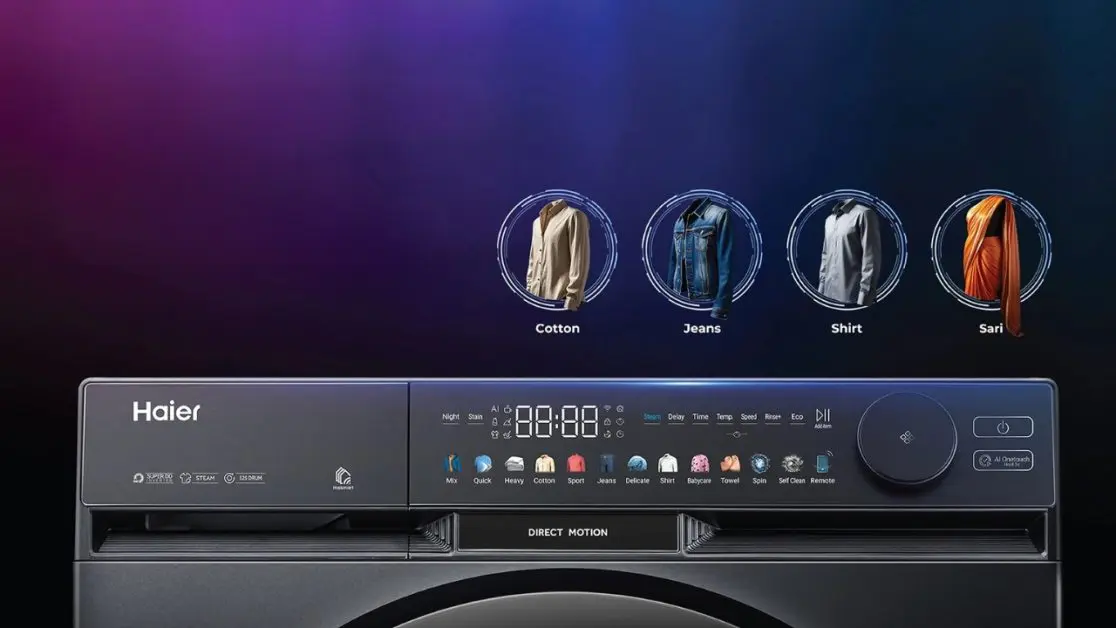
A colour touch panel sounds like a premium flourish until you watch people use it.
Icons are easier than manuals.
Visual cues beat memory.
Clear prompts reduce mistakes.
Haier’s AI Colour Touch Panel organises programs by fabric type and real usage scenarios rather than technical terms, making everyday decisions simpler for everyone in the home .
This matters for:
- Parents juggling multiple loads
- Elder family members who value clarity
- First-time buyers setting up new homes
Good interfaces do not show off. They disappear into routine.
How different households actually use AI washing
AI features reveal their value differently depending on lifestyle.
One option is the working professional
Laundry runs while emails get answered. One touch. No thinking. No rewash.
The second option is the family household
Mixed fabrics, unpredictable dirt, varying load sizes. AI prevents excess water and detergent use.
The third option is the new homeowner
No learning curve. The system handles decisions from day one.
The insight is clear.
AI does not replace skill.
It removes the need for it.
Why “perfect wash” is the wrong promise
There is no perfect wash.
There is only the right wash for that load.
AI systems aim for adequacy, not excess. Enough water. Enough movement. Enough time.
Overwashing wastes resources.
Underwashing wastes effort.
Features like Super Drum capacity and Dual Spray rinsing support this balance by improving detergent removal and rinse efficiency without adding extra cycles .
Good systems reduce correction.
The larger pattern behind smart laundry
AI in appliances follows the same principle seen in modern work tools.
- Remove repetitive decisions
- Standardise good outcomes
- Reduce dependence on expert users
That is why AI-powered machines feel calming.
They do not demand attention.
They earn trust.
Smart laundry is becoming emotional infrastructure
This sounds abstract until you live with it.
Cleaning clothes on time reduces morning stress.
Quiet night cycles protect sleep.
Lower bills ease monthly pressure.
These are not product features.
They are quality-of-life shifts that compound over time.
Where this transformation is heading
The future of smart laundry is not more buttons.
There are fewer interruptions.
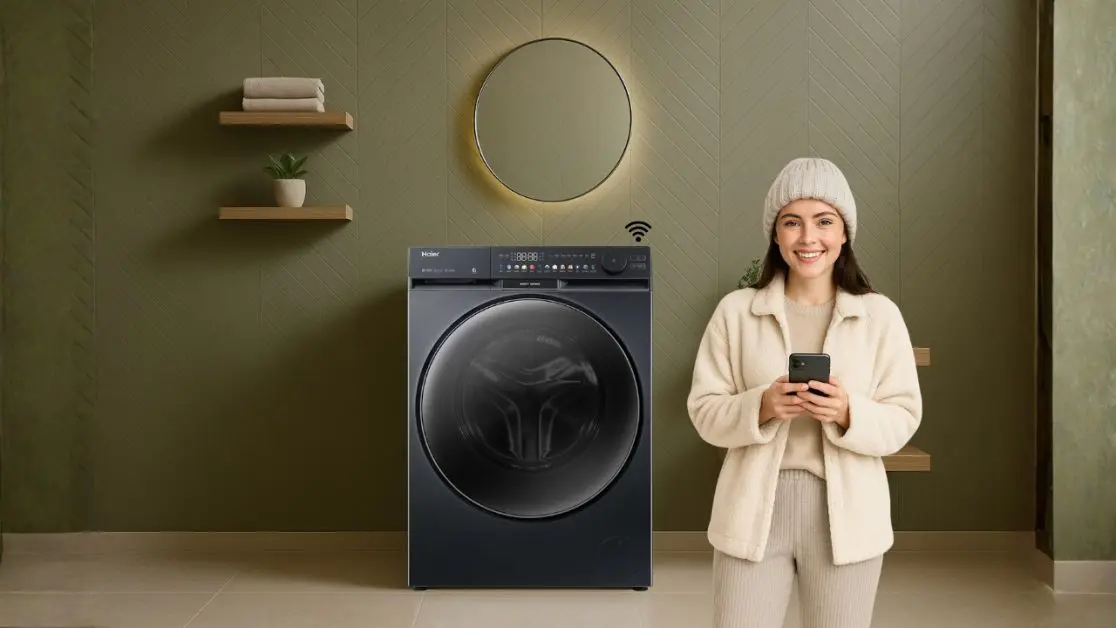
Remote monitoring. Cycle updates. Maintenance alerts. All designed to fade into the background rather than demand action.
The best technology does not feel advanced.
It feels natural.
The one insight worth remembering
AI does not make washing machines smarter.
It makes life lighter.
When everyday systems absorb complexity, people reclaim time, calm, and control.
That is the real meaning of one-touch washing.
Not pressing a button.
Letting go of a burden you never realised you were carrying.