
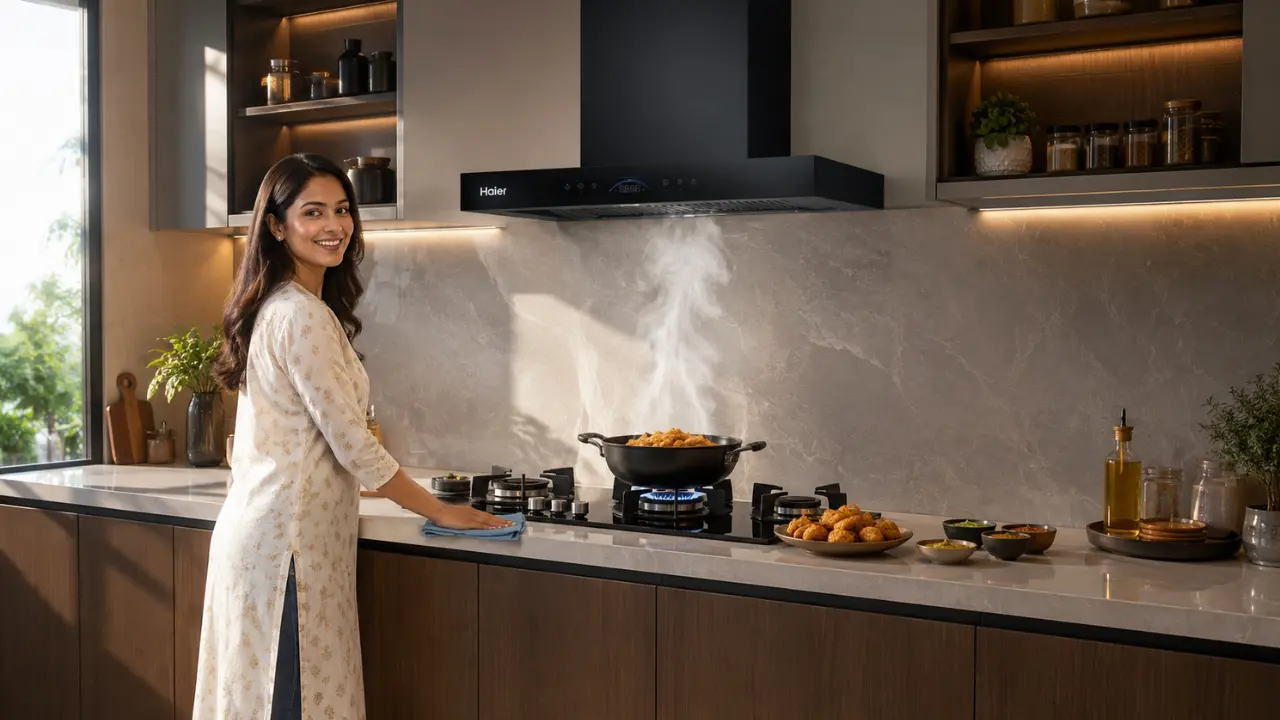

A clean kitchen is rarely about cleaning alone
Oil build up does not begin as a cleaning problem.
It begins as an airflow problem.
Anyone who cooks Indian food regularly knows this pattern. One tadka becomes two. Weekend frying turns into festival prep. Steam mixes with oil particles. Walls slowly lose their brightness. Cabinets become sticky. The chimney filter starts trapping grease faster than expected.
And suddenly, the kitchen feels heavier.
Not dirty. Heavy.
That is the hidden system most people miss. Kitchens do not become uncomfortable because cooking is messy. They become uncomfortable when smoke, grease, and heat stop moving efficiently.
Smart chimney design changes that equation.
Modern chimneys are no longer just exhaust devices hanging above a stove. They are becoming airflow systems designed around how Indian homes actually cook. Strong suction. Heat auto-clean technology. Filterless architecture. Gesture controls. Lower noise motors. Better oil management.
The goal is simple. Less grease settling where it should not.
And in Indian homes, that changes more than aesthetics. It changes how often people deep clean their kitchens, how long cabinets stay fresh, and how comfortable cooking feels after a long workday.
Why oil build up happens faster in Indian kitchens
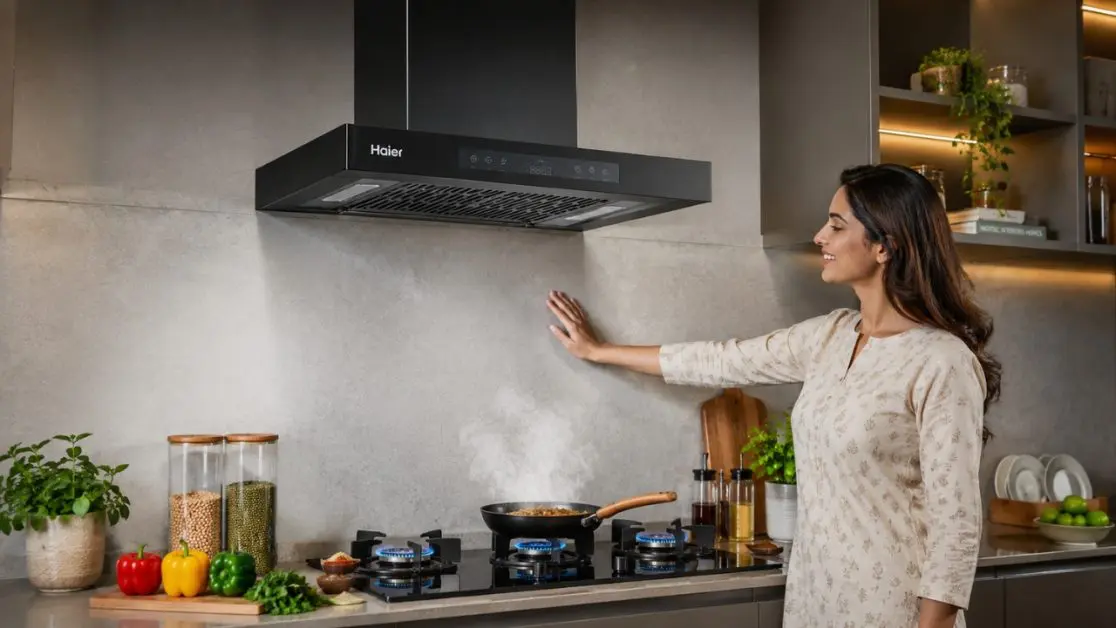
Indian cooking is intense by design.
High heat. Deep frying. Tempering spices. Slow gravies. Repeated use of oil. Long cooking sessions during festivals and family gatherings.
A regular exhaust fan struggles in this environment.
According to energy and indoor air quality studies from organisations like the International Energy Agency and WHO, cooking emissions can significantly affect indoor air quality when ventilation is weak. Oil particles are microscopic. They travel farther than people assume.
That explains why grease appears in unexpected places:
- On ceiling corners
- Around cabinet handles
- Near tube lights
- On tiled backsplashes
- Inside chimney filters themselves
The invisible always becomes visible eventually.
The old chimney problem most households accepted
Older chimney systems often relied heavily on mesh filters.
At first, they worked.
Then oil started collecting inside the layers. Suction dropped. Cleaning became frustrating. Some families postponed maintenance because removing and washing filters felt like a weekend project.
That delay creates a cycle:
- Grease blocks airflow
- Airflow weakens suction
- Weak suction leaves more grease in the kitchen
- More grease creates faster buildup
Systems fail slowly before they fail visibly.
That is why filterless chimney designs are becoming more relevant for modern Indian homes.
Smart chimney design is really about reducing friction
The best home appliances quietly remove friction from daily life.
Not dramatically. Repeatedly.
A smart chimney works the same way.
What makes modern chimney systems smarter?
One option is stronger suction power.
The second option is better airflow engineering.
The third option is automation that reduces maintenance effort.
The best systems combine all three.
Haier’s chimney range, for example, focuses heavily on high suction capacity and filterless airflow systems designed for Indian cooking conditions. Models like the Haier HIH-T1900-BLDC-IN feature 1600 m³/h suction power, BLDC motor technology, heat auto-clean functionality, and touch plus gesture controls.
That matters because suction power determines how quickly smoke and oil particles leave the cooking zone before they spread across the kitchen.
The difference between removing smoke and managing grease
Many people think chimneys exist to remove visible smoke.
That is only half the story.
The real challenge is airborne oil.
Smoke disappears quickly. Oil residue does not.
Modern filterless chimneys are designed to reduce grease accumulation inside filters by minimising obstruction points. That creates smoother airflow and often reduces cleaning frequency.
Haier’s filterless chimney models also integrate Heat Auto Clean technology, designed to melt grease accumulation internally for easier maintenance and improved hygiene.
That changes the relationship people have with kitchen cleaning.
Instead of reacting to visible buildup, the system continuously manages it in the background.
Why lower maintenance changes cooking behaviour
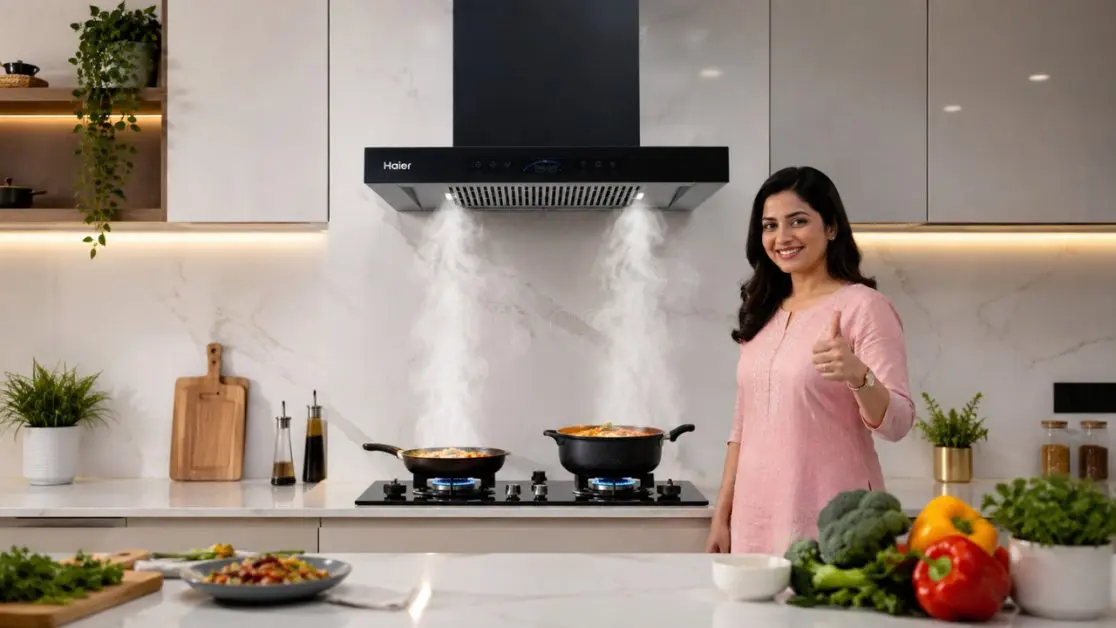
This part rarely gets discussed.
When kitchens feel easier to maintain, people cook differently.
They experiment more. Fry more comfortably. Spend longer preparing meals during festivals. Invite people over without worrying about lingering odours the next morning.
Convenience shapes culture more than people admit.
Three kitchen experiences modern families now expect
1. Less sticky surfaces
Oil particles settling on surfaces create that thin sticky layer every Indian household recognises instantly.
Efficient suction reduces how much grease escapes into the room.
2. Lower noise during cooking
Traditional chimneys often sounded aggressive.
Modern BLDC motor systems aim to reduce operational noise while improving efficiency. Haier’s BLDC chimney variants mention lower maintenance and lower noise performance alongside energy efficiency benefits.
That matters in open kitchens where cooking overlaps with conversations, TV time, or children studying nearby.
3. Easier interaction
Touch and gesture controls are not just aesthetic upgrades.
Cooking involves wet hands. Oily fingers. Fast movement.
Gesture-enabled controls reduce repeated physical contact with chimney surfaces, helping maintain cleaner panels over time. Multiple Haier chimney models include Touch & Gesture functionality for hands-free operation.
Small design decisions create large behavioural shifts.
The kitchen is becoming a lifestyle space
This shift matters more than most appliance conversations acknowledge.
Indian kitchens are changing.
They are becoming:
- More open
- More visible
- More design-focused
- More integrated with living spaces
A decade ago, kitchens stayed hidden.
Now they appear directly beside dining areas, living rooms, and social spaces. That changes expectations around cleanliness, smell control, and visual organisation.
Oil build up becomes more noticeable when the kitchen is part of the home experience instead of isolated from it.
Why chimney aesthetics suddenly matter
A chimney is no longer purely functional.
It affects how modern kitchens feel visually.
T-shape designs. Arc glass finishes. Black glass panels. Minimal interfaces. Slim structures.
These design choices matter because appliances increasingly influence interior aesthetics.
Haier’s chimney lineup includes both T-shape and arc glass configurations across multiple sizes, including 60 cm, 75 cm, and 90 cm variants.
People are not only buying airflow anymore.
They are buying visual calm.
Smart kitchens reduce invisible fatigue
There is another hidden system at work here.
Mental load.
When kitchens demand constant cleaning, people experience friction repeatedly throughout the week. Wipe the cabinet. Clean the filter. Remove grease stains. Scrub corners. Wash oily surfaces again.
Tiny interruptions accumulate.
Good appliance design reduces those interruptions before they become routines.
Features that quietly reduce kitchen fatigue
Here are a few features modern households increasingly value:
- Heat Auto Clean for easier grease management
- Filterless systems that reduce manual cleaning effort
- High suction capacity for heavy Indian cooking
- Cleaning reminders that simplify maintenance timing
- Delay-off functions that continue airflow after cooking ends
- BLDC motors for better efficiency and quieter performance
For example, Haier chimney models include cleaning reminder systems and delay-off functionality that continue operation briefly after cooking sessions.
Good systems do not eliminate effort entirely.
They eliminate unnecessary effort.
Choosing the right chimney depends on how you cook
This is where most buying advice becomes too generic.
The right chimney is not universal.
It depends on:
- Cooking frequency
- Kitchen size
- Open versus closed layout
- Frying intensity
- Family size
- Festival cooking habits
A solo working professional cooking twice a day needs something different from a five-member household preparing elaborate weekend meals.
A practical framework for thinking about chimney design
One option is compact efficiency
Smaller kitchens often benefit from space-conscious designs with strong suction and lower maintenance requirements.
The second option is heavy-duty airflow
Frequent frying and large family cooking sessions require higher suction capacity and stronger airflow consistency.
The third option is aesthetic integration
Open modular kitchens often prioritise sleek finishes, quieter operation, and minimal visual clutter alongside performance.
The smartest buying decisions happen when design matches behaviour.
Not trends.
The future of kitchens is less visible maintenance
The next generation of appliances will not succeed because they look futuristic.
They will succeed because they remove invisible stress.
That is the real innovation story.
Not screens. Not touch panels. Not buzzwords.
Reduction.
Less grease buildup.
Less cleaning effort.
Less lingering smell.
Less noise.
Less friction.
A kitchen works best when it fades into the rhythm of life instead of interrupting it.
And perhaps that is the larger lesson smart chimney design teaches us.
The best systems are not the ones you notice constantly.
They are the ones quietly preventing problems before they arrive.
Frequently Asked Questions
How do I know if my current chimney is not handling oil build-up properly?
Common signs include sticky cabinets, grease on tiles, oily residue near lights, frequent filter clogging, lingering cooking smells, and smoke spreading beyond the cooking area.
Should I choose a filterless chimney or a traditional filter chimney?
Filterless chimneys generally require less maintenance because they reduce grease accumulation in mesh filters and maintain airflow more consistently over time.
Is higher suction power always better for Indian cooking?
Not always, but households that frequently fry, temper spices, or cook elaborate meals typically benefit from higher suction capacities that capture smoke and oil particles faster.
I cook only twice a day. Do I really need a premium chimney?
It depends on your cooking style. Even moderate cooking can generate grease and odours. A chimney with efficient airflow and low maintenance may still provide long-term convenience.
What chimney size should I choose for my kitchen?
The size should generally match or slightly exceed the width of your cooktop. Common options include 60 cm, 75 cm, and 90 cm models.