
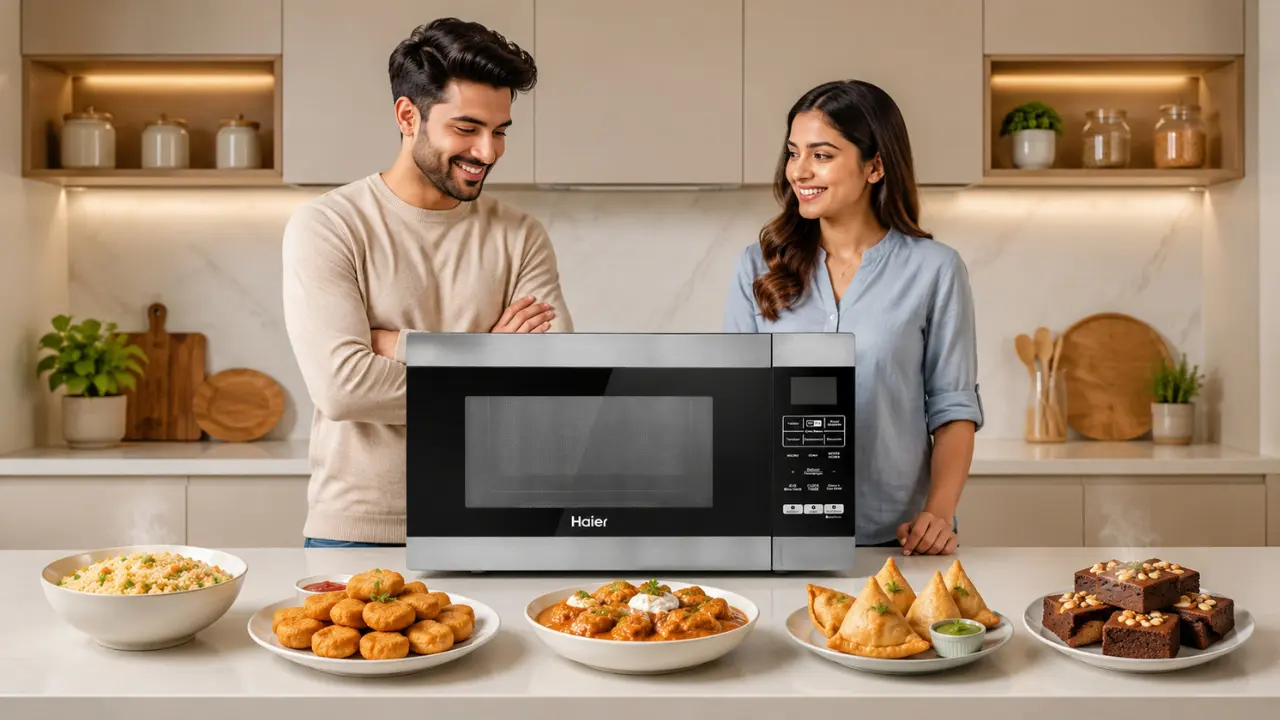

Multi direction heating improves cooking by distributing heat evenly from multiple sources inside an oven or microwave, ensuring consistent temperature, faster cooking, better texture, and uniform results without constant monitoring.
It removes guesswork, reduces uneven cooking, and turns everyday meals into predictable, repeatable outcomes.
Why does cooking still feel inconsistent, even when you follow the recipe?
It is Sunday evening.
You are making paneer tikka. The marinade is perfect. The spices are right. The timing is exact.
But the result?
One side is slightly burnt. The inside feels undercooked. The edges are dry.
Same recipe. Different outcome.
This is not a cooking problem.
It is a heat distribution problem.
Most people assume cooking is about ingredients.
But the hidden system is simpler.
Heat decides everything.
What is multi direction heating, really?
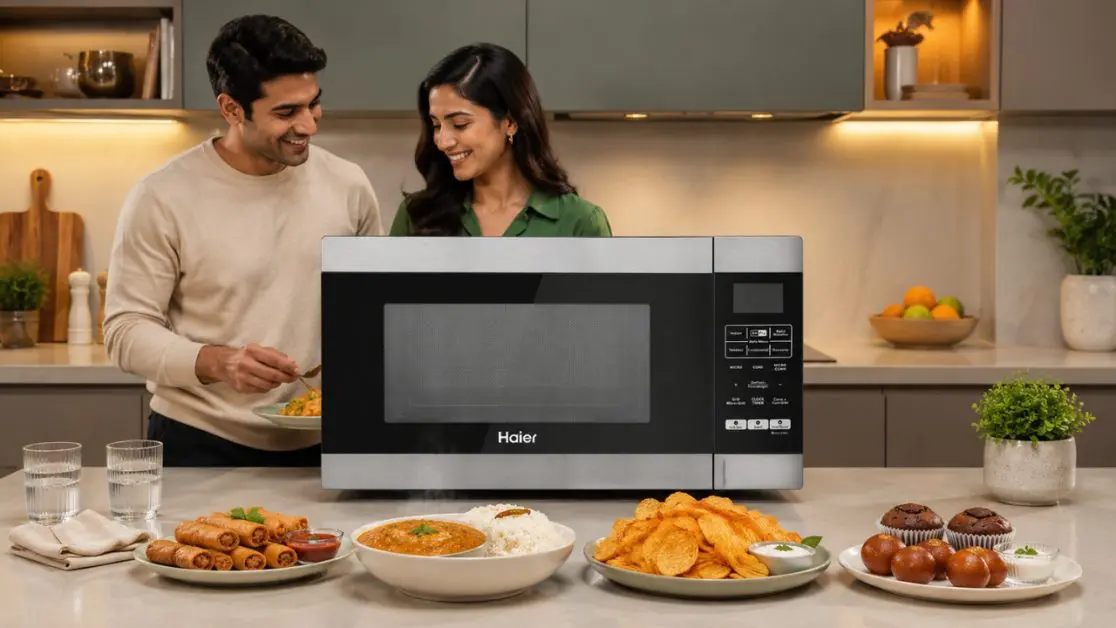
Multi direction heating is not a feature. It is a system.
Instead of heat coming from a single source, it flows from multiple directions inside the appliance. Top. Bottom. Sides. Circulation fans.
Think of it like sitting in a room with one fan versus a well-designed air conditioning system.
- One fan hits one spot
- A system cools the entire room evenly
Cooking works the same way.
How it works inside modern appliances
- Heating elements are placed in multiple zones
- Fans circulate hot air continuously
- Temperature remains stable across the cavity
- Food receives heat from all angles
In appliances like the Haier 30L Convection Microwave With In-Built Air Fryer (HIL3001ARSB), this system is enhanced with convection heating and combination modes that distribute heat evenly for faster and better cooking
The result is simple:
No cold spots. No overcooked edges. No guesswork.
The real problem: uneven heat creates uneven decisions
Most kitchens run on adjustment.
You rotate trays.
You flip food mid-way.
You keep checking.
Why?
Because the system is unreliable.
When heat is uneven, cooking becomes reactive.
And reactive cooking leads to three hidden costs:
1. Time cost
- You check food repeatedly
- You extend cooking time
- You restart cycles
2. Quality cost
- Food dries out
- Texture becomes inconsistent
- Flavours don’t settle evenly
3. Mental cost
- Constant monitoring
- Fear of overcooking
- No confidence in outcomes
Inconsistent systems create inconsistent cooks.
What changes when heat comes from all directions?
Everything.
Multi direction heating shifts cooking from effort to predictability.
Here is what actually improves
| Cooking Factor | Single Direction Heating | Multi Direction Heating |
| Heat distribution | Uneven | Uniform |
| Cooking time | Longer | Faster |
| Texture | Inconsistent | Balanced |
| Monitoring | Frequent | Minimal |
| Results | Unpredictable | Repeatable |
Consistency is the real upgrade. Not speed.
Why does multi direction heating improve everyday Indian cooking?

Indian kitchens are complex.
You are not baking one tray of cookies. You are cooking layered dishes.
- Parathas need crisp outside and soft inside
- Chicken needs even grilling
- Biryani needs heat penetration without drying
Single direction heat struggles here.
Multi direction heating thrives.
Three everyday scenarios
1. Weeknight cooking after work
You want speed. You need reliability.
Multi direction heating cooks evenly without babysitting.
2. Hosting guests
Multiple dishes. Limited time.
Uniform heating ensures everything finishes together.
3. Healthy cooking trends
Air frying, grilling, baking
Even heat reduces oil usage while maintaining texture
Modern appliances now combine these needs into one system. For example, combination cooking modes allow microwave, grill, and convection to work together for faster results
One system. Multiple outcomes. Less effort.
What are your options when choosing cooking systems?
Not all kitchens operate the same way.
You have three clear paths.
Option 1: Traditional single heat appliances
- Lower cost
- Basic functionality
- Requires manual adjustments
Cost: Time, effort, inconsistency
Option 2: Convection with limited circulation
- Better heat distribution
- Faster cooking than basic models
- Some improvement in consistency
Cost: Partial control, still needs monitoring
Option 3: Multi direction heating systems
- Uniform heat from multiple sources
- Combination cooking modes
- Minimal intervention required
Cost: Slightly higher upfront
Benefit: Long-term efficiency and better results
You are not buying a machine. You are choosing a system.
How multi direction heating connects to modern lifestyles
Cooking is no longer an isolated activity.
It sits inside a larger system.
Work. Family. Health. Time.
Multi direction heating fits into this system by reducing friction.
It aligns with three modern needs
- Speed without compromise
- Consistency without effort
- Health without complexity
That is why features like auto cook menus matter.
A system that already knows what you want reduces decisions.
For example, appliances offering hundreds of preset menus automate cooking logic, adjusting time and power automatically
Automation is not about technology. It is about removing decisions.
The hidden advantage: cooking becomes repeatable
Here is the shift most people miss.
Good cooking is not about talent.
It is about repeatability.
Multi direction heating creates a controlled environment.
- Same heat distribution
- Same cooking cycle
- Same output
Every time.
Think of it like a good playlist.
You don’t create it again every day. You just press play.
Reliable systems turn effort into habit.
What should you look for in a multi direction heating appliance?
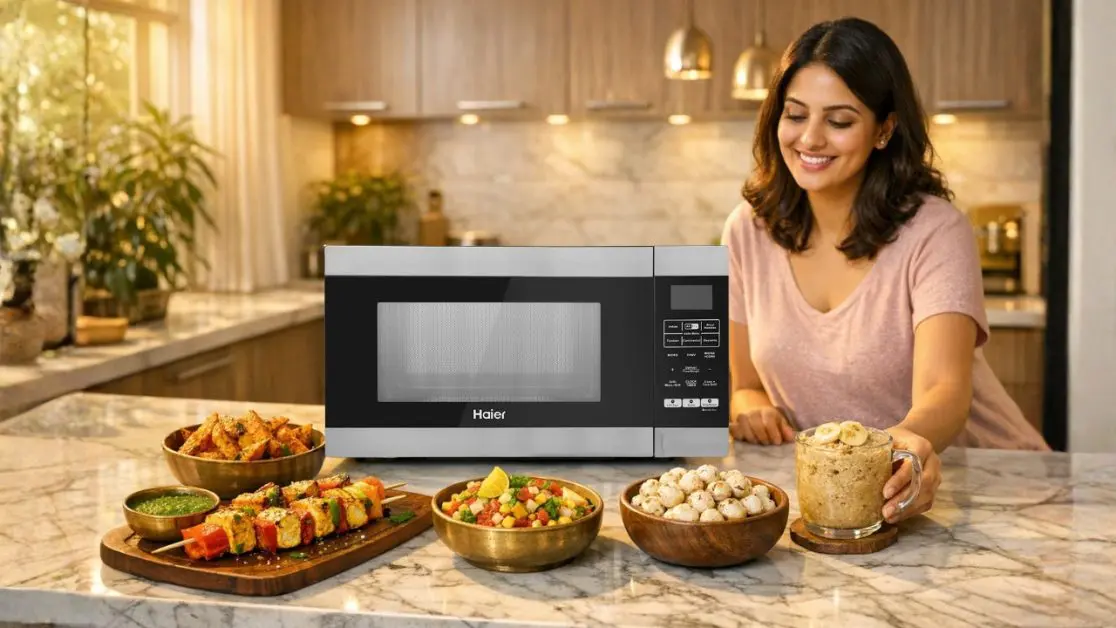
Not all systems are equal.
Look for these indicators:
1. Combination cooking modes
Microwave + grill + convection together
2. Air circulation design
Fans that move heat evenly
3. Power flexibility
Multiple power levels for different dishes
4. Pre-set cooking intelligence
Menus that remove guesswork
5. Build quality
Stainless steel interiors improve heat retention and distribution
A simple decision framework
When evaluating your next appliance, ask:
- Does it reduce my effort?
- Does it improve consistency?
- Does it save time without compromising quality?
If the answer is yes, the system works.
If not, it is just another appliance.
The bigger insight: better systems create better outcomes
Most people try to improve results by trying harder.
Better recipes. Better techniques. More attention.
But the real shift happens elsewhere.
Change the system, and the outcome changes automatically.
Multi direction heating is not just about cooking evenly.
It is about designing a kitchen where:
- Food turns out right the first time
- Time is respected
- Effort is reduced
So what does this mean for how we cook today?
Cooking is no longer about standing in front of a stove for hours.
It is about creating systems that work quietly in the background.
Multi direction heating is one of those systems.
You don’t notice it when it works.
But you feel it when it doesn’t.
And once you experience consistent, even cooking, you stop adjusting your habits.
Because the system finally adjusts to you.
The insight is simple.
Good cooking is not about controlling heat.
It is about designing how heat behaves.
Frequently Asked Questions
I follow recipes exactly, so why does my food still cook unevenly?
The issue is usually heat distribution, not your recipe. If heat comes mainly from one direction, one side may burn while another stays undercooked.
I keep opening the oven to check food. Can multi direction heating reduce that?
Yes. Because heat reaches food from multiple angles, cooking becomes more predictable and needs less constant monitoring.
I want cooking results that repeat every time. Does this feature help?
Yes. Multi direction heating creates a more controlled cooking environment, so the same dish is more likely to turn out consistently.
I need faster cooking after work, but I don’t want food to become dry. Will this help?
Yes. Even heat can reduce cooking time while keeping texture more balanced.
Does multi direction heating only make food faster, or does it actually improve quality?
The bigger benefit is consistency. Speed improves, but the real upgrade is more even texture and fewer failed results.
I want to air fry snacks with less oil but still get crispness. Does even heating matter?
Yes. Air frying depends on hot air circulation, so multi direction heating helps create crisp outsides without excessive oil.