
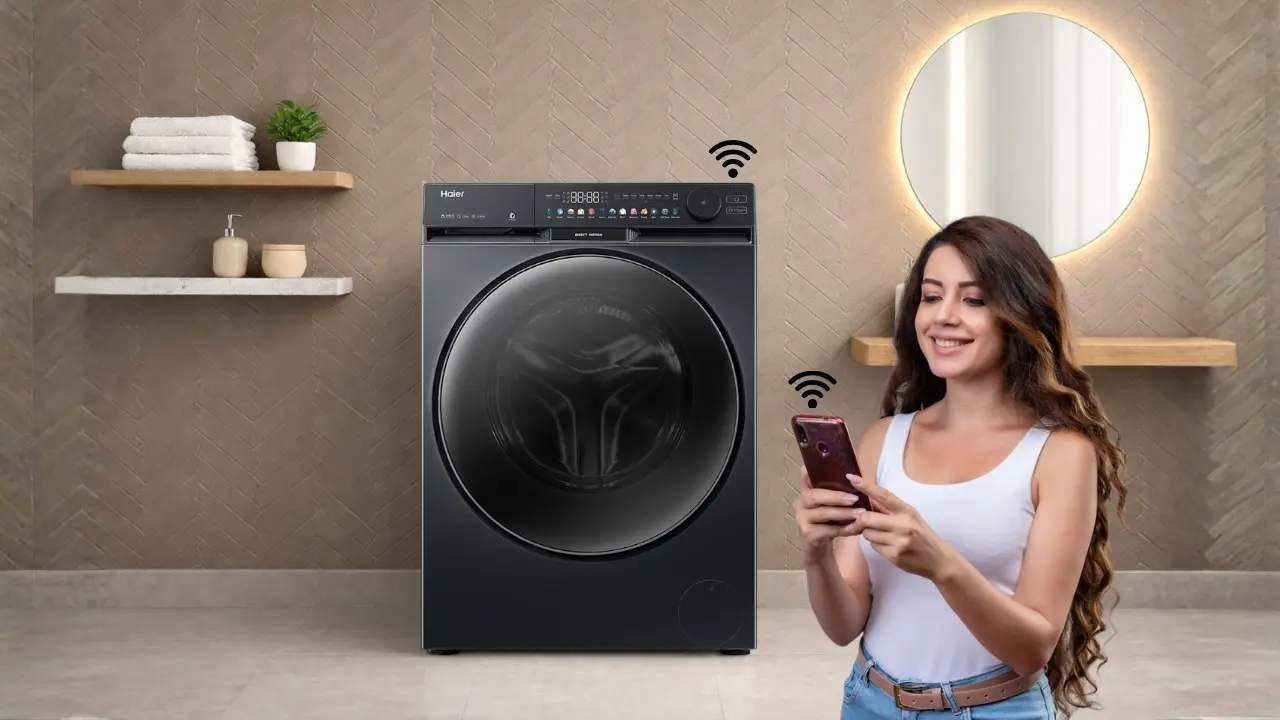

Smart appliances are transforming modern homes by quietly taking over decisions we once made manually.
They sense. They learn. They adapt.
And most importantly, they give time, energy, and mental space back to the people living inside the home.
This is not about futuristic houses filled with screens.
This is about real Indian homes feeling calmer, more organised, and easier to run.
The modern home problem is hiding in plain sight.
It is 8:30 pm.
The washing machine still needs to run.
The AC is on, but someone feels cold.
The TV volume keeps changing.
The electricity meter is ticking faster than expected.
Modern homes are full of appliances.
But attention is limited.
That is the problem smart appliances are solving.
Not by asking for more control.
But by taking responsibility.
Good technology does not demand attention. It earns trust.
Smart homes are not about control. They are about relief
Early smart homes focused on control panels and apps.
More buttons.
More settings.
More decisions.
Today, the shift is clear.
From command-driven homes to intuitive systems
Modern smart appliances do three things exceptionally well:
1. They observe usage patterns
When laundry usually happens. How cooling is used. When peak loads occur.
2. They make micro-decisions automatically
Adjusting water, power, temperature, and time without being told.
3. They reduce daily decision fatigue
Fewer reminders. Fewer manual overrides. Less mental load.
The result is not speed.
The result is ease.
Why Indian homes feel this transformation more deeply
Indian households are dynamic systems.
Work-from-home days mix with school mornings.
Festive weeks clash with deadlines.
Seasons change fast.
Smart appliances thrive in variability.
Three realities shaping Indian smart homes
- Energy efficiency is not optional
Electricity costs fluctuate with usage and season. - Time is fragmented
People manage work, family, and rest in overlapping windows. - Appliances run beyond fixed schedules
Late-night washes. Afternoon cooling. Early-morning reheats.
Smart appliances adapt to context instead of expecting routine.
Laundry shows the smartest transformation of all
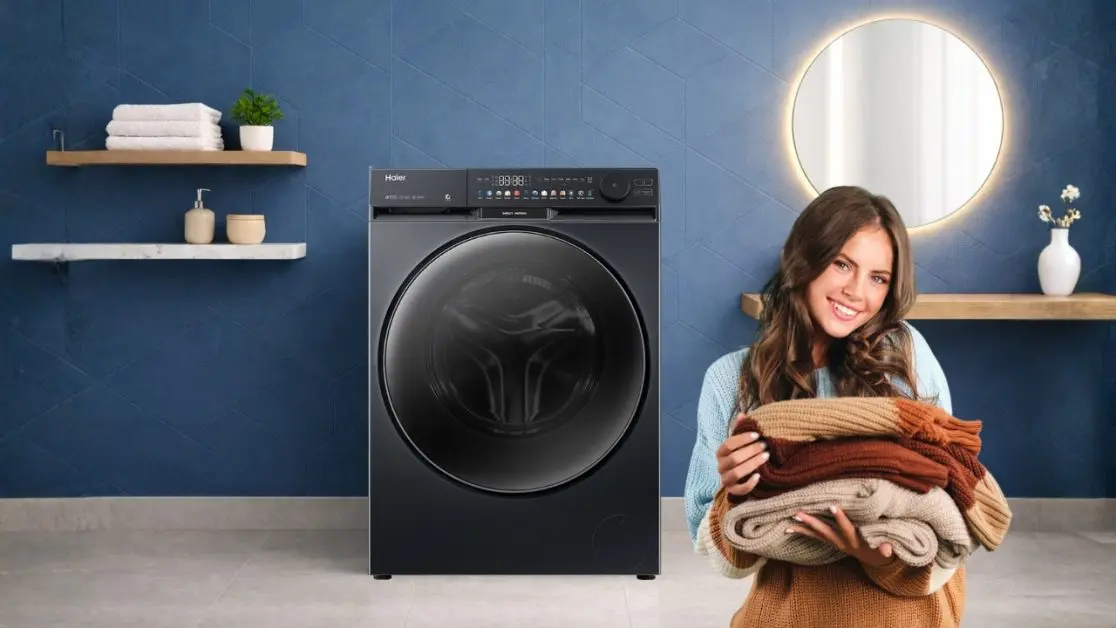
Laundry is often underestimated.
Different fabrics.
Different dirt levels.
Different load sizes.
Manual settings rely on guesswork.
Smart washing machines replace guessing with sensing.
What modern smart washing machines do differently
Take the 10 Kg Fully Automatic Front Load Washing Machine HW100-DM14F9BKU1.
It is designed around one idea.
Remove decisions from the user.
Key smart features include:
- One-Touch AI Wash
Automatically detects fabric type, load weight, and dirt level, then selects the ideal wash cycle. - AI Colour Touch Panel
A large, intuitive display that makes program selection visual and simple. - Eco Wash Technology
Matches water level and wash time to the load, reducing energy and water usage. - Direct Motion Motor
A beltless motor that reduces vibration, lowers noise, and improves durability. - WiFi Connectivity
Allows remote control and cycle monitoring through a smartphone.
These features work quietly in the background, turning laundry into a low-effort task rather than a time-consuming chore .
Automation feels powerful when it feels invisible.
Bigger families need smarter scaling, not bigger effort
As households grow, complexity increases.
That is where higher-capacity smart appliances matter.
The 12 Kg F9 Front Load Washing Machine HW120-DM14F9BKU1 is built for this reality.
How scale meets intelligence
This model extends the same smart principles with added capacity and flexibility:
- 12 Kg Capacity
Handles bedding, curtains, and larger family loads with ease. - Super Drum 525 Technology
A wider drum that improves wash performance while reducing fabric tangling. - Dual Spray System
Automatically cleans detergent residue from the door gasket, maintaining hygiene. - Night Wash Mode
Designed for silent operation, ideal for late-night cycles. - Smart Remote Control via WiFi
Start, pause, or schedule washes remotely. - Direct Motion Motor with Long-Term Warranty
Ensures quieter operation and long-term reliability.
Here, smart does not mean complicated.
It means predictable and dependable .
Smart appliances are becoming energy partners
Energy efficiency is no longer static.
It is behavioural.
From star ratings to real-time optimisation
Smart appliances adjust continuously:
- Washing machines reduce power for lighter loads
- Refrigerators manage cooling zones based on usage
- ACs respond to room conditions instead of fixed temperatures
This matters in Indian cities where voltage, weather, and usage patterns fluctuate daily.
Efficiency is no longer a label.
It is a system.
Entertainment has shifted from fixed settings to adaptive experiences
The television is no longer a passive screen.
It is an intelligent experience engine.
What smart TVs do behind the scenes
- Automatically adjust brightness based on ambient light
- Optimise motion handling for sports and action content
- Balance sound for clarity without constant volume changes
Cricket nights feel immersive.
Late-night viewing stays comfortable for everyone.
The best entertainment adapts to the room, not the remote.
The kitchen is becoming a timing assistant

Modern kitchens are multitasking hubs.
Smart kitchen appliances reduce supervision, not creativity.
How intelligence reduces kitchen stress
- Pre-set cooking modes eliminate constant checking
- Sensors prevent overcooking and uneven heating
- Energy-efficient operation reduces idle power usage
The benefit is not faster cooking.
There are fewer interruptions.
Smart homes work as systems, not isolated products
The real transformation is not in individual appliances.
It is in how they work together.
What a system-driven home looks like
- Laundry runs when power demand is lower
- Cooling adjusts to occupancy patterns
- Refrigeration adapts during festive storage periods
- Notifications replace manual checking
Each appliance takes responsibility for its role.
The home feels coordinated.
Not controlled.
Trust is the foundation of smart living
Smart appliances only work when people trust them.
That trust is built through:
1. Consistency
The appliance performs reliably without constant intervention.
2. Transparency
Clear displays and understandable feedback.
3. Durability
Long motor warranties and proven engineering.
Features like Direct Motion motors and extended warranty coverage are not add-ons.
They are signals of long-term commitment.
Trust turns automation into habit.
The future smart home is quieter, not louder
The next phase of smart homes will not add more alerts.
It will remove them.
Fewer decisions.
Fewer interruptions.
More flow.
Smart appliances are slowly reshaping homes into responsive environments that support work, rest, and family life without constant attention.
What this transformation really means
Smart homes are not about showing progress.
They are about feeling settled.
When appliances adapt to life instead of demanding effort, homes become places of recovery, not management.
That is the real shift.
Not smarter machines.
Smarter living.
And once a home reaches that balance, it becomes hard to imagine living any other way.