
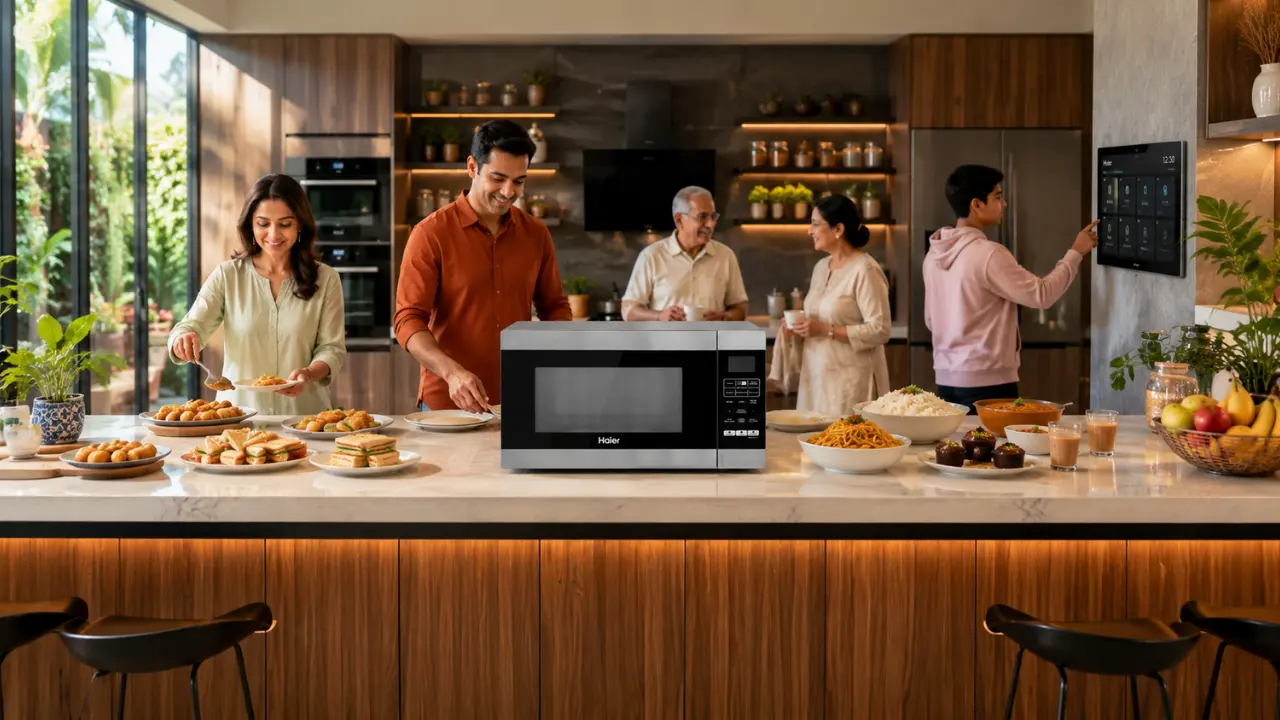

Smart cooking in Indian kitchens is no longer about gadgets. It’s about reclaiming time, reducing effort, and making everyday meals feel lighter to manage.
Dinner at 9:45 PM.
One person is on a work call. Another is scrolling recipes. Someone forgot to defrost the chicken. The pressure cooker whistles in the background.
This is not chaos. This is a modern Indian kitchen.
And smart cooking is quietly redesigning how this moment plays out.
Why are Indian kitchens changing so fast?
Three forces are colliding at once.
- Time is shrinking
Dual-income households are now common. Cooking cannot take three hours daily. - Expectations are rising
Health, variety, and presentation matter more than ever. - Technology is becoming invisible
Appliances no longer demand attention. They adapt silently.
The kitchen is no longer a place. It’s a system.
Trend 1: Cooking is becoming a time management problem, not a skill problem
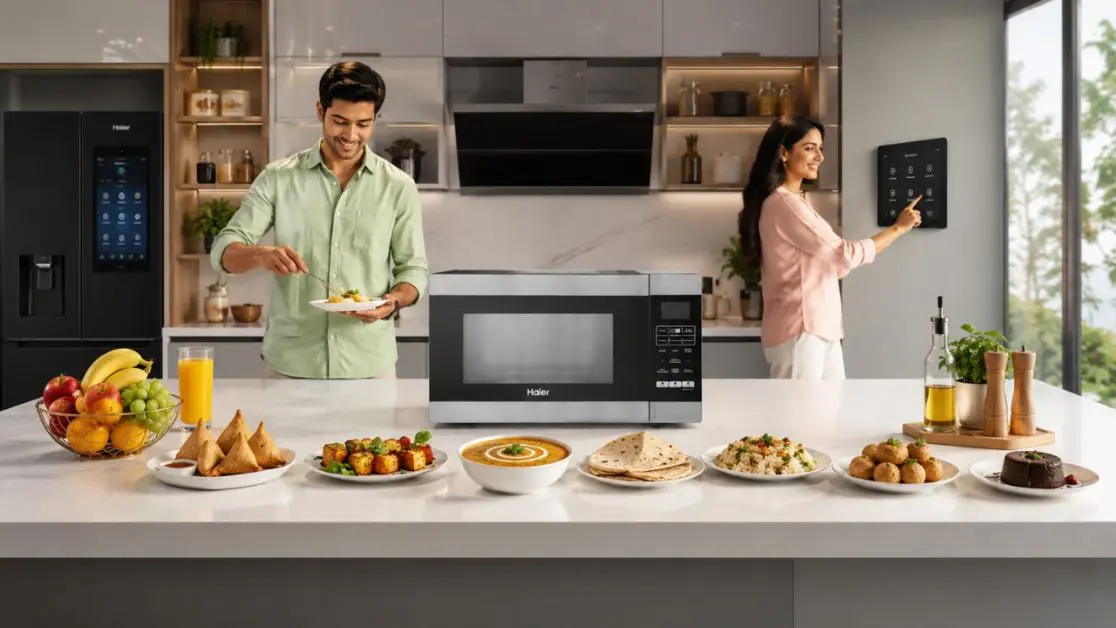
Earlier, cooking skill defined outcomes.
Now, time defines everything.
What changed?
- 68% of urban Indian households prefer meals under 30 minutes
- Working professionals cook 4–5 times a week but want minimal prep
- Frozen and semi-prepped ingredients usage has doubled in the last 5 years
The shift is clear.
People don’t want to “learn cooking.”
They want to fit cooking into life.
How smart kitchens respond
- Pre-set cooking modes reduce decision fatigue
- Multi-stage cooking automates sequences
- Defrosting becomes predictable, not guesswork
A smart microwave, for instance, doesn’t just heat. It structures time.
One touch. One sequence. Done.
Trend 2: One appliance, multiple roles
Indian kitchens don’t have infinite space.
But expectations? Unlimited.
So what’s the solution?
Consolidation.
One appliance doing five jobs.
Typical modern usage pattern
- Morning: reheating breakfast
- Afternoon: defrosting ingredients
- Evening: baking or grilling
- Night: quick snacks or reheating leftovers
Instead of multiple machines, users want one reliable system.
This is where things get interesting
Convection microwaves with air fryer functionality are gaining traction because they collapse multiple workflows into one.
Not because they are fancy.
Because they reduce friction.
Trend 3: Healthy cooking is becoming default, not optional
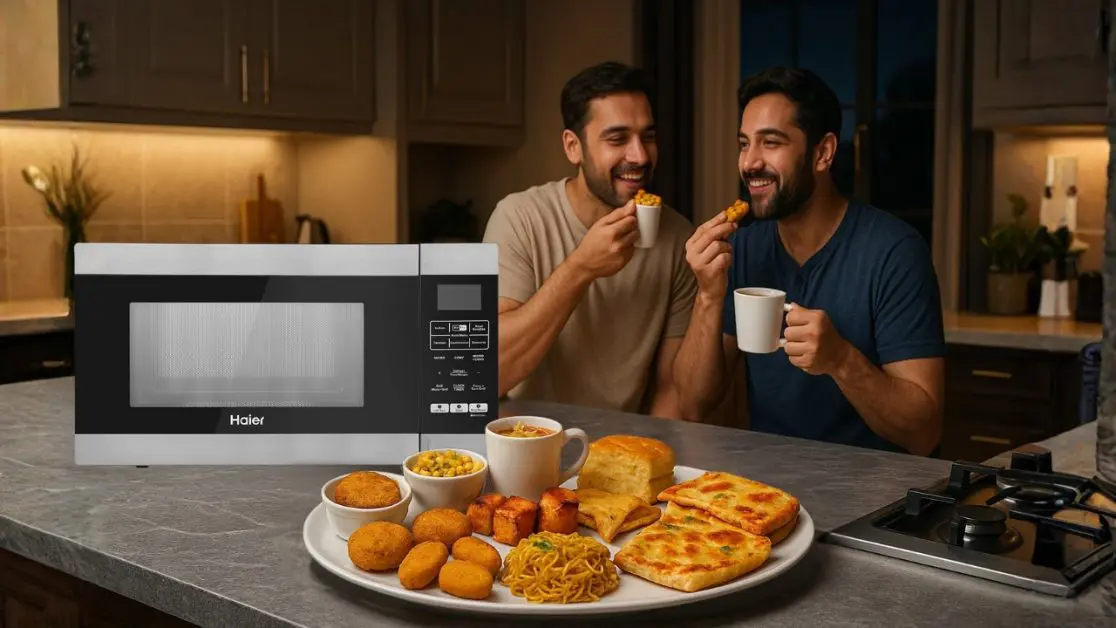
Five years ago, “healthy cooking” was aspirational.
Today, it’s expected.
What’s driving this shift?
- Rising awareness of oil consumption
- Lifestyle diseases appearing earlier
- Social media influence on food habits
How behaviour is changing
- Air frying instead of deep frying
- Baking instead of pan frying
- Controlled reheating instead of overcooking
A simple truth
People don’t want to give up taste.
They want better trade-offs.
Smart Cooking Choices in 2026
- Air fry instead of deep fry
- Steam instead of boil
- Bake instead of roast
- Reheat intelligently instead of repeatedly
Health is no longer about sacrifice. It’s about optimisation.
Trend 4: The rise of “set-and-forget” cooking
Cooking used to demand attention.
Now it demands intent at the start, not effort throughout.
Why this matters
Because attention is the scarcest resource today.
Real-life scenario
You start cooking dal.
Earlier:
- Check flame
- Stir occasionally
- Monitor consistency
Now:
- Select mode
- Set time
- Walk away
What changed?
Automation.
And more importantly, trust in automation.
Trend 5: Kitchens are becoming design spaces, not utility zones
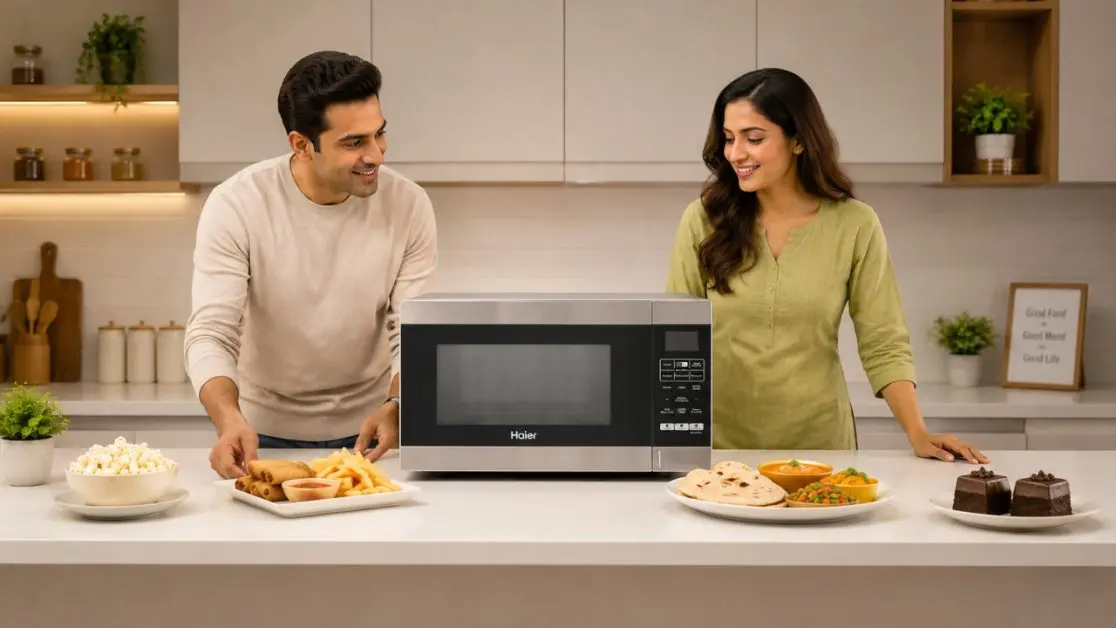
Look at any new urban Indian home.
The kitchen is visible. Open. Integrated.
It’s no longer hidden.
Implication?
Appliances are no longer judged only by performance.
They are judged by:
- Design
- Finish
- Integration with interiors
What people want
- Clean lines
- Minimal clutter
- Appliances that blend, not dominate
A curved glass door or sleek finish isn’t aesthetic fluff.
It’s part of how modern homes communicate order.
Trend 6: Smart cooking is reducing decision fatigue
Here’s a hidden problem nobody talks about.
Cooking isn’t tiring.
Deciding what to cook is.
Micro-decisions pile up
- How long to defrost?
- What temperature to use?
- Should I grill or bake?
Each decision adds friction.
Smart systems reduce this
- Pre-programmed recipes
- Auto-adjust temperature settings
- Guided cooking modes
Less thinking. More doing.
Three ways Indian households are adapting to smart cooking
One option: Full adoption
- Multi-functional appliances
- Smart presets
- Integrated cooking routines
Benefit: Maximum efficiency
Cost: Initial learning curve
Second option: Hybrid approach
- Traditional cooking + smart appliances
- Use tech only for time-saving tasks
Benefit: Comfort + efficiency
Cost: Partial optimisation
Third option: Minimal adoption
- Stick to traditional methods
- Use appliances only for basics
Benefit: Familiarity
Cost: Time inefficiency
Every kitchen chooses its level of intelligence.
Where Haier fits into this shift
Not as a disruptor shouting for attention.
But as an enabler that quietly removes friction.
Take a typical example
A working professional comes home at 8 PM.
They want:
- Something quick
- Something healthy
- Something consistent
This is where a product like the Haier 30L Convection Microwave with In-Built Air Fryer becomes relevant.
Not because it’s feature-heavy.
Because it simplifies decisions.
What it enables
- Air frying without separate equipment
- Baking and grilling in one space
- Pre-set cooking for Indian dishes
- Faster defrosting cycles
Why this matters
Because real life doesn’t pause for cooking.
Cooking has to fit into real life.
Trend 7: Small kitchens, smarter layouts
Urban homes are getting compact.
Kitchens even more so.
Constraint creates innovation
- Vertical storage
- Multi-purpose appliances
- Minimal surface clutter
What users prefer
- 20L–30L capacity appliances
- Compact but powerful systems
- Easy-to-clean surfaces
A 23L solo microwave, for instance, becomes ideal for:
- Small families
- Single professionals
- Rental setups
Not because it’s basic.
Because it’s right-sized.
Trend 8: Speed is becoming a non-negotiable feature
Nobody says it out loud.
But everyone expects it.
Modern expectations
- Heat in seconds
- Cook in minutes
- Minimal wait time
Why speed matters
Because cooking now competes with:
- Work deadlines
- Screen time
- Social commitments
The faster the system, the more likely it gets used.
Smart Cooking Reality Check
Let’s cut through the noise.
Smart cooking is not about:
- Fancy screens
- App connectivity
- Voice control
It’s about:
- Saving 20 minutes daily
- Reducing mental load
- Making outcomes predictable
Anything beyond that is secondary.
The hidden system behind smart kitchens
Here’s what most people miss.
Smart kitchens are not built on technology.
They are built on reducing friction at every step.
Friction points in traditional cooking
- Time uncertainty
- Manual monitoring
- Multiple tools
- Decision fatigue
What smart cooking removes
- Guesswork
- Repetition
- Overthinking
The best kitchen is the one you don’t have to think about.
What does this mean for Indian homes?
It means cooking is becoming:
- More consistent
- More accessible
- Less exhausting
It also means something deeper.
Cooking is shifting from effort to experience
Earlier, effort defined value.
Now, experience defines value.
People want:
- Reliable outcomes
- Less stress
- More time for themselves
The one insight worth remembering
Smart kitchens don’t make you cook better. They make cooking easier to repeat.
And repetition is what actually builds habits.
Final thought: The future of Indian kitchens
The next evolution won’t be about more features.
It will be about:
- Invisible intelligence
- Seamless integration
- Effortless routines
The kitchens that win won’t be the most advanced.
They’ll be the ones that feel the simplest to live with.
And somewhere in that simplicity, brands like Haier find their place.
Not as the centre of attention.
But as the system that quietly makes everything else work.
Frequently Asked Questions
Why does cooking feel more exhausting than it used to?
For many people, the biggest challenge isn’t cooking itself it’s the constant stream of decisions. Choosing recipes, setting temperatures, deciding cooking times, and planning meals all create mental fatigue before cooking even begins.
I spend more time deciding what to cook than actually cooking. Is that normal?
Yes. Modern households face decision overload. Smart appliances with preset recipes and guided cooking modes help reduce these daily micro-decisions.
How can I make weekday cooking less stressful after work?
Focus on reducing preparation and decision-making. Using pre-prepped ingredients, preset cooking modes, and multifunctional appliances can significantly shorten evening meal routines.
Why are more people looking for meals that take less than 30 minutes?
Work schedules, commuting, family responsibilities, and digital distractions leave less time for cooking. Convenience is becoming a necessity rather than a luxury.
Is cooking becoming more about managing time than learning skills?
Increasingly, yes. Many people already know basic cooking techniques. The bigger challenge is fitting cooking into busy schedules.