
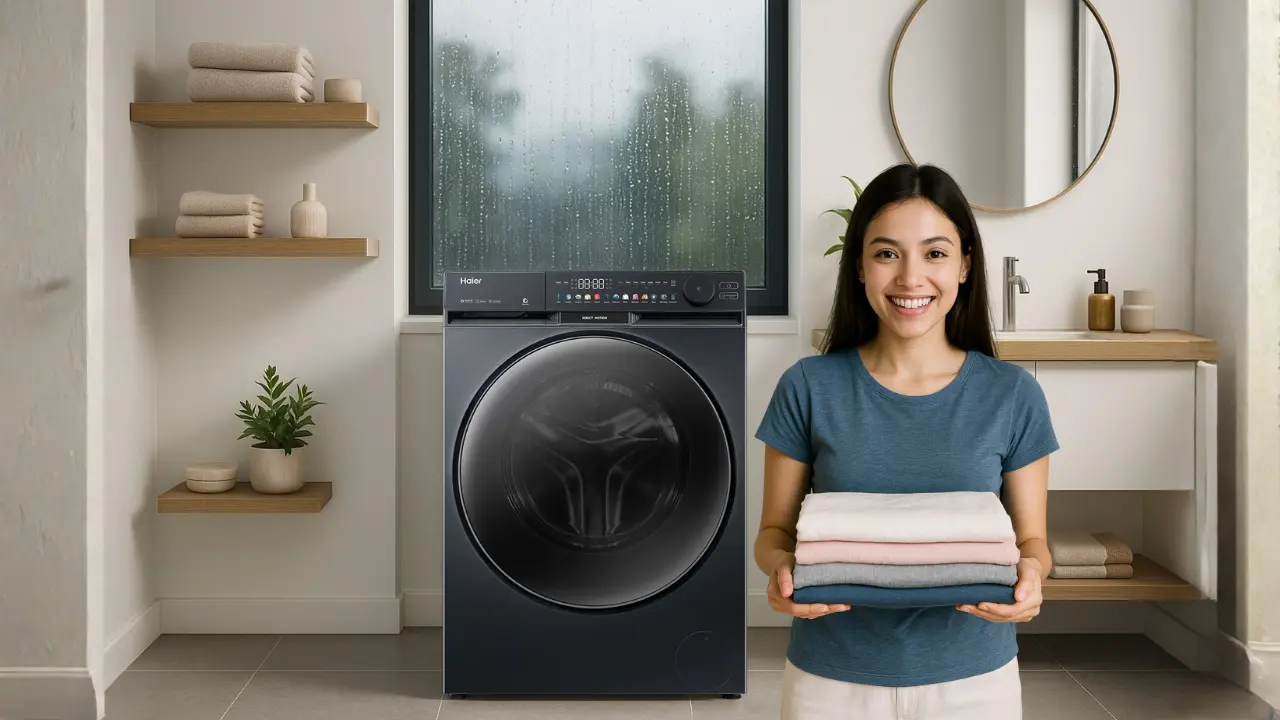

Rainy laundry struggles can be solved by changing habits, washing smaller loads more often, using quick-dry settings, and upgrading to smart washing machines that handle moisture-heavy months with silent cycles, wrinkle care, and efficient spin speeds.
Why Rainy Days Still Dictate Our Laundry Choices
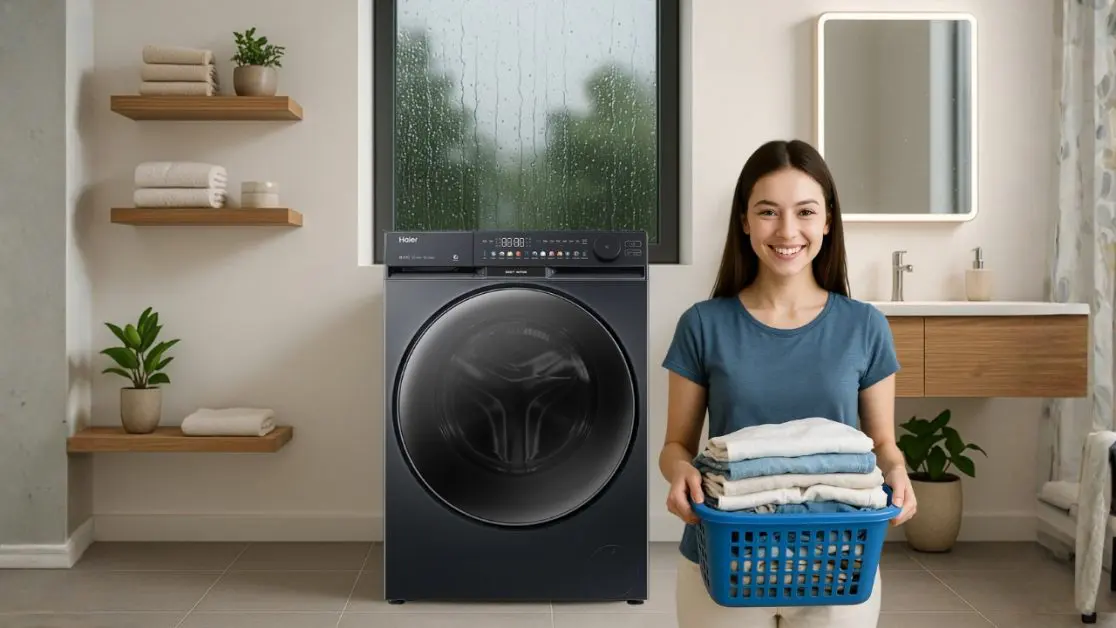
Anyone who has lived through a monsoon in India knows the problem. Clothes don’t dry. Dampness lingers in bedsheets. The smell of half-dried jeans spreads across the room.
For decades, families coped by stringing makeshift lines in balconies, running ceiling fans non-stop, or layering wet shirts on rods behind doors. Laundry wasn’t just a chore. It was a test of patience, planning, and sometimes negotiation. “Don’t wear that, it’s still wet.”
But here’s the shift: you no longer need to let rain dictate your washing habits. With the right tweaks and smarter machines laundry can finally match the rhythm of your life, not the weather.
What’s Broken in Our Current Laundry Routine?
Three everyday frictions repeat across Indian households:
1. Overloading and under-drying. Big bundles go in at once. The machine spins, but clothes come out damp, making the drying process even harder in humid air.
2. Unplanned night washing. Families run loads late in the evening, but the noise keeps everyone awake.
3. The smell factor. Rain plus damp clothes equals mustiness. Even after re-washing, odour clings to fabrics.
These habits come from older machines and older lifestyles. But homes and expectations have changed. Couples living in apartments, students in hostels, parents balancing school uniforms with office wear all need a faster, quieter, cleaner solution.
Small Habit Changes That Go a Long Way
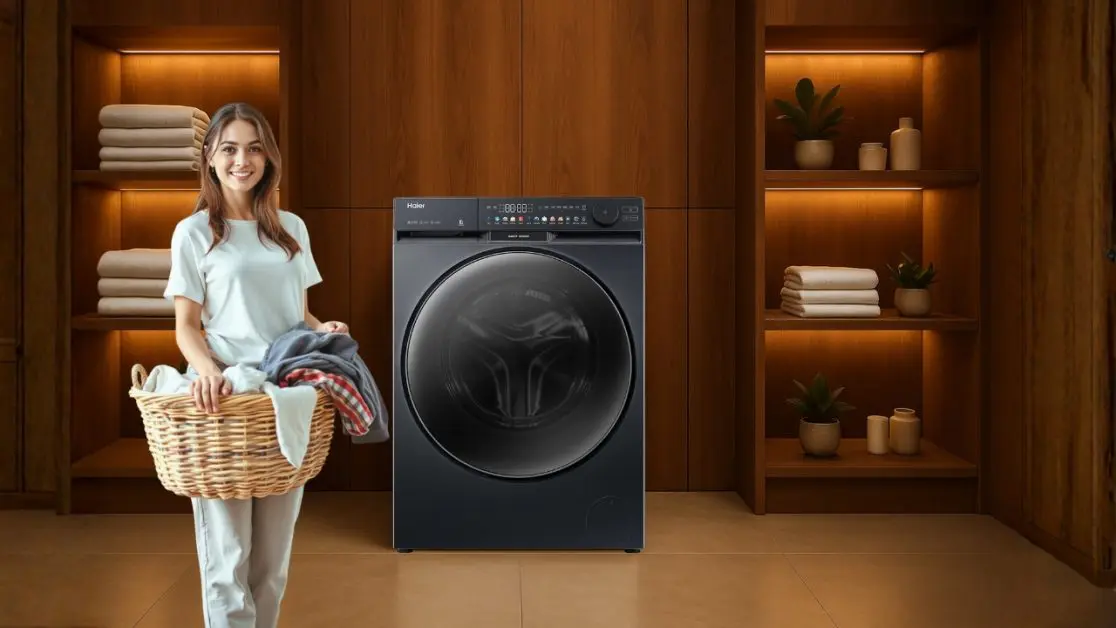
Before we talk technology, let’s look at what you can do today:
- Wash in smaller, frequent loads. Less fabric per cycle means faster drying indoors.
- Sort by fabric type. Heavy jeans and light cottons need different drying times. Mix them and you set both up for failure.
- Time your washes. Start cycles early in the morning, so clothes catch whatever daylight or breeze the day offers.
- Space your drying area. Clothes packed tightly together won’t dry. Think of it as social distancing for laundry.
Simple tweaks. But the real unlock comes when appliances adapt to these habits, not the other way around.
Enter the Era of Smart Washing
The biggest change in laundry isn’t detergent. It’s intelligence.
Modern front-load machines don’t just spin clothes they sense, calculate, and adjust. For example, Haier’s 10 Kg Fully Automatic Front Load Washing Machine (HW100-DM14F9BKU1) comes with One-Touch AI Wash, which detects fabric type, load weight, and dirt levels before choosing the right program. That means no more guessing. No more overdrying cottons or under-cleaning sportswear.
The same model includes Night Wash, built for silent operation. Imagine starting a cycle at 11 pm without waking your kids or your neighbours.
It’s not just about features. It’s about reducing mental load. You press one button, the machine makes the call, and your clothes come out ready.
The Psychology of Laundry Freedom

Here’s the hidden system: laundry isn’t just a physical task. It’s mental clutter.
When clothes don’t dry, your to-do list expands. You delay folding. You argue about space. You carry the smell into meetings or classes. The rain controls not just your balcony but your mood.
Technology, when done right, doesn’t just solve the chore. It restores agency. A Direct Motion Motor that runs silently, or a 1400 RPM spin speed that wrings out maximum water, is more than a spec sheet. It’s a guarantee that your laundry won’t control your day.
How to Build a Smarter Laundry Rhythm
Think of laundry like meal prep. The smarter you plan, the less you stress. Here are three system upgrades:
1. Adopt quick cycles. Machines like the Haier 12 Kg F9 offer Quick 15 programs for lightly soiled clothes. Perfect for office shirts or gym wear that need a fast refresh.
2. Leverage express drying. High RPM spin speeds mean clothes come out less wet. Pair that with indoor racks plus a fan, and you’ve already cut drying time in half.
The result? Less dependency on the weather. More predictability for your routine.
Cost-Benefit: Old Habits vs New Systems
Let’s compare:
| Factor | Old Approach | Smart Laundry Approach |
| Load size | Big, irregular bundles | Smaller, optimised cycles |
| Energy use | High due to repeat drying | Lower due to AI sensing & efficiency |
| Noise | Disturbs household at night | Silent Night Wash |
| Odour control | Manual re-wash | Steam/refresh cycles |
| Mental effort | Choosing programs, guessing time | One-touch AI wash |
The math is simple. You save water, electricity, and time. But more importantly you save mental bandwidth.
The Bigger Picture: Homes That Breathe Easier
When you zoom out, laundry is a mirror. It shows how our homes are evolving.
In the past, the house adjusted to the weather. Now, appliances adapt to us. This shift from reactive to proactive defines modern living. It’s not about luxury. It’s about resilience.
For young professionals sharing a flat, for parents juggling uniforms, or for couples setting up new homes, the message is the same: rainy laundry days don’t have to dictate life anymore.
Final Thought: From Rain-Soaked to Rain-Proof
Changing washing habits isn’t about buying more racks or using more detergent. It’s about recognising that small shifts both in routine and in technology compound into freedom.
One line to remember: Laundry is no longer the weather’s hostage.
And when your washing machine understands that when it senses fabric, runs silently at night, and steams freshness back into clothes you realise rainy days have lost their grip.