
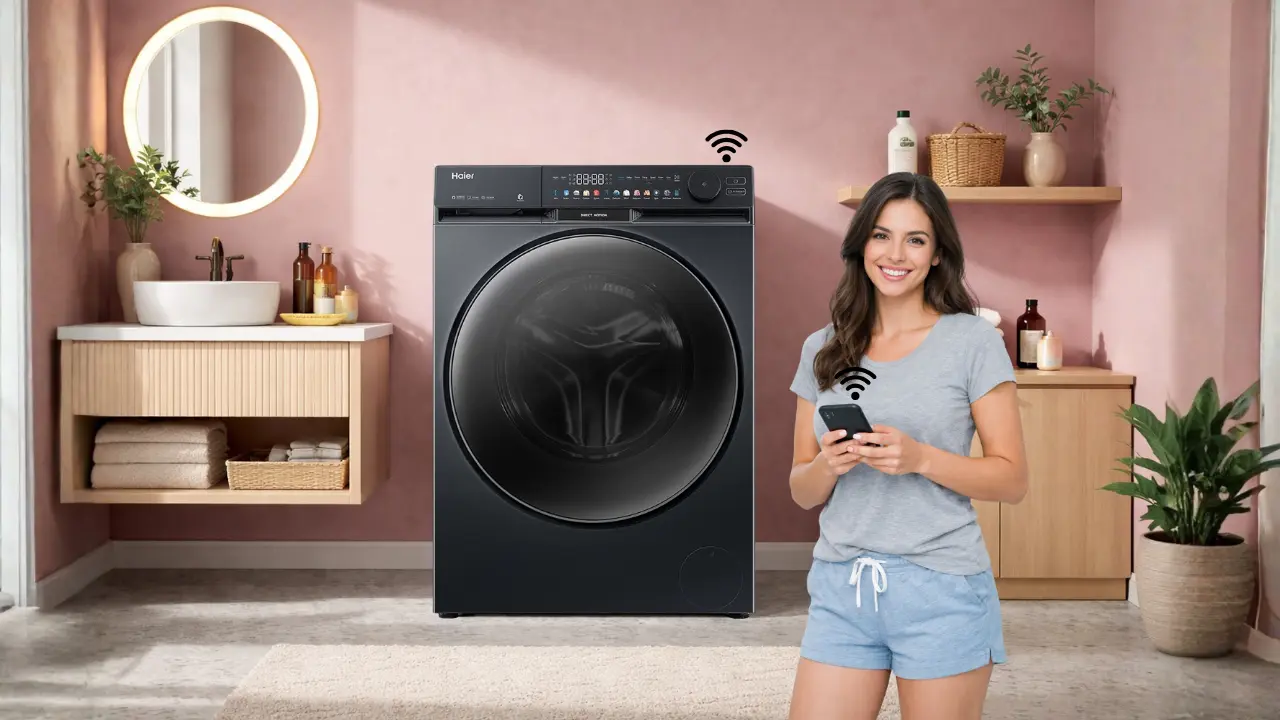

Smart washing meets smart hygiene when laundry systems stop guessing and start understanding.
Today’s washing machines do more than spin clothes clean. They read fabric, sense load, adjust water and time, and quietly protect hygiene across the entire home. The result is no effort saved alone. It is consistency built into daily life.
Laundry stops being a chore.
It becomes infrastructure.
Why hygiene today is about systems, not soap?
There is a familiar moment in many Indian homes.
Clothes look clean.
But towels feel stiff.
Baby clothes still hold a damp smell.
Dark t-shirts lose softness too fast.
Most people blame detergent. Or water. Or humidity.
The real issue usually sits deeper.
Hygiene is not a product. It is a system.
Laundry works as a loop. Dirty clothes go in. Water, motion, temperature, and time do their work. Clean clothes come out.
When one part of that loop breaks, hygiene fades quietly.
Smart washing exists to repair the loop, not just rush it.
The shift from washing clothes to managing hygiene
Older machines were built around force.
More water.
More time.
More spinning.
That worked when clothes were tougher and routines were simpler.
Modern Indian homes tell a different story.
- Mixed loads of office wear, gym clothes, and home fabrics
- Smaller, frequent washes instead of one weekly cycle
- Separate baby care loads
- Late night laundry in apartments where silence matters
The role of the washing machine has changed.
Smart washing adapts to real life instead of asking users to get everything right.
How intelligent washing systems actually think
Smart hygiene starts before the wash begins.
Modern front load machines use sensors to read the load and fabric before deciding water level, wash time, and spin speed. The machine commits only after it understands what is inside.
What smart washing systems adjust automatically
1. Fabric recognition
Cotton, synthetics, blends, and delicates need different handling.
2. Load weight sensing
Smaller loads use less water and energy without compromise.
3. Dirt level estimation
Deeper cleaning only when necessary.
4. Temperature balance
Enough heat for hygiene without fabric damage.
5. Spin optimisation
Faster drying with less stress on fibres.
This intelligence is not decorative.
It is a functional discipline.
Why hygiene improves when machines decide less emotionally
Most hygiene problems come from residue.
Leftover detergent.
Hard water deposits.
Fabric particles stuck inside the drum.
Over time, residue becomes the enemy of freshness.
Smart washing systems reduce residue in three ways.
1. Accurate water control
Automatic weighing ensures detergent dissolves fully and rinses out completely.
2. Controlled drum movement
Balanced motion lifts dirt away instead of rubbing it deeper.
3. Advanced rinse cycles
Multiple rinse strategies clear what older machines leave behind.
Clean clothes are not just washed.
They are properly released.
Steam and refresh cycles fit modern routines
Not every garment needs a full wash.
A jacket worn once.
A kurta after dinner.
Office clothes that feel tired but not dirty.
Steam based refresh cycles reduce odour, relax wrinkles, and lower bacterial presence between washes.
This protects fabric life, saves water, and keeps hygiene intact without overwashing.
Silence is part of hygiene
Laundry happens around life.
Early mornings.
Late nights.
Between meetings.
After the children sleep.
Quiet operation is no longer a luxury.
Direct drive motor systems eliminate belts and reduce vibration. This allows night washes without disturbance and improves long term durability.
Haier front load washing machines such as the 10 Kg Fully Automatic Front Load Washing Machine and the 12 Kg F9 Front Load Washing Machine use Direct Motion Motor technology for smoother, vibration free operation over years of use.
Silence protects more than peace.
It protects routine.
Why drum design shapes hygiene outcomes
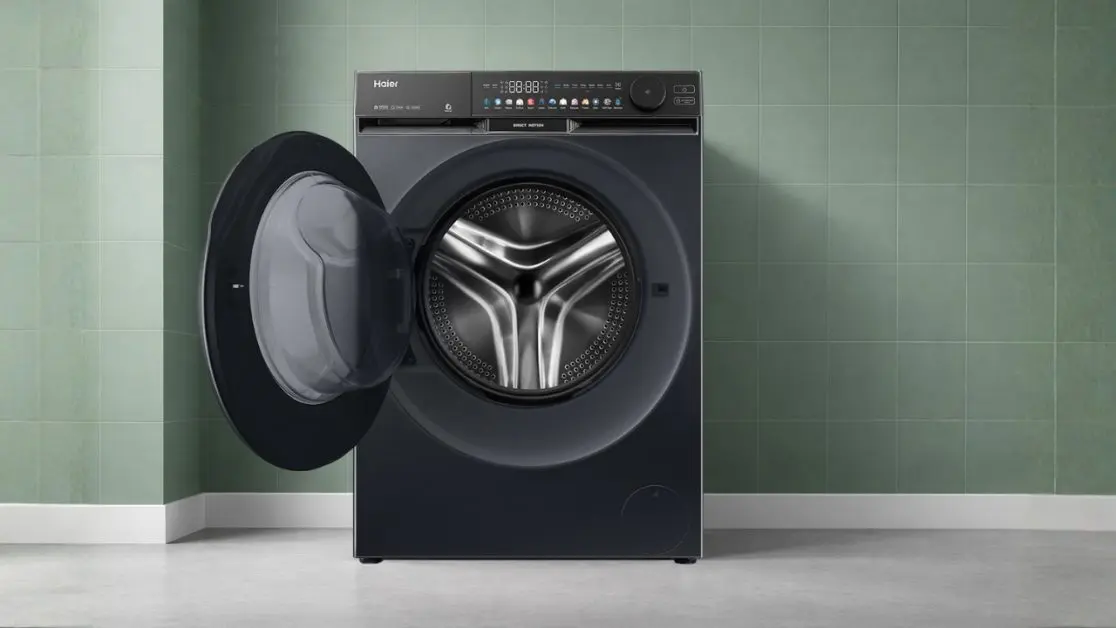
The inside of the machine matters as much as settings.
Pillow shaped drum designs allow clothes to glide instead of scrape. Larger drum diameters give fabrics room to move freely, improving rinse quality and reducing wear.
This matters most for:
- Baby care programs
- Delicates and undergarments
- Sportswear and daily office clothes
Gentle movement cleans better over time.
Machine hygiene is part of clothing hygiene
A dirty machine cannot deliver clean clothes.
Self clean and drum hygiene programs flush out detergent residue, moisture, and trapped particles inside the drum.
This prevents odour buildup, reduces skin irritation, and extends machine life.
Maintenance becomes automatic.
Hygiene stays invisible.
Smart connectivity is really about timing
WiFi control often sounds optional until it becomes normal.
Starting a wash while leaving work.
Scheduling cycles to finish before peak power hours.
Getting alerts exactly when clothes are ready.
Timing matters because wet clothes sitting too long invite odour.
Smart connectivity ensures freshness finishes on schedule, not when remembered.
Energy efficiency is hygiene thinking long term
Clean clothes should not create waste.
Eco wash programs automatically match water, energy, and time to actual load needs.
This reduces power bills, saves water, and makes daily washing sustainable without effort.
Good hygiene respects tomorrow as much as today.
Capacity choice affects hygiene more than size pride
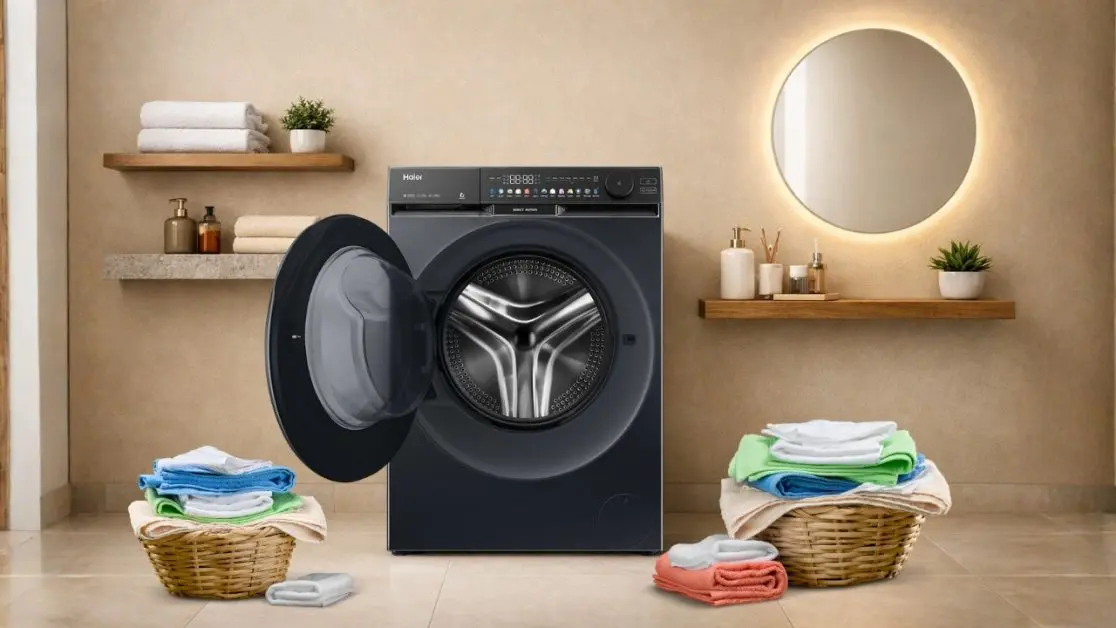
More capacity is not always better. Less capacity is not always smarter.
How to choose with hygiene in mind
- 8 to 9 kg
Ideal for solo professionals or couples with frequent light washes. - 10 kg
Balanced for families managing daily clothes and weekly bedding. - 12 kg
Designed for larger households or frequent bulk washing.
Machines like the 10 Kg Fully Automatic Front Load Washing Machine HW100-DM14F9BKU1 and the 12 Kg F9 Front Load Washing Machine HW120-DM14F9BKU1 use intelligent load sensing to ensure capacity supports hygiene rather than overpowering it.
Right sizing prevents overcrowding and underuse.
The real benefits show up quietly
Smart hygiene does not impress on day one.
It shows up slowly.
Clothes last longer.
Colours stay richer.
Skin feels better.
Laundry stops demanding attention.
The best systems fade into routine.
That is their success.
What this means for Indian homes today
Smart washing reflects a bigger shift.
Less manual decision making.
More trust in intelligent systems.
More time reclaimed for living.
Just like smart cooling adjusts without reminders.
Just like smart TVs optimize viewing effortlessly.
Laundry now follows the same philosophy.
Quiet technology.
Consistent hygiene.
Homes that feel more sorted.
The insight worth keeping
Hygiene does not improve by trying harder. It improves by designing better systems.
When smart washing meets smart hygiene, everyday life becomes lighter without anyone needing to notice why.
Frequently Asked Questions
If clothes look clean, why do they still cause skin irritation or smell?
Because leftover detergent, fabric particles, and hard water deposits stay trapped. Hygiene depends on release, not just washing.
I live in a humid city. Does that make hygiene harder?
Yes, but smart washing compensates through better spin optimisation, controlled rinses, and moisture management inside the drum
Why do dark t-shirts lose softness so quickly?
Excess spin force and unnecessary heat damage fibres. Smart washing adjusts spin speed and temperature per fabric.
Do smaller, frequent washes reduce hygiene?
Not if the machine senses load weight and dirt correctly. Smart systems are built for modern, frequent washing habits.
How often should I run drum hygiene cycles?
Once every 2–4 weeks, depending on usage. Smart machines automate reminders or cycles.
How does capacity choice affect hygiene?
Overcrowding prevents proper rinsing; underloading wastes water. Correct capacity keeps the hygiene loop balanced.
Why do smart systems feel ‘invisible’ after some time?
Because they reduce decisions. When hygiene works consistently, laundry stops demanding attention.