

The right water dispenser capacity depends less on the appliance and more on the rhythm of your home. A solo working professional may need a compact dispenser for quick hydration. A family of five handling summer heat, school bottles, guests, and cooking needs something far larger. The smartest choice is not the biggest tank. It is the one that quietly keeps up with your lifestyle.
A water dispenser fails in small ways first.
Not dramatically.
The cold water runs out during dinner. Guests wait while the tank refills. Someone forgets to replace the bottle upstairs. Morning routines slow down because hydration suddenly becomes friction.
That is the hidden truth about storage capacity.
Most people think water dispensers are about temperature.
Cold. Normal.
But capacity shapes convenience more than almost any other feature.
A dispenser is not really a machine. It is a timing system for the household.
And timing changes everything.
Why Storage Capacity Matters More Than People Realise
Picture a typical Indian summer afternoon.
Children return from school. Someone fills steel bottles for the next day. The kitchen runs continuously. Cold water gets used faster than expected. Guests arrive without warning because that is how Indian homes work.
Suddenly, a small-capacity water dispenser starts creating invisible stress.
Not because it is broken.
Because it was designed for a different pattern of life.
The right storage capacity removes interruptions before they happen.
That is what good appliances quietly do.
They eliminate tiny daily frictions most people stop noticing.
According to the World Health Organization, proper hydration directly affects energy, concentration, and body temperature regulation. In a country where summer temperatures regularly cross 40°C in many regions, access to chilled and readily available water becomes less of a luxury and more of a behavioural necessity.
A water dispenser is no longer just an office appliance sitting near a conference room.
It has entered the modern home.
The Three Most Common Capacity Mistakes
One mistake is buying too small
This usually happens in new apartments.
A couple buys a sleek compact dispenser because it “looks enough.” Then routines evolve.
Parents visit. Friends stay over. Remote work increases water consumption. Summer arrives.
The dispenser suddenly feels undersized.
Small appliances become stressful when households grow faster than expected.
The second mistake is buying oversized capacity unnecessarily
Bigger is not always smarter.
A large-capacity water dispenser inside a small home often wastes energy and space. Water remains stored longer. Electricity consumption rises. Kitchen layouts feel tighter.
Convenience without context becomes clutter.
The third mistake is ignoring usage behaviour
This is the hidden variable.
Some households drink more chilled water. Others use hot water constantly for tea, coffee, soups, or instant meals. Some refill bottles throughout the day because children carry water everywhere.
Capacity planning without behavioural planning rarely works.
How to Choose Water Dispenser Capacity Based on Household Size
For solo professionals or students
A compact dispenser usually works best.
Typical usage patterns:
- Morning hydration
- Evening cold water
- Occasional guests
- Limited kitchen usage
Ideal focus:
- Space efficiency
- Faster cooling
- Lower power consumption
Smaller homes do not need industrial-scale storage.
They need consistency.
For couples or small families
This is where mid-sized storage becomes practical.
Because usage becomes layered:
- Two office bottles
- Cooking support
- Fitness hydration
- Guests on weekends
- Increased summer usage
One person changes appliance usage.
Two people multiply it.
For larger Indian families
This is where higher-capacity water dispensers make real sense.
Particularly during:
- Summers
- Festivals
- Family gatherings
- School seasons
- Work-from-home periods
Large households consume water continuously, not occasionally.
The system never truly stops.
That changes the storage equation completely.
Cold Water Capacity and Normal Water Capacity Are Different Decisions
Most buyers focus only on total storage.
That misses the real question.
How much chilled water do you need ready instantly?
Because cold water recovery speed matters more during Indian summers than overall tank size.
A dispenser with balanced cooling storage performs differently from one built only for occasional use.
The same applies to normal water storage.
Some homes use dispenser water:
- Mostly for chilled drinking water
- For refilling bottles throughout the day
- During workouts and fitness routines
- For guests and family gatherings
- For quick hydration during peak summer afternoons
Usage patterns define ideal storage.
Not marketing labels.
Why Indian Summers Change Everything
Water usage in India is deeply seasonal.
April and May create entirely different hydration behaviour compared to December.
People drink more frequently.
Guests ask for chilled water immediately.
Children refill bottles repeatedly.
Cold beverages increase.
Summer exposes weak appliance decisions quickly.
This is why many modern households now prefer dispensers with stronger cooling systems and practical storage balance instead of ultra-basic models.
The appliance is no longer preparing for “average usage.”
It is preparing for peak moments.
And peak moments define satisfaction.
The Smart Kitchen Is Quietly Becoming a Hydration System
Watch a modern kitchen carefully.
Refrigerators manage freshness.
Air fryers reduce oil usage.
Dishwashers reduce repetitive labour.
Water dispensers reduce waiting.
Every appliance now manages a form of energy.
Time energy.
Mental energy.
Physical energy.
That shift matters.
Hydration is no longer separate from lifestyle design.
It sits inside it.
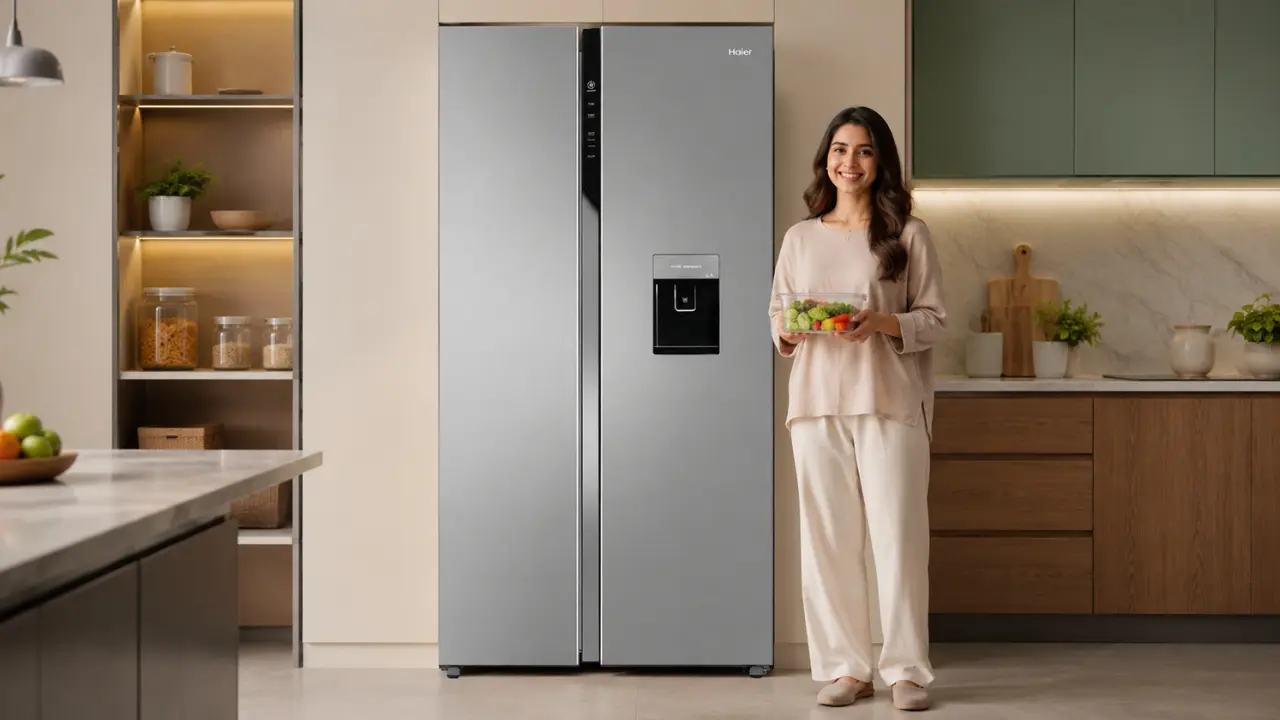
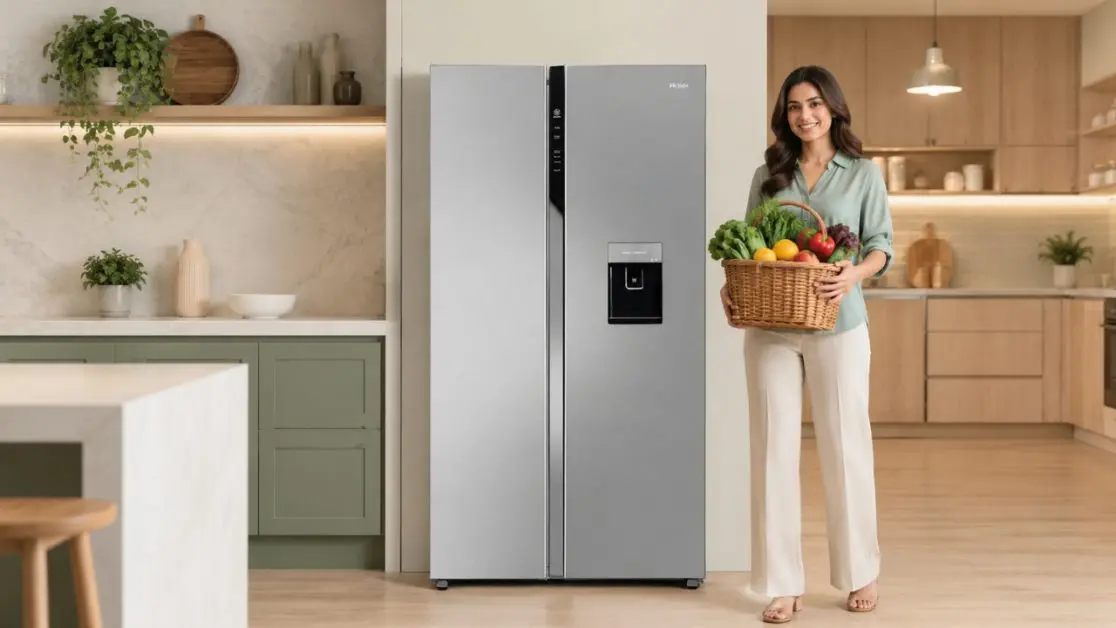
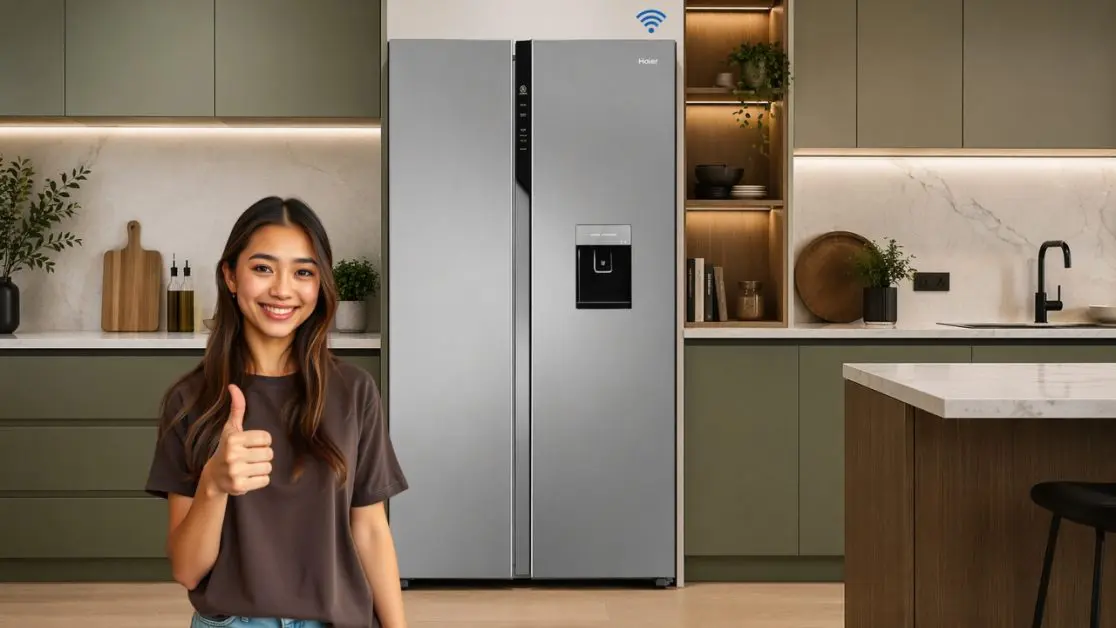
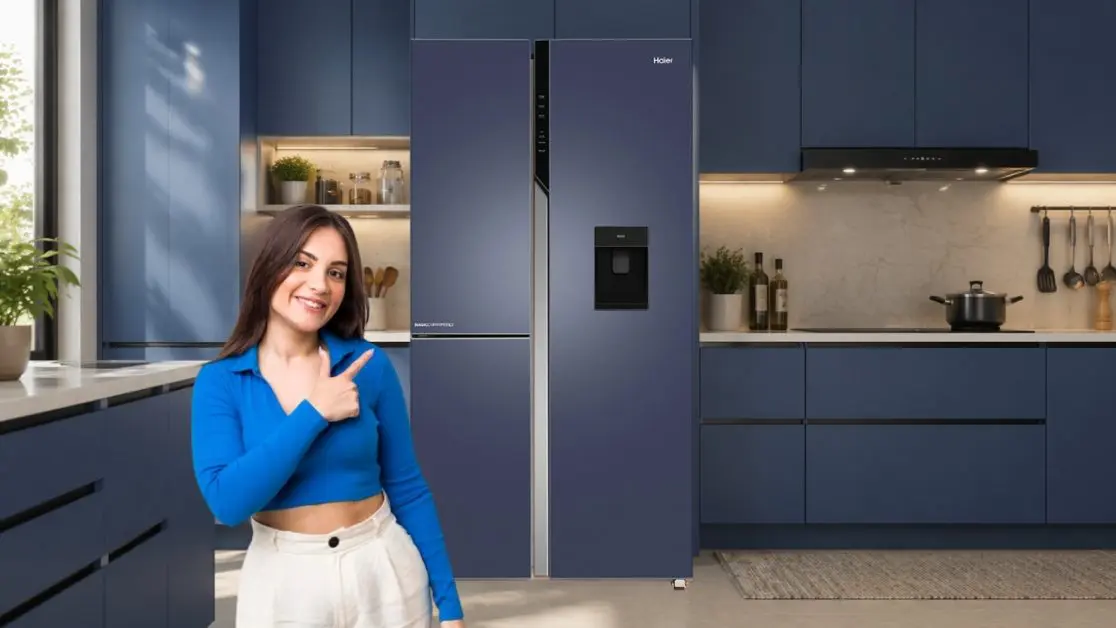
This is partly why integrated water dispensing systems inside refrigerators are becoming increasingly attractive for Indian families. Models like the Haier 596L Ultramarine Steel 2 Door Smart Convertible SBS Refrigerator (HRS-682WUSU1), the Haier 596L Regal Steel 2 Door Smart Convertible SBS Refrigerator (HRS-682WRSU1), and the Haier 596L Shiny Silver 2 Door Smart Convertible SBS Refrigerator (HRS-682SWDU1) include an in-built 2.5-litre BPA-free water dispenser designed for easier daily access to chilled water.
The feature sounds simple.
But systems thinking changes how you see it.
The real value is not the dispenser itself.
It is removing one more repetitive task from everyday life.
What Most Buyers Forget About Bottle Refilling
Refilling frequency affects user satisfaction more than people expect.
A smaller tank means:
- More bottle changes
- More interruptions
- More planning
- Faster depletion during gatherings
A larger tank means:
- Better continuity
- Higher convenience
- More stable cooling availability
But also:
- Larger footprint
- Higher electricity usage in some cases
- Greater space requirement
Every appliance decision is a trade-off.
Smart homes are not built by maximizing everything.
They are built by balancing things correctly.
Storage Capacity Should Match Your Daily Rhythm
One option is compact convenience
Best for:
- Singles
- Studio apartments
- Minimal kitchens
Benefits:
- Lower energy use
- Smaller footprint
- Faster setup
Limitations:
- Frequent refills
- Less ideal for guests
The second option is balanced family capacity
Best for:
- Couples
- Small families
- Hybrid work households
Benefits:
- Stable daily supply
- Better cold-water continuity
- Practical long-term flexibility
Limitations:
- Requires moderate kitchen space
The third option is high-capacity storage
Best for:
- Joint families
- Large households
- Frequent entertaining
Benefits:
- Reduced interruptions
- Better peak-hour performance
- Supports high summer consumption
Limitations:
- Larger appliance footprint
- Higher upfront investment
Every category solves a different problem.
The mistake is assuming one solution fits every home.
The Hidden Link Between Capacity and Energy Efficiency
Many buyers separate storage and energy efficiency into different decisions.
They are connected.
An undersized dispenser works harder because refilling cycles happen more frequently.
An oversized dispenser may cool more water than needed.
Efficiency lives in alignment.
Not excess.
Modern appliances increasingly use inverter-based systems and smarter cooling management to maintain balance between performance and electricity consumption. Features like Expert Inverter Technology in models such as the Haier 596L Ultramarine Steel 2 Door Smart Convertible SBS Refrigerator (HRS-682WUSU1) and Haier 596L Shiny Silver 2 Door Smart Convertible SBS Refrigerator (HRS-682SWDU1) focus on smart cooling and steady savings.
That broader shift reflects where appliance design is heading overall.
Not maximum power.
Adaptive efficiency.
Why Water Dispensers Are Becoming Lifestyle Appliances
There was a time when water dispensers belonged mostly in offices, clinics, and waiting areas.
Now they sit inside:
- Open kitchens
- Home offices
- Studio apartments
- Family dining spaces
The appliance evolved because behaviour evolved.
People hydrate differently now.
Work differently.
Host differently.
Live differently.
A modern home is increasingly designed around flow.
And flow depends on reducing interruption.
That is the real reason storage capacity matters.
Not because bigger numbers look impressive.
But because the right capacity disappears into the background.
The best appliances rarely demand attention.
They quietly remove friction from daily life.
The Real Question Is Not “How Big?”
It is this:
How does your home actually live?
Do people constantly refill bottles?
Do guests visit often?
Does summer usage spike sharply?
Do children carry water daily?
Does your kitchen already feel crowded?
Capacity decisions become clearer once behaviour becomes visible.
Because appliances are not really about machines.
They are about patterns.
And the homes that feel effortless are usually the ones designed around those patterns early.
That is the hidden system most buyers miss.
Frequently Asked Questions
How do I know what water dispenser capacity is right for my household?
Start with your daily habits rather than the tank size. A single person typically needs a compact dispenser, while couples and small families benefit from mid-sized storage. Larger families, frequent guests, and high summer consumption usually justify higher-capacity models.
Should I buy the biggest water dispenser I can afford?
Not necessarily. Oversized dispensers can consume more space and potentially more energy while storing water you may not use. The best capacity is the one that matches your actual usage patterns.
My family is growing. Should I buy a larger dispenser now?
If you expect household usage to increase within the next few years, choosing a slightly larger capacity can prevent future inconvenience and frequent upgrades.
Is a compact water dispenser enough for a couple?
It depends on your lifestyle. If both people work from home, exercise regularly, or frequently host guests, a mid-sized option often provides better convenience.
Why does my dispenser always seem too small during summer?
Water consumption rises significantly during hot weather. Many households underestimate seasonal demand, especially when children, guests, and chilled water usage increase.