
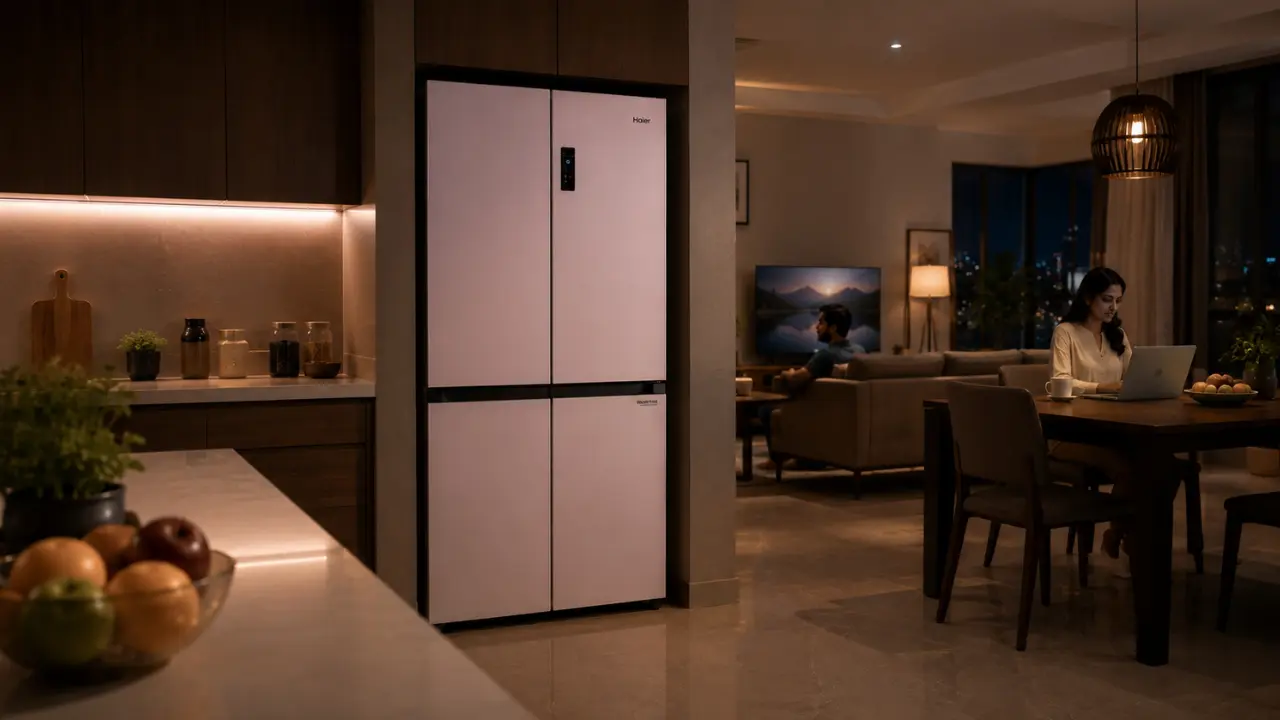

You open the refrigerator for a glass of cold water and, before you even reach for the bottle, yesterday’s fish curry announces itself.
Indian refrigerators have a particularly demanding job. Leftover curries, chopped onions, garlic-heavy gravies, paneer preparations, seafood, pickles and fermented foods may all share space with milk, fruits, desserts and drinking water. The problem is not that these foods belong outside the refrigerator. Quite the opposite. The challenge is storing strong-smelling foods correctly so that their aroma does not dominate everything around them.
Good refrigerator organisation therefore goes beyond finding an empty shelf. Containers, placement, cleanliness and the refrigerator’s internal storage design all matter.
Here are practical ways to get it right.
First, Why Do Some Foods Make the Entire Fridge Smell?
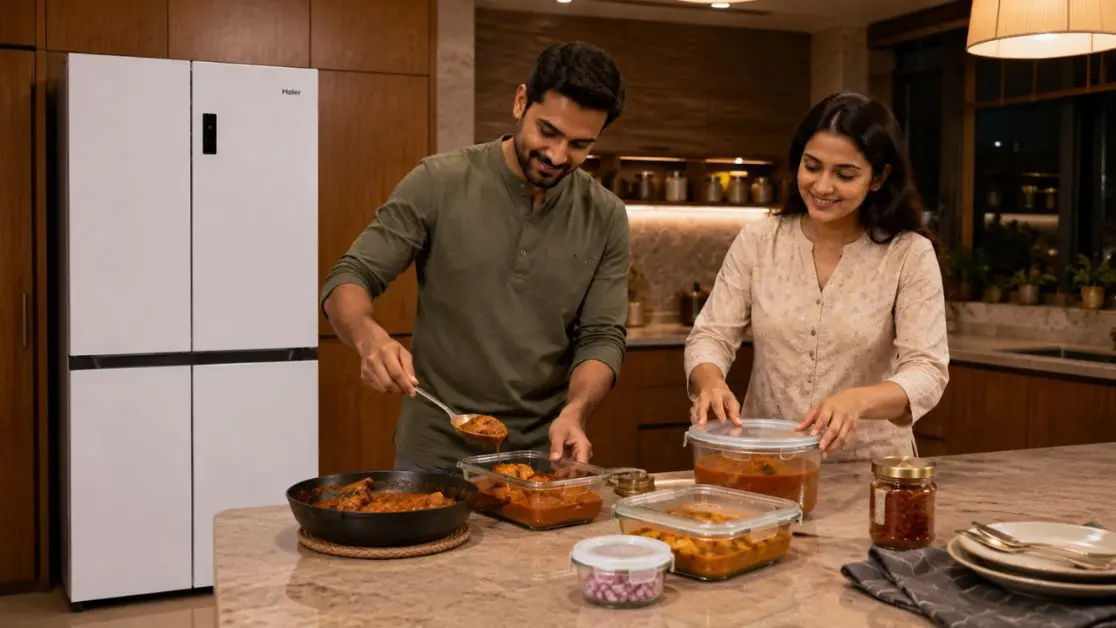
Strong food aromas come from volatile compounds released naturally by ingredients and prepared dishes. Put an uncovered bowl of onion-rich curry into an enclosed refrigerator and those aromas have nowhere much to go.
The situation becomes more noticeable when several pungent foods are stored together.
Common examples in Indian kitchens include:
- Cut onions and garlic
- Fish and seafood preparations
- Strong curries and gravies
- Pickles and chutneys
- Boiled eggs
- Certain cheeses
- Fermented batters and foods
- Leftover restaurant or takeaway dishes
Temperature matters, but cold storage alone is not an odour-management strategy. How the food is packed matters just as much.
The Golden Rule: Seal Before You Chill
The simplest habit is also one of the most effective: never rely on an open bowl or loosely placed plate for strongly aromatic food.
Use clean, food-safe containers with properly fitting lids. A secure container creates a physical barrier between the food and the refrigerator environment.
For particularly pungent foods, check the lid before storing. A container that appears closed but has a slightly lifted corner can still allow aromas to escape.
What about cling film?
It can be useful for short-term covering, but a well-sealed reusable container is generally more practical for regular refrigerator organisation, especially for curries, gravies and other foods that may spill.
And there is another benefit: neatly sealed containers are easier to stack and identify.
Do Not Put Piping-Hot Food Straight Into Storage Containers
After cooking, food should not simply be forgotten on the kitchen counter for hours. At the same time, putting a large quantity of steaming-hot food straight into the refrigerator is not ideal either.
A more practical approach is to divide larger preparations into smaller, shallow containers so they can cool more efficiently before refrigeration.
Avoid leaving perishable cooked food at room temperature longer than necessary, particularly during India’s warmer months.
This habit helps with food management while also preventing large uncovered vessels from occupying valuable refrigerator space.
Give Strong-Smelling Foods Their Own Storage Zone
Here is where refrigerator organisation starts making a noticeable difference.
Instead of placing food wherever there happens to be room, create simple zones. Keep everyday dairy in one area, produce in another and strongly aromatic cooked foods together in securely closed containers.
This approach helps because you immediately know where to look. More importantly, a forgotten bowl of three-day-old gravy is less likely to disappear behind juice bottles and vegetables.
A simple Indian refrigerator routine could look like this:
- Cooked leftovers: sealed and grouped together
- Raw ingredients: separately packed and appropriately stored
- Cut onions: tightly sealed
- Pickles and chutneys: jars properly closed after every use
- Fruits and vegetables: kept in their designated storage area
- Desserts and dairy: kept away from foods likely to release strong aromas
Organisation may sound like housekeeping advice. In practice, it makes refrigerator storage considerably easier.
Never Underestimate a Small Spill
Sometimes the culprit is not the food container at all.
A spoonful of curry dripping underneath a container, pickle oil on a shelf or a few drops of fish marinade can leave a persistent smell long after the original food has been removed.
Clean spills when you notice them rather than waiting for the next full refrigerator clean-up.
Also inspect:
- Shelf edges
- Door racks
- Corners
- Container bottoms
- Vegetable storage areas
Toughened, spill-resistant shelving can make day-to-day maintenance easier, particularly in households where large vessels and multiple containers are routinely stored.
Use Refrigerator Space According to What You Actually Eat
This becomes important in larger Indian households.
One week you may need extra room for fresh vegetables and beverages. Another week, after grocery shopping or preparing food ahead of a family gathering, storage priorities change completely.
A fixed internal layout can make those changes awkward.
Haier’s Lumiere 520L 3 Star French Door Refrigerator addresses this through its convertible storage design. The Lumiere offers a total capacity of 520 litres and can provide up to 440 litres of refrigerator space, while its 90-litre convertible section can be adapted according to storage requirements.
That flexibility becomes genuinely useful when your food habits change from one week to another.
Where Haier’s Deo Fresh Technology Fits In
Sealed containers remain the first line of defence against food odours. Refrigerator technology can complement those good storage habits.
The Haier Lumiere 520L 3 Star French Door Refrigerator features Deo Fresh Technology, which Haier states is designed to absorb odour and impurities while maintaining freshness.
For a refrigerator regularly storing everything from homemade curries to vegetables and beverages, this is a particularly relevant feature. Rather than treating odour control as an afterthought, it is built into the refrigerator’s food-storage proposition.
There is another practical advantage: space.
The Lumiere’s interior is organised across multiple storage zones, while its movable door rack and shelf provide flexibility when accommodating different container and bottle sizes. The product also uses toughened glass shelving designed for the heavier utensils commonly found in Indian homes.
In other words, the refrigerator gives you room to organise properly rather than simply squeezing containers into whichever gap is available.
A Better Way to Store Specific Smelly Foods
Different foods need slightly different handling.
Onions and garlic
Once cut, place them in small airtight containers. Avoid leaving half an onion exposed on a plate.
Fish and seafood
Keep them securely wrapped or sealed and physically separated from ready-to-eat foods. If frozen storage is appropriate for your plans, use suitable freezer-safe packaging.
Curries and gravies
Transfer leftovers into clean, covered containers instead of refrigerating the entire cooking vessel whenever practical. Smaller containers are also easier to arrange.
Pickles and chutneys
Wipe jar rims before closing them. A tiny amount of pickle oil around the lid can create a surprisingly persistent aroma.
Fermented foods and batter
Allow for expansion where relevant and use suitable covered containers. Do not overfill.
Simple? Yes. But consistently following these habits makes the biggest difference.
What to Look for in a Refrigerator When Food Organisation Matters
If your household stores a substantial amount of fresh produce, cooked food and weekly groceries, capacity alone does not tell the complete story.
Look at how that capacity can actually be used.
Useful considerations include:
- Flexible storage compartments
- Adjustable shelves or door racks
- Dedicated produce storage
- Easy-to-clean shelving
- Odour-management technology
- Adequate freezer capacity
- Clear interior visibility
The Haier Lumiere combines its 520L capacity with convertible storage, Deo Fresh Technology, toughened glass shelves and adjustable storage features. Its 4-door configuration also helps divide a large refrigerator into more purposeful storage areas.
Make Freshness a Habit, Not a Weekend Clean-Up
A refrigerator should not become an archive of forgotten leftovers.
Label containers when needed, check older food regularly and clean spills promptly. Above all, seal strongly aromatic foods before storing them.
Technology can make this routine easier, but good habits still matter.
For Indian households where the refrigerator handles an unusually diverse mix of ingredients and prepared dishes every day, the Haier Lumiere 520L 3 Star French Door Refrigerator brings together generous capacity, flexible organisation and Deo Fresh Technology in a design intended for modern food storage. And when tonight’s fish curry can sit inside without becoming tomorrow morning’s first noticeable aroma, that is the kind of everyday convenience that actually counts.
Frequently Asked Questions
1. What is the best way to store strong-smelling food in a refrigerator?
Keep strong-smelling foods such as curries, cut onions, fish and chutneys in clean, food-safe containers with tightly fitting lids. Proper sealing helps prevent aromas from spreading to other foods stored nearby.
2. How can I stop my refrigerator from smelling like leftover food?
Store leftovers in sealed containers, wipe spills immediately and regularly check for forgotten or spoiled food. A refrigerator with an odour-management feature can further support everyday freshness. The Haier Lumiere 520L 3 Star French Door Refrigerator features Deo Fresh Technology, designed to absorb odour and impurities while maintaining freshness.
3. Can I store cut onions in the refrigerator?
Yes. Cut onions should be kept properly covered in a suitable airtight container rather than left exposed. This also helps prevent their strong aroma from spreading throughout the refrigerator.
4. How should fish and other strong-smelling non-vegetarian foods be stored?
Fish and similar foods should be securely wrapped or placed in tightly sealed, food-safe containers and kept appropriately separated from ready-to-eat foods. For longer storage, use suitable freezer-safe packaging when freezing is appropriate.
5. Does Haier Lumiere have a feature for managing food odours?
Yes. The Haier Lumiere 520L 3 Star French Door Refrigerator includes Deo Fresh Technology, which Haier describes as helping absorb odour and impurities while maintaining freshness.
6. Is the Haier Lumiere suitable for families that store a lot of cooked food and groceries?
The Haier Lumiere offers a 520-litre total capacity, with up to 440 litres of refrigerator space through its convertible configuration. It also has a 90-litre convertible section, allowing households to adjust storage according to changing fridge and freezer requirements.