
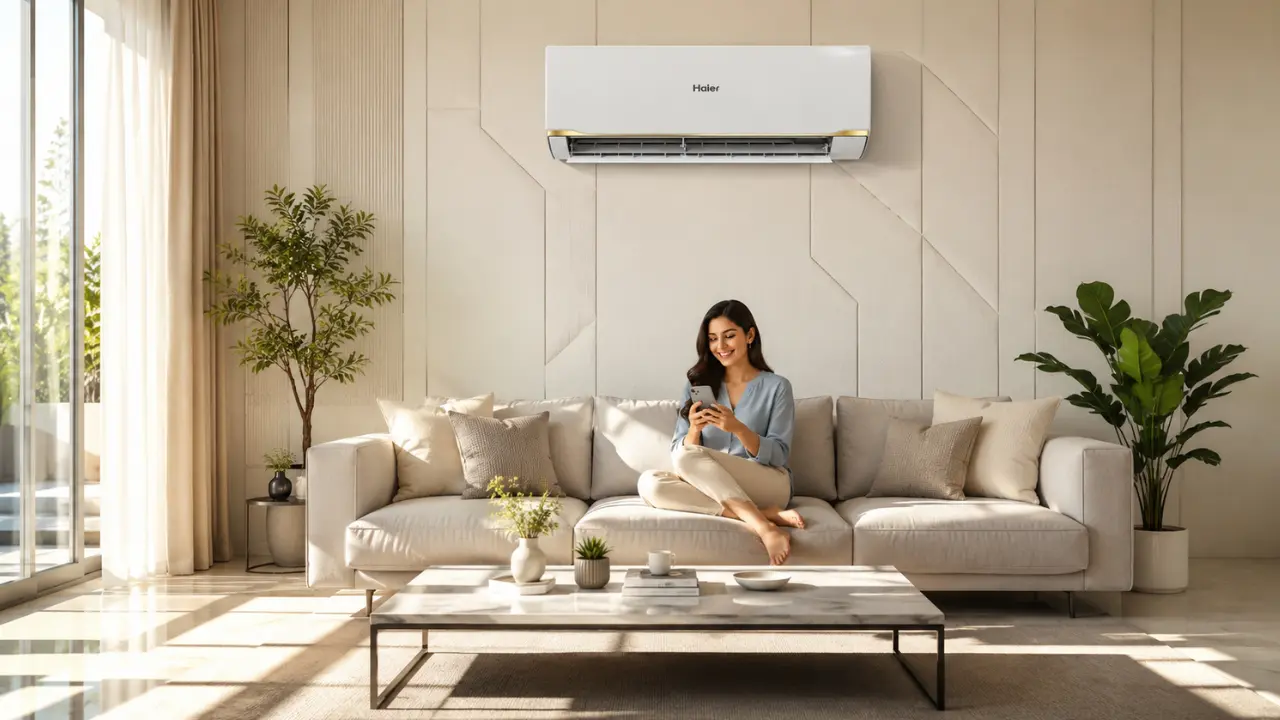

The room is not hot because of the AC. The room is hot because of everything around it.
An air conditioner does not cool a room in isolation. It fights against sunlight, trapped heat, poor insulation, open windows, thin walls, and even the direction your balcony faces.
That is the hidden system most people miss.
Two homes can use the same 1.5 Ton AC. One feels perfectly cool. The other struggles all summer. The difference is rarely the machine alone. It is the environment the machine operates in.
And in Indian summers, that environment matters more than people think.
Why do some rooms heat up faster than others?
Walk into a west-facing bedroom at 4 PM in May.
The curtains feel warm. The wardrobe feels warm. Even the bedsheet holds heat.
Now walk into a shaded north-facing room in the same house.
Different experience entirely.
Sunlight changes how hard your AC works. Not gradually. Dramatically.
According to the International Energy Agency, buildings account for nearly 30% of global energy consumption, and cooling demand rises sharply in hotter urban regions. In cities like Delhi, Ahmedabad, and Hyderabad, direct sunlight through windows can increase indoor heat gain significantly during peak summer hours.
The problem is not just temperature.
It is stored in heat.
Concrete walls absorb heat during the day and slowly release it at night. That is why some rooms still feel warm at 11 PM even when the sun disappeared hours ago.
Heat lingers.
And your AC keeps fighting it.
Sunlight turns your room into a heat battery
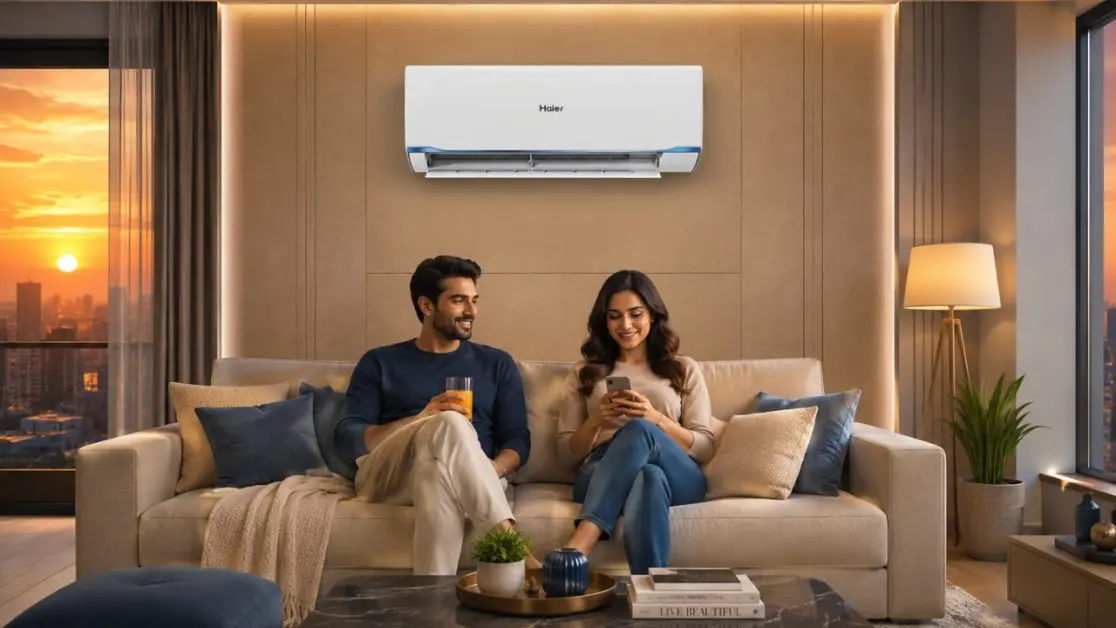
Most people think sunlight only affects brightness.
It affects thermodynamics.
Three places where heat enters fastest
- Large glass windows without curtains
- Top-floor ceilings exposed to direct sun
- West-facing walls that absorb afternoon heat
One option is thick blackout curtains.
The second option is reflective window films.
The third option is better insulation inside walls and ceilings.
Each solves a different layer of the problem.
That matters because cooling efficiency is never about one fix. It is about reducing heat from multiple directions at once.
A cooler room is often a better-protected room.
What insulation actually does
Insulation sounds technical. It is not.
Think of it like a steel flask.
The flask does not create cold water. It slows down heat transfer.
Homes work the same way.
Good insulation slows outside heat from entering and prevents cool air from escaping too quickly.
Poor insulation creates what engineers call thermal leakage. But most families experience it differently.
They call it this:
“The room cools fast, but gets warm again immediately.”
That sentence explains insulation failure perfectly.
Signs your home may have poor insulation
- AC runs continuously without reaching the set temperature
- Rooms heat up within minutes after switching off the AC
- Walls feel hot during evenings
- Electricity bills spike despite moderate usage
- Upper floors remain warmer than lower floors
The Bureau of Energy Efficiency in India repeatedly highlights insulation and shading as major factors affecting household cooling efficiency.
Yet most AC discussions focus only on tonnage and star ratings.
That is incomplete thinking.
An overworked AC costs more than electricity
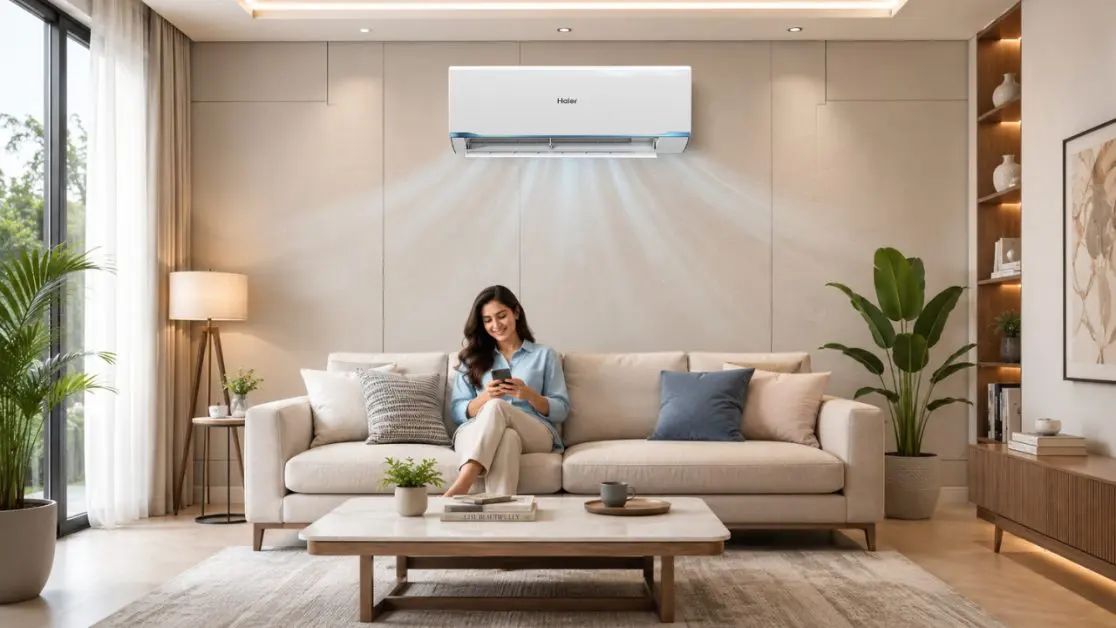
People often blame the AC when cooling feels inconsistent.
Sometimes the AC is undersized.
But often the room itself is the problem.
A poorly insulated room forces the compressor to work longer cycles. Longer cycles increase:
- Power consumption
- Wear on components
- Indoor humidity fluctuations
- Noise levels
- Maintenance requirements
The machine keeps compensating for structural inefficiency.
It is like trying to fill a leaking bucket faster instead of fixing the hole.
That is why room conditions matter as much as AC specifications.
How modern ACs are adapting to real Indian homes
Older AC systems operated with a simple assumption:
Cool the room uniformly.
Modern homes are more complex than that.
One person works from home beside a sunlit window. Another sleeps in a darker corner. Kids keep opening doors. Kitchen heat spills into the hall. Afternoon sunlight shifts room temperature every hour.
Cooling today needs intelligence, not just power.
That is where newer AI-based systems are changing the conversation.
Haier’s AI Climate Control systems, including the Haier 1.7 Ton 5 Star Desert Rose Air Conditioner, focus on adapting cooling performance based on room conditions, usage habits, and occupancy patterns rather than fixed cooling cycles. Features like AI Human Detection and AI for Comfort are designed to optimize cooling while reducing unnecessary energy consumption.
That shift matters in Indian homes where environmental conditions change constantly through the day.
Because the real problem is rarely “cooling.”
The real problem is variable heat behaviour.
The hidden relationship between sunlight and electricity bills
A room exposed to harsh sunlight needs more cooling energy.
Simple.
But the compounding effect is what most people miss.
Here is what typically happens
- Sunlight increases indoor heat
- AC compressor runs longer
- Energy consumption rises
- Components experience more stress
- Cooling efficiency drops gradually over time
One weak link affects the whole system.
Systems thinking matters inside homes too.
In India, where summer temperatures regularly cross 45°C in several regions, even small efficiency improvements can create noticeable savings across an entire season.
That is why window placement, curtains, roof treatment, and insulation influence electricity bills almost as much as the AC itself.
Not all heat behaves the same way
Morning heat feels different from afternoon heat.
Dry heat feels different from humid heat.
A compact studio apartment behaves differently from a large living room with glass panels.
The mistake is assuming one cooling strategy fits every home.
Three common Indian home scenarios
1. Top-floor apartments
These absorb maximum roof heat.
Best solutions:
- Roof insulation
- Reflective coatings
- Higher-capacity inverter ACs
- Blackout curtains
2. Compact urban bedrooms
These traps heat quickly due to limited airflow.
Best solutions:
- Cross ventilation
- Proper sealing around windows
- Convertible cooling modes
- Smart airflow direction
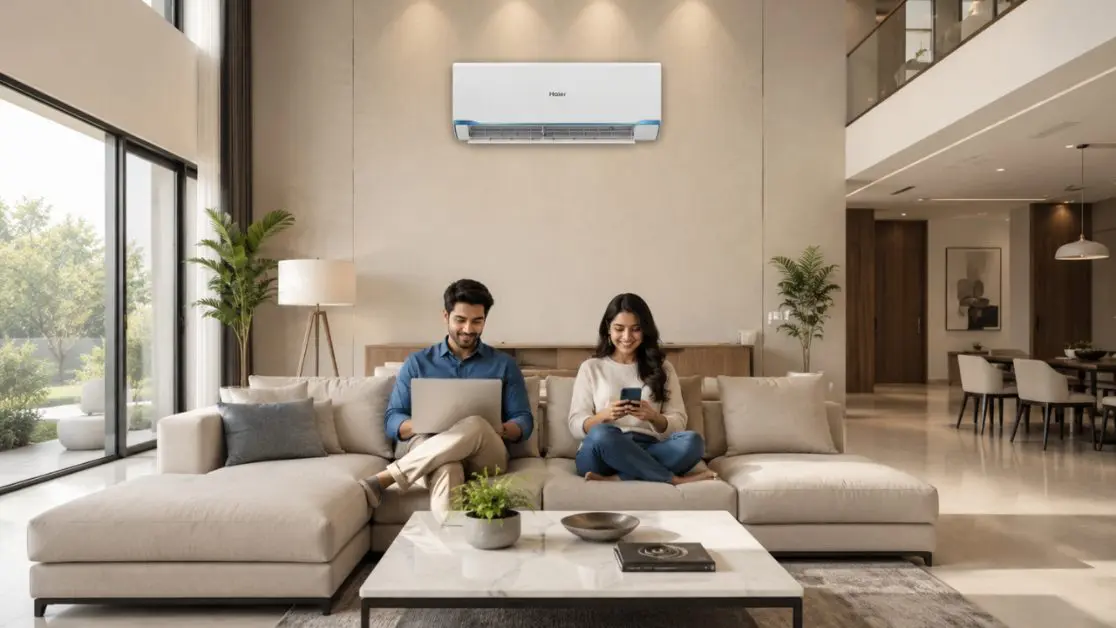
3. Large living rooms with sunlight exposure
These experience uneven cooling.
Best solutions:
- Long air throw AC systems
- Zoned cooling behaviour
- Insulated curtains
- Smart occupancy detection
The room decides the strategy.
Not the brochure.
Cooling efficiency is becoming behavioural intelligence
The future of air conditioning is not colder air.
It is adaptive cooling.
Modern systems increasingly monitor occupancy, energy usage, weather patterns, and indoor conditions to adjust performance automatically.
The Haier Desert Rose series includes AI-driven cooling adjustments, 7-in-1 convertible modes, AI ECO optimisation, and AI Human Detection to manage cooling more intelligently in changing home environments.
That evolution reflects a bigger truth:
People do not live in static environments anymore.
Homes shift constantly through the day.
And appliances that understand patterns perform better than appliances that only follow commands.
Small insulation changes create disproportionate results
This is the part most people underestimate.
You do not always need major renovation work.
Sometimes small interventions create measurable cooling improvements.
Practical insulation upgrades that actually help
- Thermal curtains for west-facing windows
- Weather sealing around doors
- Window films for direct sunlight
- Roof cooling paint on terrace homes
- Keeping indoor doors closed during peak heat hours
- Using lighter wall colours to reduce heat absorption
None of these sound revolutionary.
Together, they change how the room behaves.
And behaviour is what determines cooling efficiency.
The most expensive cooling mistake is ignoring the room itself
People spend weeks researching AC brands.
Very few spend even one hour analysing room conditions.
That imbalance creates disappointment.
An efficient AC inside a poorly insulated room still struggles.
A thoughtfully designed room allows even moderate cooling systems to perform better.
That is the hidden principle underneath energy savings.
Not bigger machines.
Better thermal balance.
A cooler home is usually a smarter system
The future of Indian homes will not depend only on powerful appliances.
It will depend on how intelligently homes manage heat, airflow, insulation, and energy together.
Sunlight is free.
But unmanaged sunlight becomes expensive.
Insulation is invisible.
But invisible systems shape everyday comfort more than visible products ever will.
That is the larger shift happening quietly across modern homes.
Cooling is no longer just about lowering temperature.
It is about understanding how heat moves, how people live, and how smarter systems respond in real time.
Frequently Asked Questions
My 1.5 Ton AC works perfectly at my friend’s house but struggles in mine.
The difference is often the room, not the AC. Factors like direct sunlight, poor insulation, top-floor exposure, large windows, and heat-retaining walls can dramatically increase cooling demand.
Do I need a bigger AC or better insulation?
If your AC runs constantly but never reaches the set temperature, improving insulation, shading, and heat control may solve the problem more effectively than upgrading the AC.
Why does my room get hot again so quickly after I turn off the AC?
This is a common sign of thermal leakage. Cool air escapes and outside heat enters faster when insulation is weak.
Does room direction really affect AC performance?
Yes. West-facing rooms typically absorb intense afternoon sunlight and retain heat longer, making cooling more difficult.
Why does my bedroom still feel warm at night even after sunset?
Walls, ceilings, furniture, and floors store heat during the day and release it slowly throughout the evening.
Are large windows making my room hotter?
Large glass surfaces allow significant heat gain, especially without curtains, blinds, or reflective films.