
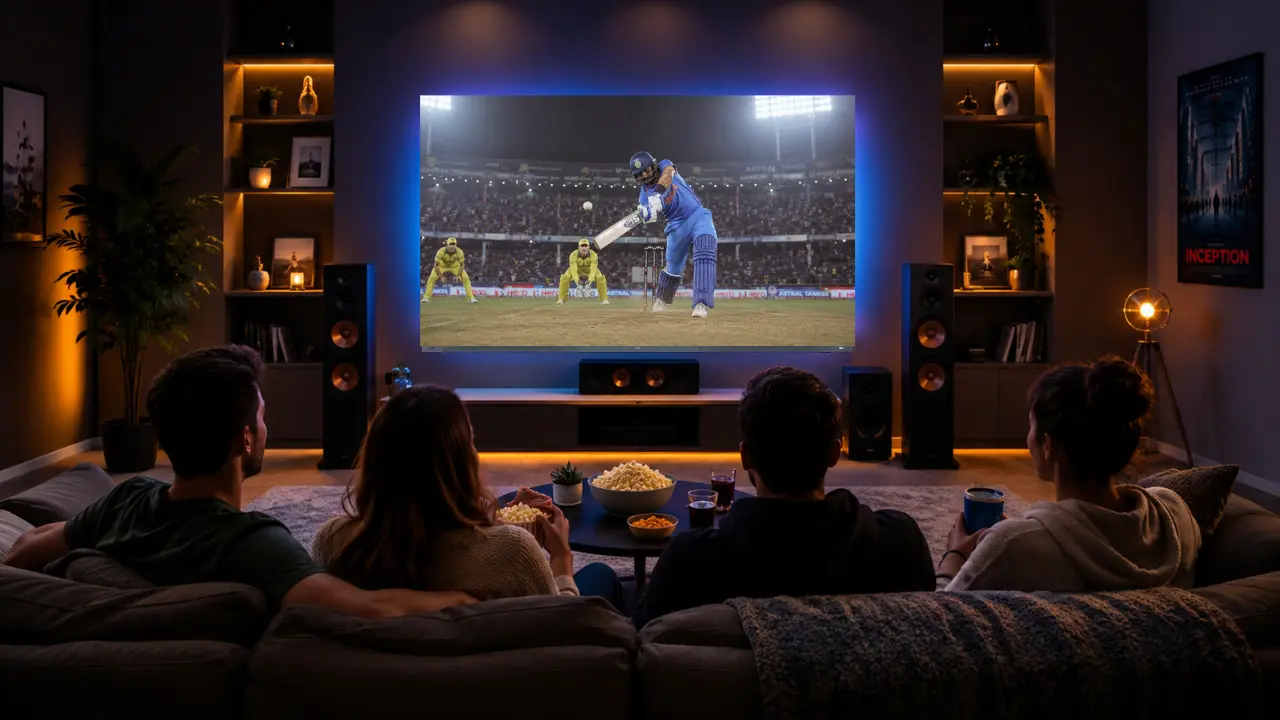

Technology has transformed live sports from simple viewing into a full-scale home experience
Modern sports fans do not just watch matches anymore.
They experience them. Smarter TVs, immersive sound systems, Mini LED displays, AI-powered streaming, and motion-enhancing technologies now make cricket finals, football matches, and Formula 1 races feel sharper, louder, and more emotional inside Indian homes.
The living room has quietly become the new stadium.
A cricket match in India is rarely just about cricket.
It is dinner plates balancing on the sofa during the last over.
It is cousins shouting at the TV during a DRS review.
Its neighbours suddenly become analysts during the IPL season.
And increasingly, it is technology working silently in the background to make every moment feel bigger than life.
That is the real story.
Sports did not become more emotional overnight.
The experience around sports evolved.
A television today does far more than display content. It controls immersion, sound depth, motion clarity, colour realism, streaming speed, and even how people gather inside a home.
The difference between “watching” and “feeling” a match often comes down to technology.
And sports expose that better than anything else.
Modern sports fans expect immersion, not just entertainment
There was a time when sports fans accepted grainy broadcasts and delayed commentary.
Not anymore.
Streaming platforms, gaming culture, and cinematic entertainment changed audience expectations permanently.
Today’s viewers want:
- Sharper visuals
- Faster motion clarity
- Stadium-like sound
- Seamless streaming
- Personalized recommendations
- Multi-device flexibility
Sports now compete against every other form of entertainment.
That changes everything.
The modern sports fan is no longer passive.
They want immersion.
Motion technology quietly changes the way sports feel
Most viewers notice motion quality emotionally before they understand it technically.
A football sprint looks smoother.
A tennis rally feels cleaner.
A fast Yorker becomes easier to track.
That difference comes from motion optimization technologies like MEMC and refresh-rate enhancement systems.
Fast-moving sports create visual stress on traditional displays. Motion blur interrupts immersion. Camera pans feel shaky. Action loses clarity.
Modern Mini LED televisions solve this differently.
The Haier M80F Mini LED Google TV Series includes DLG 120 Hz support and MEMC technology designed to reduce motion blur during fast-paced sports and action scenes.
combine smoother frame handling with Mini LED picture processing for more immersive sports viewing experiences.
The important thing is not the feature name.
It is the outcome.
The eyes feel less tired.
The match feels more fluid.
The brain spends less effort “processing” motion and more energy enjoying the moment.
Good technology removes friction.
Great technology becomes invisible.
Bigger screens changed the psychology of sports watching
Screen size changes emotion.
That sounds dramatic until you experience a high-pressure match on a large display.
A stadium atmosphere feels different when the crowd occupies physical space inside the room.
A cricket boundary feels louder when the visuals dominate your field of vision.
A Formula 1 race feels cinematic when colour contrast becomes more lifelike.
This is where Mini LED technology becomes important.
Mini LED displays improve contrast, local dimming precision, and brightness levels significantly compared to older LED systems. The Haier M80F Mini LED TV lineup includes Dolby Vision support, HDR10 technology, and advanced local dimming zones that improve picture depth and realism.
Three ways sports viewers now choose their experience
| Viewing Style | Experience Outcome |
| Smartphone streaming | Portable but emotionally limited |
| Standard TV viewing | Functional and convenient |
| Large Mini LED display viewing | Immersive and cinematic |
Sports are emotional theatre.
Scale changes theatre.
That is why families increasingly treat large-screen televisions as the centerpiece of sports nights, festive gatherings, and weekend entertainment.
Sound is the hidden system behind sports emotion
Picture quality gets attention.
Sound creates emotion.
Think about what people actually remember from iconic matches:
- Crowd eruptions after sixes
- Commentary tension before penalties
- Stadium chants during football games
- Bat-to-ball impact sounds
- Race engine roars in Formula 1
Audio creates presence.
And presence changes everything.
Modern televisions now focus heavily on immersive sound systems because sports rely on atmosphere as much as visuals.
The Haier M80F Mini LED 165cm (65) Google TV Sound By KEF (H65M80FUX) combines Dolby Atmos support with Sound by KEF and a 2.1 channel woofer system for richer and more immersive audio experiences.
That matters more than most people realize.
Humans emotionally trust experiences that feel spatial.
When crowd noise surrounds the room instead of coming from flat speakers, the brain interprets the match as more real.
Technology amplifies emotional memory.
Smart TVs changed sports from scheduled viewing into instant access

Older television systems trained viewers around fixed schedules.
Miss the toss? You missed it.
Miss kick-off? Wait for highlights.
Streaming platforms destroyed that limitation.
Today’s smart TVs combine live sports, streaming apps, AI recommendations, voice search, and casting features into one connected system.
The Haier M80F Mini LED 140cm (55) Google TV Sound By KEF (H55M80FUX) integrates Google TV functionality, Google Assistant voice controls, Chromecast support, and personalized content recommendations.
That matters because Indian homes themselves have changed.
The old viewing system looked like this
- One TV
- Shared timing
- Fixed family viewing
The modern viewing system looks different
- Personalized schedules
- Streaming-first households
- Flexible content discovery
- Multi-device ecosystems
Technology now adapts sports around people’s lifestyles.
Not the other way around.
That is the real shift.
Gaming technology is improving sports viewing too
An interesting crossover happened quietly.
Gaming accelerated television innovation faster than television itself.
Features originally built for gamers now improve sports experiences directly.
Low latency. Faster response systems. Motion synchronization. HDMI 2.1 support.
These technologies reduce lag and improve movement continuity during fast-paced content.
The Haier M80F Mini LED 189cm (75) Google TV Sound By KEF (H75M80FUX) includes gaming-focused technologies like VRR, ALLM, MEMC, and HDMI 2.1 eARC connectivity.
Even non-gamers benefit from this.
Because sports and gaming share the same technical challenge:
Speed.
Slow content hides display weaknesses.
Sports expose them instantly.
Technology is making sports more social inside homes again
People often assume technology isolates families.
Sports often prove the opposite.
One large television during the IPL season can bring an entire household together.
Parents who rarely stream content suddenly stay awake for Super Overs.
Friends gather more often during tournaments.
Grandparents ask children to explain replay systems.
Technology creates rituals when used intentionally.
And rituals matter inside homes.
How modern TVs improve sports gatherings
| Technology Feature | Real-Life Impact |
| Large Mini LED displays | Creates stadium-like immersion |
| Dolby Atmos audio | Makes rooms feel energetic |
| Smart streaming access | Faster match discovery |
| Voice controls | Easier navigation during games |
| Wireless casting | Quick sharing of highlights |
| AI recommendations | Keeps viewers engaged longer |
Homes increasingly function as entertainment hubs now.
Especially during sports seasons.
The best sports technology disappears into the experience
Nobody pauses during a tense chase to discuss dimming zones.
Nobody celebrates HDMI standards during a final-minute goal.
And that is exactly the point.
The best technology becomes invisible.
It removes friction instead of demanding attention.
Less blur.
Less buffering.
Less audio distortion.
Less effort.
More emotion.
That philosophy extends beyond sports too.
The same systems thinking applies to refrigerators during festivals, air conditioners during peak summer, and televisions during match nights.
Smart homes are not built around flashy features.
They are built around smoother experiences.
Sports viewing is becoming experiential, not passive
The future of sports inside Indian homes will revolve around immersion.
AI-powered recommendations will personalize match discovery.
Mini LED displays will continue improving realism.
Immersive audio will feel more cinematic.
Voice-enabled ecosystems will simplify access.
But the deeper shift is cultural.
People no longer gather around televisions because there are no alternatives.
They gather because the experience feels worth gathering for.
That changes everything.
Technology does not replace sports emotion.
It magnifies it.
And perhaps that explains why a last-over thriller today feels louder, sharper, and more unforgettable than ever before.
Not because cricket changed.
Because the living room did.
Frequently Asked Questions
I want a TV mainly for cricket and IPL nights. What features should I actually care about?
Focus on motion clarity, large screen size, Mini LED contrast, Dolby Vision or HDR, strong sound, and smooth streaming support.
Is a bigger TV really better for watching sports at home?
Yes, for group viewing and high-energy matches, a larger screen makes the experience feel more immersive and stadium-like.
I am confused between a regular smart TV and a Mini LED TV for sports. Which feels better?
Mini LEDs usually feel better for sports because they offer stronger brightness, better contrast, and more realistic picture depth.
Should I buy a TV for movies or sports first if my family watches both?
A TV with Mini LED, Dolby Vision, Dolby Atmos, and motion enhancement works well for both sports and movies.
Why does the ball look blurry on my TV during cricket matches?
Fast sports expose motion blur. Features like MEMC and higher refresh-rate support help make fast-moving action look smoother.
I struggle to follow fast Yorkers and football passes on my TV. Is that a TV problem?
It can be. A display with better motion processing can make quick movements easier to track.