
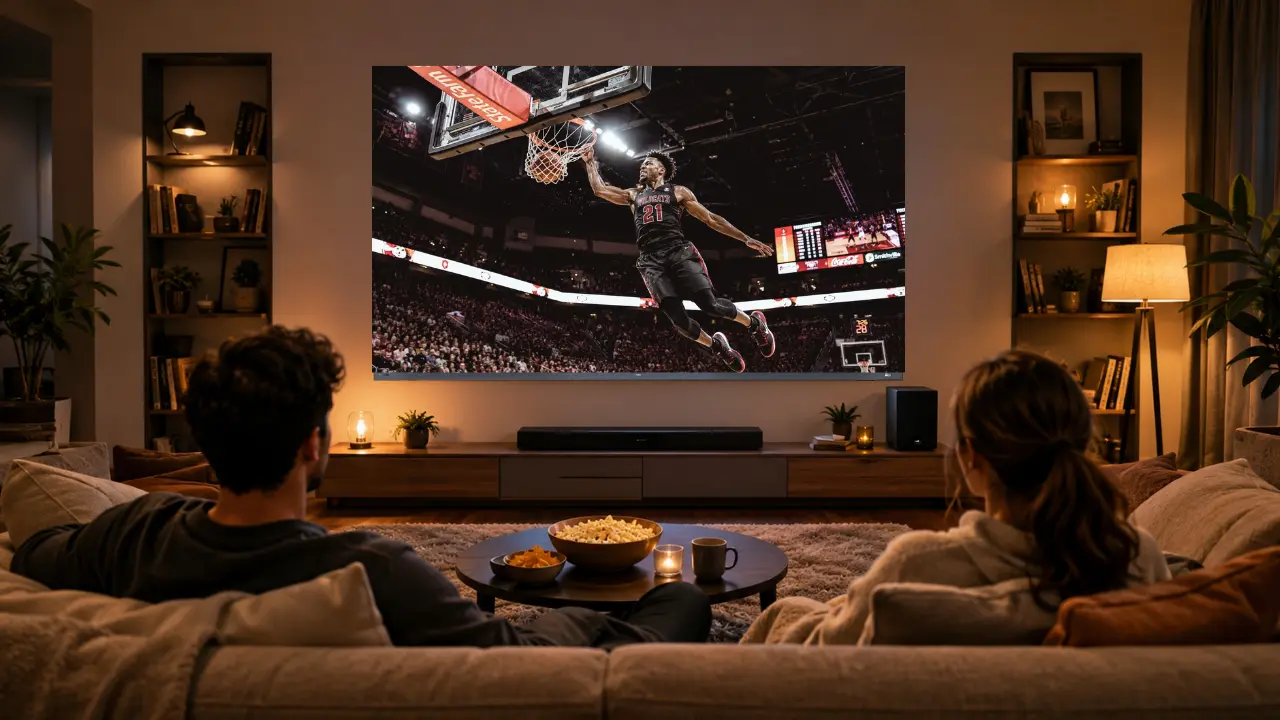

MEMC technology in TVs reduces motion blur and makes fast-moving scenes look smoother by adding extra frames between original video frames.
Whether it is an IPL match, a Formula 1 race, or a late-night action film binge, MEMC helps motion feel cleaner and more fluid. It is one of those TV technologies people rarely search for directly, but immediately notice when it is missing.
A good TV does not just display pictures.
It manages movement.
And movement changes everything.
Why do fast-moving scenes often look blurry on regular TVs?
Picture this.
India needs 12 runs in the final over. The camera tracks the ball. The crowd erupts. The shot pans quickly across the stadium.
But something feels off.
The motion looks shaky. The ball slightly blurs. The scene loses sharpness for a split second.
That moment matters because our eyes notice bad motion faster than low resolution.
Most people assume TV quality is only about:
- 4K resolution
- Bigger screen size
- Bright colors
- Louder sound
But motion handling quietly shapes the entire viewing experience.
This is where MEMC technology becomes important.
What does MEMC actually mean?
MEMC stands for:
- Motion Estimation
- Motion Compensation
The system works like this:
A TV studies two existing frames, predicts movement between them, and inserts additional frames to create smoother motion.
Think of a flipbook.
If there are fewer pages, movement looks jerky.
Add more pages between movements, and everything suddenly feels fluid.
MEMC works on the same principle.
It creates visual continuity.
Haier’s Mini LED TV lineup, including the Haier M80F Mini LED 165cm (65) Google TV Sound By KEF (H65M80FUX), features MEMC 60 Hz technology designed to reduce motion blur during fast-moving content.
The real effect is emotional, not technical.
Sports feel more immersive. Gaming feels more responsive. Camera pans stop feeling distracting.
The hidden truth: Motion quality matters more than most people realize
A blurry moving object breaks immersion instantly.
That is why cinemas obsess over frame pacing.
That is why gamers care about refresh rates.
And that is why premium televisions increasingly focus on motion processing systems like MEMC.
Where MEMC creates the biggest difference
Not all content benefits equally from MEMC.
Some viewing experiences transform dramatically.
Others barely change.
| Content Type | MEMC Impact | Why It Matters |
| Cricket & Sports | Very High | Fast ball movement and camera tracking |
| Action Movies | High | Smoother motion during chase scenes |
| Gaming | High | Cleaner visuals during rapid gameplay |
| News Channels | Low | Minimal fast motion |
| OTT Binge Watching | Moderate to High | Better scene transitions |
| Concerts & Dance Shows | High | Fluid movement clarity |
This explains why people suddenly notice TV quality during IPL season but not while watching regular news channels.
Technology only matters when context exposes it.
Why Indian households notice MEMC more than they think
Indian living rooms are dynamic environments.
Someone is watching cricket.
Someone walks across the room.
The kitchen pressure cooker whistles.
Kids run around.
Fans spin overhead.
Lights stay on.
Motion competes with attention constantly.
In these spaces, smoother visuals reduce strain on the eyes.
A TV with weak motion handling feels tiring during long viewing sessions.
A TV with better motion processing feels effortless.
That difference becomes visible during:
- IPL matches
- OTT marathons
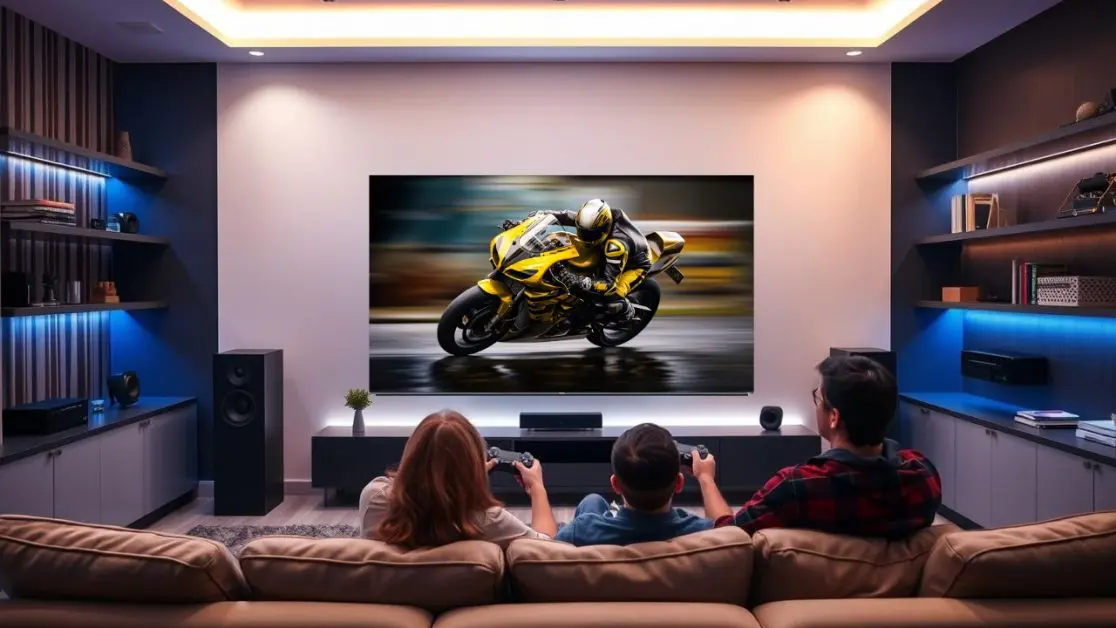
- PS5 gaming sessions
- Fast YouTube sports clips
- Action-heavy cinema
- Live concerts
MEMC does not just improve visuals.
It reduces friction inside the viewing experience.
The best technology feels invisible because it quietly removes discomfort.
MEMC vs Refresh Rate: The confusion most buyers have
This is where many buyers misunderstand TV specifications.
Refresh rate and MEMC are related.
But they are not the same thing.
Refresh rate is hardware
Refresh rate refers to how many times the screen refreshes every second.
For example:
- 60Hz = 60 screen refreshes per second
- 120Hz = 120 screen refreshes per second
MEMC is intelligent motion processing
MEMC predicts movement and inserts additional frames artificially.
One controls screen refresh capability.
The other controls motion smoothness.
A television can have a 60Hz panel and still deliver smoother motion through MEMC optimization.
The Haier M80F Mini LED 189cm (75) Google TV Sound By KEF (H75M80FUX) combines MEMC 60 Hz with features like Dolby Vision, HDR10, VRR, ALLM, and HDMI 2.1 support for smoother entertainment and gaming experiences.
People shop for isolated specs.
But experiences come from systems working together.
The sports test reveals everything about a TV
Want to test MEMC properly?
Watch sports.
Especially:
- Cricket
- Football
- Tennis
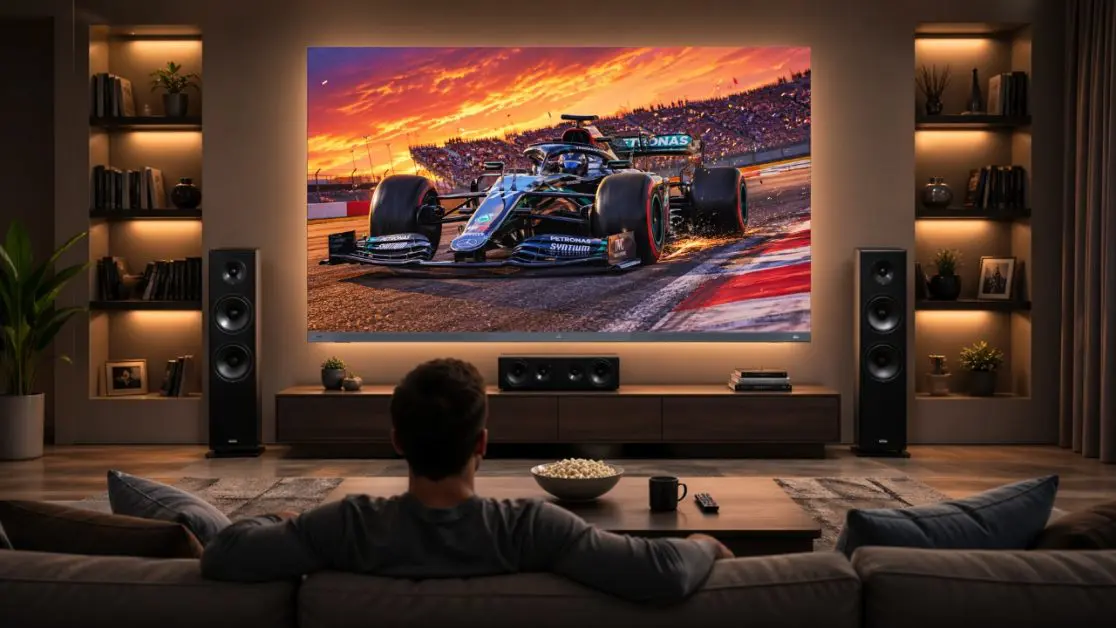
- Formula 1
- Basketball
Sports expose weak motion processing instantly.
Observe:
- Camera movement
- Ball tracking
- Player movement
- Fast scrolling graphics
- Crowd shots
Motion problems become immediately visible.
This is exactly why premium TV brands focus heavily on sports demos inside showrooms.
Because motion clarity creates emotional impact instantly.
No one wants blurry visuals during a last-over thriller.
Why gamers care deeply about MEMC and motion technology
Gaming changed television expectations permanently.
Earlier, TVs were optimized mainly for movies.
Now they optimize for responsiveness too.
Modern gamers expect:
- Low latency
- Reduced blur
- Fast response
- Stable motion
- Smooth transitions
This is why features like:
- MEMC
- VRR
- ALLM
- HDMI 2.1
are increasingly discussed together.
The Haier M80F Mini LED 215cm (85) Google TV Sound By KEF (H85M80FUX) includes MEMC 60 Hz, Dolby Atmos, HDMI 2.1 eARC, and gaming-focused enhancements designed for fast-paced entertainment.
The larger shift is fascinating.
TVs are no longer passive appliances.
They are interactive entertainment systems.
The modern living room quietly became a digital arena.
MEMC is useful, but balance matters
Every technology has trade-offs.
MEMC does too.
The first issue is over-smoothing
Some viewers dislike excessive smoothness because movies stop feeling cinematic.
Films traditionally use lower frame rates.
Too much smoothing creates what people often call the “soap opera effect.”
Everything starts looking unnaturally polished.
That is why many premium TVs allow users to adjust MEMC intensity.
The second issue is processing quality
Poor motion processing can create:
- Visual artifacts
- Ghosting
- Artificial edges
- Distorted movement
Good MEMC feels natural.
Bad MEMC feels distracting.
The goal is not maximum processing.
The goal is believable motion.
Technology works best when it quietly disappears into the experience.
MEMC works best when combined with other TV technologies
Modern television quality is layered.
MEMC alone cannot create a premium experience.
It works alongside technologies like:
1. Mini LED
Improves contrast and black levels.
2. Dolby Vision
Enhances brightness and cinematic depth.
3. HDR10
Improves color and dynamic range.
4. Dolby Atmos
Creates immersive surround sound.
5. AI Voice Control and Google TV
Improves navigation and personalization.
For example, the Haier M80F Mini LED 140cm (55) Google TV Sound By KEF (H55M80FUX) combines MEMC, Dolby Vision, HDR10, Google TV, Dolby Atmos, and KEF-powered sound into a single entertainment ecosystem.
That matters because people never experience features individually.
They experience the system as a whole.
Great TV choreography.
Not isolated specifications.
Should MEMC matter while buying a TV?
Yes.
But only if motion quality matters in daily life.
One option is casual viewers
If someone mainly watches news or occasional content, MEMC matters less.
The second option is movie and sports lovers
MEMC becomes significantly more important here.
Motion quality changes the experience daily.
The third option is gamers and premium entertainment users
MEMC becomes part of a larger performance ecosystem involving refresh rate optimization, gaming responsiveness, and smoother visual transitions.
The smarter buying question is not:
“Does this TV have MEMC?”
The smarter question is:
“How important is smooth motion in the way this home watches entertainment?”
That changes the decision entirely.
The future of televisions is invisible intelligence
The best technologies rarely demand attention.
Nobody buys Wi-Fi because routers look exciting.
People buy what Wi-Fi enables.
MEMC works the same way.
People rarely walk into stores asking for motion interpolation systems.
They ask for:
- Better cricket viewing
- Smoother gaming
- Cleaner action scenes
- More immersive movie nights
That is the hidden system behind modern televisions.
The future of TV quality is not just sharper screens.
It is screens that understand how humans experience movement.
And increasingly, that is what smart homes are becoming.
Not homes filled with gadgets.
Homes where technology quietly removes friction from everyday life.
Frequently Asked Questions
What does MEMC mean on TV?
MEMC stands for Motion Estimation Motion Compensation. It is a motion-processing technology that makes fast-moving scenes appear smoother by adding extra frames between original video frames.
Why do sports sometimes look blurry on TVs?
Fast camera movement, ball tracking, and rapid scene changes can overwhelm weaker motion processing systems. Without MEMC or good motion handling, scenes may appear shaky, blurred, or less sharp.
Does MEMC actually improve picture quality?
Not directly in terms of resolution. MEMC improves motion smoothness, which changes how immersive and comfortable the viewing experience feels.
I mainly watch cricket and IPL matches. Does MEMC matter to me?
Yes. Cricket benefits heavily from MEMC because it improves:
Ball tracking
Fast camera pans
Crowd shots
Scoreboard movement
Sports are one of the easiest ways to notice motion quality differences.
I only watch news channels and YouTube casually. Do I need MEMC?
Probably not a major priority. News channels usually have minimal fast motion, so MEMC will have less visible impact.
Is MEMC more important than 4K?
For many people, motion quality affects viewing comfort more immediately than resolution. A blurry 4K image during fast motion can still feel disappointing.
Should gamers care about MEMC?
Yes, especially for fast-paced games like:
Racing
FPS shooters
Sports games
Action adventures
MEMC can improve motion clarity, though serious gamers also care about:
VRR
ALLM
HDMI 2.1
Input lag