
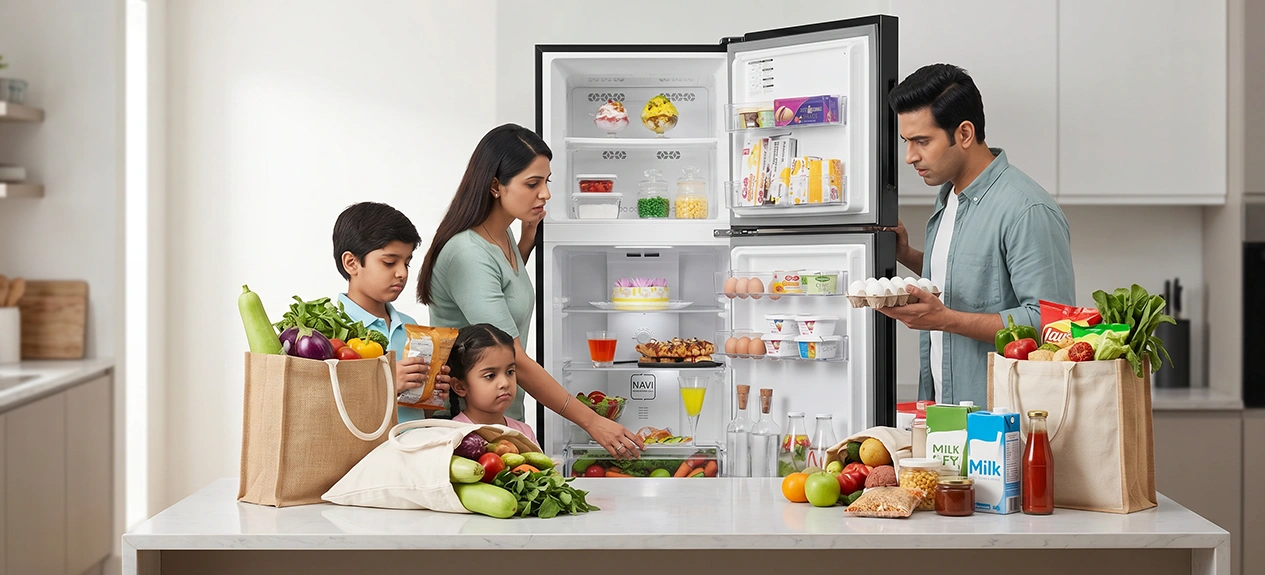

Most people compare refrigerator features before buying one. They check ratings, warranties, and finishes for quite some time. People ignore capacity, which is one of the important factors. Every fridge choice depends on that fit alone. That mismatch is where the real cost sits, and it doesn’t show up in the first few weeks.
A new refrigerator usually feels right in the beginning. Then small issues start showing up. Grocery runs leave too little space, or a large fridge stays half empty because your household simply doesn’t need that much storage. This is exactly the kind of thing a proper refrigerator size guide would flag before the purchase, not after.
Why Most Buyers Ignore Refrigerator Capacity
Refrigerator shopping often pulls people toward features first. Energy ratings, cooling modes, and fancy storage options get most of the attention. Capacity hardly stays in the conversation for long.
But that one number affects your everyday routine more than people expect. It decides how much food fits after shopping, how comfortably you store leftovers, and whether the fridge suits your kitchen. Pick the wrong size, and those small daily compromises keep showing up for years.
Need help choosing the right refrigerator capacity?
Read this blog : How To Choose The Right Refrigerator Capacity For Your Household?
Hidden Costs of Picking the Wrong Fridge Size
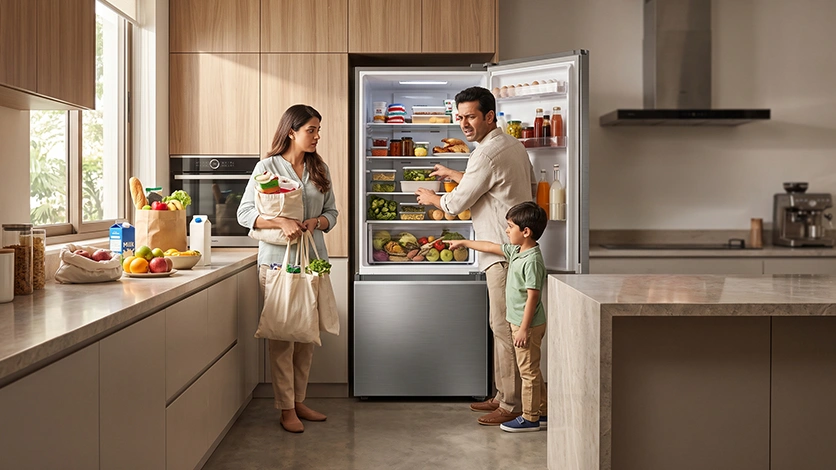
Before choosing the right refrigerator capacity, see what happens when the size doesn’t fit your family’s everyday storage and shopping habits. It creates daily trouble, not just less space.
- Food spoiling faster than it should: When a refrigerator is consistently overpacked, cold air doesn’t circulate the way it needs to. Some sections run warmer than the set temperature. Vegetables and leftovers that should stay good for four or five days start turning on day two or three, and you end up throwing out food that should have been fine.
- A refrigerator with too little space fills up quicker: Weekly groceries stop fitting comfortably after a few days. Then you’re heading back to the store again. Families who prefer fewer shopping trips or live far from fresh markets end up dealing with this problem again and again.
- A larger fridge running empty burns more power: A 600L refrigerator that’s half empty for most of the month still runs its compressor to maintain temperature across the full internal volume. That extra electricity draw is consistent, it runs every day of every year, and it shows up in your bill whether or not you notice the reason.
A Practical Refrigerator Capacity Guide for Indian Homes
Capacity decisions come down to three real variables: how many people live in the house, how often and how seriously they cook, and how frequently the household restocks groceries. The table below gives honest starting ranges to work from.
| Household Size | Capacity Range to Consider | Suitable Fridge Type |
| 1 to 2 people | 90L to 200L | Direct Cool single door |
| 2 to 3 people | 200L to 280L | Top Mount double door |
| 3 to 4 people | 280L to 400L | Top or Bottom Mount |
| 4 to 6 people | 400L to 520L | Bottom Mount or French Door |
| Large families or frequent hosts | 520L and above | Side-by-Side or French Door |
Note: Use these capacity ranges as a starting point only. Your cooking habits, shopping routine, and household needs matter just as much when choosing the right refrigerator size.
Need help choosing the right refrigerator size?
Read this blog: How to Choose the Right Refrigerator Size for Your Family
Choosing the Right Refrigerator Size in India
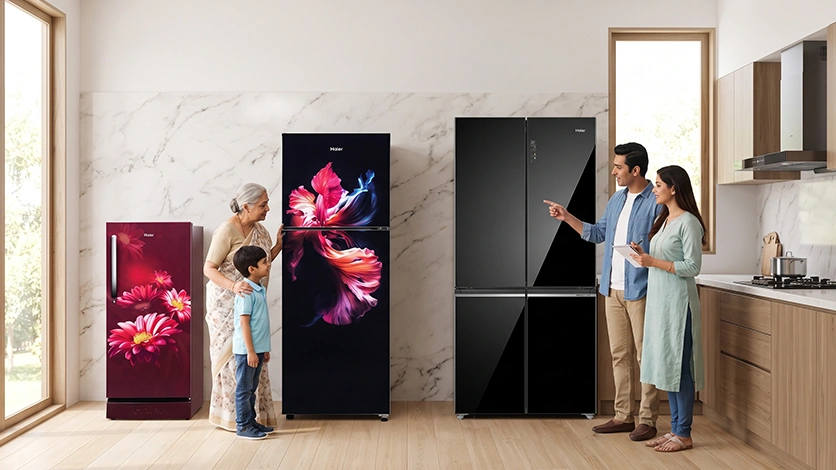
The refrigerator sizes in India span a genuinely wide range, from single-door 90L units designed for compact city apartments to 630L French door models built for large joint families with serious kitchen space. Each category serves a different use case and a different kind of household.
- Direct cool single-door refrigerators cover roughly 90L to 250L. They use natural convection to maintain temperature and work well in smaller households where storage needs are manageable and kitchen space is limited. Energy efficiency tends to be good at this size range.
- Top-mounted double-door refrigerators are the most common type in Indian households, for a practical reason. They offer good capacity across a range from around 235L to 550L, the freezer is accessible at the top, and the format fits most standard Indian kitchen sizes without much trouble.
- Bottom-mounted refrigerators put the fresh food section at eye level and the freezer down below. For households that open the fresh food compartment twenty times a day and the freezer maybe twice, this layout is more convenient than it might sound. Capacities range from roughly 235L to 445L.
- Side-by-side refrigerators, both two-door and three-door configurations, start at around 540L. They are built for large households and kitchens that have room for the wider footprint. The three-door format adds a separate middle section for flexible temperature zoning.
- French door models combine a wide fresh food section at the top with either a single or multi-door freezer below. They typically start from 520L and go up to 630L. The format works well in open kitchen layouts where the wider door swing isn’t a problem.
Haier Offers Refrigerators in Every Size
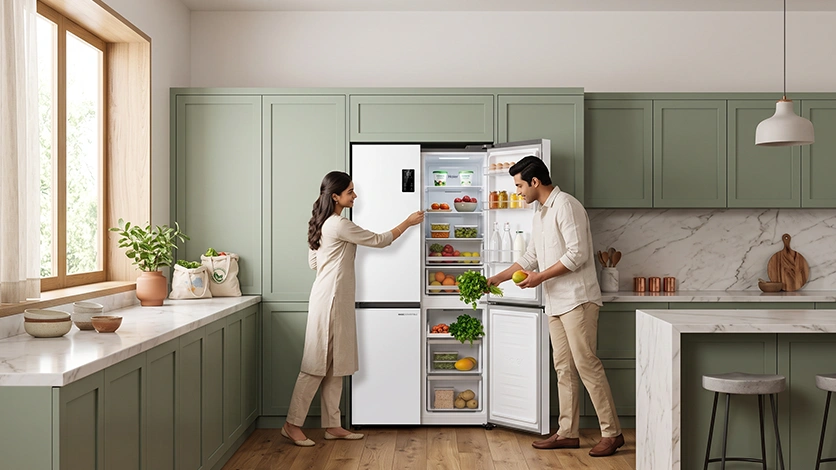
Refrigerator capacity is only one part of choosing the right model for your home. Families store food very differently, so matching daily habits matters just as much. Haier has different capacities and formats, which makes that choice a bit easier.
Our Direct Cool Refrigerators, from 90L to around 215L, fit singles, couples, and small families comfortably. The inverter compressor keeps cooling efficiently and more quietly. Ice freezes fast, shelves hold heavy utensils well, and voltage changes don’t interrupt everyday cooling much.
For growing families, our Top Mounted Refrigerators bring a broader set of features to the double-door format. These models support up to 10-in-1 Convertible Modes, letting you adjust how space is split based on what the week demands. Magic Cooling keeps food fresh through consistent automatic temperature management, and Triple Inverter and Dual Fan Technology speed up cooling while keeping energy consumption in check.
A separate fruit box and a large vegetable box mean fresh produce stays in better condition longer. Our Bottom Mounted Refrigerators carry similar features with an added advantage: the fresh food compartment sits at a natural standing height, so there’s no bending to see what’s inside. The 14-in-1 Convertible Modes on select models give even more flexibility for households with varying storage needs across the week.
Large families usually need storage that stays organised without much effort. Our 2-door side-by-side refrigerators offer flexible space, so you can switch between fridge and freezer whenever plans change. The outside display adjusts settings without opening the door. The app helps track groceries, while the inverter compressor and jumbo ice maker handle everyday use with ease.
The 3-Door Side-by-Side range is India’s first 3-door convertible refrigerator, offering up to 83% convertible fridge space with a dedicated 17% freezer section that holds up to 80L with separate storage boxes. SmartSense AI runs across both side-by-side lines, sensing usage patterns and adapting energy consumption accordingly.
Our 4-Door Refrigerators are ideal for families who prefer organised storage and the flexibility to adapt space as their needs change. Separate compartments help reduce cold air loss while making frequently used items easier to access. Smart Convertible technology provides up to 85% fridge space with a dedicated convertible section. Along with Deo Fresh Technology to reduce food odours, ABT Pro Technology for improved hygiene.
Across our full range, every refrigerator comes with at minimum a 2-year comprehensive product warranty and a 10-year compressor warranty. We build refrigerators that are meant to last, and the warranty reflects that.
Conclusion
A refrigerator is in your kitchen for ten years, sometimes longer. The size decision made on the day of purchase shapes the experience of every single day inside that span. Too small and the problems are immediate: overcrowded shelves, faster spoilage, and more frequent shopping. Too large and the costs are quieter but consistent: higher electricity use, wasted kitchen space, and a unit that never quite gets used to capacity.
Matching capacity to household size and format to daily usage habits removes most of these costs before they start. That’s the decision worth spending time on, and it’s the one that most buyers rush through.
Frequently Asked Questions
What are the hidden costs of buying a refrigerator that is too small?
An undersized refrigerator fills up much quicker than most people expect, leaving little room for proper airflow between stored food. That means fruits, vegetables, and leftovers can spoil sooner, while frequent grocery runs slowly increase your monthly spending without you even noticing it.
How do you choose the right Haier refrigerator size for my family?
Start by counting how many people live at home, then think about how often meals are cooked every week. Families of two or three usually need 200L to 300L, while four to six members fit better with 400L to 520L. Haier covers every size pretty well.
Does refrigerator size affect energy efficiency and electricity bills?
Yes, it goes both ways, and people often miss that while buying. A fridge that’s too large or packed too tightly works harder to keep cooling steady. Pick a size that matches your daily use, and the electricity bills usually stay under better control.
What warranty does Haier provide on its refrigerators?
Haier gives a minimum 2-year comprehensive warranty on its refrigerators, along with 10 years of compressor coverage across the lineup. The Lumiere Series goes a step further, offering a 5-year comprehensive warranty too, which many buyers finds reassuring over long-term use.
What is the ideal refrigerator capacity for Indian households?
For most Indian families of three to four members, a capacity between 300L and 400L works well for daily use. Households of five or more, or families that cook frequently and do large weekly shops, should look at 400L to 520L and above for comfortable, organised storage.
What features should you look for besides size when buying a refrigerator?
Check for an inverter compressor if lower power use matters in your home. Convertible storage, steady cooling, and cleaner interiors makes daily use easier. A display panel and dedicated fruit or vegetable space can be useful too, depending on how you store food.