
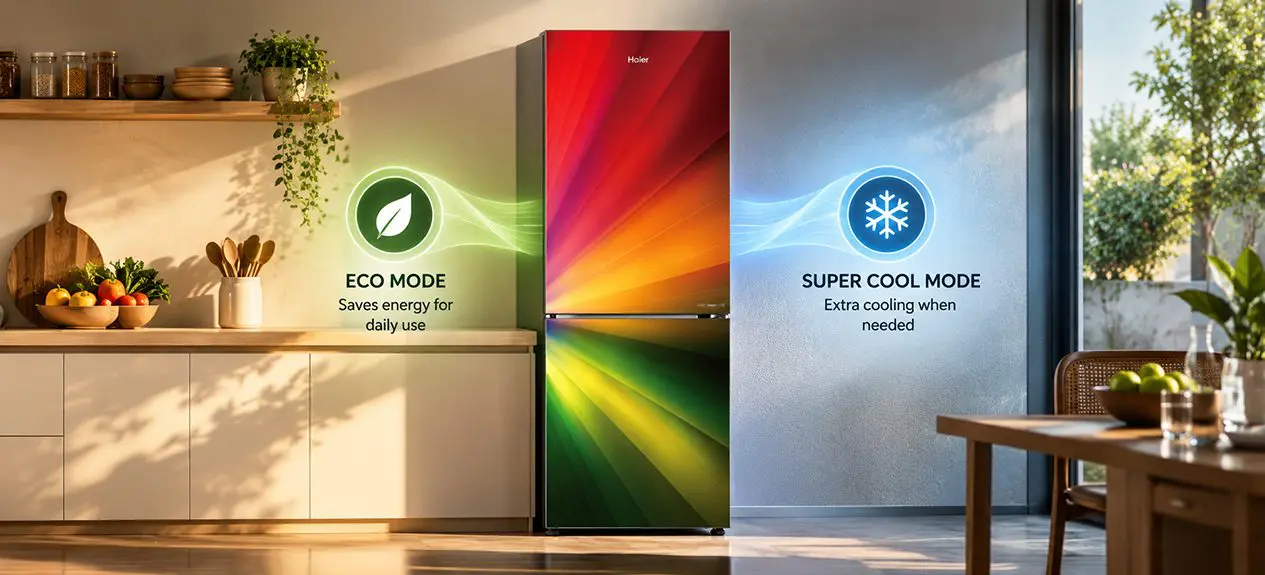

A refrigerator runs all day keeping everything from fresh vegetables and dairy products to leftovers and frozen foods at appropriate temperatures. Unlike appliances that turn on only when in use, it still draws power even if the kitchen is empty. This is something to bear in mind when selecting and using a refrigerator.
However, not every household uses their refrigerator the same. Its cooling needs can be influenced by the storage needs, how often the doors are opened and even the weather. As modern appliances are starting to come with features such as twin energy saving mode refrigerator technology, it is interesting to consider the relationship between different cooling needs and the electricity that we use in our daily lives.
Before we go into the energy-saving features, it’s helpful to know why a refrigerator needs electricity 24/7 and what affects its power consumption.
Why Does a Refrigerator Consume Electricity Throughout the Day?
A fridge has to be at a constant temperature for food to be fresh and safe to eat. Even when the doors are closed, heat leaks slowly into the compartments. Cooling should be periodic. But how much power does a fridge use in a day?
- Compressor operation. The compressor circulates the refrigerant and removes heat from inside the refrigerator. Traditional models turn on and off as needed; inverter compressors can change their speed as needed based on cooling needs.
- Heat through the refrigerator walls. Even a well-insulated fridge will have some heat leaching inside eventually from the environment. The cooling system must be able to remove heat to keep the temperature at the desired level.
- Lots of opening the fridge door. The door opens, warm air spills out, and the cold comes in. The appliance then has to dump unwanted heat, which can result in longer compressor run times and higher electricity consumption.
- Amount and temperature of food. The more groceries or hot food you put into the fridge, the harder the appliance has to work to cool it all. The compressor might have to run longer and use more energy to get the new stored items down to the desired temperature.
What are Twin Energy Saving Modes in a Refrigerator?
The Twin Energy Saving Mode refrigerator has two settings just for this purpose, so you can control the electricity consumption according to your cooling needs. The product offers two levels of power saving, whereas a normal eco mode refrigerator would only have one setting for saving power. ‘This allows households more freedom to choose a mode of operation and not be stuck with the same setting in every situation.
The idea with these modes is to provide more flexibility in energy management based on normal refrigerator usage. Household routines, food storage habits and frequency of appliance use influence cooling requirements. There are several energy-saving options so that users can choose an option that is more suited for them while considering electricity consumption.
How Do the Two Energy Saving Modes Actually Work?
Haier’s Twin Energy Saving offers two levels of energy efficiency, each setting designed to suit different cooling needs. Although both aim to lower electricity use, the options available depend on the refrigerator’s features and how it is being operated.
- Mode One is good for daily refrigeration usage. Mode One offers daily food storage in the refrigerator, with a lower consumption setting that can save up to 15% of energy. Useful when both fresh-food and freezer compartments are needed for regular use.
- Convertible mode enables more potential savings. Convertible Mode works with the refrigerator’s supported convertible functions to save up to 30% of energy. It provides users with an alternate operating mode where their storage needs are not the standard setup.
- The two modes are not combined automatically. The figures of 15% and 30% are for different energy-saving levels, not cumulative savings. Selecting convertible mode does not entail an additional 30% savings on top of the savings offered by mode one.
- Energy-saving modes are not the same as inverter technology. You can choose between two energy-saving modes with Twin Energy Saving Modes, and Twin Inverter Technology regulates the compressor and fan to suit the cooling requirement.
The Twin Energy Saving Mode refrigerator has two settings just for this purpose, so you can control the electricity consumption according to your cooling needs. The product offers two levels of power saving, whereas a normal eco mode refrigerator would only have one setting for saving power. ‘This allows households more freedom to choose a mode of operation and not be stuck with the same setting in every situation.
The idea with these modes is to provide more flexibility in energy management based on normal refrigerator usage. Household routines, food storage habits and frequency of appliance use influence cooling requirements. There are several energy-saving options so that users can choose an option that is more suited for them while considering electricity consumption.
How Do the Two Energy Saving Modes Actually Work?
Haier’s Twin Energy Saving offers two levels of energy efficiency, each setting designed to suit different cooling needs. Although both aim to lower electricity use, the options available depend on the refrigerator’s features and how it is being operated.
- Mode One is good for daily refrigeration usage. Mode One offers daily food storage in the refrigerator, with a lower consumption setting that can save up to 15% of energy. Useful when both fresh-food and freezer compartments are needed for regular use.
- Convertible mode enables more potential savings. Convertible Mode works with the refrigerator’s supported convertible functions to save up to 30% of energy. It provides users with an alternate operating mode where their storage needs are not the standard setup.
- The two modes are not combined automatically. The figures of 15% and 30% are for different energy-saving levels, not cumulative savings. Selecting convertible mode does not entail an additional 30% savings on top of the savings offered by mode one.
- Energy-saving modes are not the same as inverter technology. You can choose between two energy-saving modes with Twin Energy Saving Modes, and Twin Inverter Technology regulates the compressor and fan to suit the cooling requirement.
How Is Energy Saving Mode Different from Normal Refrigerator Operation?
Normal operation is about maintaining the cooling settings you have chosen, while a fridge in energy-saving mode operates in an efficiency-driven way. Some practical factors can explain the differences.
| Points of differences | Normal mode | Energy saving mode |
| Cooling approach | Follows the refrigerator’s regular cooling settings | Uses an efficiency-focused cooling configuration |
| Electricity consumption | Power usage varies with the refrigerator’s cooling requirements | Designed to consume less electricity under suitable conditions |
| Temperature settings | Maintains the temperatures selected for regular operation | May use adjusted temperature settings to reduce energy consumption |
| Compressor activity | Operates according to the refrigerator’s standard cooling controls | May optimise compressor operation to manage power consumption |
| Cooling response | Responds to changes in temperature through normal cooling controls | May take longer to restore temperatures after increased cooling demand |
| Suitable usage | Useful for everyday storage and periods of higher cooling demand | Suitable when cooling requirements are relatively stable |
| Mode flexibility | Continues using the regular cooling configuration until settings are changed | Offers selectable efficiency levels or additional operating options, depending on the model |
When should you turn on Power Saving Mode on a fridge?
If the cooling requirements of the refrigerator are easier to meet, then a fridge power saving mode can be useful. These settings are intended to save power, but their appropriateness will depend on how the appliance is being used and what kind of food is stored inside.
- When the fridge isn’t being opened for the night. If the model has a scheduled energy-saving operation, then these quieter hours can be a handy time to use it without interrupting regular kitchen activities.
- If you mostly store items that need to be kept cold. If you have regular storage needs, and the refrigerator is mostly filled with daily essentials like milk, vegetables, fruits and leftovers, an energy saving setting can be suitable.
- If you want to cut your electricity bills in the long run. Refrigerators run all year round, 365 days, and even a small reduction each day in electricity use can help cut the cost of running them over a year. You may also find that having the appropriate energy-saving setting on constantly can help you to keep your household electricity costs lower over time.
- If you don’t need to freeze or cool quickly. There are times when you want to chill a few drinks quickly or make ice in a short time. If these functions are not needed, an energy-saving mode could be a better choice of operation depending on the settings available in the refrigerator.
What Should You Know Before Switching to an Energy-Saving Mode?
Turning your fridge to an energy-saving mode setting is pretty easy, but there are a few things to bear in mind before doing this. These can help you understand how the appliance uses energy and keep you from expecting the same results under each operating condition.
- Check if mode selection is needed manually. Some refrigerators will stay in the mode you select until you change it. Others may default to a certain mode after you perform certain functions.
- Search for the BEE star rating on the refrigerator. An energy-saving mode does not override the overall efficiency rating of the appliance. The BEE label also gives an estimate of the annual electricity consumption at standard test conditions.
- Think about where you put the refrigerator. A refrigerator placed too close to a wall or a heat-generating appliance might find it difficult to dissipate heat. Regardless of the selected energy-saving setting, maintaining the ventilation clearance recommended by the manufacturer will allow the cooling system to operate properly.
- Measure electricity use over a longer period. A lower electricity bill doesn’t mean the mode you chose is the problem, as other household appliances also consume electricity. A compatible energy meter will help you to compare the refrigerator consumption in normal and energy-saving mode in similar periods.
Wish to know about our energy-efficient models?
Read through: Energy-Efficient Refrigerators: Saving the Planet and Your Wallet
How Haier Refrigerators Approach Energy Savings and Flexible Cooling
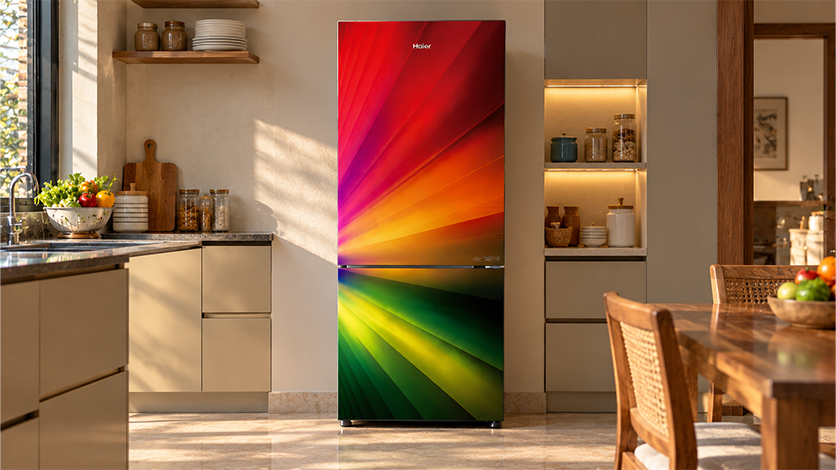
At Haier, we look at energy efficiency in terms of how a refrigerator operates throughout the day. Our chosen refrigerators incorporate technologies that let us use less electricity while still meeting the daily cooling requirements by controlling compressor operation and changing compartment use.
1> Twin Energy Saving Technology with 3 levels of efficiency
Our Twin Energy Saving feature gives you two energy-saving options. Potential savings of up to 15% (Convertible Mode: up to 30%) are available in Mode One. The percentages are non-cumulative, and savings will vary based on refrigerator usage.
2> Convertible options allow more flexible storage
Our 8-in-1 Convertible allows select compartments to operate in multiple configurations. This flexibility is provided to meet the changing needs of food storage, whether you need to store more fresh produce or adjust the use of the freezer.
3> Twin Inverter Technology addresses cooling demand
Twin Inverter Technology allows us to tailor the compressor & fan motor speed to fit cooling needs. This enables us to control cooling output more efficiently and reduces the need for repeated fixed-speed operation.
4> Our fridges combine energy management with daily convenience
Our 256 Litres Frost Free Inverter Bottom Mounted Refrigerator brings together Twin Energy Saving Modes, 8-in-1 Convertible Technology and Twin Inverter cooling. We also offer Turbo Icing, allowing users to access faster ice preparation when needed without treating it as part of the energy-saving function.
Conclusion
The Twin Energy Saving Modes offer a convenient way to manage refrigerator energy consumption with two different efficiency settings. Understanding what each mode offers and when it is appropriate for your storage needs will make these settings more useful.
If you’re still using a regular fridge or even a smart fridge that saves energy, it is just as important to keep your food at the right temperature as it is to save on energy.
FAQs
What is an energy-saving mode in a refrigerator?
Energy-saving mode is a setting that allows the refrigerator to consume less electricity while maintaining the temperature needed to store food. Depending on the model, it may alter cooling operations, temperature settings or compressor activity.
How do fridge energy-saving modes work?
Energy-saving modes on a fridge will work by managing the cooling operations better. Some fridges control the compressor activity or temperature settings; others use convertible compartments to avoid unnecessary cooling.
Do refrigerator eco modes really save electricity?
Yes, refrigerator eco modes can be effective in reducing electricity usage if used under appropriate operating conditions. But the actual savings depend on room temperature, how often the door is opened, what you put in the fridge and how efficient the fridge is. There’s an eco mode that’s meant to optimise energy management, but it doesn’t promise the same savings for every home.
What is the difference between eco mode and normal mode?
Normal mode keeps the refrigerator’s default cooling settings and responds to normal temperature fluctuations. Eco mode is intended to save electricity. It may do this by changing the cooling level or temperature settings .
Should I keep energy saving mode on all the time?
You can leave the energy-saving mode on for normal use if you stay within the recommended food storage temperatures. For larger quantities of newly bought groceries or in very hot weather, however, it is better to switch to normal cooling.
Do energy modes affect cooling?
Energy-saving modes might change how a refrigerator cools, but they should not affect the safe storage of food. These settings may affect compressor operation, temperature targets or compartment functionality depending on the model.