
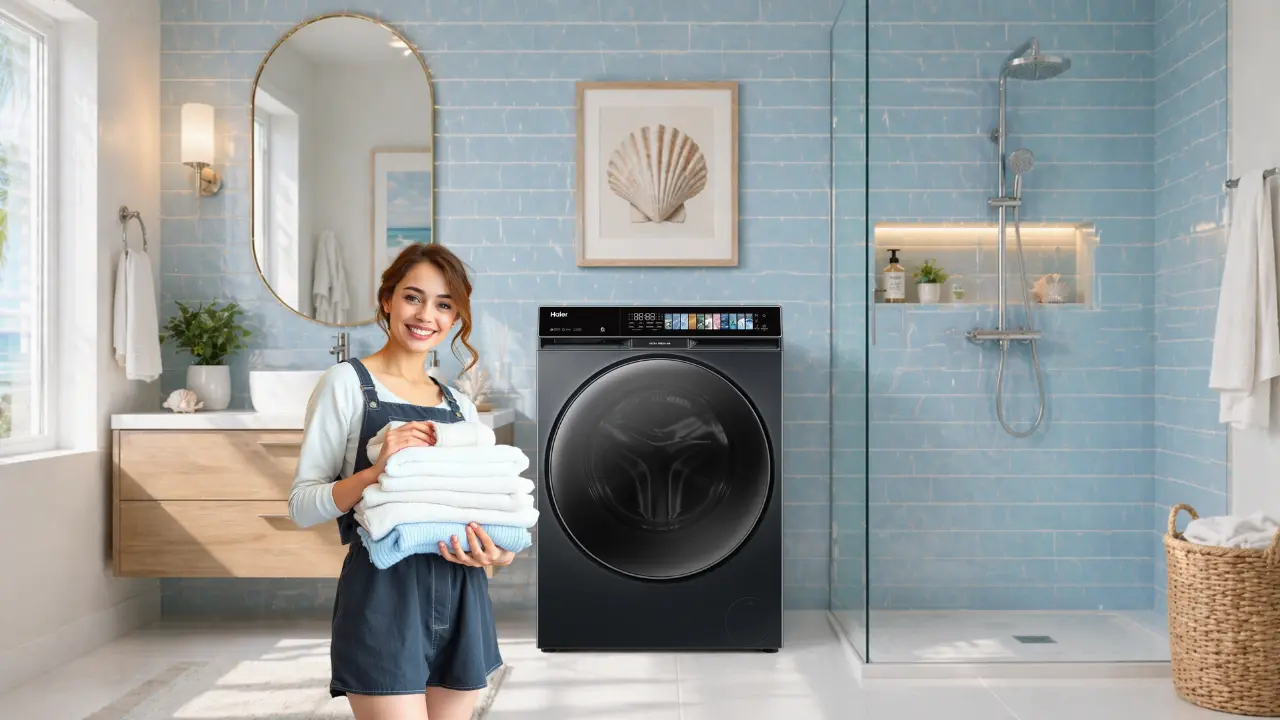

Automation is the future of laundry because it removes decision-making, reduces effort, saves time, and delivers consistent results by turning washing into an intelligent system instead of a manual task. It replaces guesswork with precision, and effort with ease.
In modern Indian homes, that shift is no longer a luxury. It is becoming the baseline.
Why does laundry still feel like work in 2026?
It is Sunday evening.
A pile of clothes sits on a chair. Office wear. Gym clothes. Bedsheets. Towels.
Someone stands in front of the washing machine.
Pause.
Which mode?
How much detergent?
Heavy wash or quick wash?
Laundry is not difficult.
But the thinking around it is.
That is the hidden cost most people ignore. Not time. Not electricity.
Decision fatigue.
And automation solves exactly that.
Automation is not about machines. It is about removing friction
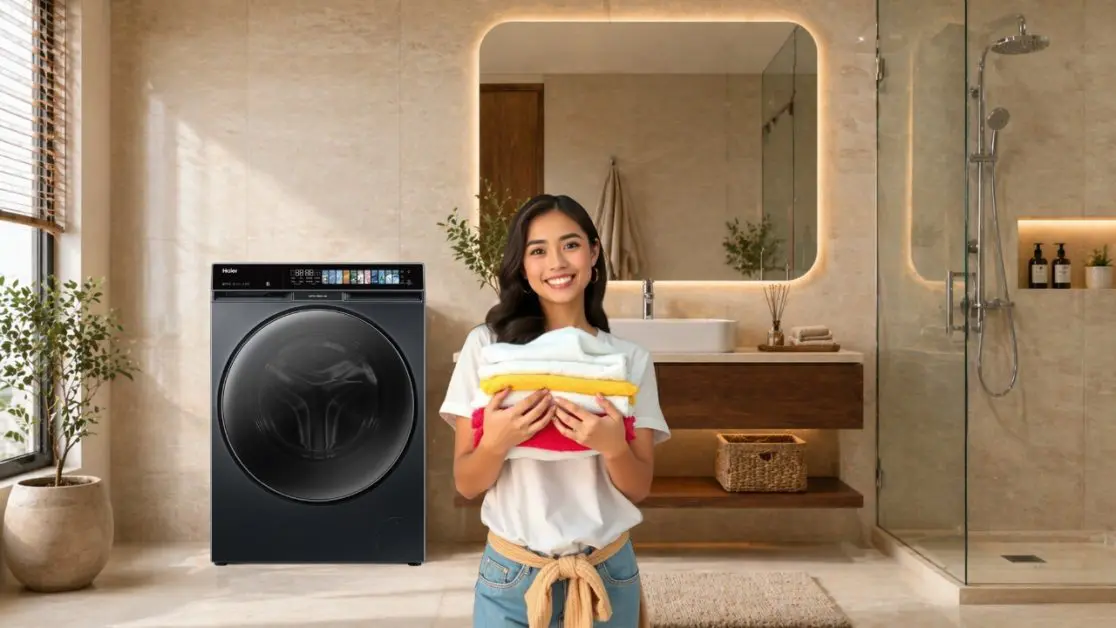
Most people assume automation means adding more technology.
More buttons. More features. More complexity.
The truth is simpler.
Good automation removes decisions.
Think of it like booking a cab.
Earlier, you called, negotiated, waited.
Now, you tap once. It happens.
Laundry is going through the same shift.
The real problem: Fragmented laundry systems
Walk into a typical Indian home.
- One person loads clothes
- Another adjusts settings
- Someone adds detergent later
- Someone remembers to take clothes out
It is a chain of small tasks.
Each step creates friction.
Automation connects them into a system.
Three ways people approach laundry today
Let’s break it down clearly.
One option is: Manual control
- You decide every setting
- You measure detergent
- You monitor cycles
Cost: Time, effort, inconsistency
Benefit: Full control
The second option is: Semi-automatic convenience
- Preset programs help
- Some automation exists
- Still requires intervention
Cost: Partial effort
Benefit: Some time saved
The third option is: Fully automated systems
- Machine senses load, fabric, and dirt level
- Adjusts settings automatically
- Optimises water, energy, and time
Cost: Higher initial investment
Benefit: Maximum ease, consistency, efficiency
The shift is clear.
People are moving from control to clarity.
What automation actually looks like in modern laundry
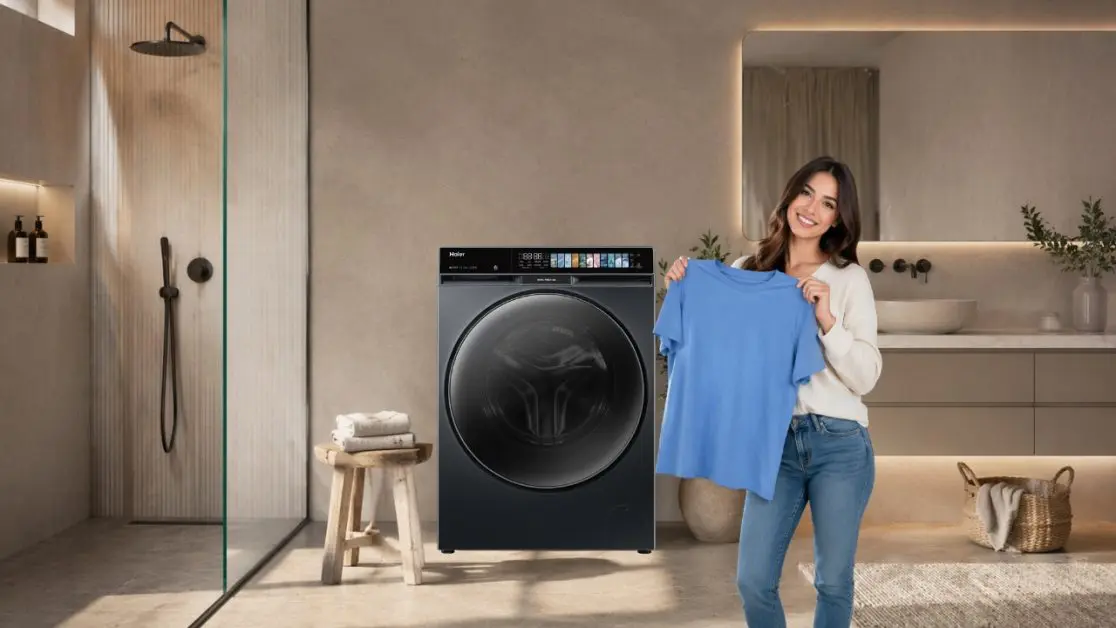
Automation is not one feature.
It is a system of small intelligent decisions working together.
Here is what that system includes:
| Function | What it replaces | What it delivers |
| AI Wash | Manual setting selection | Auto-optimised cycles |
| Smart Dosing | Guessing detergent | Exact usage every time |
| Auto Weight Detection | Estimating load | Precision water and time use |
| Air Circulation | Manual drying timing | Long-lasting freshness |
| App Control | Physical monitoring | Remote convenience |
Each feature removes one decision.
Together, they remove the entire mental load.
The invisible upgrade: From appliance to system
A washing machine used to be a tool.
Now it is a decision system.
Take machines like:
- Haier 12 Kg F11 Front Load Washer Washing Machine (HW120-DM14F11BKU1)
- Haier 12 Kg F11 Front Load Washer & Dryer Washing Machine (HWD120-DM14F11BKU1)
- Haier 10 Kg F9 Pro Front Load Washer Washing Machine (HW100-DM14F9PBKU1)
- Haier 12 Kg F9 Pro Front Load Washer Washing Machine (HW120-DM14F9PBKU1)
They do not just wash clothes.
They observe.
- Fabric type
- Load size
- Dirt level
Then they decide.
All in one touch.
That is not a feature.
That is a shift in how work gets done.
Automation saves more than time
Most people think automation is about speed.
It is not.
It is about efficiency across multiple dimensions.
1. Time efficiency
- Faster cycles
- No repeated adjustments
- Parallel tasks become possible
2. Energy efficiency
- Direct Motion Motor ensures smooth, low-noise, energy-efficient performance
3. Water efficiency
- Smart dosing avoids excess detergent
- Auto weight ensures precise water use
4. Mental efficiency
- No repeated decisions
- No second guessing
The biggest win is not saving minutes.
It saves attention.
Why automation fits perfectly into Indian homes
Indian households are complex.
Laundry here is not just clothes.
It includes:
- School uniforms
- Sarees and delicate fabrics
- Gym wear
- Kitchen towels
- Festival outfits
Each needs different care.
Manual systems struggle with this complexity.
Automation thrives in it.
One machine. Multiple realities
A working professional runs a quick cycle at night.
A parent washes mixed loads on Sunday.
A couple manages laundry between meetings.
Same machine. Different needs.
Automation adapts.
That is its real strength.
The “after wash” problem no one talks about
Laundry does not fail during washing.
It fails after.
You forget clothes overnight.
Morning comes.
They smell off.
Not dirty. Not fresh.
Just stale.
Technologies like Ultra Fresh Air solve this by circulating air inside the drum for up to 12 hours, preventing moisture buildup and odor formation.
Freshness is not just created.
It is maintained.
Automation reduces errors you don’t notice
Most laundry mistakes are invisible.
- Too much detergent
- Wrong temperature
- Overloading the drum
- Using the wrong cycle
You do not notice immediately.
But fabrics wear out faster.
Energy usage increases.
Clothes lose softness.
Automation corrects these silently.
The shift is already happening
Look around.
- Smart ACs adjust temperature automatically
- Refrigerators manage cooling zones
- TVs recommend content
Laundry is catching up.
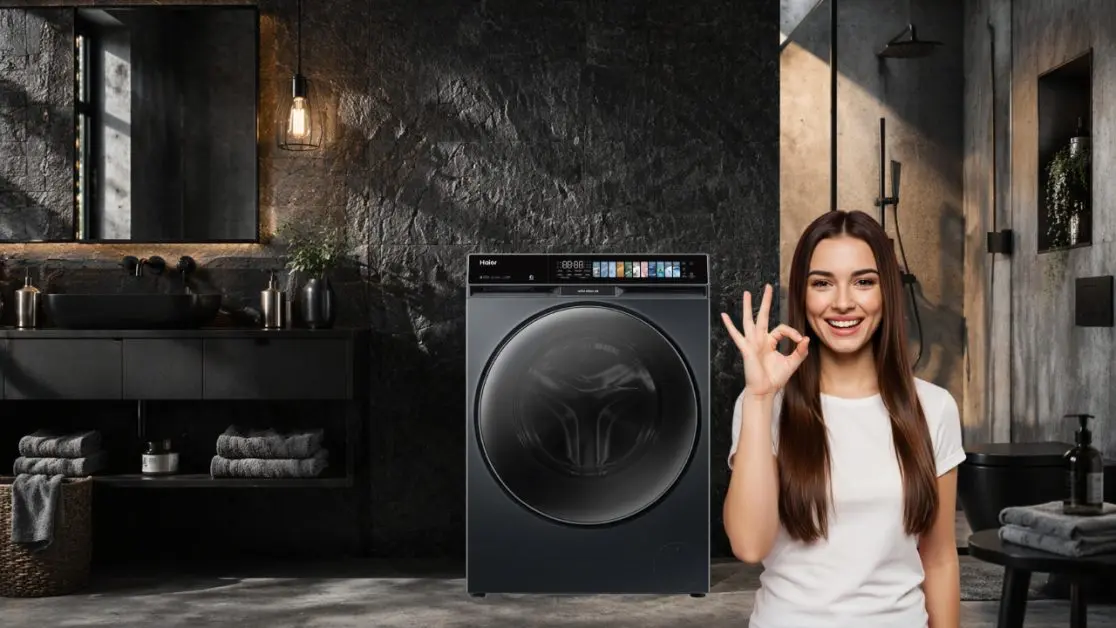
Machines like the Haier F11 and F9 Pro series bring:
- AI-powered wash decisions
- Smart dosing systems
- Silent motors for night cycles
- WiFi-enabled remote control
This is not the future.
It is already here.
What automation costs and what it returns
Let’s simplify the decision.
Costs
- Higher upfront investment
- Initial learning curve
Returns
- Time saved every week
- Lower electricity and water usage
- Longer fabric life
- Reduced mental effort
Over time, the system pays for itself.
Not just financially.
But mentally.
The deeper insight: Automation changes behaviour
Automation does not just make tasks easier.
It changes how often you do them.
Laundry becomes:
- More frequent
- Less stressful
- More consistent
You stop postponing it.
You stop overthinking it.
It becomes invisible.
What does this mean for the future of work at home?
Every home runs like a system.
Tasks. Decisions. Processes.
Automation reduces friction across all of them.
Laundry is just one example.
But it reveals a larger pattern.
The future of work is not doing more.
It is deciding less.
So, is automation the future of laundry?
Not because it is advanced.
Not because it is smart.
But because it aligns with how life is changing.
Less time.
More complexity.
Higher expectations.
Automation fits that reality.
Quietly.
The one idea to remember
The best machines do not make you faster.
They make you think less.
And once that happens, laundry stops being a task.
It becomes something that simply happens.
Like it always should have.
Frequently Asked Questions
Why does doing laundry feel mentally exhausting even when it’s simple?
Because the effort isn’t physical it’s cognitive. Choosing cycles, detergent amounts, and timing creates repeated micro-decisions that drain attention.
Why do I keep delaying laundry even when it only takes an hour?
You’re not avoiding the task, you’re avoiding the thinking required to start it.
Why do I stand in front of my washing machine and still feel unsure what to do?
Too many options without guidance create hesitation. More control often means more confusion.
What does AI Wash actually do in a washing machine?
It detects load size, fabric type, and dirt level, then auto-selects the optimal cycle.
Is smart dosing really useful or just a gimmick?
It’s highly practical. It prevents detergent waste and improves wash quality.
Can I really control my washing machine from my phone?
Yes, with WiFi-enabled models, you can start, monitor, and adjust cycles remotely.
Why is my washing machine using too much water?
Likely due to manual settings or lack of load detection.
Why are my clothes still dirty after a wash cycle?
Incorrect cycle selection or underestimating dirt level.
Why is my machine noisy during night cycles?
Older motors or imbalance. Modern Direct Motion motors reduce noise significantly.