
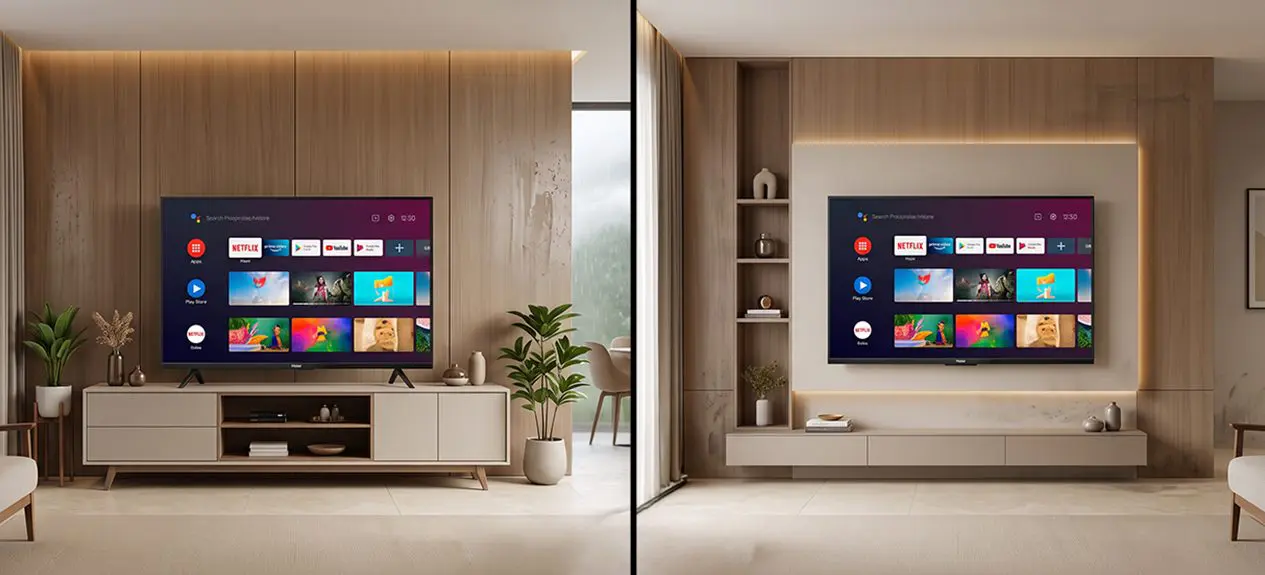

In a damp home, deciding where the TV goes isn’t just about saving space or keeping the living room tidy. During the monsoon, moisture tends to build up on walls, especially around corners, windows, and any surface facing outside. If the television ends up too close to a damp wall, that moisture can eventually work its way toward the vents, ports, and internal components. So when it comes to wall mounting vs a TV stand, which one actually makes sense?
A wall-mounted TV stays out of reach of accidental knocks and floor-level moisture, but mounting it straight onto a damp wall just trades one problem for another. A TV stand gives you more room to work with, since you can move the television away from a moisture-prone wall, as long as there’s enough space around it.
The safer choice starts with figuring out where the dampness is coming from and how much airflow the TV needs.
Wall Mounting vs TV Stand: What Changes in a Damp Room?
The real difference between the two setups isn’t the TV; it’s the distance and airflow around it.
A wall-mounted TV sits close to the wall, which looks clean and frees up the floor. But if that wall has damp patches, condensation, or seepage, that position stops making sense. A TV stand, on the other hand, lets you place the television further from the wall and move it if that spot starts getting damp.
| Factor | Wall Mount | TV Stand |
| Floor-level moisture | Less exposed | More exposed, depending on placement |
| Distance from damp wall | Usually limited | Easier to increase |
| Air circulation | Depends on mount and wall clearance | Usually easier to manage |
| Flexibility | Hard to move once installed | Easy to reposition |
| Space saving | Excellent | Needs furniture space |
| Installation | Needs proper mounting | Simpler setup |
| Damp-wall suitability | Only if the wall is dry and sound | Better if the TV can stay clear of dampness |
That’s why wall mounting vs a TV stand should be decided after you’ve checked the wall, not just by picking whichever option looks nicer.
When is Wall Mounting a Safe Option?
Wall mounting can work fine in a damp-prone home, as long as the wall itself is dry and structurally sound.
It keeps the TV up off the floor, away from accidental knocks, spills, or moisture at ground level, and it’s a good option for smaller rooms where a TV unit would eat into your space.
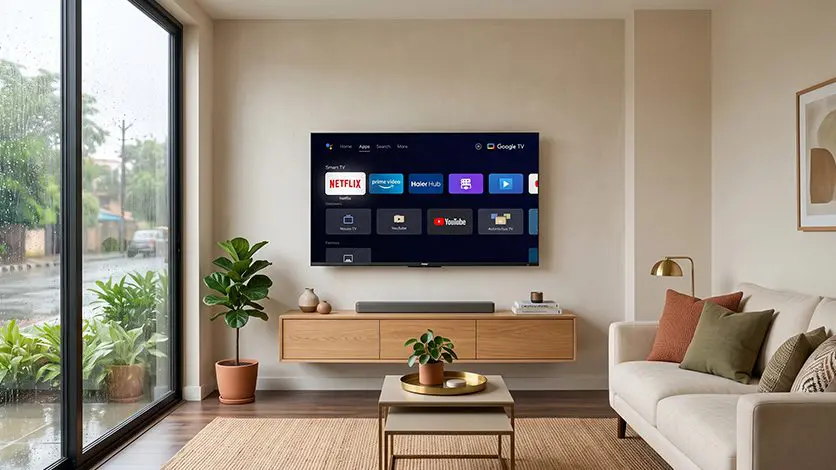
However, don’t assume mounting a TV automatically protects it from humidity.
If the wall has seepage, peeling paint, damp patches, or condensation, deal with that first before anything gets installed. Mounting a TV straight onto a wall that’s already showing signs of water intrusion makes TV damage prevention a lot harder than it needs to be.
Haier’s installation guidance recommends checking the wall structure, picking a mount that suits it, and making sure the bracket can hold the TV’s weight safely.
When Can a Table Stand Be the Better Choice?
A stand starts to make more sense when the wall behind the TV is the main concern.
For example, if an exterior wall gets damp during heavy rain, keeping the TV on a sturdy unit gives you the option of positioning it farther away from that surface. And if moisture starts showing up in that spot later on, the TV can also be moved to a drier part of the room.
This flexibility is the main advantage of a TV stand that helps with moisture protection.
However, one condition worth flagging: the stand itself has to be solid and strong enough to support the TV’s weight. It should sit on a level surface, and the TV should be secured appropriately, especially if there are kids or pets around who might bump into it.
So a stand isn’t automatically the safer pick either. It just gives you more room to adjust based on the TV’s surroundings.
The Priority: How to Protect a TV From Wall Moisture
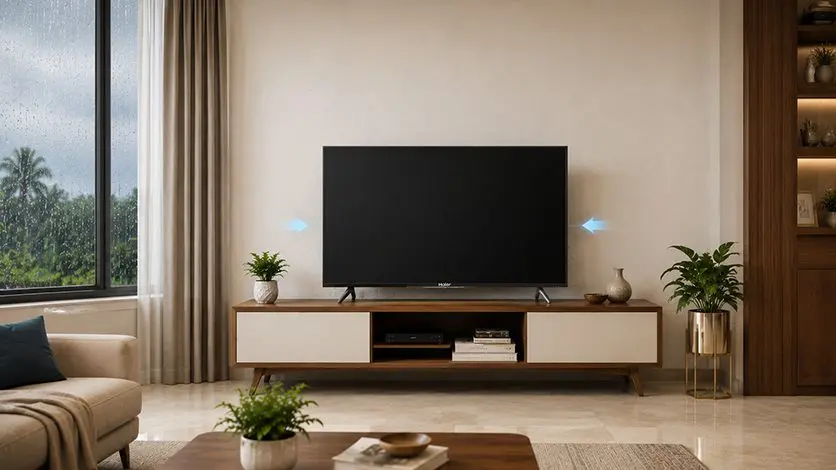
If you are concerned about how to protect TV from wall moisture, start by looking at the wall rather than the television.
- Check for dampness first: Look out for bubbling paint, stains, mould, peeling patches, or a wall that just feels cold and damp to the touch.
- Keep some distance where you can: A table stand makes it easier to create space between the TV and a wall that’s prone to moisture.
- Improve ventilation: Don’t wedge the TV into a tightly closed cabinet. Air needs room to circulate around the vents.
- Keep rain out: Avoid spots where water could get in through an open window, balcony, or a poorly sealed gap.
- Keep the ports dry: HDMI, USB, power, and other ports should stay clear of direct water and condensation.
These are simple but useful steps for preventing TV damage, particularly during prolonged rainy weather.
How to Protect a TV on a Stand
A stand gives you more flexibility, but placement is still important.
Keep the TV clear of windows where rain could get in, and don’t push it up against a wall that’s already showing moisture. Make sure the cabinet isn’t blocking the TV’s vents either.
It’s also worth keeping liquids, humidifiers, and indoor plants away from the unit. It might seem unrelated to humidity specifically, but regular exposure to water or moisture near electronics is best avoided altogether.
If the room gets particularly humid, improving airflow does more good than covering the TV up. And a TV cover should never go on while the television’s actually running; it traps heat and blocks airflow.
What is the Best Way to Place a TV in Humidity?
The best way to place a TV in humidity is to prioritise a dry wall or a stable surface with decent airflow around it.
If the wall’s dry and structurally sound, mounting is a great space-saving option. If it’s damp, a stand gives you more freedom to keep the TV away from that spot.
In other words, don’t start with the mounting method. Start with the safest location, then figure out whether a wall mount or stand fits better there.
Wall Mount or Stand: Which One Should You Choose?
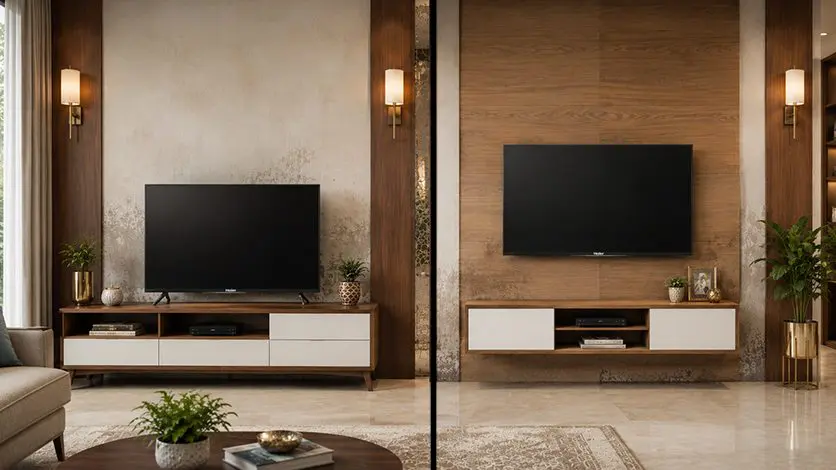
Go with a wall mount if:
- The wall is dry and structurally sound.
- Floor space is tight.
- You want the TV up and out of reach of spills or knocks.
- You can keep proper ventilation and clearance around it.
Go with a TV stand if:
- The wall behind the TV tends to get damp.
- You want the option to move the TV later.
- You’re renting and don’t want to drill into the wall.
- You’ve got a stable TV unit with room around it.
The real takeaway from TV wall mount vs table stand safety is that neither option wins by default in every home. The wall’s condition, the airflow, how well it’s installed, and the distance from moisture matter far more than the mounting style itself.
Read more: The Pros and Cons of Wall-Mounting Your TV.
Conclusion
A wall-mounted TV works well on a dry wall, while a stand tends to make more sense when the dampness is really concentrated on the wall behind the television. What matters is keeping moisture away from the TV, maintaining airflow, and making sure the installation can properly support the screen.
For homes dealing with humid weather, safe TV installation isn’t about choosing between a wall and a stand; it’s about finding the right spot first. Once that’s sorted, the TV can work comfortably through the rainy season without dampness turning into a bigger problem.
FAQs
How do Haier Smart TVs handle high humidity and damp wall installations?
Haier TVs are designed for everyday home environments, but they should still be kept away from direct moisture, condensation, and damp walls. Proper ventilation and installation are important in humid conditions.
Do Haier televisions feature rugged chassis designs to minimise moisture and dust ingress?
Haier TVs are built for regular household use, but the chassis should not be treated as waterproof. Keeping the television dry and allowing sufficient airflow remains essential.
Is a tabletop TV stand safer than wall mounting for homes prone to dampness?
Not necessarily; a tabletop stand can make it easier to keep the TV away from a damp wall, while a properly installed wall mount can also be safe if the wall is dry and well ventilated.
How does dampness or high wall moisture affect a television mounted directly on a wall?
Persistent moisture can contribute to condensation and may affect internal electronic components over time. Keeping a small, well-ventilated gap from damp surfaces can help reduce the risk.
How does air circulation play a role in protecting electronics from moisture damage?
Good airflow helps heat escape and reduces the chance of moisture remaining trapped around the television. This is especially important when the TV is installed near a humid or poorly ventilated wall.