
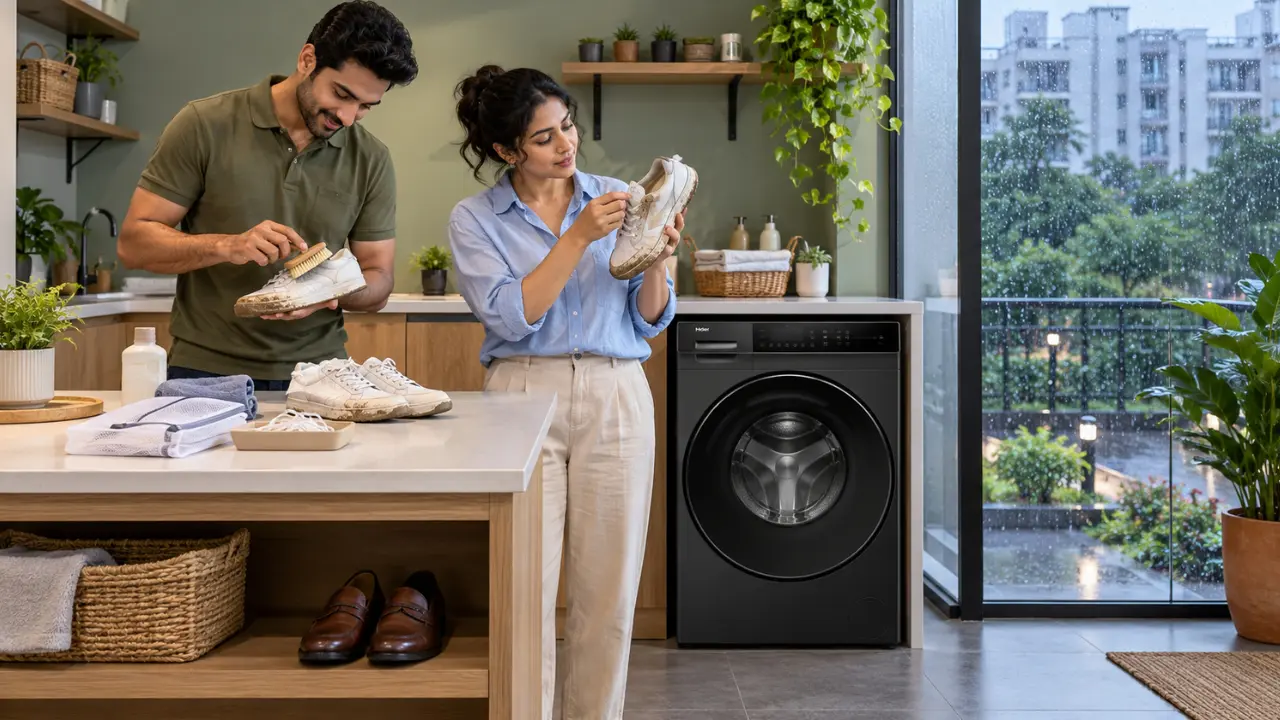

Yes, sometimes. But before you put the ones you love in the washing machine and hit Start, one question must be asked: Can your shoes go in the washing machine?
Cleaning a pair of canvas shoes can make them look much fresher than a normal pair of shoes. Leather loafers, suede shoes or shoes with fine or delicate decoration, on the other hand, can become misshapen, lose their factory finish or lose their adhesive strength when exposed to water and movement. As crucial as the wash itself is the washing process.
In households that are used to the dust and mud on the road, the dirt found in the playground or even a spill of milk on the floor, shoes face the recurring task of keeping them clean. Of course, handwashing is good, but scrubbing the two sides of a pair of trainers will take some time.
So, what can we do about a washing machine to help? Yes, if you’re aware of its restrictions and take the right approach.
Which Shoes Can Be Put in the Washing Machine?

Not all shoes are suited for the wash drum. The most effective starting point is to check the manufacturer’s care directions, which can generally be discovered on the label or in the shoe’s packaging. Do not machine-wash them if they are not meant to be washed by machine.
The response of a shoe to water and movement can be influenced by the type of fabric construction, adhesive and materials on which the sole rests.
So, let’s now get into the most popular types of footwear.
- Canvas shoes: Can be machine-washed as outlined in the shoe manufacturer’s directions.
- Fabric or cotton sneakers: Many of these will be machine-washable, but check for any delicate trims or glued sections that may not be able to be washed.
- Running shoes: Most shoes that are used for running can be cleaned using a mild soap and soft brush. Unless the manufacturer specifies doing so, machine-washing should not be considered.
- Leather shoes: Avoid regularly putting them in the washing machine. Too much water may ruin the leather and change its finish.
- Suede shoes: Do not put them into the washing machine because it will mark and change the texture of the shoes.
- Formal shoes, shoes with embellishments and delicate designs: Clean as per the manufacturer’s special care instructions.
A small hint: If you don’t know how the shoe will behave when it gets wet and shaken in the washing machine, don’t put the shoe in the washing machine to test it.
How to Check Whether Your Shoes Are Machine-Washable
The most convenient method to find out whether your shoes are machine-washable is to examine the label for instructions and look at the shoes prior to washing. Run a visual inspection for one minute before preparing a wash load. This simple action can prevent a needless cleaning disaster.
1. Read the Directions for Use
The shoe manufacturer’s instructions are more important than the general cleaning recommendations. Some shoes may look like regular cotton sneakers, but they contain elements or materials that are not capable of being washed using a washing machine.
2. Inspect the Sole and Stitching
Worn areas include peeling edges, loose stitching, worn or cracked soles, or any places where the upper material has begun to separate from the base. Damage may be exacerbated by water and repeated movement.
3. Inspect for Decorations
Finishes such as metallic details, glued-on stones, delicate prints or other decorative elements might not wash well. The primary fabric may be washable, but these decorations can create problems.
4. Remove Any Loose Dirt First
Gently brush the soles together outside to remove dried mud, grit and dust. This is particularly useful after walking around in the mud in a park or after a commute.
If not removed, loose debris may be swept into the wash water and affect other items.
How to Wash Shoes in a Washing Machine: A Step-by-Step Guide

If the footwear manufacturer has stated that it can be machine-washed, use a safe machine-washing technique. Don’t make it difficult, but a little preparation can go a long way.
Step 1: Prepare the Shoes
If they are removable, take out the laces and insoles. Wash the laces separately and follow the manufacturer’s instructions for the insoles, as some might not be able to withstand soaking.
Wipe off any dry dirt on the uppers and soles. If the shoes still have any remaining mud stains, try to remove as much of the mud as possible prior to washing.
Step 2: Choose an Appropriate Laundry Bag
Place each shoe in a separate mesh laundry bag and wash it in the washing machine. This will reduce the risk of direct contact with the drum but does not remove the risk entirely.
If they can be washed with the rest of the laundry, a few old towels are acceptable. They can somewhat soften the impact and decrease the sound made by shoes moving around.
Avoid washing shoes alongside light-coloured clothing, expensive fabrics that need special care, or other items that can get dirty from the shoes.
Step 3: Make the Most Suitable Wash Programme Selection
This is why it is important to have washing machine setting options.
When shoes are approved for machine-washing, use a low-temperature, gentle programme when washing shoes, if permitted by the manufacturer’s instructions. Avoid excessive force during washing and excessive spin speeds that will cause undue strain on the shoe’s structure.
Keep in mind that a programme may be available on your machine, but it may not be appropriate. It can be called Cotton, Quick Wash or Daily Wash. Select a setting according to the care needs of the footwear.
Step 4: Use Detergent Sparingly
Use an appropriate amount of mild laundry detergent, following its instructions. Excessive amounts of detergent may leave a film on the fabric, and harsh cleaners may affect colours and finishes.
Don’t apply bleach, alcohol-based stain removers or fabric softeners to shoes unless the manufacturer of the shoes recommends it.
Step 5: Allow Shoes to Air-Dry
Remove the shoes after washing and gently mould them if necessary. Loosely packing them with clean paper can help draw moisture from them and maintain their structure. Replace the paper when it is wet.
Place the shoes in a well-ventilated area to air-dry, but not in direct sunlight. Never place them on a hot floor or in a tumble dryer, except as authorised by the manufacturer.
Avoid hastening the drying process. Shoes that feel dry on the outside can still be wet inside or around the soles.
What Setting in the Washing Machine Should You Use?
There is no common shoe-washing programme for all materials. It will depend on the manufacturer’s instructions for the footwear and the appliance settings that are available.
Some of the basic rules are:
- Water temperature: Cool or low-temperature water is preferred if not contraindicated by the shoe care instructions.
- Spin speed: A low spin speed may reduce mechanical stress, but it is not enough to render inappropriate footwear safe for machine-washing.
- Wash duration: If the footwear has been approved, a gentle programme could be more suitable than an intensive programme.
- Load arrangement: Make sure that the load is properly balanced and do not overload the drum.
- Amount of detergent: Use the amount recommended by the detergent label. Don’t use more detergent to get rid of stubborn dirt.
Remember, washing machines are used to wash laundry. A pair of shoes might be more difficult to accommodate, have heavier weight concentrated in certain areas, and contain parts that can loosen through repetitive motion.
Washing Shoes in a Washer: Is There Any Danger?

It is very convenient to wash things in a machine, but it’s not always safe. When you know what you may encounter, you’ll be able to decide when to use your appliances and when to pick up the cleaning brush.
Damage to Adhesives and Soles
Some footwear is glued together at the upper and sole. These bonds can be weakened or broken by mechanical action, moisture and heat, particularly in footwear that is already worn.
Loss of Shape
The internal structure of a shoe can change when it is washed or treated incorrectly, or if it is not handled gently. This can cause significant difficulties in the case of formal footwear or shoes with a fragile inner construction.
Surface Damage and Fading
Printed designs, dyed materials and decorative finishes may not be water-resistant or detergent-resistant. Patches, faded areas or roughened surfaces may be caused by a seemingly harmless wash.
Drum Noise and Load Imbalance
Most clothes weigh less and are flatter than shoes. Repeated blows against the drum or an uneven load can cause the wash to become noisy and prevent the machine from functioning as intended.
Always follow the instructions in the washing machine user’s manual, including any restrictions on shoes, heavy items or hard objects. If the manual does not specify that shoes are suitable for washing, it is best to hand-clean them.
Can You Make Your Laundry Easier With a Haier Washing Machine?
Learning about the shoe is the first step to safe shoe cleaning. Other functions, including ease of control, wash programmes and fabric-care features, may also improve everyday laundry tasks.
In case you are thinking of upgrading your washing machine at home, Haier India offers front-load washing machines to meet the different needs of families. Consider the following models: the Haier F3 8 kg Front Load Washing Machine and the Haier 10 kg Fully Automatic Front Load Washing Machine.
Haier F3 8 kg Front Load Washing Machine
Model: EFL80-IM12F3BKU1
This machine is equipped with AI One Touch and a Super Drum (525 mm), along with wash cycles such as Delicate, Quick Wash, Eco Wash and Self Clean.
It provides a variety of programmes that may be useful for families with regular washing requirements. Before you seriously consider using this machine for footwear, however, be sure to read the user’s manual.
Haier 10 kg Fully Automatic Front Load Washing Machine
Model: HW100-DM14F9BKU1
Haier offers 10 kg fully automatic front-load washers, with other styles of washing machines available as well.
This model has a capacity of 10 kg, a colour display panel, One-Touch AI Wash and a Direct Motion Motor. It’s created for families that require larger laundry capacity and easy operation.
It has a listed range of programmes that include Delicate/Silk, Hand Wash, Express 15 min, Baby Care and Self Clean. While these features can be applied to a number of washable products, they don’t mean that shoes are suitable for washing in the washing machine.
What’s in It for You?
The washing machine chosen should be suitable for the average household’s laundry requirements and not for a particular laundry task.
- AI One Touch: There is a one-touch AI washing function to detect the type of fabric, load and dirt level and wash accordingly.
- Special programmes: Special programmes are available for different laundry jobs, making it easier to choose a laundry cycle depending on the requirements of the load.
- Fabric-handling design: The F3 is equipped with a 525 mm Super Drum to support fabric movement and garment care.
- Motor technology: Haier’s Direct Motion Motor is used in the 10 kg version, which is designed for smooth, quiet and efficient performance.
- Various capacities: Households can select from 8 kg and 10 kg capacities depending on their laundry needs.
The important distinction is that neither of the shoe descriptions above mentions a special shoe-washing programme. It is not advisable to present these machines as footwear-cleaning machines. Please check the permitted load types and instructions for use before washing shoes.
The benefit of choosing a Haier washing machine is the ability to choose a combination of capacity, controls and wash programmes that will suit your washing requirements.
When Is It Appropriate to Wash Your Shoes by Hand?
Sometimes it’s as simple as it gets.
Handwashing is typically recommended when the footwear manufacturer advises against machine-washing, when the shoe has been constructed to be fragile, or when mechanical movement is likely to harm the shoe.
If you wear shoes that must be cleaned regularly, then you can do so in a different way:
- Use a soft brush to brush away loose dirt.
- Dilute a bit of the appropriate mild soap with water.
- Test the solution on an inconspicuous area before cleaning the entire shoe.
- Gently clean the affected surface using a soft cloth or brush.
- Wipe off the soap with a clean, slightly damp cloth.
- Allow the shoes to air-dry.
Clean suede, leather or specialist sports shoes with products recommended for those specific materials. Never soak the shoe unless stated by the manufacturer.
Though a time-consuming process, this method can help save shoes that may otherwise be damaged in a washing machine.
The Last Word: Clean Shoes Begin With the Right Treatment
There may be some shoes that can be cleaned with a washing machine, but convenience is not the top priority when it comes to footwear. Follow the manufacturer’s directions, properly prepare your shoes and choose the right cleaning technique. If in any doubt, it’s better to hand-clean them.
Haier India’s front-load washing machines offer a range of features that can be used for regular laundry, such as AI One Touch washing, various capacities, multiple wash programmes and more. The Haier F3 8 kg may be a more suitable choice for households that require a versatile laundry solution, while the 10 kg model may be more suitable for households that need to deal with larger quantities of laundry.
Before purchasing, check the features, specifications and usage instructions of each model to determine which one is best suited for your residence.
Get to know Haier India’s washing machine range and select a washing machine to meet your everyday needs.
Frequently Asked Questions
1. Can you wash shoes in a washing machine without damaging them?
Yes, certain shoes can be machine-washed safely when their manufacturer permits it. Canvas and some fabric footwear may be suitable, but leather, suede and delicate shoes generally require alternative cleaning methods. Use the recommended settings and follow the appliance manual.
2. Can I wash sneakers in a front-load washing machine?
Some fabric sneakers can be washed in a front-load machine if the footwear manufacturer approves machine washing. Remove loose dirt first, use a mesh laundry bag and select a suitable gentle programme. A front-load design alone does not guarantee that sneakers are safe to wash.
3. Which wash mode is best for shoes?
There is no universally suitable wash mode for shoes. A gentle, low-temperature programme may be appropriate for approved footwear, but the correct setting depends on the shoe’s construction and the washing machine’s instructions. Do not assume that Delicate or Quick Wash is automatically suitable.
4. Can I wash shoes with clothes?
It is better to avoid washing shoes with regular clothing. Shoes can carry grit and mud, and their rigid structure can cause impact and load imbalance. If machine washing is approved, wash them separately from garments, using an appropriate laundry bag and compatible load arrangement.
5. Can I put shoes in the dryer after washing?
Do not use a tumble dryer unless the shoe manufacturer explicitly permits it. Heat can affect adhesives, shape and materials. Natural air-drying in a well-ventilated area is generally the safer option.
6. Can I wash school shoes in a washing machine?
It depends on their material and construction. Canvas school shoes may be machine-washable if the manufacturer allows it, whereas leather or synthetic formal shoes may need surface cleaning. Check the care instructions before choosing a method.
7. Is a Haier washing machine suitable for washing shoes?
Haier’s F3 8 kg and 10 kg front-load models offer multiple wash programmes and features intended to support everyday laundry. However, the supplied product information does not confirm that either model has a dedicated shoe-washing programme. Consult the relevant user manual before attempting to wash footwear.