
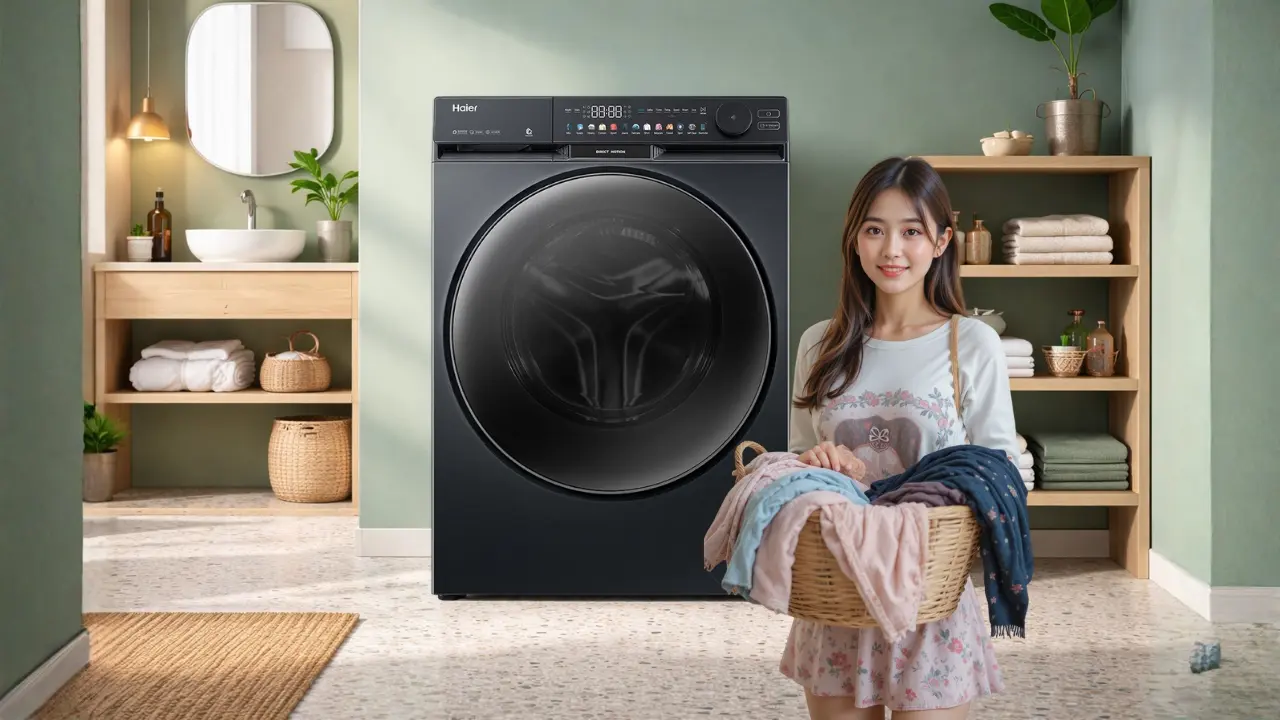

Effortless laundry for families with heavy loads means fewer cycles, fewer decisions, and machines that quietly adapt to the unpredictable rhythm of Indian homes.
It is about handling volume without turning laundry into a daily planning exercise. When the machine understands the load, life feels lighter.
That is the real shift modern households are looking for.
Laundry is no longer a chore. It is a system problem.
Laundry today is not about washing clothes.
It is about managing flow.
School uniforms pile up midweek.
Office wear accumulates silently.
Bedsheets, towels, sofa covers wait for the weekend.
Festive clothes arrive all at once.
Indian households rarely deal with laundry in neat batches. According to urban household studies, a family of four to five generates anywhere between 6 to 9 kg of laundry every two days, with spikes during winters, monsoons, and festivals.
The problem is not dirt.
The problem is volume meetings have a limited time.
Most laundry stress comes from systems that were never designed for this scale.
Bigger families do not need more control. They need fewer decisions
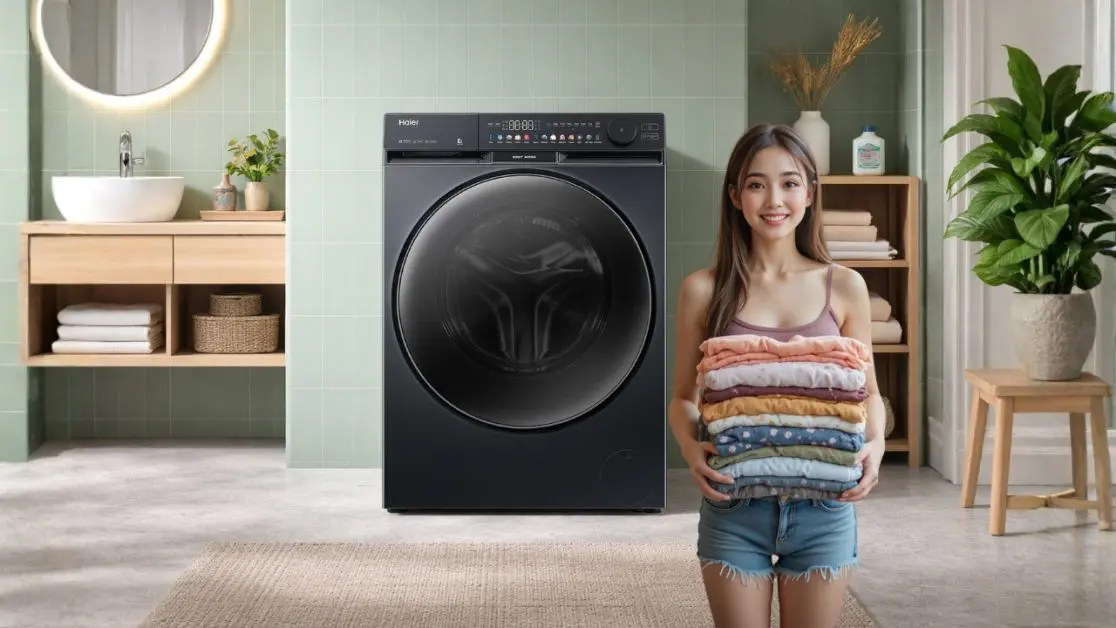
Older washing machines assumed something unrealistic.
That someone would stand there and decide everything.
Fabric type.
Water level.
Spin speed.
Wash duration.
That assumption does not survive modern life.
In homes where both partners work or where parents juggle school schedules and elderly care, attention is the scarcest resource. Every extra decision feels heavier than the electricity bill.
This is where intelligent automation changes the experience.
Machines like the Haier 10 Kg Fully Automatic Front Load Washing Machine HW100-DM14F9BKU1 and the Haier 12 Kg F9 Front Load Washing Machine HW120-DM14F9BKU1 are built around one simple idea. The machine should think first, not the user.
One touch AI wash systems sense fabric type, load size, and dirt level automatically.
The user presses start.
The system handles the rest.
That is not convenient. That is respect for time.
Capacity is not a number. It is a lifestyle choice.
When families look at washing machine capacity, they often focus on kilograms.
10 kg.
12 kg.
But capacity is really about calendar freedom.
A larger capacity machine changes how often laundry enters your life.
Here is what higher capacity actually delivers.
- Fewer wash days per week
- Combined loads instead of split cycles
- Space for comforters, blankets, and large curtains
- Lower cumulative water and electricity usage
A single full load wash in a 12 kg front load washing machine can replace two smaller cycles. Over a week, that reduction compounds.
Appliance efficiency studies show that consolidating laundry into fewer, fuller cycles can reduce overall water usage by up to 30 percent and energy consumption by nearly 20 percent.
That is how effortlessness shows up.
Not in faster cycles.
But with fewer interruptions.
The drum decides the outcome long before the program does
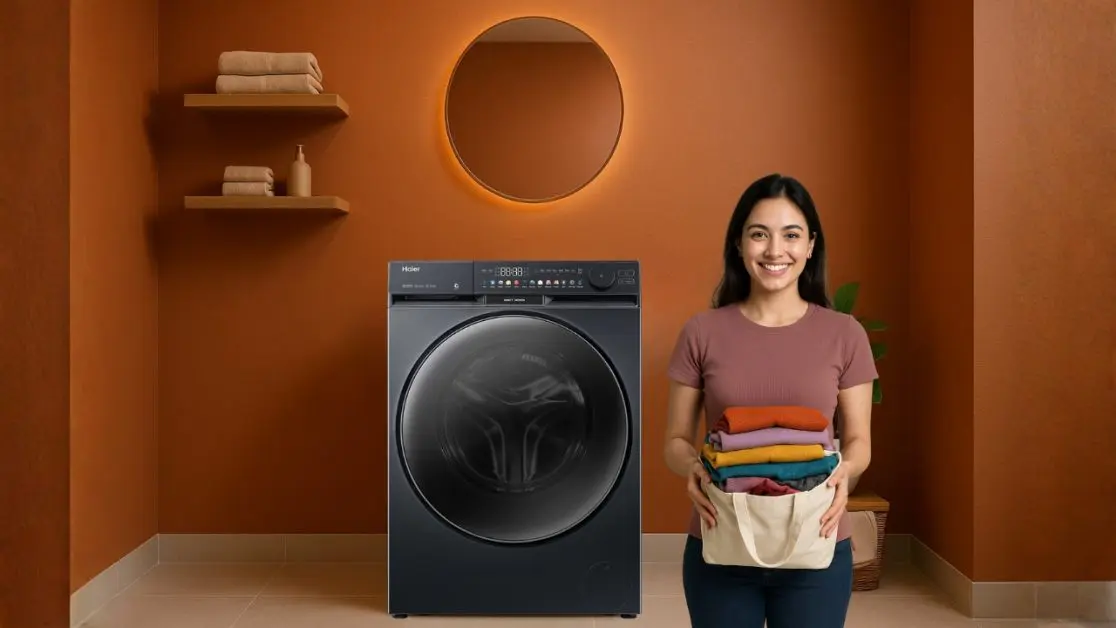
Many buyers compare machines by scrolling through program lists.
Cotton.
Wool.
Baby care.
Quick wash.
But programs only matter if the drum supports them.
The real work happens inside.
Drum diameter, internal contouring, and rotation pattern determine whether clothes tumble freely or clump together. Larger diameter drums allow gravity to work properly, lifting clothes and letting them fall instead of pressing them flat against the surface.
Both the Haier 10 Kg Fully Automatic Front Load Washing Machine HW100-DM14F9BKU1 and the Haier 12 Kg F9 Front Load Washing Machine HW120-DM14F9BKU1 use an enlarged Super Drum design that increases usable internal space without increasing external footprint.
The result is simple.
- Better wash quality
- Less tangling
- Reduced fabric stress over time
Good laundry care begins with movement, not settings.
Silence changes behaviour inside homes
Noise is rarely discussed. But it shapes habits.
In many Indian homes, washing machines sit close to bedrooms or workspaces. Loud cycles push laundry to inconvenient hours or get postponed altogether.
That is how laundry piles up.
Direct drive motor technology addresses this at the source.
By connecting the motor directly to the drum, machines eliminate belts and reduce vibration. Fewer moving parts mean lower noise, smoother operation, and improved durability.
The Direct Motion Motor used in Haier front load machines allows late night or early morning washes without disturbing sleep or work calls, an underrated advantage in compact urban homes.
Effortless laundry often sounds like silence.
That silence gives households flexibility.
What happens after the wash matters just as much
Laundry does not end when the machine stops.
There is unloading.
Drying.
Ironing.
Folding.
This is where small efficiencies add up for families.
Steam refresh cycles help reduce wrinkles and odours, making clothes easier to manage post wash.
Better rinsing systems reduce detergent residue, which means less stiffness and fewer skin irritations, especially important for children and sensitive skin.
When clothes come out closer to wearable, the entire laundry chain shortens.
Saving five minutes per load may feel minor.
Saving thirty minutes across multiple loads changes evenings.
The hidden cost of smaller machines shows up slowly
On paper, a smaller washing machine looks economical.
Lower price.
Lower space requirement.
But heavy load households pay later.
More cycles increase electricity consumption.
Repeated washing increases water use.
More friction means faster fabric wear.
Over time, clothes age faster and utility bills creep upward.
High capacity front load washing machines reverse this equation. They reduce frequency, improve efficiency, and extend garment life.
This is not about premium features.
It is about aligning machines with real usage patterns.
Cheap appliances often cost more over time.
Efficient systems protect both clothes and calendars.
Smart connectivity works best when it stays in the background
Not every family wants to control laundry from a smartphone.
But notifications that tell you when a cycle ends.
Remote start during off peak hours.
Quick changes without standing in the utility area.
These features remove friction without demanding attention.
Both the Haier 10 Kg Fully Automatic Front Load Washing Machine HW100-DM14F9BKU1 and the Haier 12 Kg F9 Front Load Washing Machine HW120-DM14F9BKU1 offer smart operation options that support routines instead of interrupting them.
The best technology stays invisible until needed.
Effortless laundry is really about reclaimed time
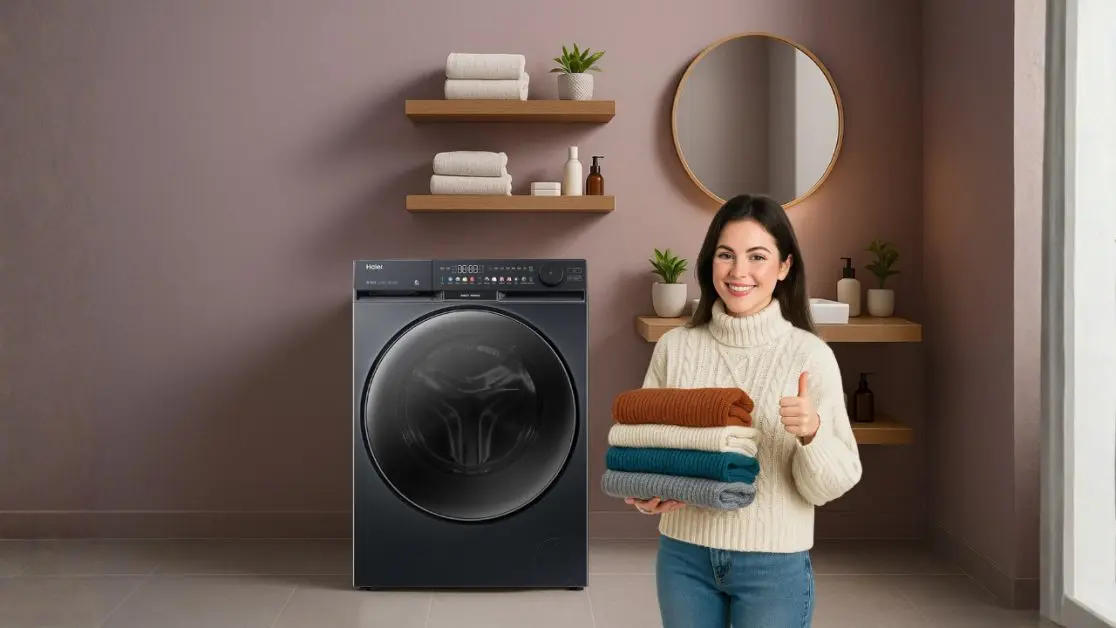
At its core, effortless laundry is not about clothes.
It is about time.
Time that does not get spent sorting loads.
Time that does not get lost waiting for cycles to finish.
Time that goes back into family, rest, or personal work.
When laundry stops dictating the week, households breathe easier.
That is the real upgrade.
Not smarter machines.
Calmer days.
A simple framework for heavy load households
Before choosing a washing machine, families should ask three practical questions.
- How often do we want to wash in a week
- Do we regularly wash bulky items at home
- Do we want the machine to adapt without constant input
If the answers point to fewer cycles, larger combined loads, and minimal manual decision making, then high capacity front load machines with intelligent automation are no longer optional.
They become infrastructure.
Like hot water.
Like stable power.
Like reliable internet.
The future of Indian homes is quieter systems, not louder features
Homes are becoming more intentional.
Less chaos.
More flow.
Appliances that blend into routine instead of demanding attention will define this shift. Washing machines that quietly handle heavy loads without fuss are part of that evolution.
Effortless laundry is not a luxury.
It is a signal.
A signal that homes are being designed around life as it actually happens.
And that is where real comfort begins.
Frequently Asked Questions
I feel exhausted just thinking about laundry. Why does it feel like such a big task?
Because laundry in Indian homes is not a single chore it’s a system with too many decisions. When machines ask you to choose fabric, water level, spin speed, and duration every time, they drain mental energy. For busy families, decision fatigue is the real burden, not washing itself.
Do I actually need to think about fabric type and settings every single wash?
No and you shouldn’t have to. Modern high-capacity machines with AI wash systems are designed to sense load size, fabric mix, and dirt level automatically. One-touch washing removes repeated micro-decisions that quietly exhaust households.
My kids’ uniforms pile up midweek. Is it okay to wash mixed loads together?
With a larger drum and intelligent sensing, yes. High-capacity front-load machines are designed for mixed, real-world laundry, not idealized batches. Better tumbling prevents clumping and uneven cleaning even when loads are combined.
How does silence actually change routines?
Quiet machines give flexibility. When laundry no longer interrupts rest or work, it fits into life instead of competing with it.
How do AI wash systems actually help day to day?
They sense load size, fabric mix, and soil level automatically. You press start once. Over weeks, this removes dozens of small decisions that otherwise drain energy.
When does a washing machine stop being an appliance and become infrastructure?
When it quietly adapts to real life without constant input like hot water, stable power, or reliable internet. At that point, it stops demanding attention and starts giving time back.
How often do we actually want laundry to enter our week?
That’s the most important question. Capacity isn’t about kilograms, it’s about calendar freedom. Fewer interruptions matter more than faster cycles.