
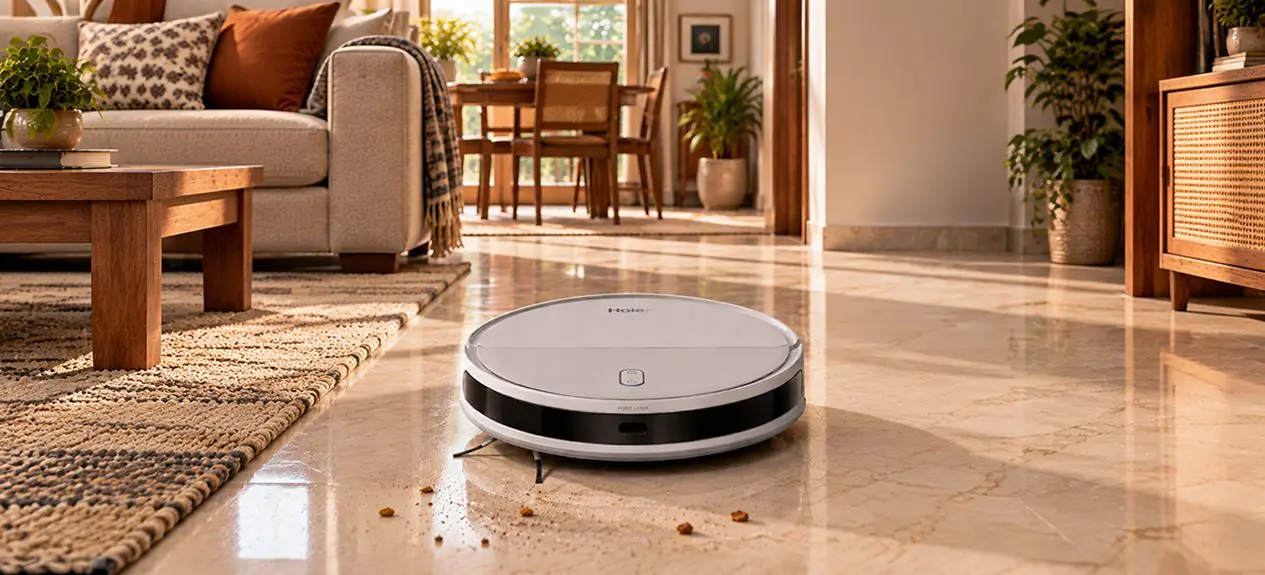

A robot vacuum cleaner was a luxury appliance a decade ago. Today, it sits quietly in the corner of Indian living rooms and kitchens, doing a job most people would rather not do themselves. That shift has brought a much wider spread of products into the market. At one end, there are simple machines that vacuum a flat, uncluttered floor. At the other, there are units with laser mapping, strong suction, built-in mopping and docks that empty themselves, and these sit at a noticeably higher price point.
That range is exactly why the robot vacuum cleaner price in India varies so much from one listing to the next. Two products can look almost identical in photos and still differ by tens of thousands of rupees, because the gap usually comes down to what’s happening inside the machine and its dock, not the logo on top. Knowing what actually drives that cost makes it far easier to pick something that fits your home, your floors and your budget, rather than paying for automation you’ll never really use.
Robot Vacuum Cleaner Price in India: Quick Overview
The current market spans a wide range, from models priced below ₹15,000 to premium machines costing ₹50,000 or more. Retail listings show budget options around ₹10,000–₹20,000, while many feature-rich models fall between ₹20,000 and ₹50,000. Premium units with highly automated docking systems can exceed ₹50,000.
As a broad robot vacuum price guide, the market can be understood this way:
| Price Range | What You Can Typically Expect |
| Under ₹20,000 | Basic vacuuming, some mopping, app control and simpler navigation |
| ₹20,000–₹40,000 | Better suction, mapping, mopping and smarter navigation |
| ₹40,000–₹60,000+ | Advanced navigation, stronger automation and self-emptying features |
| ₹60,000+ | Premium docking, advanced mopping and flagship smart features |
Disclaimer: Prices shift with sales and seasonal offers, so these ranges are best treated as a buying guide rather than fixed price bands.
What Determines the Price of a Robot Vacuum Cleaner?
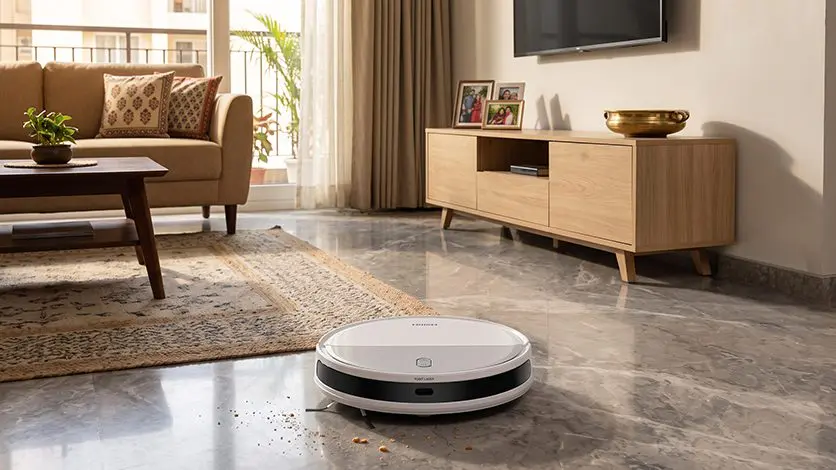
There is no single feature that determines a robot vacuum’s price. Two models may both vacuum and mop but have very different prices because of their navigation system, suction power, battery, software and level of automation.
Before comparing the robot vacuum cleaner price, look at what is actually included in the machine.
Suction Power and Navigation (Gyro vs LiDAR)
Suction power is one of the most visible specifications when comparing a robot vacuum cleaner price. Higher suction can help with fine dust, hair, crumbs and debris, particularly on carpets and rugs.
Navigation is where the price difference really shows up. Gyroscope-based systems get around a room in a fairly straightforward, structured way, and they keep the cost down. LiDAR does more: it scans the space with lasers, builds a sharper map, and steers around furniture and clutter with noticeably better accuracy.
The Haier CIVIC X11 comes with laser navigation and 5,000 Pa suction. This can help to clean your house more efficiently.
Vacuum-Only vs Vacuum-and-Mop Combos
A vacuum-only robot generally costs less because it focuses solely on collecting dust and debris. A vacuum-and-mop model adds wet cleaning, which proves useful on tile, marble and other hard flooring.
When comparing the robot mop price in India, mopping capability alone does not determine value. Consider the water tank capacity, cleaning modes, water control and how smoothly the robot transitions between dry and wet cleaning.
For many Indian homes, a vacuum-and-mop combination is the more practical choice, since it covers two routine floor-cleaning tasks within a single appliance.
Self-Emptying Docks and Auto-Wash Features
Self-emptying capability is one of the features that significantly increases price. Rather than manually emptying the robot’s small dustbin after every few cleaning cycles, the docking station transfers collected dust into a larger container automatically.
More advanced docks can also wash and dry mop pads, and on select models, manage water levels independently. These features reduce hands-on maintenance considerably, but they add to the purchase price.
The Haier CIVIC X11 Pro, for example, combines sweeping and mopping with automatic dust collection through its dock, making it a more automated choice than a standard robot vacuum.
Battery, App Features and Brand
Battery capacity, runtime, app connectivity and smart-home integration all influence the final cost.
A robot designed for a larger home requires enough battery life to cover more floor area. App controls add scheduling, customised cleaning modes and other conveniences, while voice-control compatibility simplifies day-to-day operation.
Brand support matters just as much. A lower upfront cleaning robot cost in India does not necessarily translate to better value if replacement parts, servicing or accessories prove difficult to source later.
Robot Vacuum Price Ranges Explained
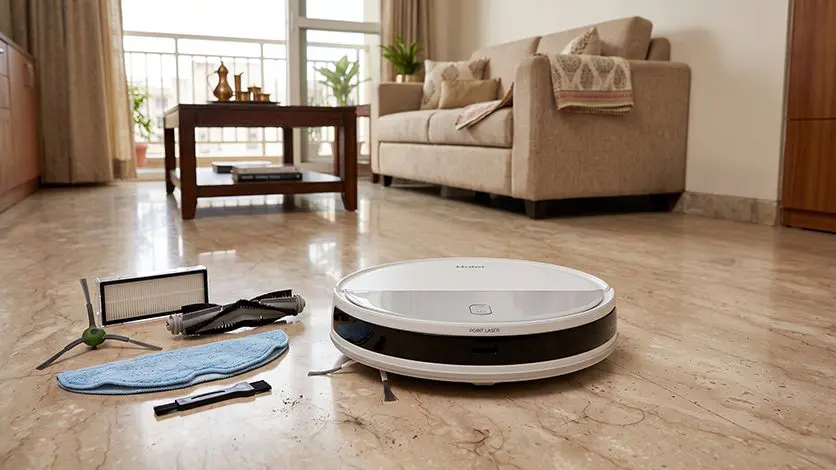
Once you know what drives the price, comparing models by category gets a lot simpler. Budget, mid-range and premium robot vacuums are built for different kinds of users, so the priciest option on the shelf isn’t automatically the right one for your home.
Entry-Level / Budget Robot Vacuums
Models below ₹20,000 fall into this segment, and they’re a good fit if daily automated cleaning is the goal rather than a full feature list. Expect basic vacuum-and-mop functions, app control, automatic charging and fairly simple navigation. Several options in Indian retail listings currently sit around ₹15,000–₹20,000, which makes this a sensible starting point for smaller apartments or anyone trying a robot vacuum for the first time.
Mid-Range Robot Vacuums
Between ₹20,000 and ₹40,000, features start getting noticeably better: stronger suction, sharper mapping, vacuum-and-mop functionality, bigger tanks and more capable apps.
This is also the point at which navigation deserves closer comparison. For buyers who value accurate room mapping, paying a premium for laser navigation is often worthwhile.
The Haier CIVIC X11, priced at ₹16,999, combines 5,000 Pa suction, laser navigation, wet-and-dry cleaning, app and voice control, and a 2600 mAh battery.
Premium and Flagship Robot Vacuums
Above ₹40,000–₹50,000, the focus shifts increasingly toward automation and convenience. Premium models often include self-emptying docks, automatic mop washing, drying systems, advanced obstacle detection and more sophisticated mapping.
Certain Indian models with advanced docking systems are priced around ₹50,000–₹80,000 or higher, though seasonal discounts can bring their selling prices down considerably.
At this level, the relevant question is not simply whether the higher robot vacuum cleaner price in India fits your budget, but whether you will genuinely use the additional automation on offer.
How Much Does a Robot Vacuum Cost to Run? Ongoing Costs
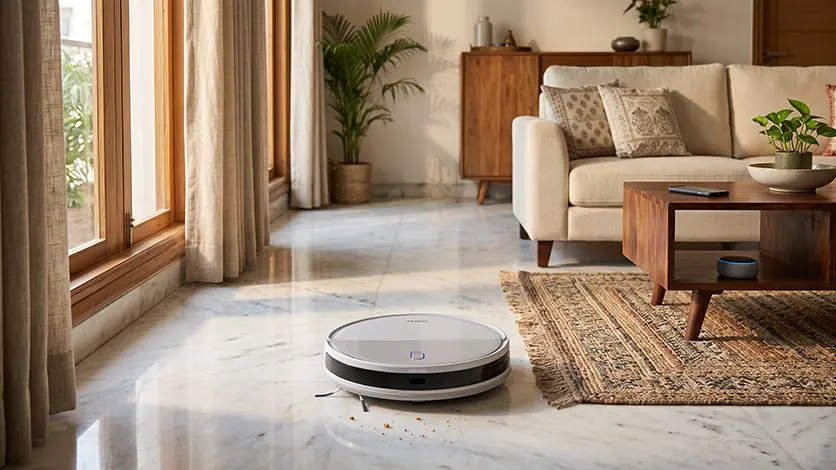
The purchase price accounts for only part of the overall cost. Like any appliance, a robot vacuum requires basic maintenance and periodic replacement parts.
Filters, Brushes, Mop Pads and Consumables
Filters need cleaning or swapping out once they’ve collected enough fine particles. Brushes pick up hair and dust over time, and mop pads eventually need a wash, then a replacement.
Factor these into the real cost of ownership when you’re weighing the robot vacuum and mop combo price. A pricier model isn’t necessarily a bad deal long-term, as long as spare parts are easy to get hold of down the line.
Electricity and Maintenance
Power use isn’t a real concern here; robot vacuums draw far less than most household appliances, though they still need to be charged regularly. What actually takes time is the upkeep: clearing the dustbin, wiping down brushes and sensors, and cleaning filters and mop parts.
More automation means less hands-on work day to day, but skipping maintenance entirely still isn’t a good idea.
Is a More Expensive Robot Vacuum Worth the Extra Cost?
Not necessarily. A higher-priced robot vacuum earns its cost when the additional features solve a genuine problem within the home. LiDAR navigation earns its keep in bigger homes with several rooms, and a self-emptying dock makes sense for anyone who wants to stay hands-off day to day. That’s really the test: does the feature solve something you actually deal with at home?
A smaller flat with mostly hard flooring usually doesn’t need all of that. Paying for every premium feature there just isn’t necessary.
Consider what your home actually needs before weighing the highest and lowest robot vacuum cleaner price options against each other.
How to Choose the Right Robot Vacuum for Your Budget
Begin with your home rather than the price tag.
Weigh the size of your home, floor type, daily dust levels, presence of pets, need for mopping and your tolerance for manual maintenance.
An entry-level model suffices for buyers seeking basic automated cleaning. The mid-range category is often the sensible choice for those who want stronger mapping and well-rounded cleaning performance. For buyers prioritising hands-free cleaning, premium models with automated docks can justify the extra investment.
Ultimately, the most useful robot vacuum price guide is one that matches the features you will actually use. Compare suction, navigation, mopping, battery life, app controls, maintenance, and after-sales support together, rather than choosing on price alone.
FAQs
How much will a house cleaning robot cost?
Anywhere from around ₹10,000 for a basic model to ₹80,000 or more for a fully automated one. Most buyers looking at a mid-range machine with decent mapping and mopping end up spending somewhere between ₹20,000 and ₹40,000.
What is a good price for a robot vacuum cleaner?
There’s no single right number here, it really comes down to what your home needs. A small flat with hard floors might do fine at ₹15,000–₹20,000, while a bigger multi-room house often justifies spending closer to ₹30,000–₹40,000 for better navigation.
Why are some robot vacuum cleaners so expensive?
The jump in price usually comes from LiDAR navigation, stronger suction, self-emptying docks and auto-wash mopping systems. Add better batteries and smarter apps into the mix, and the cost climbs even further.
Do budget robot vacuum cleaners work well?
For smaller homes with simple layouts, yes, they handle daily cleaning just fine. Where they fall short is precise mapping and heavier-duty features like self-emptying docks, which only show up once you move into the higher price brackets.
What is the price of a robot vacuum and mop combo?
Combo units typically start around ₹20,000 and can go well past ₹60,000 depending on tank size, water control and dock automation.
Are there ongoing costs after buying a robot vacuum?
Yes, filters, brushes and mop pads all wear out and need replacing over time. Electricity use stays fairly low, but budgeting for consumables is worth doing upfront.
How much does a Haier robot vacuum cleaner cost?
It varies by model. The CIVIC X11 is priced at ₹16,999 for its laser navigation and stronger suction, and the CIVIC X11 Pro moves up to ₹29,499 with its self-emptying dock.
Is a robot vacuum cleaner cheaper than hiring house help over time?
Over a few years, often yes, especially once you factor in a robot’s low running cost against a recurring monthly wage. That said, a robot handles floors only, so most households still keep some help around for everything else.