


Hot water comfort in a household comes down largely to one decision: capacity. Too little, and heating time, energy use, and reheating frequency all increase. This geyser capacity guide covers the factors that determine a suitable size, family size, bathing habits, bathroom requirements, and heater type among them.
The size range varies from 3-litre units to 25-litre storage heaters. The deciding factor is not just the people in your family; it is the volume of hot water required at any single moment.
Why Geyser Capacity Matters
The stored volume of heated water, and how quickly it depletes before requiring a reheat, is what capacity governs. Insufficient capacity becomes evident quickly in households where several people bathe one after another.
Geysers with higher capacity have their own issues. More installation space is needed, and the cost is higher. Balancing household size and available space produces the right outcome.
How to Choose Geyser Size: Key Factors
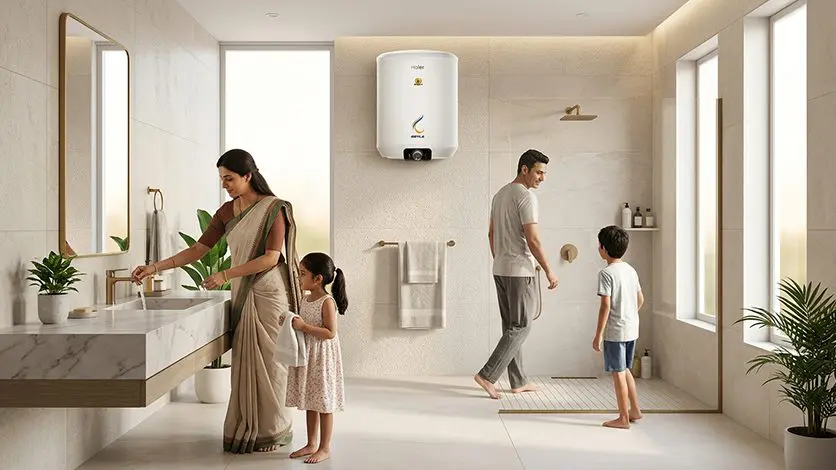
Family size plays a role, though bathing style and installation location frequently matter just as much.
Number of People / Family Size
Moderate hot-water needs, the kind seen in single-person households or couples, rarely demand the same capacity a family of four requires.
A 15-litre storage heater generally covers moderate demand for a geyser litre for family of 4. Where multiple members shower for extended periods, or need hot water simultaneously, a larger tank becomes the more sensible option.
Usage: Bucket Bath vs Shower
Consumption shifts dramatically based on bathing method. Less hot water goes into a bucket bath than a shower, which keeps smaller capacities entirely workable for many households.
A continuous supply matters more for showers, pushing households that shower regularly toward larger storage capacities.
Determining the right water heater size for family use, then, depends jointly on user count and each person’s actual consumption habits.
Bathroom vs Kitchen Use
Kitchen and bathroom installations rarely share the same capacity requirements. Smaller volumes at a time typically define kitchen use, which suits compact instant heaters well.
Greater volume becomes necessary for bathroom use, particularly where showers are involved, favoring appropriately sized storage units instead.
Instant vs Storage and How It Affects Size
On-demand heating characterizes instant water heaters, generally at smaller capacities. Storage heaters take a different approach, maintaining a standing reserve of already-heated water.
Comparing a 3-litre instant unit against a 15-litre storage heater on capacity alone misses the point, given how differently the two operate. Consumption habits, not litre count, should guide the decision.
Geyser Size Guide by Family Size and Use
Bathing type and user count together shape the right capacity. The ranges below provide a practical starting point.
1-3 Litre: Instant Use, Kitchen and Single-Person Needs
Short-duration, smaller-scale needs, kitchen taps, washbasins, immediate rather than stored hot water, define the 1-3 litre range.
The 3 litre vs 5 litre geyser comparison, accordingly, applies more to instant-use scenarios than to households seeking a primary bathroom heater.
3-6 Litre: Small Families and Bucket Baths
Bucket bathing changes the equation considerably. Where it predominates, and per-person hot-water use stays modest, a 3-6 litre unit generally covers the need without excess.
Compact storage in this range includes Haier’s 6-litre ABS cylindrical water heater, built for exactly this kind of limited bathroom demand.
10-15 Litre: Couples and Small Families with Showers
Regular shower use tends to steer couples and small families toward the 10-15 litre bracket, where capacity keeps pace with routine bathing.
At 15 litres, hot water availability tend to stay in reasonable balance for geyser capacity for shower needs.
The Haier 15L ESTILE Cylindrical 5 Star Water Heater pairs this capacity with a 2.2 kW heating system, a digital temperature display, and a CrystalShield tank.
15-25 Litre: Large / Joint Families and Multiple Bathrooms
Multiple people sharing one bathroom in a short window, that’s where higher-capacity storage heaters earn their place, particularly in larger households.
Families facing heavier consumption, or bathrooms where showers run often, tend to benefit most from the larger reserve a 25-litre unit provides.
How Many People Can One Geyser Serve? (Quick Reference)
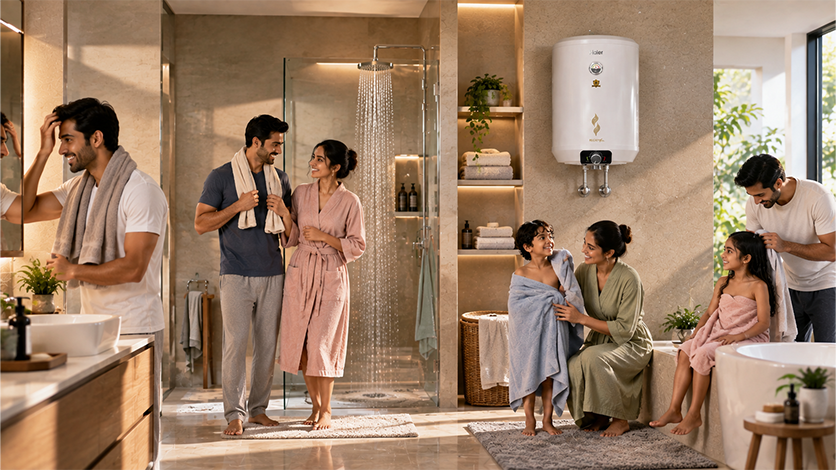
Instant or limited-use applications suit a 3-litre unit best. Smaller households, particularly those relying on bucket bathing, find 5-6 litres adequate. Couples and small families generally do well with 10-15 litres, while larger households or heavier hot-water demand call for 15-25 litres.
Fixed rules these are not, only practical guidelines. Bathing habits and daily usage can lead two identically sized households toward entirely different capacity needs.
3L vs 5L vs 15L vs 25L: Which Is Right for You?
Intended application should anchor the decision from the outset. Smaller quantities, kitchens, washbasins, limited bathing, point toward a 3-litre or 5-litre model.
A larger reserve, well suited to regular use by couples or smaller families, comes with a 15-litre storage heater. Several people needing hot water at once, especially with consecutive showers, justifies a 25-litre model.
Actual consumption during the busiest part of the day should guide capacity selection, rather than defaulting to the largest option available.
Common Geyser-Sizing Mistakes to Avoid
Family size alone, without regard to bathing habits, frequently drives a flawed capacity decision. A family of four relying on bucket baths has little in common, hot-water-wise, with a family of four where everyone showers at length.
Oversizing a storage heater for a small household ranks among the more common errors as well. Installation space, especially within compact bathrooms, deserves equal consideration.
Similar litre ratings do not make instant and storage heaters interchangeable. Their heating methods, and the applications each suits, remain fundamentally different.
Recommended Geyser Sizes at a Glance (Checklist)
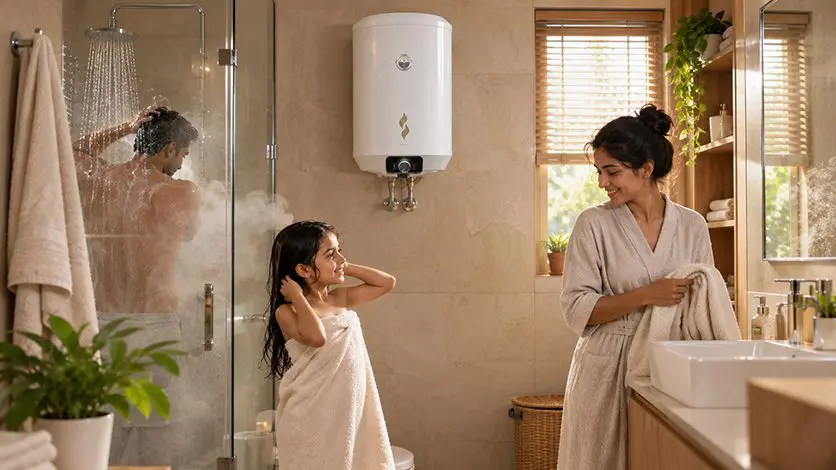
User count, bathing method, frequency of consecutive use, and kitchen-versus-bathroom application together determine the best geyser size for home use. Limited or instant requirements suit smaller capacities well; couples and small families tend toward 10-15 litre models; greater hot-water demand calls for larger 15-25 litre storage heaters.
Actual daily usage, not family size in isolation, should ultimately guide capacity selection. Adequate hot water, without unnecessary capacity, space, or heating cost, follows from a correctly sized geyser.
FAQs
What size geyser do I need for a family of 4?
A 15-litre storage heater generally covers moderate use for a family of four. Where showers run longer or multiple people need hot water around the same time, a larger capacity becomes the more practical choice.
Is a 3 litre geyser enough for a bathroom?
For light or occasional use, possibly. Regular bathing, particularly showers, tends to outpace what a 3-litre unit can reliably supply.
How many people can use a 25 litre geyser?
A 25-litre unit typically serves larger or joint families comfortably, especially where several people bathe within a short window. Actual capacity still depends on shower length and how often consecutive use occurs.
Which is better, a 3 litre or 5 litre geyser?
Neither outperforms the other universally, the right pick depends on intended use. Both suit instant, smaller-scale needs like kitchens or washbasins rather than full bathroom demand.
What size geyser is best for a shower?
15 litres tends to strike a reasonable balance between available hot water and physical size for most shower routines. Longer showers or back-to-back users may still call for something larger.
Is a 15 litre geyser enough for a joint family?
It can work for moderate use, though joint families often push toward 20-25 litres. Bathroom count and how many people bathe consecutively make the real difference here.
What geyser capacity should I choose for a kitchen?
Kitchen use rarely demands large capacity. A 1-3 litre instant heater generally covers washing and small hot-water needs at the tap.
Is a 5 litre geyser enough for 2 people?
For bucket baths or light use, yes, this capacity holds up reasonably well. Regular showers for both people may still stretch it thin.
Which geyser is best, 3 litre or 5 litre?
Both fall into the instant-use category, better suited to kitchens and washbasins than full bathing needs. The better choice comes down to how much hot water gets used per session, not one model outperforming the other.
How many litres of geyser to buy for family of 2?
A 6-10 litre range usually covers a couple’s needs comfortably. Frequent, longer showers may justify moving toward the higher end of that range.
How much litre geyser for family of 4?
15 litres remains a common, sensible choice for a family of four under moderate use. Larger households or longer shower habits often shift that number upward.
How many people can use a 25 litre geyser?
Larger or joint families tend to get the most out of a 25-litre unit, particularly when multiple people share one bathroom. Shower duration and frequency of consecutive use still shape the real-world limit.
Which geyser is best in 5 litres?
At 5 litres, the better option depends on whether the setup is instant or storage-based, since each serves a different purpose. Kitchen and washbasin use tend to suit this capacity better than full bathroom needs.