
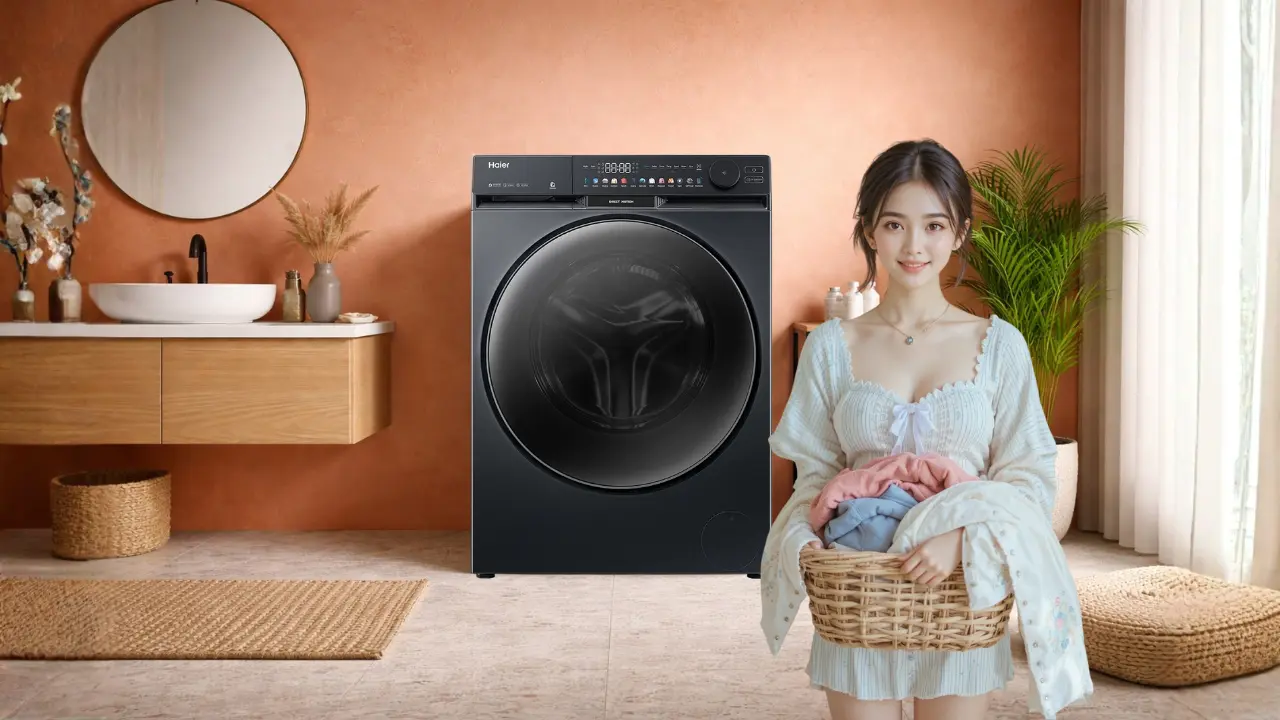

Smart tech meets daily hygiene when everyday appliances quietly take over decisions we used to manage manually.
They sense, adjust, clean, refresh, and protect without demanding attention. In modern Indian homes, hygiene no longer depends on effort alone. It depends on systems that think, adapt, and perform consistently in the background.
That shift is already happening.
Not loudly.
Not dramatically.
But unmistakably.
Hygiene today is no longer about effort. It is about intelligent design
Picture a familiar weekday evening.
You step back home after a long day. Clothes carry the smell of traffic, office ACs, shared lifts, maybe a quick snack stop on the way. The routine is automatic. Everything goes into the wash. You select a familiar cycle. You move on.
That is how hygiene used to work.
Effort in. Hope out.
But life today moves faster. Homes are busier. Time is fragmented.
Hygiene now needs to be predictable, not effort-heavy.
That is where smart technology quietly steps in.
Not as a list of features.
As a thinking layer built into everyday routines.
The hygiene problem most households do not see
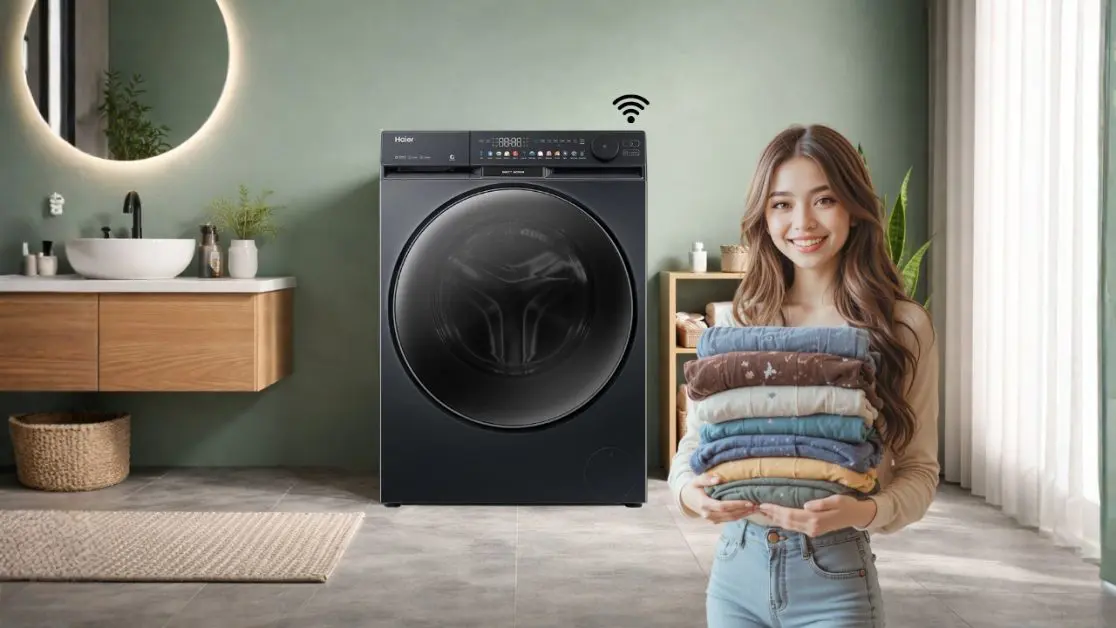
Hygiene failures are rarely obvious.
They show up slowly.
- Clothes look clean but feel lifeless
- Baby wear smells neutral, not fresh
- Towels lose softness too quickly
- Skin irritation appears without a clear reason
Most homes blame detergent or water quality.
The real issue is deeper.
Hygiene is a system.
When the system cannot sense, adapt, or self-correct, small inefficiencies stack up.
Smart tech fixes that silently.
What makes hygiene truly smart, not just automated
Automation repeats instructions.
Smart systems make decisions.
That difference defines modern hygiene.
In advanced front load washing machines, intelligence begins with understanding three things automatically:
1. The type and weight of the load
2. The actual dirt level
3. The most efficient combination of water, motion, temperature, and time
For example, machines like the 10 Kg Fully Automatic Front Load Washing Machine (HW100-DM14F9BKU1) use intelligent sensing to match wash parameters precisely to each load, rather than relying on rigid presets.
The outcome is consistent.
- Less detergent residue
- Reduced fabric stress
- More reliable hygiene across loads
Clean clothes stop being a matter of guesswork.
Why daily hygiene needs precision, not intensity
There is a long-standing belief that better hygiene requires more.
More water.
More detergent.
Higher heat.
Longer cycles.
In reality, excess often causes damage.
- Detergent residue irritates skin
- High temperatures weaken fibres
- Overwashing wastes water and power
Smart hygiene focuses on just enough.
Exactly what the load needs.
Nothing extra.
This precision protects clothes, skin, and resources at the same time.
Three ways households approach hygiene today
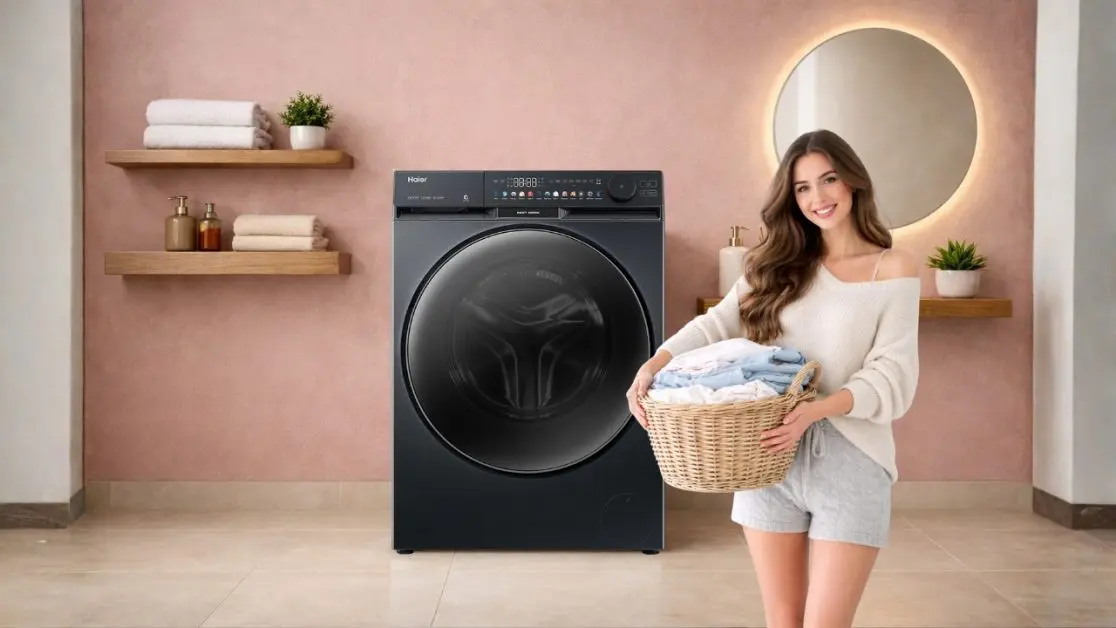
Let us look at the choices clearly.
Option one: Manual control
Every cycle is selected by hand.
It offers control but demands time, attention, and experience.
Option two: Fixed automation
Preset programs repeat the same logic every time.
Convenient, but blind to variation.
Option three: Intelligent balance
The machine senses, decides, and adjusts automatically.
You stay informed without managing details.
This third option defines modern hygiene.
It reduces mental load.
It improves consistency.
It adapts to real life.
That is why intelligent washing feels effortless rather than technical.
Silence is a hygiene feature, not a luxury
Noise affects behaviour.
If a machine sounds disruptive, people delay cycles.
If it vibrates heavily, night washes feel risky.
Quiet operation allows hygiene to fit into life naturally.
Direct drive motor systems reduce friction, vibration, and mechanical wear. Machines like the 12 Kg F9 Front Load Washing Machine (HW120-DM14F9BKU1) use Direct Motion Motor technology to deliver stable, low-noise performance even during high-speed spins.
The benefit goes beyond comfort.
- Stable washing improves cleaning consistency
- Reduced vibration protects fabrics
- Late-night or early-morning washes become practical
Silence becomes part of the hygiene system.
Steam and refresh change how urban wardrobes work

Not every garment needs a full wash.
In cities, clothes often absorb odours without visible dirt.
Smart steam refresh programs address this gap. They reduce odours and wrinkles between washes, keeping clothes wearable without aggressive washing.
This shifts habits.
People are overwhelmed less.
Clothes last longer.
Water usage drops naturally.
The smartest hygiene decision is often knowing when not to wash.
Timing is part of hygiene, not an afterthought
Modern routines are unpredictable.
Laundry happens between calls, meals, school prep, and rest.
Smart scheduling and remote control features allow hygiene to run alongside life instead of interrupting it.
- Start a cycle remotely
- Monitor progress without checking physically
- Finish laundry exactly when needed
These are small changes with large psychological benefits.
When hygiene becomes predictable, stress reduces.
Why Indian homes demand smarter hygiene systems
Indian households are complex.
- Mixed fabrics in one load
- Heavy-duty daily wear alongside delicate clothing
- Seasonal humidity and dust
- Multiple generations sharing the same machine
Generic systems struggle here.
Adaptive systems succeed.
Intelligent load sensing and fabric-aware wash logic respond to variation rather than assuming uniformity.
That adaptability is what makes smart hygiene especially relevant in Indian homes.
Hygiene has shifted from chore to infrastructure
This is the deeper change.
When hygiene systems work well, people stop thinking about them.
No rewashes.
No second guessing.
No reminders.
That is the real promise of smart appliances.
Not a visual drama.
Not feature overload.
Reliability.
Appliances that quietly hold standards every single day, even when life gets messy.
The bigger implication most people miss
Homes are becoming decision partners.
They absorb hundreds of micro-decisions so people can focus elsewhere.
This shift is not limited to washing machines.
It applies to cooling, food storage, and entertainment too.
When smart tech meets daily hygiene, it does not try to impress.
It tries to stabilize life.
And in uncertain, fast-moving times, stability is the upgrade that truly matters.
The most sorted homes are rarely the most complicated.
They are the ones where systems quietly do their job.
Every day.
Without fuss.
Without reminders.
That is where smart technology truly belongs.
Frequently Asked Questions
Is washing longer and hotter actually better for hygiene?
No.
Excess heat weakens fibres. Excess time causes fabric stress. Excess detergent irritates skin.
Smart hygiene systems achieve better results with less aggression.
Why does intelligent sensing matter more than extra modes?
Because modes assume. Sensors respond.
Real laundry is unpredictable, mixed fabrics, partial loads, varying dirt. Intelligence adapts to reality.
What actually makes a washing machine ‘smart’ and not just automatic?
Automation follows commands.
Smart systems make decisions, based on load weight, dirt level, and optimal resource use, without needing user intervention.
Why does good hygiene feel invisible now?
Because when systems work perfectly, people stop thinking about them.
No rewashes. No doubts. No reminders.
What is the real upgrade smart hygiene offers?
Stability.
Not complexity. Not flashiness.
Just quiet reliability, every single day.