
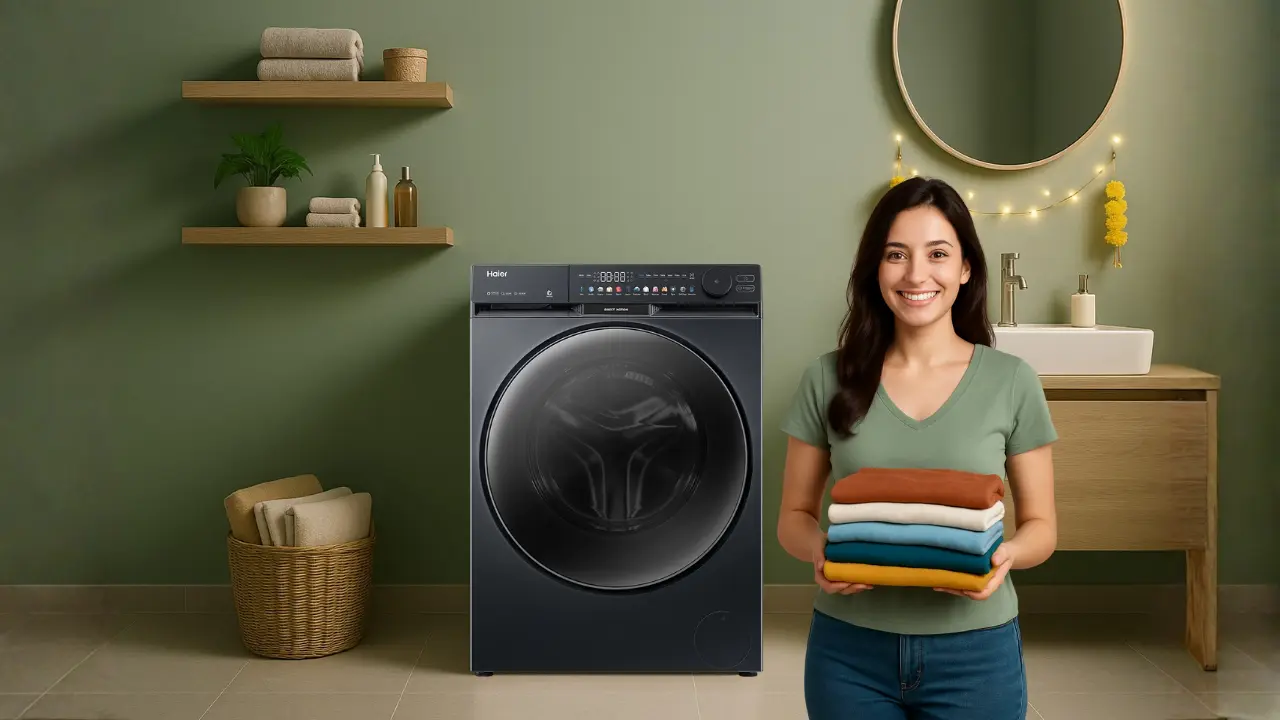

Winter laundry is trickier than it looks. Cold water weakens detergent performance, thick fabrics trap moisture, and indoor drying turns rooms into mini rainforests. But most of the pain isn’t the season, it’s our habits.
Here are ten everyday laundry mistakes almost every Indian household makes when the temperature drops and how small tweaks (and smarter machines) can change everything.
1. Treating All Fabrics the Same

Winter wardrobes are a mix of textures woollens, thermals, fleece, and cotton. Yet, most of us toss everything into one load and hit “Quick Wash.”
Wool shrinks. Fleece pills. Cotton turns rough.
Each fabric needs its rhythm temperature, spin, and detergent.
That’s where smart washing programs help. Haier’s AI-powered One-Touch Wash automatically senses fabric type, load, and dirt level to pick the right wash settings. It’s like having an invisible expert who knows your wardrobe better than you do.
Because in winter, one size never fits all, not in clothes, and not in laundry.
2. Washing in Cold Water, Always
Cold water seems safer for colours, but in winter it can backfire. Detergents don’t dissolve well in icy water, leaving residues that cling to clothes. You end up with dull fabrics and that faint “not-quite-clean” smell.
Modern front-load machines like Haier’s 12 Kg F9 Series balance it smartly, letting you choose precise water temperatures up to 90°C, depending on the fabric. A warm wash helps detergents work better and kills odour-causing bacteria, a small seasonal upgrade that makes a big difference.
3. Overloading the Drum
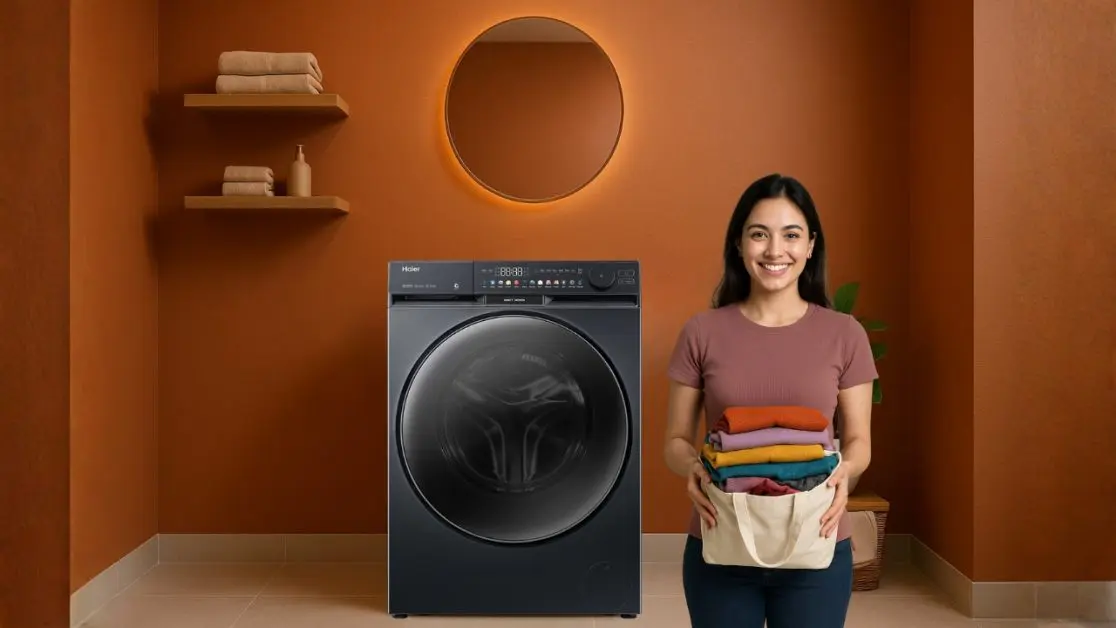
We all do it. Stuffing the drum because “who has time for two loads?”
But heavy blankets, jeans, and sweaters trap water. When crammed, they don’t rinse or spin properly. The result? Musty-smelling laundry that takes forever to dry.
A simple rule: leave one hand’s width of space at the top.
Haier’s Direct Motion Motor ensures vibration-free spinning even in heavy loads, but airflow still matters. Overstuffing reduces washing efficiency and stretches the drying time you already don’t have in winter.
4. Ignoring Spin Speed Settings
High spin speeds remove more water, which means faster drying. But many users leave it on the default setting or worse, switch it off to “protect clothes.”
Winter demands smarter spinning. The 1400 RPM Direct Motion Motor in Haier’s front-loaders extracts moisture efficiently while staying gentle on fabrics. You get less dripping, quicker drying, and quieter cycles especially useful when you wash at night.
Efficiency isn’t about doing more; it’s about knowing what to fine-tune.
5. Washing at the Wrong Time of Day
Laundry often follows convenience, not climate. But in winter, timing can change everything.
Washing late evening or after sunset means your clothes stay damp overnight feeding mildew and that unmistakable “stale winter smell.”
Try early-morning or midday washes when sunlight and airflow peak.
And if you can’t, Haier’s Night Wash feature runs ultra-silent cycles even at night without disturbing sleep. You wake up to freshly spun laundry ready for the morning sun, a small domestic luxury that just makes sense.
6. Skipping the ‘Refresh’ Step

Sometimes clothes aren’t dirty, they’re just not fresh. Jackets worn twice, sweaters after one outing, or mufflers that absorbed a bit of street air. Instead of rewashing, most people stuff them back into cupboards. That’s how wardrobes start smelling musty.
Haier’s Steam Care is built for that in-between need. A quick steam treatment removes odours and wrinkles without a full wash cycle. It’s the modern answer to dry-clean dependency, practical, cost-efficient, and gentle on winter fabrics.
7. Neglecting Machine Hygiene
Cold weather slows drying not just for clothes, but for washing machines too. Moisture trapped inside drums can lead to mold and odour.
Haier machines include a Self-Clean Program that sanitises the drum using high-temperature water and rapid spin. Running it once a fortnight during winter keeps your machine and your clothes fresh.
Think of it like skincare: clean tools create clean results.
8. Forgetting Fabric Care Labels
Winter is when care labels matter most. That small tag inside your sweater, the one that says “hand wash only” or “dry flat” isn’t a suggestion. It’s the difference between a soft wool pullover and a doll-sized disaster.
Haier’s Cotton, Wool, Baby Care, and Delicate/Silk modes simplify this. Instead of memorising care tags, you pick the right mode once and let the AI system adjust water levels, spin speed, and temperature automatically.
In short: smarter settings save more than just electricity; they save your wardrobe.
9. Not Using Extra Rinse for Detergent Residue

In winter, thicker fabrics absorb more detergent but rinse less efficiently. Leftover detergent clings to fibres, making them stiff and itchy especially on thermals or baby clothes.
Haier’s Extra Rinse function in the F9 Series solves this. It adds another rinse cycle automatically, ensuring all detergent is washed away. The difference you’ll feel isn’t just in softness it’s in comfort.
Because nobody wants itchy sweaters in a season meant for warmth.
10. Ignoring Energy Efficiency in the Name of Convenience
We assume winter laundry equals higher bills. So we cut corners with fewer washes, bigger loads, and half-dried clothes under fans. But the real fix isn’t in compromise; it’s in technology.
Haier’s 5-Star Rated Front Load Washers with Direct Motion Inverter Motors consume less power even at higher spin speeds. They’re whisper-quiet, energy-smart, and built for longevity with a 20-year motor warranty that makes energy-saving a long-term lifestyle, not just a season’s trick.
Smart efficiency is not about doing less; it’s about doing it better.
Bonus Tip: Rethink How You Dry
Drying is half the battle in winter. Instead of spreading clothes everywhere and hoping for the best:
- Use indoor stands near sunny windows or under fans.
- Shake clothes before hanging to reduce wrinkles.
- Avoid drying in sealed balconies; airflow beats humidity.
- For heavy loads, run a final high-spin cycle to reduce moisture before air-drying.
Haier’s Direct Motion technology helps you start that process ahead of time when your clothes come out almost dry, saving both time and space.
A Simple Winter Laundry Routine

If you want to rewire your winter laundry habits, start here:
1. Sort fabrics before loading keep woollens and synthetics separate.
2. Use warm water for thick clothes or bedding.
3. Select the right mode Cotton, Wool, or Baby Care as needed.
4. Run for mid-week freshness.
5. Finish with Self Clean every two weeks.
It’s not just about washing better. It’s about creating a rhythm that suits the season.
The Hidden Cost of Laundry Stress
Most people underestimate how much time and mental energy laundry takes. When clothes don’t dry, rooms smell, or sweaters lose shape, frustration builds up quietly.
A good washing machine doesn’t just clean clothes it cleans your schedule.
It returns hours you can spend on things that matter more: family, work, or that second cup of chai in peace.
That’s the philosophy behind Haier’s smart laundry design appliances that understand real Indian homes. Homes where balconies double as drying areas, where late-night laundry is normal, and where efficiency means peace of mind as much as lower bills.
Why Smart Laundry Is the Future of Home Comfort
Winter amplifies inefficiency. You feel it in longer drying times, damp fabrics, and extra electricity spent on heaters or fans.
But the real shift is this: laundry isn’t just a chore anymore it’s a comfort system.
Machines like Haier’s 10 Kg AI Series or 12 Kg F9 Front Loaders combine sensory intelligence, energy efficiency, and quiet operation, adapting to your clothes, schedule, and season automatically.
So the question isn’t just how clean are your clothes?
How calm is your routine?
Final Thought
Winter laundry doesn’t have to mean damp clothes on every chair, endless waiting, or itchy sweaters.
It can be smarter, quieter, and effortless if you understand the small mistakes that make it harder.
And when your washing machine does the thinking for you from sensing fabric types to refreshing clothes with steam you stop fighting the season and start flowing with it.
Because a well-done laundry cycle isn’t just about clothes.
It’s about creating space for a life that feels a little more sorted.