


Inverter-based water heaters don’t just heat faster, they think smarter.
By adjusting their power draw in real time, they maintain steady warmth using less electricity than conventional on-off systems. The result: lower bills, longer appliance life, and comfort that feels effortless.
What makes heating energy-efficient today isn’t speed. It’s intelligence

Every Indian home has its own winter ritual.
A quiet hum of the Water Heater before sunrise. A rush to get ready before school or work.
And then, the inevitable electricity bill that makes you wonder how can such a small comfort cost so much?
That’s where inverter-based heaters step in. Not as another “smart” gadget, but as a quiet evolution in how homes consume energy.
Instead of drawing maximum power every time you switch them on, inverter heaters sense the temperature of the water and adjust their energy use dynamically. No waste. No overheating. Just steady, intelligent efficiency.
The hidden flaw in traditional heaters
Most conventional water heaters still run on a simple binary logic: on or off.
When the water gets cold, they blast full power again. When it overheats, they shut down abruptly.
This constant start-stop cycle wastes energy. Each restart demands a surge of current, like accelerating a car repeatedly in traffic. Over time, that strain also shortens the heater’s life.
The result?
A higher bill and a product that runs hotter, louder, and shorter than it should.
How inverter-based heaters change the equation
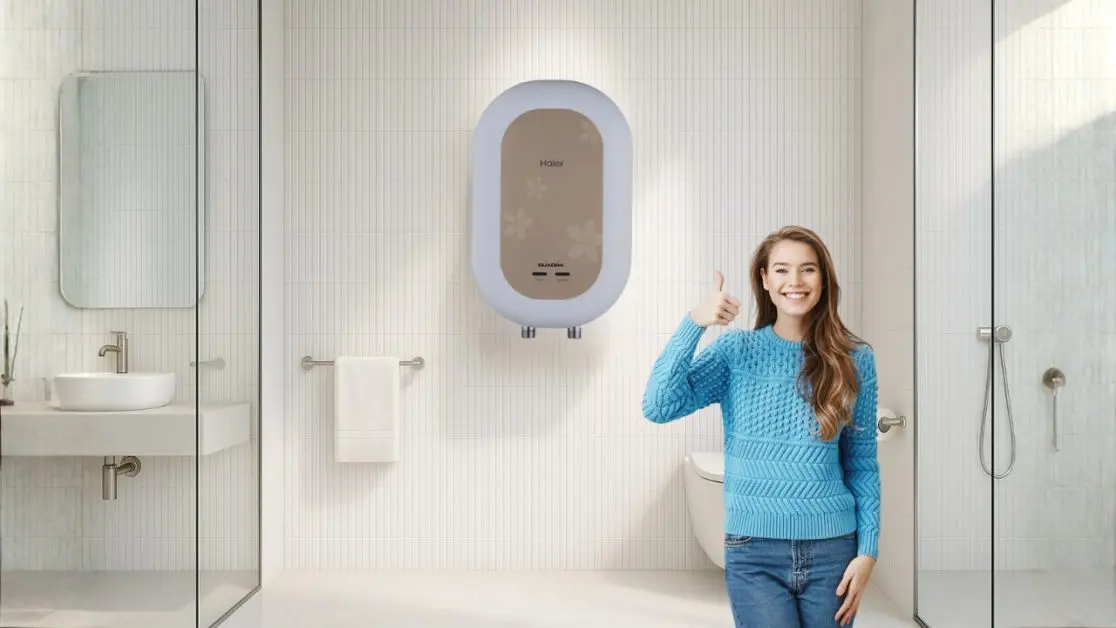
Think of inverter heating like cruise control in your car.
Instead of repeatedly revving and braking, it maintains a stable pace consuming just enough energy to stay efficient.
In a typical Indian household, that stability can reduce electricity use by 20–40%, depending on usage and temperature settings.
And because the heating element works more evenly, the system experiences less wear and tear meaning fewer repairs and longer product life.
The science is simple:
- Inverter control adjusts wattage automatically.
- Steady-state heating prevents thermal spikes.
- Precision sensors ensure water stays at your chosen temperature not a degree more.
The experience is smoother, quieter, and faster yet noticeably more efficient.
What real savings look like in Indian homes
Let’s translate those percentages into daily life.
Say your old 3kW Water Heater runs for 40 minutes total each morning about 2 units of electricity.
An inverter-based equivalent could bring that down to 1.2–1.5 units, depending on insulation, water flow, and ambient temperature.
Multiply that across an entire winter season, and the difference is enough to offset a month’s worth of internet bills.
That’s the real energy saving invisible day to day, but undeniable over time.
A smarter way to think about comfort
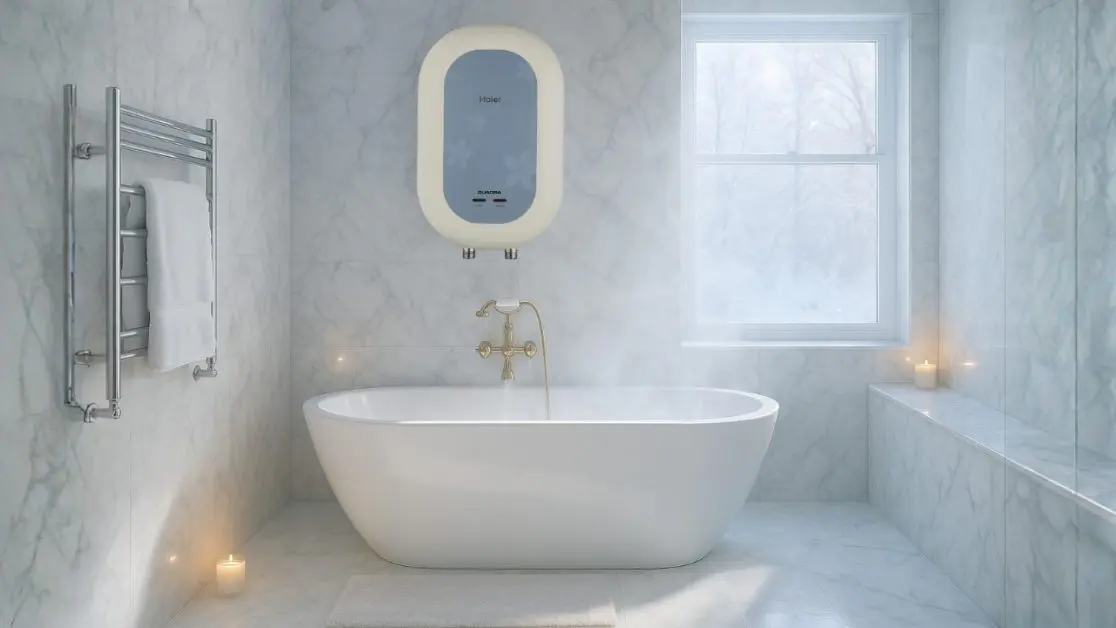
Here’s the real shift: inverter-based heaters redefine comfort not as more heat, but as steady precision.
When a Water Heater doesn’t overshoot or cycle off abruptly, it eliminates those awkward moments too hot in the first minute, too cold by the third.
That consistency feels luxurious, even if you don’t always notice it.
And yet, your electricity meter does.
Haier’s approach to energy-intelligent heating
Across Haier India’s instant water heater range, this principle shows up in the details: quiet, practical, and purposeful.
Take the Haier 3L ISI Certified Ivory Instant Water Heater (ES3V-C2(I)-P).
Its Dual Thermal Proof (TTS) system offers two layers of overheat protection first at 75°C, then again at 95°C automatically powering off to prevent waste and improve safety.
Its Incoloy 800 stainless steel heating element ensures longer life under high heat, while the RSC U-Turn Flow Technology keeps water fresh by preventing stagnation.
Every one of those design decisions translates into efficiency: no idle heating, no unnecessary power draw, and consistent performance even under 8-bar pressure ideal for high-rise apartments.
Or consider the Haier 3L Instant Water Heater (EI3V-C1(W)-P) a compact 3kW unit designed for quick, continuous heating.
With its BPS antibacterial mode, the heater intelligently raises water to 80°C to eliminate microbes, without consuming excess power. That’s efficiency meeting hygiene not one at the cost of the other.
Even the Zyon Instant Water Heater (EI3V-ZYON) brings efficiency down to the structural level, using a 304 stainless steel tank and copper heating element for faster heat transfer and less standby loss.
Copper conducts heat better, which means the same result at lower energy input, a quiet win for both performance and savings.
Where the real savings show up: systems, not switches
The beauty of inverter efficiency lies in systems thinking.
It’s not just the hardware, it’s the coordination between components.
Every element the heating coil, thermostat, flow sensor, and safety valve contributes to an ecosystem that runs at optimal balance.
When those systems talk to each other, the appliance behaves less like a machine and more like a rhythm. It adapts.
So when you turn on your Haier Water Heater for that quick post-workout shower, it doesn’t panic into full power mode. It senses water temperature, adjusts wattage, and delivers exactly what you need no more, no less.
That’s not just engineering. That’s empathy built into technology.
The ripple effect of small efficiencies
One efficient heater might not seem world-changing. But scale it.
If even 10% of Indian households switched to inverter-based heaters, the collective energy saved could power entire neighbourhoods during peak winter months.
It’s the kind of efficiency that compounds saving families money, reducing grid load, and lowering carbon output without sacrificing comfort.
Efficiency, in this sense, isn’t austerity. It’s alignment between human need and intelligent design.
The modern Indian household is rewriting energy habits
There’s a quiet cultural shift happening.
Families are starting to see energy-smart appliances not as luxury items, but as long-term investments in ease.
Parents choosing instant water heaters for their kids’ morning routines.
Young professionals timing their usage through mobile apps.
Couples setting up compact city homes with smarter, space-saving appliances.
They all share the same question: Can comfort be conscious?
And the answer, increasingly, is yes.
Inverter heating is the future of everyday energy
When you think about it, the promise of inverter-based heating isn’t just about saving a few rupees per unit.
It’s about reimagining how warmth, time, and energy can work together gracefully, predictably, intelligently.
That’s what makes Haier’s instant water heaters more than just appliances. They’re quiet participants in your daily rhythm conserving energy in the background so you can focus on living.
Because real innovation doesn’t demand your attention.
It earns your trust.
Quick Summary: Why Inverter-Based Heaters Save More
| Feature | Traditional Heater | Inverter-Based Heater |
| Heating Method | Fixed high-power cycles | Variable power modulation |
| Temperature Control | On/off thermostat | Continuous temperature sensing |
| Energy Efficiency | 0% optimization | Up to 40% savings |
| Water Consistency | Hot-cold fluctuations | Steady comfort |
| Product Life | Shorter due to wear | Longer with consistent load |
In a sentence
Energy savings aren’t found in switches, they’re built into systems.
And inverter-based heaters, like those from Haier, prove that the smartest warmth is also the most efficient.