
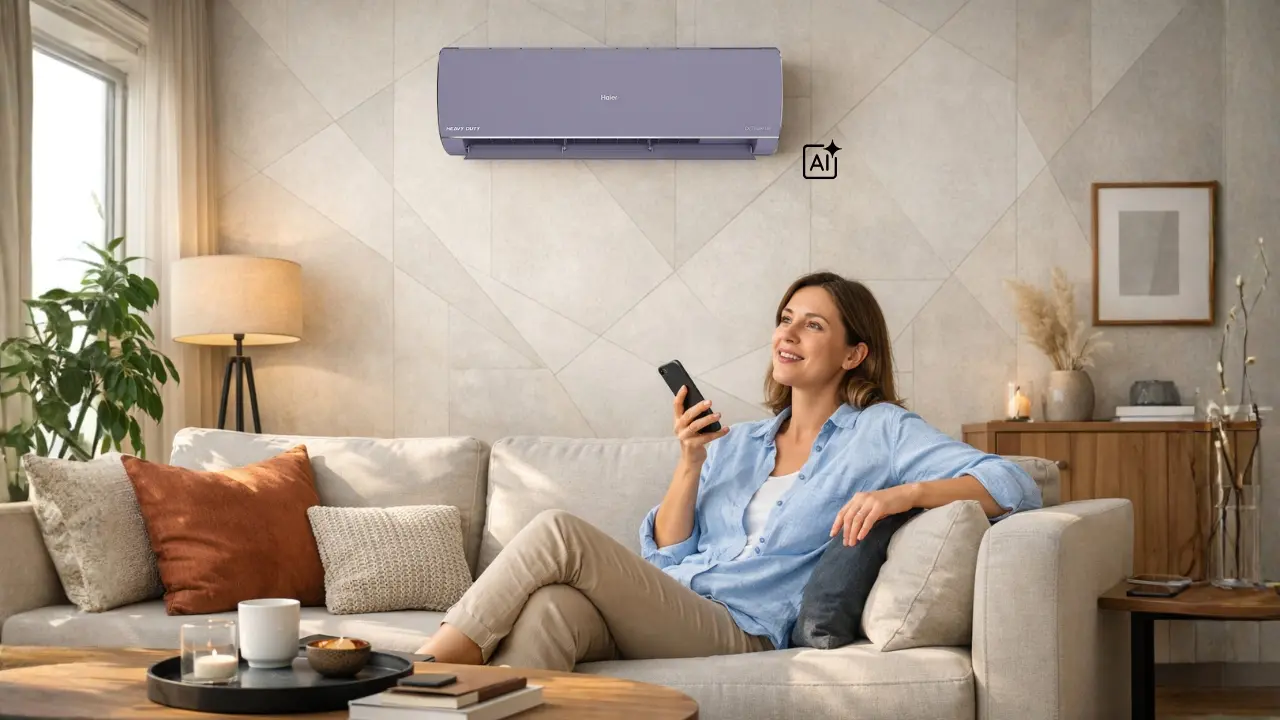

AI-powered home appliances save energy by not trusting human memory. They sense presence, learn routines, track usage patterns, and automatically reduce or stop power consumption when no one is around.
In Indian homes, where forgetting to switch off devices is common, this quiet automation cuts waste without changing habits.
The most expensive electricity is the one you do not notice.
It usually happens in a rush.
You leave home for work.
The AC hums softly in the background.
The fan stays on.
The TV standby light glows red.
Nothing feels wrong.
And yet, this is how power leaks out of Indian homes every single day.
According to Bureau of Energy Efficiency estimates, Indian households waste a significant share of electricity due to idle usage, standby power, and overcooling. Not because people do not care. Because life moves fast.
Energy waste is rarely intentional. It is usually invisible.
This is where AI steps in. Not as a gadget. But as a system that watches patterns humans cannot track consistently.
Why forgetting is not the problem. Systems are.
We blame ourselves for forgetting to switch things off.
But forgetting is human.
Repeating mistakes is human.
Optimising energy every minute is not.
Traditional appliances assume perfect users.
AI-powered appliances assume real people.
That shift changes everything.
Instead of asking, Did you switch it off?
The system asks, Should this even be on right now?
This is the hidden leap modern AI technology makes.
How AI actually saves energy behind the scenes
Let us strip away the buzzwords.
AI energy saving works through four simple ideas.
1. Presence beats promises
Timers depend on guesses.
AI depends on detection.
Modern AI-enabled appliances use occupancy sensing, motion detection, and usage signals to understand whether someone is actually in the room.
If no movement is detected, the system begins to scale down.
- Cooling reduces automatically
- Power mode shifts to energy-saving levels
- In extended absence, devices shut off entirely
In Haier’s AI-powered air conditioners, AI Human Detection senses when a room is empty and triggers step-by-step power reduction, eventually switching off if inactivity continues .
The system does not wait for you to remember.
2. Learning routines beats fixed schedules
Indian households do not run on fixed routines.
Office timings shift.
Work-from-home blends days together.
Kids are home unexpectedly.
Festivals change usage completely.
AI handles this by learning behaviour patterns over time.
Not just when devices turn on.
But how long they run.
At what temperatures.
In which seasons.
This creates a personalized energy model.
Haier’s AI Climate Control and Atmox platform track real-time usage, environmental data, and power patterns to auto-adjust performance daily, not seasonally .
The appliance stops reacting. It starts anticipating.
3. Targeted performance beats blanket power
Most appliances still work like floodlights.
Everything on. Everywhere. All the time.
AI changes this logic.
Instead of cooling an entire room, AI Target Cooling focuses airflow only where people are present. That means faster comfort with less energy.
The benefit is structural.
- Less compressor load
- Shorter run cycles
- Lower power draw
This targeted approach reduces waste without sacrificing experience, especially in larger Indian living rooms and open-plan homes .
Precision always beats excess.
4. Feedback beats blind consumption
What you cannot see, you cannot control.
AI-powered Electricity monitoring 2.0 changes this.
Users can now see:
- Daily energy usage
- Normal vs Eco mode consumption
- Cost in rupees, not just units
- Monthly trends on a calendar view
Haier’s Electricity monitoring 2.0 and Power Manager systems make energy visible and understandable, which research consistently shows leads to better long-term habits .
Awareness turns saving from effort into instinct.
Three common Indian home scenarios where AI saves power quietly
Let us make this real.
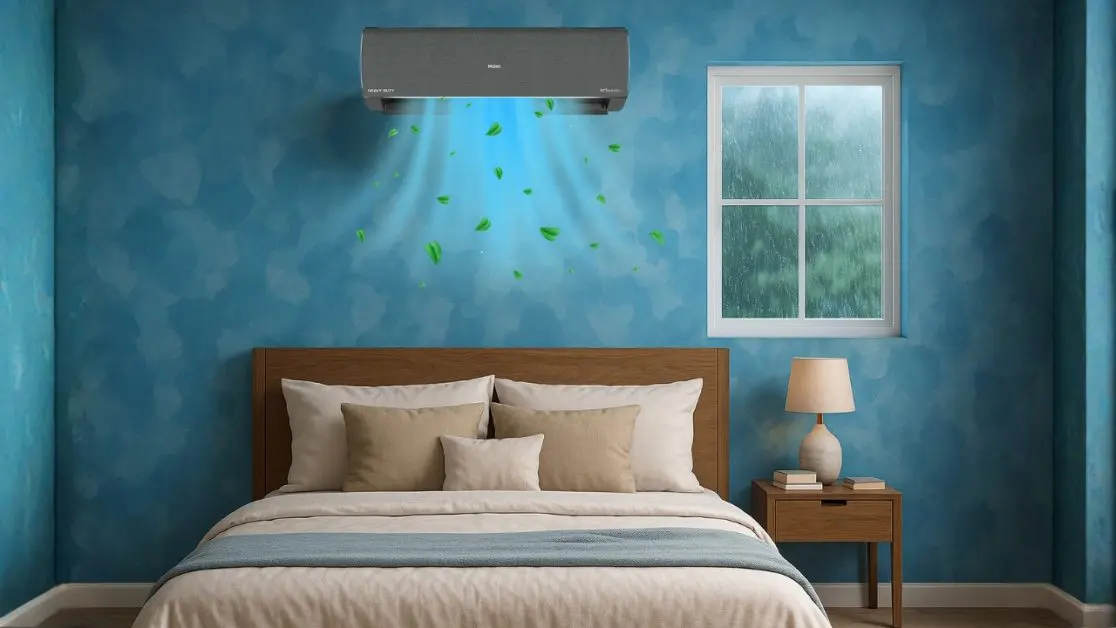
Scenario 1: The empty bedroom AC
You step out for groceries.
The AC stays on.
Traditional outcome
- AC runs for an hour
- Full power
- Nobody benefits
AI outcome
- Power shifts to Eco mode
- Auto shutdown after extended absence
Energy saved without effort.
Scenario 2: Late-night overcooling
You fall asleep.
Temperature drops.
AC keeps cooling at the same level.
AI Eco 2.0 systems monitor temperature gaps and automatically reduce cooling intensity when the set temperature is nearly achieved, shifting between Eco levels dynamically .
Comfort remains.
Consumption drops.
Sleeping should not cost extra units.
Scenario 3: Coming home after work
Without AI
- AC switched on after arrival
- High load cooling
- Longer runtime
With AI Pre-Cooling
- AI predicts arrival using geofencing
- Room pre-cools efficiently
- Shorter high-load usage window
Comfort arrives faster with lower energy spikes .
The cost-benefit reality of AI energy saving
Let us be practical.
Costs
- Slightly higher upfront appliance price
- Requires Wi-Fi or smart integration for full benefits
Benefits
- Lower monthly electricity bills
- Reduced wear and tear
- Less manual intervention
- Longer appliance life
- Better energy awareness
Over time, especially in AC-heavy Indian climates, the savings compound.
AI is not expensive. Waste is.
Why this matters more for India than anywhere else
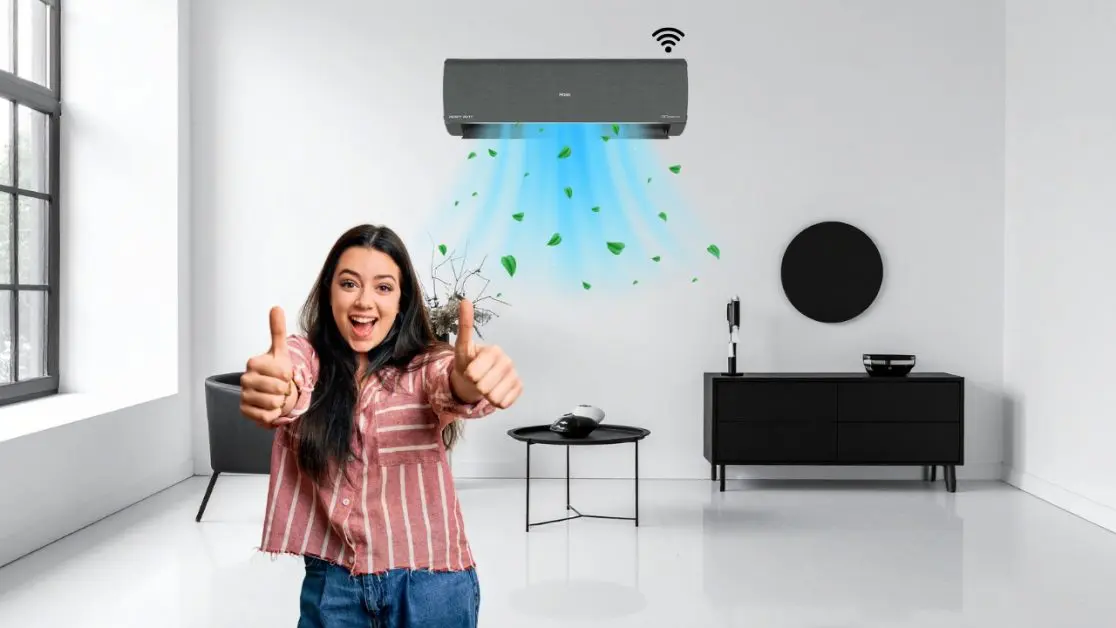
India’s energy story is unique.
- High cooling demand
- Long summers
- Rising electricity costs
- Unpredictable routines
- Mixed household usage
AI-based energy optimisation adapts to variability. Not averages.
That makes it especially relevant for:
- Young professionals living solo
- Families with kids and elders
- New homeowners managing budgets
- Urban apartments with shared loads
This is not about smart homes.
It is about resilient homes.
The deeper shift most people miss
AI energy saving is not about control.
It is about delegation.
You stop managing switches.
The system manages intent.
This is the same shift that happened with:
- Auto-save in documents
- Auto-brightness in phones
- Spam filters in email
Once experienced, manual control feels outdated.
The best technology disappears into the background.
Where Haier fits into this quietly
Haier’s approach stands out because it focuses on invisible intelligence, not flashy dashboards.
Features like:
- AI Eco 2.0 modes
- AI Climate Control
- Electricity monitoring 2.0
- Auto-clean systems that maintain efficiency
All work together as a single system rather than isolated features .
This matters because energy waste is rarely caused by one mistake. It is caused by small inefficiencies stacking up.
Systems solve systems.
What this means for the future of Indian homes
Energy will only get more expensive.
Attention will only get more scarce.
Homes that depend on memory will struggle.
Homes that depend on intelligence will adapt.
The future does not belong to people who remember everything.
It belongs to systems that forget nothing.
And quietly save power when you forget to switch things off.
Frequently Asked Questions
I keep forgetting to switch off my AC or fan when I leave, does AI really help with this?
Yes. AI-powered appliances assume forgetting is normal. Instead of relying on memory, they detect absence and automatically reduce power or shut down. You save energy even when you rush out.
How is AI different from timers or sleep modes in appliances?
Timers rely on guesses. AI relies on detection. If no movement is sensed, AI systems gradually scale down power and eventually switch off, without you setting anything.
What happens if I leave the room only for a short time?
AI doesn’t shut things off immediately. It reduces power step-by-step, waiting to confirm extended absence before switching off.
My daily routine changes a lot, can AI still learn my usage?
Yes. AI doesn’t need fixed schedules. It learns patterns over time, how long devices run, preferred temperatures, seasonal changes, and day-to-day variability.
Does AI adjust daily or only once in a season?
Daily. Real-time data allows continuous fine-tuning instead of static presets.
Why does cooling the whole room waste energy when only I’m sitting in one spot?
Traditional systems cool everything equally. AI Target Cooling directs airflow only where people are present, reducing compressor load and power draw.
I step out for groceries and forget the AC, what happens with AI?
Power shifts to Eco mode, then auto-shuts down if absence continues, saving energy without you doing anything.