

An AC feels calm instead of cold when it balances temperature, airflow, humidity, noise, and energy intelligently.
Calm cooling does not shock the body. It adapts to your room, your habits, and even your arrival time. It creates steady comfort instead of sudden chill. That difference changes how a home feels.
Cold is a setting.
Calm is a system.
On paper, both might show 24°C. In reality, they feel worlds apart.
Cold air is easy. Calm air is designed.
Walk into a room after a long Delhi commute in May.
One option blasts icy air straight at your face. You shiver. You reach for a shawl. You lower the fan speed. You start adjusting.
The second option cools the room evenly. No harsh draft. No temperature shock. Within minutes, your shoulders relax.
Both are air conditioners.
Only one feels thoughtful.
According to the Bureau of Energy Efficiency, air conditioners account for nearly 40 percent* of peak residential electricity demand in urban India. Yet most households still equate stronger cooling with better cooling.
That assumption misses something important.
Comfort is not about power. It is about precision.
What actually creates a calm cooling experience?
There are five invisible factors at play.
Not one.
1. Steady temperature, not temperature swings
Traditional ACs cool aggressively, then stop, then restart. That cycle creates temperature fluctuations of 2 to 4 degrees.
Your body notices.
Modern inverter systems like HEXA Inverter technology maintain a steady temperature curve. No sudden drop. No spike. Just continuity.
The benefit:
- Lower electricity consumption
- Better sleep quality
- Reduced throat dryness
Research from the National Sleep Foundation shows that stable room temperature between 18°C and 24°C improves sleep cycles. Stability matters more than intensity.
Calm cooling respects that.
2. Airflow direction decides everything
Cold air blowing directly on skin triggers discomfort. It activates the body’s defense response.
This is where AI Target Cooling changes the equation. Instead of cooling the entire room blindly, it focuses airflow where needed.
For example:
- During a family dinner, it cools the sofa area.
- While working from a desk, it directs air toward the workstation.
- During sleep, it avoids direct airflow on the bed.
According to internal product data from Haier’s AI Atmox system , AI Target Cooling uses installation position and cloud intelligence to adjust cooling zones intelligently.
The outcome:
Faster comfort.
Less energy waste.
No cold drafts.
Air should reach you. Not attack you.
3. Humidity control changes perception
India is not one climate. Mumbai humidity feels different from Jaipur dryness.
An AC that only lowers temperature without balancing moisture often feels sharp and uncomfortable.
Calm cooling manages humidity subtly. It keeps air breathable. Not sticky. Not dry.
The World Health Organization suggests indoor humidity between 40 to 60 percent for optimal comfort and respiratory health.
Temperature sets the number.
Humidity sets the feeling.
4. Predictive cooling removes anxiety
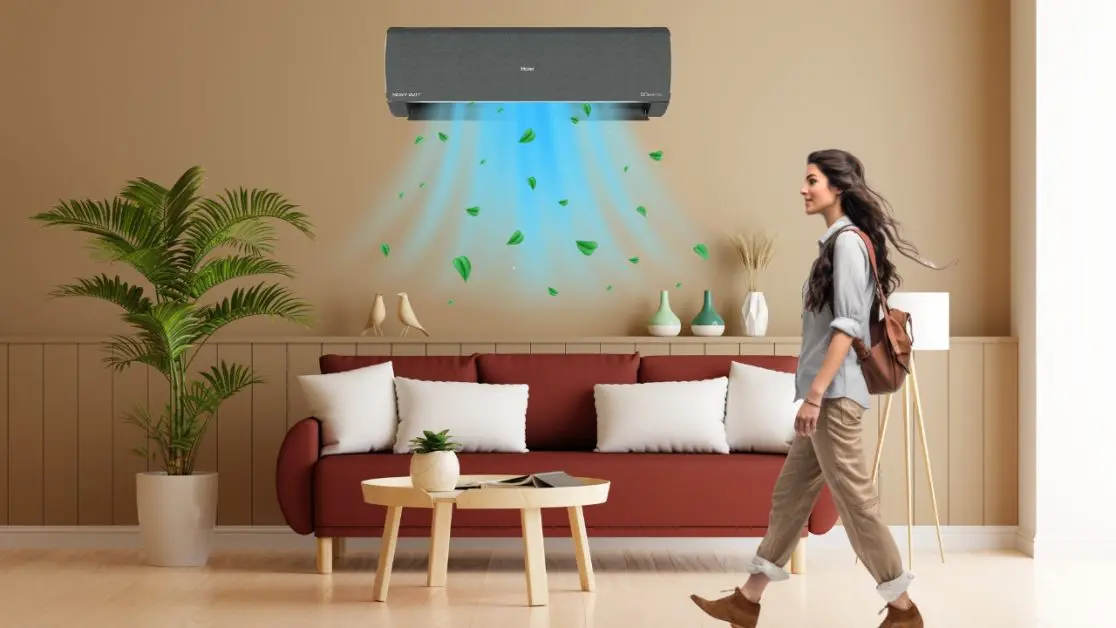
Here is a small but powerful shift.
What if your AC begins cooling before you enter the room?
AI Pre Cooling, part of Haier’s AI Atmox platform, predicts arrival within a 100 metre geofence and starts cooling automatically.
No waiting.
No sudden shock.
You enter calm air.
It sounds small. It feels transformative.
Think of it like preheating an oven before baking. The process respects timing.
According to Deloitte’s 2023 Smart Home Survey, 62 percent of urban Indian consumers prefer automation that reduces manual input.
Predictive cooling does exactly that.
It removes friction.
5. Energy awareness reduces mental load
There is another layer most people ignore.
Electricity anxiety.
In summer, AC bills can increase household expenses by 30 to 50 percent* depending on usage patterns. That background stress changes how freely people use cooling.
Systems like Atmox Power Manager show real time energy usage in currency format, graphical tracking, and custom targets.
You see:
- Normal mode runtime
- Eco mode usage
- Cost impact per day
When awareness increases, panic decreases.
Calm air is not only physical. It is financial.
Three types of cooling most homes choose
Let us simplify.
There are usually three choices in Indian homes.
One option is: Raw Power Cooling
- Fast temperature drop
- High fan speed
- High energy usage
- Noticeable airflow
Cost: Higher electricity bills.
Benefit: Quick relief in extreme heat.
The second option is: Timer Based Cooling
- Scheduled start and stop
- Manual preset temperatures
- Limited adaptability
Cost: Requires constant adjustment.
Benefit: Predictable behaviour.
The third option is: AI Adaptive Cooling
- Learns habits
- Adjusts based on occupancy
- Balances humidity and airflow
- Monitors energy consumption
Cost: Slightly higher upfront investment.
Benefit: Lower long term bills. Better comfort. Less manual effort.
The third option feels calm because it reduces decisions.
And decision fatigue is real.
At work. In parenting. In running a home.
Every small automation adds up.
Why calm cooling matters in real Indian homes
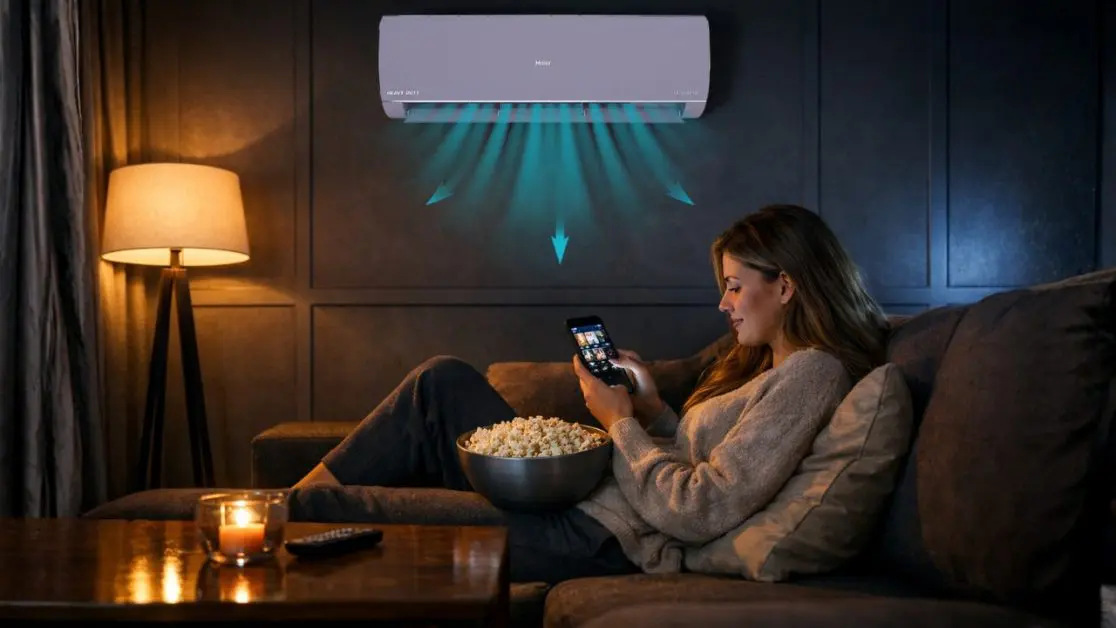
Consider three everyday moments.
Late night OTT binge
Room lights are dim.
You are under a blanket.
Temperature swings wake you.
Steady inverter cooling protects sleep cycles.
Sunday afternoon cricket
Five people. Different comfort levels.
One person feels hot. Another feels cold.
AI Target Cooling focuses airflow where needed instead of blasting the entire room.
Working from home
Laptop heat. Afternoon sunlight. Power bills rising.
AI Eco 2.0 shifts modes automatically when temperature gap narrows, moving from L1 to L3 efficiency levels.
The system adjusts. You continue working.
These are not marketing scenarios.
They are daily life.
Self cleaning also affects calmness
Here is something people forget.
Dust reduces cooling efficiency.
When coils clog, airflow weakens. ACs compensate by running harder. Noise increases. Energy usage rises.
Haier’s AI IDU Frost Self Clean and ODU Cyclone Clean reverse airflow and use frost cleaning cycles to maintain internal efficiency.
Cleaner coils mean:
- Faster cooling
- Lower electricity bills
- Less maintenance anxiety
The result is not dramatic.
It is consistent.
Clean systems behave calmly. Dirty systems struggle.
The hidden system behind calm air
If we zoom out, calm cooling follows a simple framework:
| Element | Cold Experience | Calm Experience |
| Temperature | Sudden drop | Gradual balance |
| Airflow | Direct blast | Targeted flow |
| Humidity | Ignored | Managed |
| Energy | Uncertain cost | Visible tracking |
| Maintenance | Manual effort | Auto clean cycles |
Cold is a single variable.
Calm is a coordinated system.
And systems scale better.
Why this matters beyond comfort
An AC sits quietly on a wall. It feels like background infrastructure.
But background systems shape behaviour.
When cooling feels harsh:
- People avoid using it fully
- Electricity anxiety rises
- Sleep quality drops
- Productivity dips
When cooling feels calm:
- Rooms become usable all day
- Conversations feel easier
- Work from home feels less draining
- Even summer feels manageable
India’s summer temperatures now regularly cross 45°C in cities like Jaipur and Nagpur. Climate variability is increasing. Demand for cooling is rising rapidly, according to the International Energy Agency.
Cooling is no longer a seasonal luxury.
It is everyday infrastructure.
The question is not whether you need cooling.
The question is how that cooling feels.
Calm is the future of climate control
We often assume technology should feel powerful.
In reality, the best technology feels invisible.
AI Climate Control under the AI Atmox platform adapts, predicts, monitors, and cleans without constant input.
That shift mirrors how modern households operate.
Busy schedules.
Hybrid work.
Shared spaces.
Rising electricity costs.
A calm AC respects complexity without adding to it.
True comfort is not louder. It is smarter.
The one idea to remember
Calm air cools your space.
And when space feels balanced, everything else becomes easier.
From better sleep to better focus.
From lower bills to fewer adjustments.
From reactive cooling to intelligent climate control.
That is what makes an AC feel calm instead of cold.
Not temperature alone.
But the invisible system is working quietly behind it.
Frequently Asked Questions
Can my AC start cooling before I reach home?
Yes, geofencing-based AI systems can detect your proximity and begin cooling in advance.
Does AI cooling really make a noticeable difference?
AI systems like those developed by Haier adjust airflow, humidity, and energy dynamically based on room behavior and occupancy.
What is AI Target Cooling?
It directs airflow toward occupied zones instead of blasting the entire room, improving comfort and reducing waste.
Is AI cooling just marketing?
Not when it combines predictive cooling, adaptive efficiency modes, humidity balance, and real-time energy tracking.
Why do I feel stressed running my AC all day?
Electricity bills in summer can increase 30–50%, creating background financial anxiety.
Do inverter ACs actually save money long term?
Yes. They maintain steady compressor speeds instead of cycling on/off, reducing peak consumption.
Does seeing real-time energy usage change behavior?
Absolutely. When usage is displayed in currency format, people make more informed adjustments.
Is calm cooling also about financial calm?
Yes. Predictable energy usage reduces mental stress associated with surprise bills.