
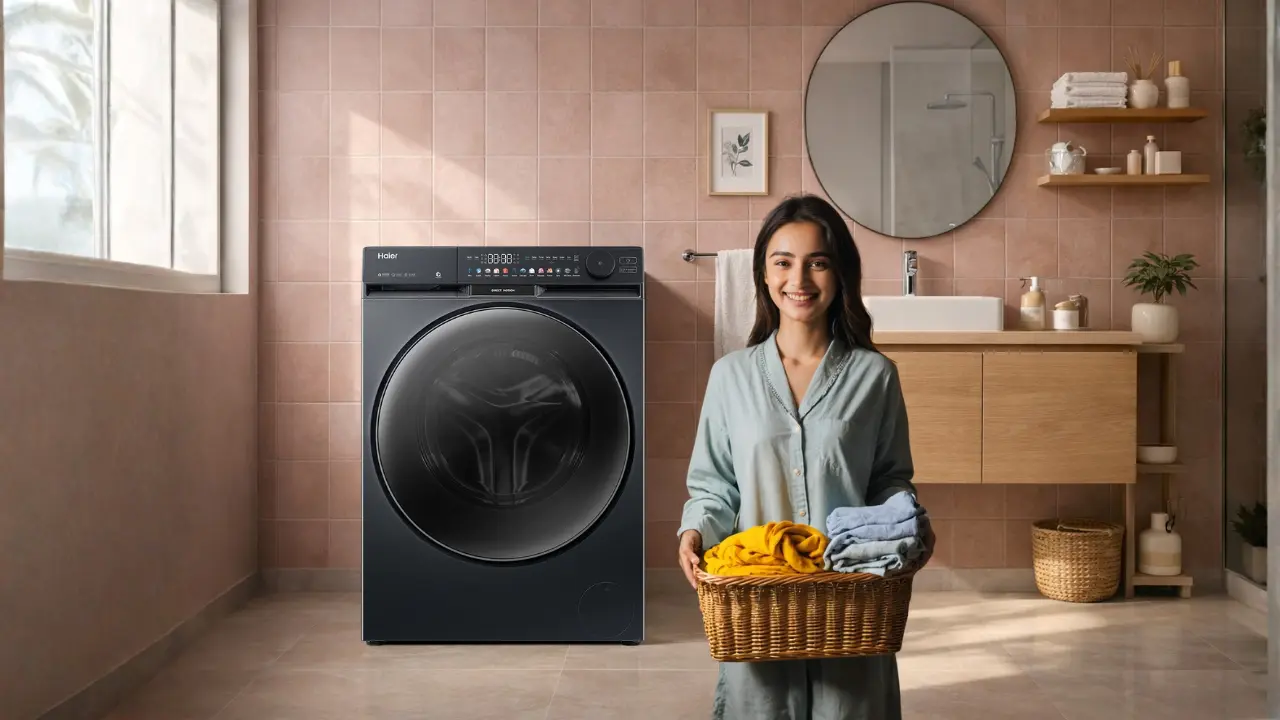

Smarter cycles create healthier outcomes because they match the wash to the load, not the other way around.
When a washing machine automatically senses fabric type, load weight, and dirt level, it saves water, energy, time, and fabric life. The result is cleaner clothes, fewer allergens, lower bills, and less stress in everyday Indian homes.
That is the short answer.
The longer one begins at 8:45 pm on a Tuesday.
A pile of school uniforms. Gym wear that smells like effort. Office shirts needed by morning. Towels that refuse to dry in monsoon humidity.
Laundry is not about clothes. It is about momentum.
And momentum needs systems.
Why do traditional wash cycles fail modern homes?
For years, we chose cycles the way we pick movie seats. Quickly. Randomly. Hoping for the best.
Cotton. Mix. Quick wash.
Done.
But here is the problem.
Most Indian households today wash 4 to 6 loads a week. In nuclear families, dual income homes, or shared flats, that number climbs. Each load is different. Cotton kurta one day. Baby clothes the next. Denim on weekends.
Yet we often run the same setting.
That mismatch has consequences.
The hidden costs of “default mode” washing
- Overuse of water
A half load treated like a full load wastes litres every cycle. - Excess detergent residue
Wrong spin or rinse settings leave traces that irritate skin. - Fabric stress
High spin on delicate materials reduces garment life by months. - Energy creep
Extra minutes add up on monthly electricity bills.
Small inefficiencies compound.
Laundry is interesting. What repeats, multiplies.
According to India’s Bureau of Energy Efficiency, washing machines account for a noticeable share of urban household electricity usage. Even a 10 to 15 percent efficiency improvement changes yearly consumption patterns.
So the question becomes clear.
Are we washing clothes?
Or are we managing outcomes?
What does a smarter cycle actually mean?
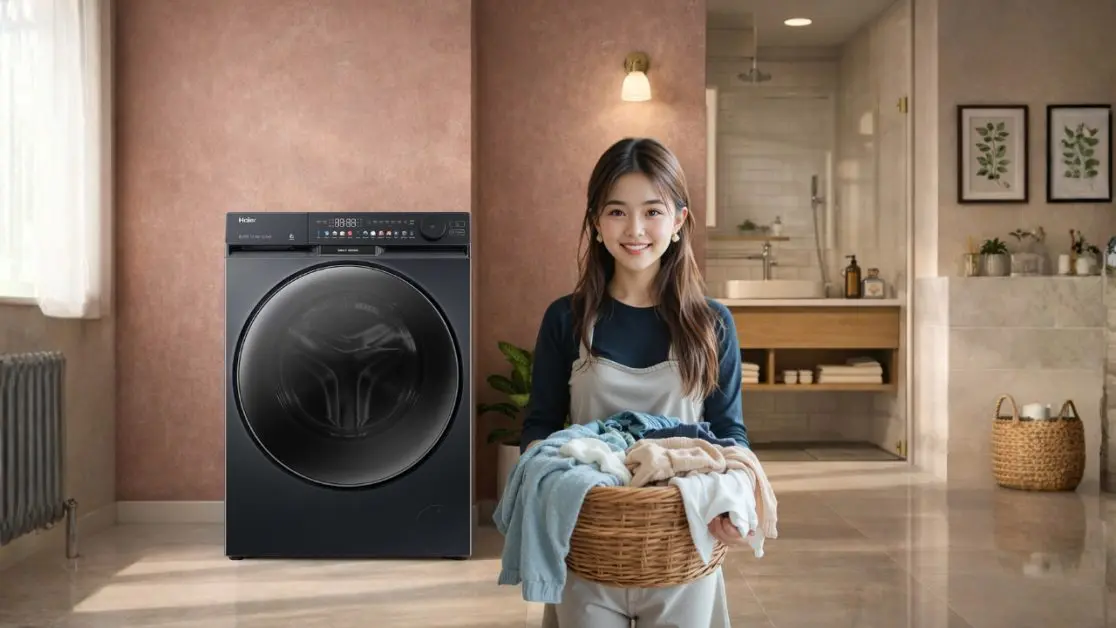
A smarter cycle does one thing well.
It removes guesswork.
Modern front load washing machines now use AI-driven systems to sense load size, detect fabric type, and adjust water level, temperature, and spin automatically.
Take the Haier 10 Kg Fully Automatic Front Load Washing Machine HW100-DM14F9BKU1.
It uses One Touch AI Wash to auto match parameters based on load and dirt level.
That sounds technical.
But the real impact is practical.
Press once.
Walk away.
Wake up to balanced results.
No over washing. No under rinsing.
Just right.
How smart washing improves health at home
We underestimate how closely laundry links to wellbeing.
Clothes touch skin all day. Towels absorb moisture. Bedsheets hold dust and allergens.
Smarter cycles influence three health outcomes:
1. Allergen control
Dual spray systems and higher temperature programs help reduce residue and allergens.
For homes with children or elderly parents, this matters. Fewer residues mean fewer skin reactions.
2. Odour reduction without harsh chemicals
Steam based refresh programs wrinkles and odors gently.
Instead of overloading detergent, you refresh intelligently.
3. Reduced bacterial buildup
Self clean cycles and 90 degree temperature programs help maintain hygiene.
A washing machine that cleans itself protects every future wash.
Healthy outcomes begin before the clothes reach the cupboard.
Efficiency is not about speed. It is about alignment.
Most people assume faster cycles equal smarter cycles.
Not always.
Smarter cycles align four variables:
| Variable | Traditional Approach | Smart Cycle Approach |
| Water level | Fixed | Auto adjusted |
| Spin speed | Manually chosen | Fabric matched |
| Temperature | Guess based | Soil level matched |
| Duration | Preset | Optimised per load |
Alignment reduces waste.
Waste reduction improves both cost and comfort.
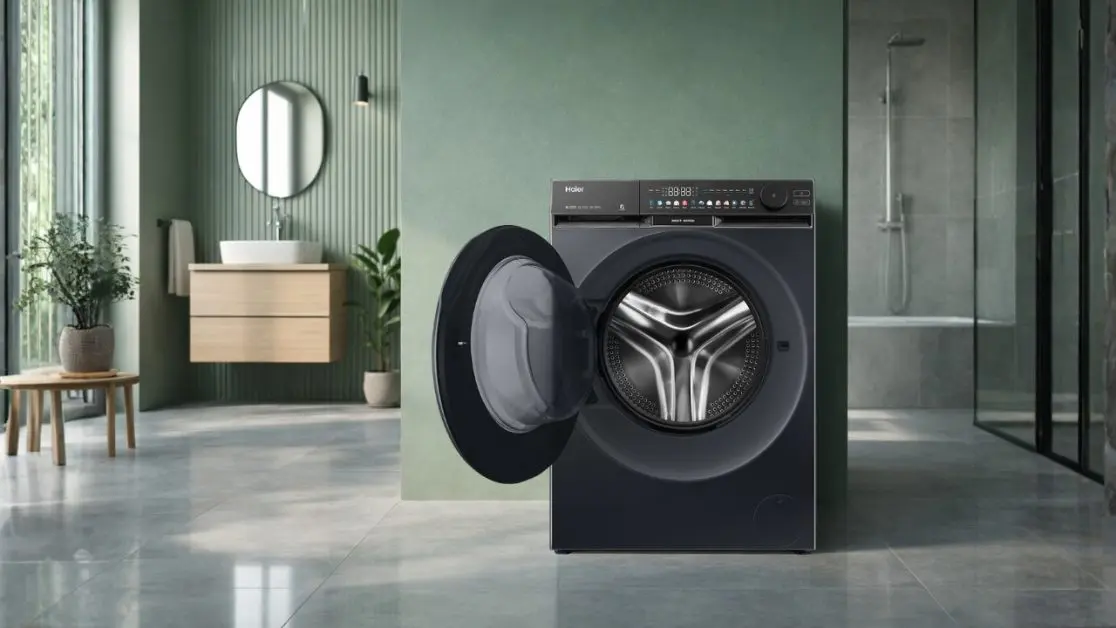
In the Haier 12 Kg F9 pro Front Load Washing Machine HW120-DM14F9PBKU1, automatic sensing, Direct Motion Motor, and energy saving modes work together to optimize performance.
That coordination is the point.
Systems outperform settings.
Silence is a health feature
Let us talk about something underrated.
Noise.
Urban India is loud. Traffic. Construction. Televisions. Pressure cookers.
When appliances add to that noise, stress increases.
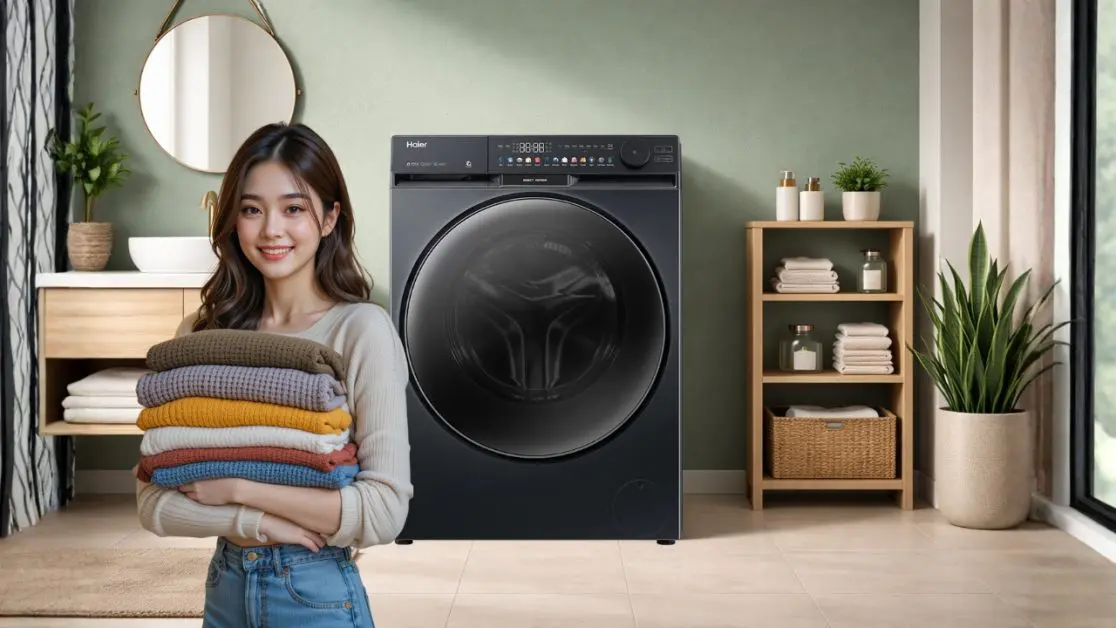
The Direct Motion Motor in Haier front load washing machines is designed for smooth, low vibration performance.
Night Wash programs allow silent cycles even after 10 pm.
This changes routines.
Working professionals can run laundry after dinner without disturbing sleep. Parents can schedule cycles post bedtime.
Better rest.
Better mood.
Health is not just hygiene. It is the environment.
Capacity is strategy, not size
Many households underestimate capacity.
A 10 Kg drum like the HW100-DM14F9BKU1 handles family loads efficiently.
A 12 Kg capacity like the HW120-DM14F9BKU1 supports larger families or bedding loads.
But capacity is not about bulk.
It is about flexibility.
Three capacity strategies
- Compact consistency
Smaller loads washed more frequently. Ideal for singles or couples. - Weekly batching
A large drum reduces frequency. Saves time. - Mixed mode approach
Daily small loads plus weekend bedding cycles.
Each approach has cost implications.
- Smaller machines use less water per cycle.
- Larger machines reduce total cycles per week.
- Smart sensors ensure neither wastes resources.
The best choice depends on rhythm.
And rhythm defines health.
Digital panels reduce friction
We rarely talk about cognitive load.
After a long workday, decision fatigue is real.
An AI Colour Panel with intuitive display reduces confusion and speeds up operation.
Clarity prevents mistakes.
Mistakes waste detergent, time, and patience.
In busy households, reducing friction matters more than adding features.
Connectivity changes accountability
WiFi enabled washing machines allow remote monitoring and notifications.
Why does that matter?
Because laundry often runs between meetings. Between school pickups. Between dinner prep.
Remote access allows:
- Cycle tracking
- Start or pause from phone
- Alerts when wash completes
Less forgotten laundry.
Less damp smell.
Better hygiene.
Small control shifts create large behavioural change.
Energy efficiency is long term health
Electricity prices fluctuate. Water availability varies by city.
Smart wash systems use auto weighing and eco modes to conserve resources.
The math is simple.
If each load saves 10 percent water and electricity, over 200 cycles a year, the cumulative impact is meaningful.
Financial savings reduce stress.
Stress reduction improves overall wellbeing.
Health extends beyond the skin.
Smarter cycles are decision frameworks
When I observe modern Indian homes, I notice something.
We are upgrading everything.
Better mattresses. Air purifiers. Smart ACs. Larger refrigerators.
But laundry habits remain traditional.
That gap creates imbalance.
Smarter cycles bring laundry into alignment with the rest of the home.
They:
- Protect fabrics
- Protect skin
- Protect time
- Protect energy
Protection is prevention.
And prevention is cheaper than correction.
The larger principle behind smarter cycles
Smarter cycles reflect a broader truth.
When systems adapt to inputs, outcomes improve.
The same principle governs business decisions, team management, even health routines.
Rigid processes fail in dynamic environments.
Adaptive systems thrive.
In laundry, adaptation means sensing fabric, load, and soil level automatically.
In life, it means responding to reality instead of clinging to defaults.
That shift feels small.
But it compounds.
So what does this mean for modern Indian homes?
It means laundry should not feel like a chore that drains energy.
It should feel like a background process that quietly supports health.
A washing machine that adjusts water automatically.
Operates silently at night.
Cleans deeply yet gently.
Saves electricity.
Removes allergens.
That machine does more than wash clothes.
It preserves routine.
And routine builds stability.
Stability builds wellbeing.
Smarter cycles create healthier outcomes.
Not because they are advanced.
But because they are aligned.
And alignment, in homes and in organisations, is the quiet engine behind everything that works.
That is what most people need.
Not louder features.
Just smarter systems that let life flow.
Frequently Asked Questions
Why do I always feel confused about which wash cycle to choose?
Most washing machines offer multiple cycles (cotton, mixed, delicate, quick wash), but real laundry loads rarely match those categories perfectly. Smart cycles remove the guesswork by automatically sensing load weight, fabric type, and dirt level, then adjusting water, temperature, and spin speed.
I usually just pick “Quick Wash” for everything. Am I damaging my clothes?
Quick cycles are useful for lightly soiled clothes but may not clean heavily used garments properly. Repeated use can leave detergent residue or trapped odors. Smart cycles balance cleaning time with fabric care automatically.
After a long workday, I don’t want to think about laundry settings. Is there a simpler way?
Yes. Modern washing machines with AI wash programs allow a single-touch start, where the machine automatically sets parameters based on load conditions.
Why do my clothes sometimes come out too wet or poorly rinsed?
This usually happens when the selected spin speed or rinse cycle doesn’t match the fabric type or load size. Smart machines automatically optimize these variables.
How can I reduce laundry mistakes at home when multiple people use the washing machine?
Machines with AI control panels and automatic sensing reduce user errors. Instead of manually selecting settings, the system adapts to the load.
My clothes smell clean but still irritate my skin. What could be causing this?
Residual detergent or incomplete rinsing can irritate sensitive skin. Smart wash systems adjust rinse cycles based on load size and detergent concentration.
I left my laundry in the washer overnight. Do I need to wash it again?
If clothes stay damp for several hours, bacteria can begin growing and cause musty smells. Rewashing with a hygiene or steam cycle is recommended.
How can I reduce allergens in clothes for my kids or elderly parents?
High-temperature wash programs, steam cycles, and dual-spray rinse systems help remove detergent residue, dust mites, and allergens more effectively.
Why do towels still smell even after washing?
Towels often trap detergent buildup and moisture. Using hotter wash temperatures and proper rinse cycles helps remove trapped bacteria.
Do washing machines need to clean themselves?
Yes. Over time, detergent residue and moisture can create bacterial buildup inside the drum. Self-clean cycles and high-temperature maintenance washes help maintain hygiene.