
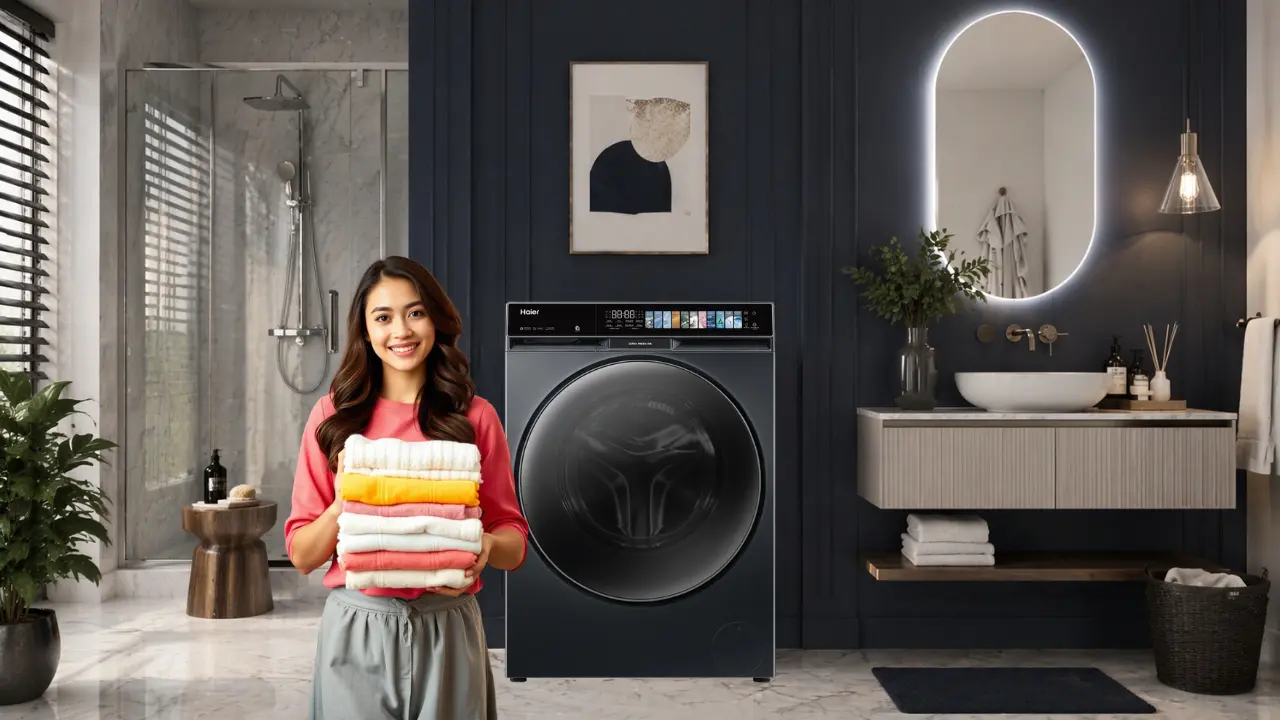

AI learns washing patterns by observing every load, identifying fabric types, weight, and dirt levels, and continuously adjusting wash cycles to deliver better cleaning with less water, energy, and effort.
Over time, it stops reacting and starts predicting, turning laundry into a self-optimising system.
The problem nobody talks about in Indian homes.
Step into a typical Indian home on a Sunday morning.
A pile of laundry builds quietly. Cotton kurtas. Gym wear. School uniforms. A bedsheet added at the last minute.
And then comes the pause.
Which mode?
Quick wash? Cotton? Heavy? Mix?
Most people guess.
And that guess creates a hidden cost.
- Overwashing weakens fabric
- Underwashing leaves stains behind
- Wrong settings waste water and electricity
Laundry feels routine.
But it is actually a decision system most homes run manually.
And manual systems break under complexity.
AI Doesn’t Just Wash Clothes. It Learns Behaviour.
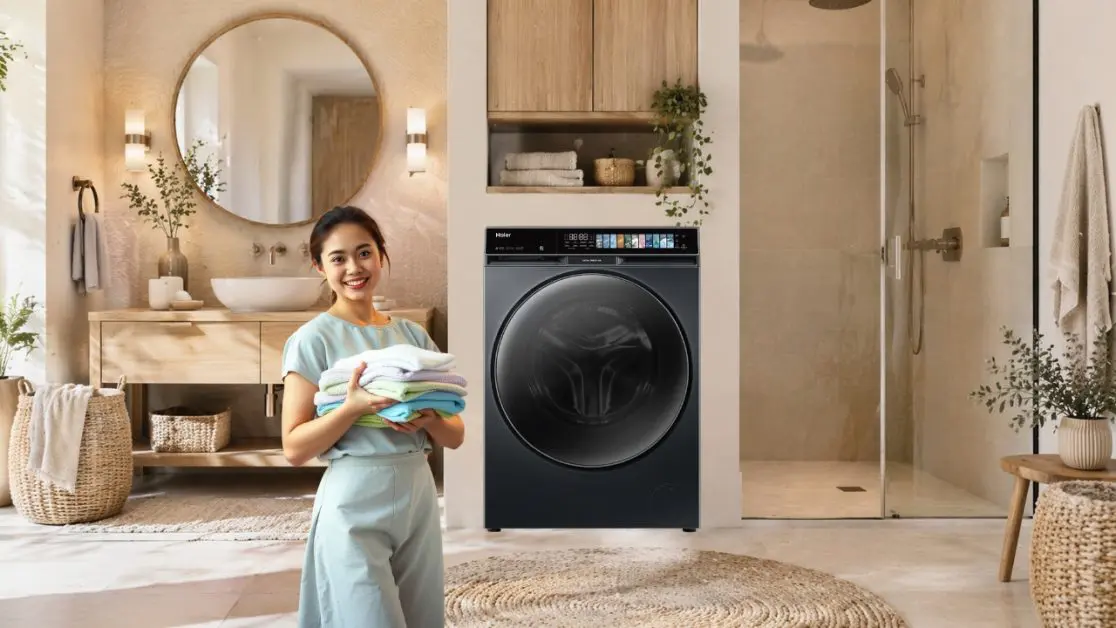
Traditional washing machines follow instructions.
AI-powered washing machines observe patterns.
That small shift changes everything.
Because the question is no longer:
“How do I wash this load?”
It becomes:
“What does this load need right now?”
What AI Actually Tracks During Every Wash
AI systems look at multiple signals together, not in isolation.
| Parameter | What It Means | Why It Matters |
| Load weight | How heavy the laundry is | Prevents excess water usage |
| Fabric type | Cotton, denim, synthetic | Protects fabric quality |
| Dirt level | Light to heavy stains | Adjusts wash intensity |
| Water absorption | How clothes retain water | Optimises rinse cycles |
| Usage history | Past cycles and habits | Predicts future needs |
In machines like the Haier 12 Kg F9 Pro Front Load Washing Machine (HW120-DM14F9PBKU1), One-Touch AI Wash automatically detects fabric type, load, and dirt level to choose the right wash settings instantly .
No trial.
No errors.
Just alignment.
Why Washing Patterns Matter More Than You Think
Most people believe laundry is about cleaning.
It is not.
It is about consistency over time.
Because one bad wash is forgettable.
Repeated bad washes are expensive.
- Colours fade faster
- Fabric loses strength
- Energy bills increase gradually
- Time gets wasted repeatedly
A machine that learns patterns fixes the system, not just the outcome.
Good machines clean clothes.
Smart machines protect routines.
How AI Actually Learns Your Washing Patterns
AI learning follows a loop.
Observe. Interpret. Adjust. Repeat.
1. It Starts With Observation
At first, nothing feels different.
You load clothes. Select a program. Start.
But the system is tracking:
- Frequency of washes
- Type of loads
- Preferred settings
- Time of usage
It builds a behaviour map.
Not just clothes.
Of your routine.
2. It Moves to Pattern Recognition
After a few cycles, patterns begin to show.
- Weekdays → smaller, quicker loads
- Weekends → heavier mixed loads
- Gym clothes → frequent short cycles
The machine starts grouping behaviour.
That is where intelligence begins.
3. It Starts Auto-Optimising
Now the shift happens.
The machine stops waiting.
It begins adjusting automatically:
- Water levels
- Spin speed
- Wash duration
- Rinse intensity
In models like the Haier 10 Kg Fully Automatic Front Load Washing Machine (HW100-DM14F9BKU1), this becomes a one-touch experience where the system auto-matches parameters for efficient cleaning and resource saving .
One action.
Multiple decisions solved.
4. It Keeps Learning and Adapting
Learning is continuous.
If your habits change, the system adapts.
- Summer season → lighter, frequent washes
- Festive season → bulk heavy loads
- New family member → more delicate cycles
AI does not fix behaviour.
It evolves with it.
Three Ways Laundry Systems Work Today
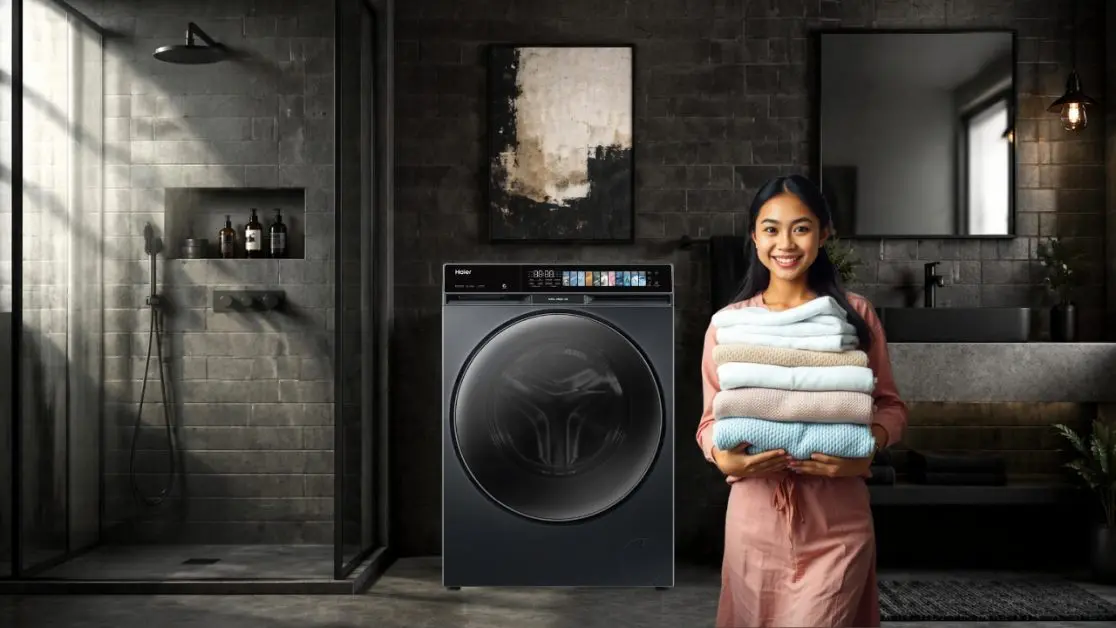
Let’s simplify the shift.
Option 1: Manual Control
You decide everything.
- Choose settings
- Adjust timing
- Experiment each time
Cost: Time, inconsistency
Benefit: Full control
Option 2: Preset Programs
The machine offers fixed modes.
- Cotton
- Quick wash
- Delicate
Cost: Limited flexibility
Benefit: Simpler than manual
Option 3: AI Learning System
The machine observes and adapts.
- Detects load automatically
- Adjusts settings dynamically
- Improves with every cycle
Cost: Requires initial trust
Benefit: Efficiency, consistency, ease
From control to collaboration.
That is the real upgrade.
The Hidden System Behind Smart Washing
AI in washing machines combines three layers.
1. Sensors That Measure Reality
Modern machines track:
- Weight of load
- Drum movement
- Water flow
This replaces guesswork with data.
2. Algorithms That Make Decisions
Algorithms translate signals into action.
- Heavy load + cotton → deeper wash
- Light load + synthetics → faster cycle
3. Feedback That Improves Future Cycles
Every wash teaches the system.
- Faster cycles get repeated
- Inefficient ones get corrected
This is where machines start learning patterns.
Why This Matters in Indian Homes
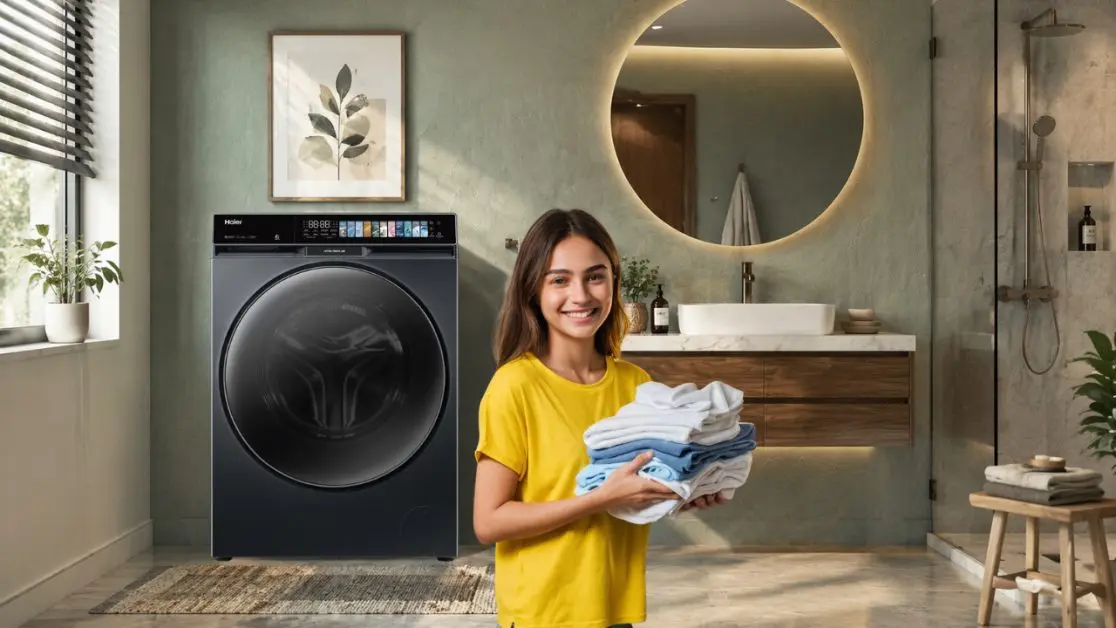
Indian laundry is complex.
- Mixed fabrics in one load
- Dust-heavy environments
- Frequent washing due to climate
- Hard water in many cities
Fixed systems struggle here.
Learning systems adapt naturally.
Real Scenarios Where AI Makes a Difference
1. Mixed Family Laundry
Different fabrics in one load.
AI detects variations and balances the cycle.
Result: Better cleaning without manual sorting.
2. Busy Workdays
Short time. Quick washes.
AI optimises cycles for speed and efficiency.
3. Festive Bulk Washing
Heavy loads during celebrations.
AI adjusts water and spin to handle volume safely.
Same machine.
Different homes.
Different intelligences.
What AI Optimisation Actually Saves
Water Efficiency
AI matches water level to load size.
No excess usage.
Energy Savings
Direct Motion motors reduce friction and improve efficiency, ensuring quieter and energy-efficient operation .
Fabric Protection
Right cycles prevent damage.
Clothes last longer.
Time Savings
No decision fatigue before every wash.
Laundry becomes automatic.
The Bigger Shift Most People Miss
This is not just about washing machines.
It is about systems that learn human behaviour.
- Air conditioners learn cooling preferences
- Refrigerators track usage patterns
- Washing machines adapt to routines
Homes are becoming responsive systems.
Not static setups.
The future is not smart devices.
The future is adaptive living.
So What Does This Change for You?
It changes how you see appliances.
If you want control
Manual settings still exist.
If you want ease
AI takes over repetitive decisions.
If you want efficiency
The system optimises resources continuously.
You decide your role.
The system adjusts accordingly.
The One Insight That Stays With You
Laundry was never just about washing.
It was always about decisions.
And decisions, when repeated daily, need systems.
When machines start learning, effort stops scaling with complexity.
That is why AI learning in washing patterns matters.
Not because it adds technology.
But because it removes friction from everyday life.
Quietly.
Consistently.
And over time, almost invisibly.
Frequently Asked Questions
Why do I always feel confused choosing the right wash mode for my clothes?
Because modern laundry loads are mixed (cotton, synthetics, heavy items), but machines expect you to pick a single mode. AI removes this guesswork by detecting and adjusting automatically.
Am I overthinking laundry, or is it actually a complex decision system?
You’re not overthinking it is complex. Every load involves variables like fabric, weight, and dirt level. AI simplifies this by handling multiple variables at once.
I just press “quick wash” every time I damage my clothes?
Possibly. Quick wash may under-clean heavy loads or stress delicate fabrics. AI systems avoid this mismatch by tailoring cycles to actual needs.
Why does laundry feel like a chore even with automatic machines?
Because decision-making is still manual. AI shifts your role from “operator” to “observer,” reducing mental effort.
How does my washing machine learn my habits over time?
It tracks usage patterns like load types, frequency, and preferred settings, then builds a behavioral model.
Will the machine still work if my routine changes?
Yes. AI continuously adapts new routines leading to updated optimization.
What does “One-Touch AI Wash” actually do for me?
It detects fabric, weight, and dirt level instantly and selects the best settings, no manual input needed.
Is AI in washing machines just marketing, or does it really help?
It’s practical. The biggest impact is reducing errors and improving consistency over time.
Does the machine remember my past washes?
Yes. Usage history helps it predict and improve future cycles.