
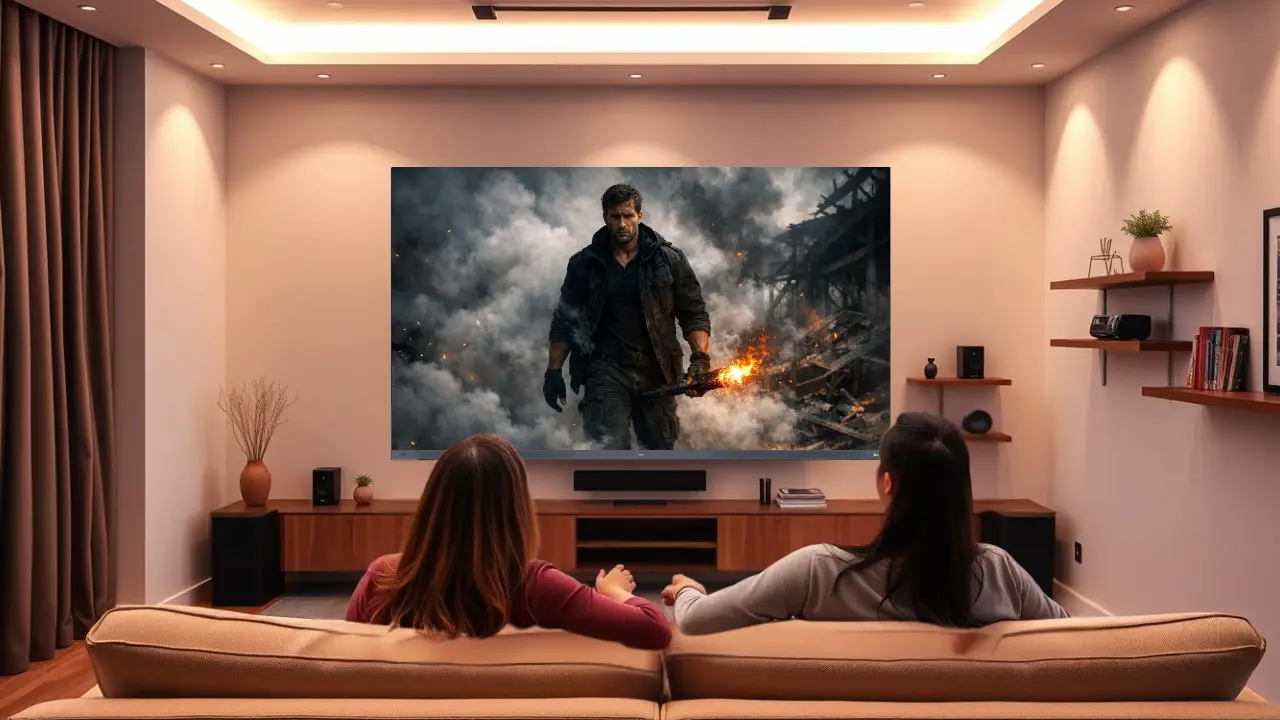

Sound by KEF delivers cinema-level audio by combining precision speaker engineering, deep bass channels, and spatial technologies like Dolby Atmos. When integrated into televisions, the system reproduces sound across a wide dynamic range so whispers stay clear and explosions feel powerful.
That is the technical explanation.
But the real story begins somewhere far more familiar.
Your living room.
The Late-Night scene most Indian homes recognize.
It is around 10:40 pm.
Dinner plates sit near the sink. Someone brings chai or popcorn. A family member says, “Bas ek episode aur.”
One episode becomes three.
A character whispers something critical in the scene.
Everyone leans forward.
“Volume badhao.”
Five minutes later an action scene begins.
A car explodes.
Now someone else shouts.
“Volume kam karo!”
This pattern plays out in homes everywhere.
Because traditional television speakers struggle with one basic challenge.
Dynamic sound range.
They handle dialogue.
Or they handle explosions.
Rarely both.
And great sound lives in the distance between those two moments.
Why Many Televisions Still Sound Flat
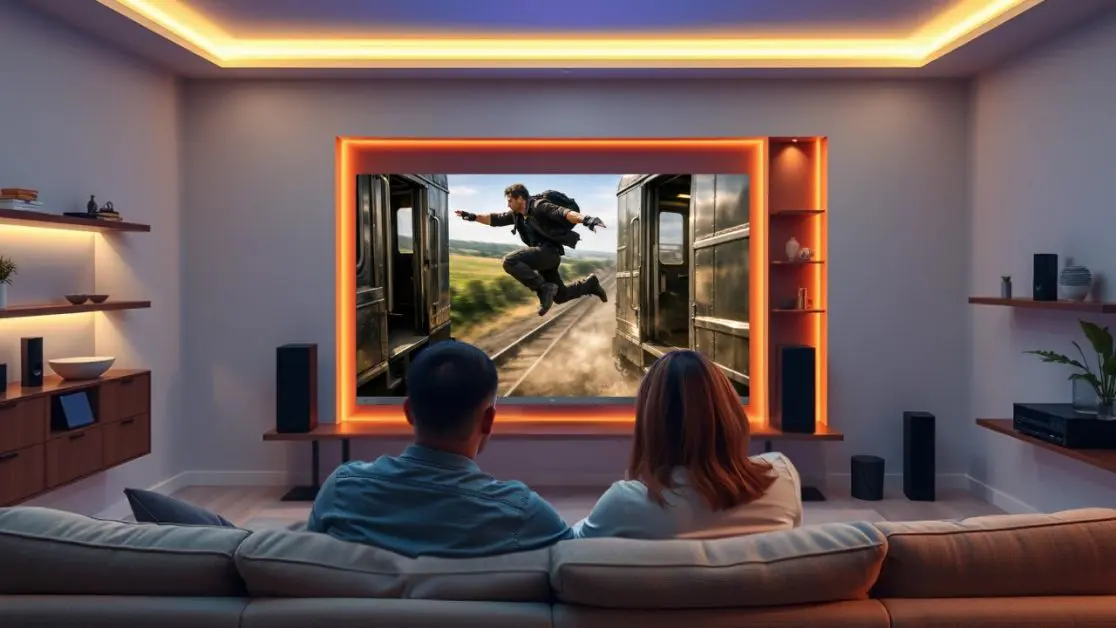
Most televisions prioritize slim design.
Thin panels leave limited space for speaker chambers. Small drivers produce acceptable audio, but not cinematic depth.
The result often looks like this:
| Viewing Situation | What You Hear |
| Dialogue scenes | Voices sound thin or distant |
| Action sequences | Bass lacks depth |
| Music shows | Instruments blend together |
| Sports matches | Crowd energy feels muted |
Your brain senses the mismatch.
Movies and sports broadcasts are engineered with complex sound layers.
When speakers compress those layers, the emotional experience shrinks.
Sound becomes background noise instead of storytelling.
KEF’s Philosophy: Sound Should Feel Natural
KEF is a British audio engineering brand known for decades of acoustic research.
Their philosophy is surprisingly simple.
Sound should feel true to the source.
Not artificially loud.
Not exaggerated.
Just accurate.
When Sound by KEF audio integrates into televisions like the Haier M80F Mini LED 189 cm (75) Google TV (H75M80FUX), the goal is not louder speakers.
The goal is precision sound reproduction.
Sound by KEF’s engineering ensures richer clarity, deeper bass, and balanced audio performance compared to conventional TV speakers.
That difference matters because human hearing is layered.
We hear frequencies separately.
Dialogue lives in mid frequencies.
Music spreads across highs and mids.
Explosions live in deep bass.
When those layers separate properly, the entire experience changes.
How Cinematic Audio Actually Works
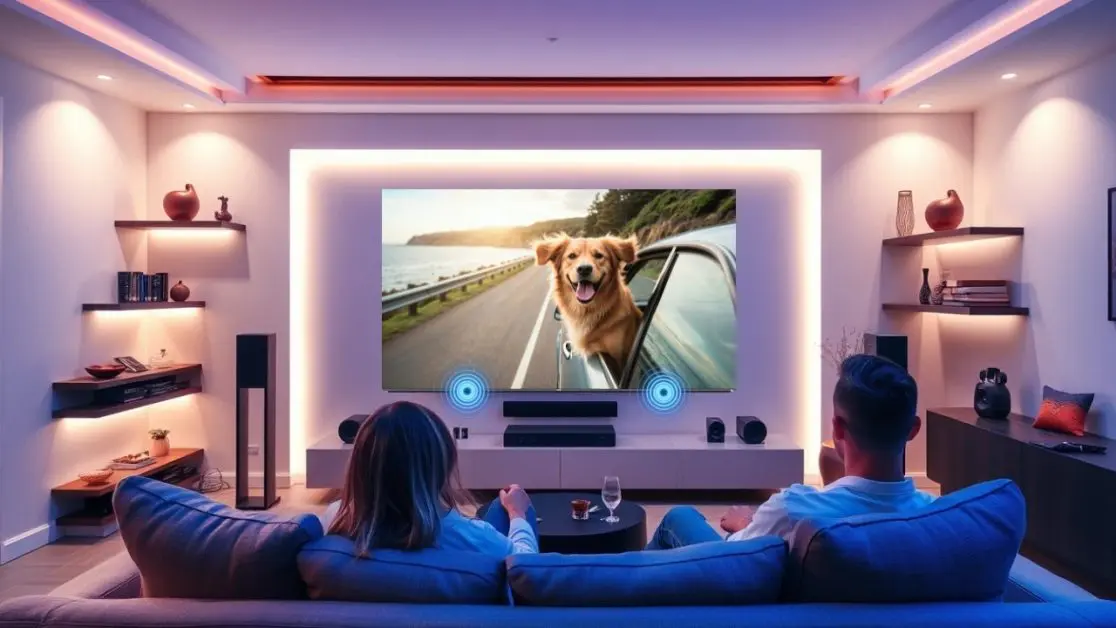
Sound engineers think about audio like architecture.
A poorly designed room echoes.
A well-designed hall distributes sound evenly.
Modern televisions replicate that idea using structured audio channels.
The Role of 2.1 Channel Sound Systems
Many advanced televisions now use a 2.1 channel speaker configuration.
This includes:
- Two main speakers for mid and high frequencies
- One dedicated woofer for deep bass
This configuration creates fuller sound compared with standard stereo speakers.
Here is how the system behaves:
| Audio Layer | Purpose |
| Left and Right Speakers | Dialogue clarity and music detail |
| Subwoofer | Deep bass impact |
| Combined Output | Balanced cinematic sound |
The effect is subtle yet powerful.
You hear detail without needing to raise the volume.
Dolby Atmos Adds a New Dimension
Traditional sound moves across the screen.
Dolby Atmos introduces height and spatial movement.
Instead of sound staying flat, it moves around the viewer.
Rain falls from above.
Helicopters move across the room.
Crowd noise surrounds the audience.
Dolby Atmos creates a three-dimensional audio field that dramatically increases immersion.
Once people experience spatial sound, ordinary TV speakers start to feel incomplete.
Different Content Needs Different Sound
One common mistake televisions make is treating all content the same.
But movies, sports, and music demand different sound profiles.
Consider three everyday viewing situations.
1. Cricket match
You want:
- Clear commentary
- Crowd ambience
- Ball impact sound
2. Movie night
You want:
- Deep bass
- Whisper-level dialogue
- Explosive action effects
3. Music performance
You want:
- Instrument separation
- Vocal clarity
- Balanced rhythm
Advanced audio systems like Sound by KEF adapt naturally across these scenarios, maintaining clarity without distortion.
The Living Room Is Becoming a Theatre

Entertainment habits in India have changed dramatically.
Streaming platforms now premiere major films and live sports directly on home screens.
That means the living room has quietly become the new theatre.
Modern televisions respond to this shift by combining multiple technologies:
| Technology | What It Improves |
| Mini LED display | Deeper contrast and brighter visuals |
| Dolby Vision | Richer colour accuracy |
| Sound by KEF | High-fidelity audio clarity |
| Dolby Atmos | Three-dimensional sound |
When these systems work together inside models like the Haier M80F Mini LED 215 cm (85) Google TV (H85M80FUX), the viewing experience becomes dramatically immersive.
At that point, the room fades away.
The story takes over.
The Underrated Power of Bass
Bass is the emotional engine of sound.
Think about a suspense scene.
The music dips into low frequencies.
Your heartbeat rises.
Without bass, tension disappears.
With bass, the moment feels physical.
Televisions with 2.1 channel audio and dedicated woofers produce deeper bass and fuller sound than conventional TV speakers.
The difference becomes obvious in:
- Action movies
- Concert performances
- Stadium sports broadcasts
Sound stops being background noise.
It becomes part of the experience.
Three Ways People Build Their Home Audio Setup
Most households approach entertainment systems in one of three ways.
Option 1: Built-in TV speakers
- Lowest cost
- Simplest setup
- Limited immersion
Option 2: External soundbars
- Moderate cost
- Extra cables and devices
- Improved clarity
Option 3: TVs with integrated premium audio
- Higher initial investment
- No additional hardware
- Balanced sound engineered into the display
Systems like Sound by KEF integrated into Haier Mini LED televisions fall into the third category.
The advantage is simplicity.
No extra devices.
No cable clutter.
Just better sound.
When Technology Works, It Disappears
The best home appliances share a quiet philosophy.
A refrigerator preserves food without constant attention.
An air conditioner maintains comfort automatically.
A good television should behave the same way.
When audio works properly, people stop talking about the speakers.
They talk about the movie.
Or the match.
Or the music performance.
Technology disappears.
Experience remains.
Screen Size Alone Does Not Create Immersion
Many buyers focus on display size.
165cm (65).
189cm (75).
254cm(100).
But size alone cannot create cinematic immersion.
Sound completes the illusion.
A large screen with weak speakers feels hollow.
But a television that pairs large displays with engineered audio systems transforms the viewing experience.
That is why advanced televisions such as the Haier M80F Mini LED Series, Haier M92 Series QD-Mini LED AI Smart Google TV, and the Haier M96 Series QD-Mini LED AI Smart Google TV (H100M96FUX) combine large screens with Sound by KEF technology.
Together they recreate something closer to a theatre environment.
The Real Purpose of Great Sound
Specifications describe technology.
Watts.
Channels.
HDR formats.
But the real purpose of sound is emotional.
Sound builds tension.
Sound releases excitement.
From a whisper in a quiet scene to the roar of a stadium crowd.
When audio reproduces that full spectrum, something subtle happens.
You stop thinking about technology.
You simply enjoy the moment.
The Future of Entertainment Lives at Home
Modern Indian homes are evolving.
They are not just places to sleep and eat.
They are spaces for relaxation, celebration, and shared experiences.
A Friday night film becomes a family ritual.
An IPL match becomes a collective celebration.
Technology plays a quiet role in shaping those moments.
And great design rarely shouts.
It works silently.
Just like the moment when a character whispers on screen…
and seconds later the entire room fills with thunder, applause, or music.
That journey.
From whisper to explosion.
That is where sound truly comes alive.
Frequently Asked Questions
I’m confused. Should I just buy a bigger TV or focus on sound too?
A bigger screen improves visuals, but without good audio, the experience feels incomplete. Sound is what creates immersion.
Do I really need a soundbar, or are built-in speakers enough for my living room?
Most built-in speakers struggle with depth. However, TVs with integrated premium audio (like KEF tuning) can eliminate the need for a soundbar.
I don’t want extra wires and devices. What’s the simplest way to get good sound?
Choose a TV with built-in engineered audio (e.g., 2.1 channel with woofer). It delivers better sound without extra setup.
Is spending more on audio actually noticeable for everyday watching?
Yes, especially in dialogue clarity and bass. You’ll stop adjusting volume constantly.
What exactly is a 2.1 channel system in a TV?
Two speakers for mids/highs + one woofer for bass → fuller sound.
I’ve heard about Dolby Atmos. Does it really make a difference at home?
Yes. It adds height and spatial movement, making sound feel 3D.
Will I notice better sound while watching cricket or just movies?
Both. Commentary clarity and crowd atmosphere improve significantly.
What makes KEF-tuned sound different from regular TV speakers?
Precision engineering + natural sound reproduction across frequencies.