
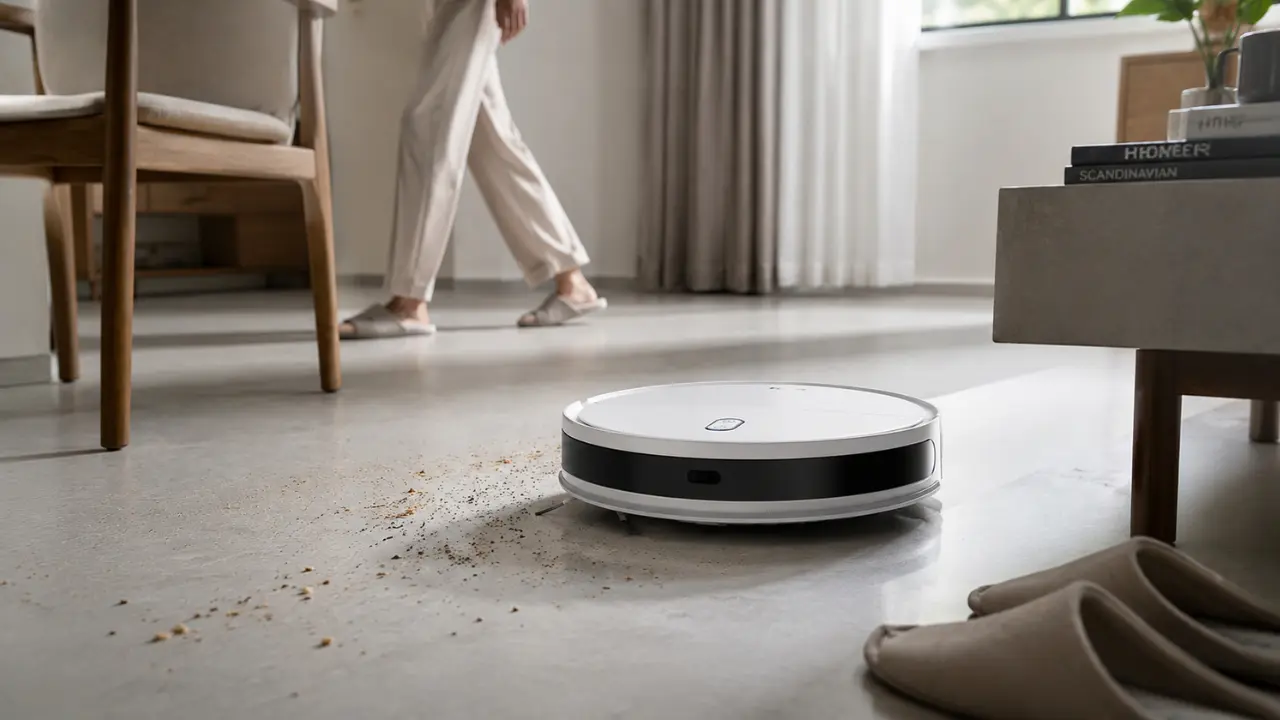

The biggest mistake people make when buying a robot vacuum cleaner is choosing based on price alone. A robot vacuum is not just a cleaning appliance.
It is a system that has to understand your home, navigate around obstacles, adapt to your routines, and clean consistently without creating more work for you.
The wrong choice becomes another gadget.
The right choice becomes a habit you stop thinking about.
And that difference is usually decided before you even buy it.
When “smart” isn’t actually smart?
Picture a typical Saturday morning.
You finally decide to buy a robot vacuum cleaner after months of seeing videos online. The product arrives. You set it up. It cleans once.
Then it starts getting stuck under furniture.
It misses corners.
It bumps into obstacles.
You manually rescue it three times a week.
Soon, the robot vacuum sits in a corner collecting dust.
Ironically.
The problem was never the robot vacuum.
The problem was buying the wrong one.
Technology succeeds when it removes friction. If it creates friction, people stop using it.
That is the hidden system behind every appliance purchase.
Mistake #1: Buying Based Only on Price
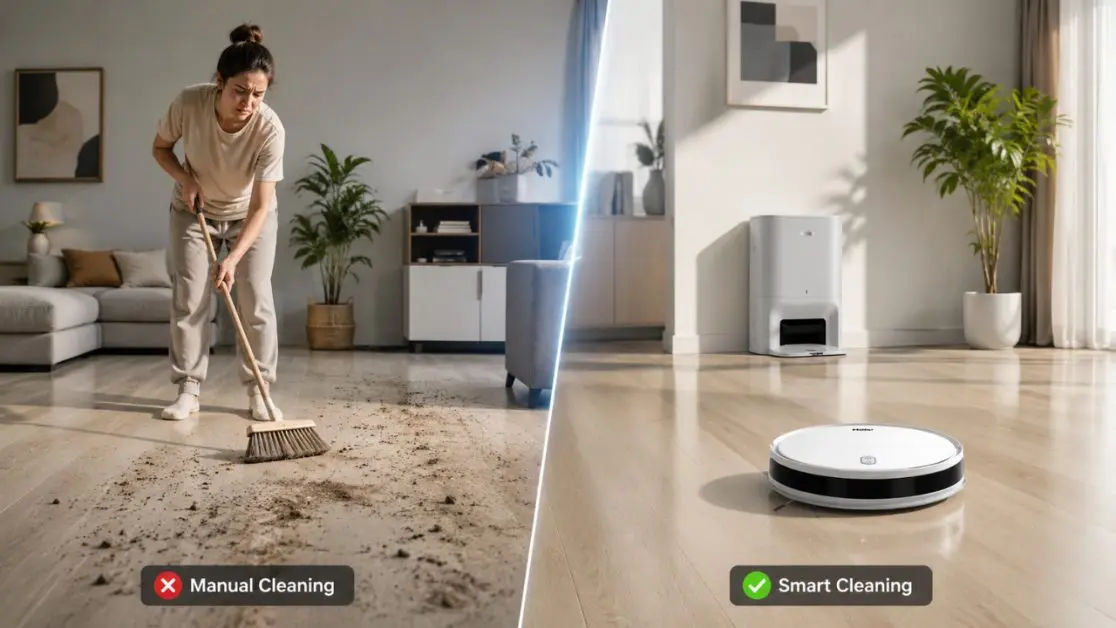
A low price feels like a smart decision.
Until you realise what was excluded to reach that price.
Many first-time buyers compare robot vacuum cleaners the same way they compare headphones or kitchen accessories.
That approach rarely works.
A robot vacuum operates inside a constantly changing environment.
Your home.
Your furniture.
Your routines.
Your family.
The cheapest option often lacks:
- Advanced navigation
- Multi-room mapping
- Strong suction performance
- Smart obstacle detection
- App-based controls
- Reliable battery backup
The cost of a poor buying decision is not financial.
It is behavioural.
You stop using the product.
Mistake #2: Ignoring Navigation Technology
This is where most buying guides get it wrong.
People focus on suction power first.
Navigation matters just as much.
A robot vacuum cleaner without intelligent navigation is like a driver without a map.
It moves.
But not efficiently.
Why Navigation Matters
Good navigation helps a robot:
- Clean systematically
- Avoid repeated paths
- Reduce missed spots
- Navigate furniture accurately
- Complete cleaning faster
Modern laser navigation systems create precise room layouts and improve cleaning efficiency across multiple rooms.
For example, the Haier CIVIC X11 and CIVIC X11 PRO use laser navigation combined with multi-map memory for better route planning and coverage.
The lesson?
A robot vacuum should know where it is.
Not guess.
Mistake #3: Underestimating Your Home Layout
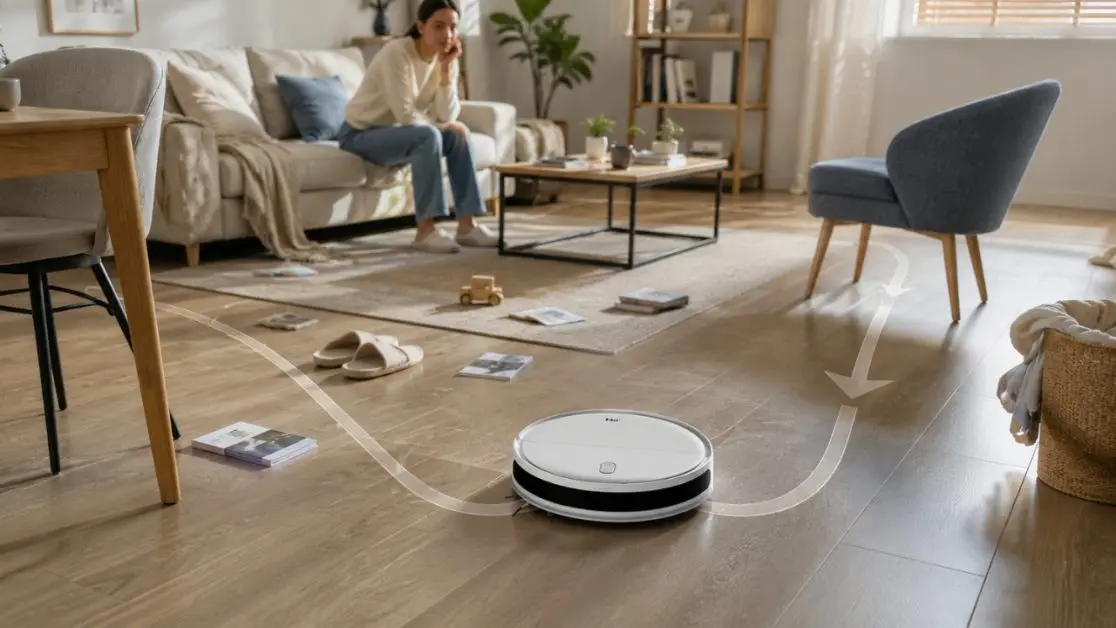
Not every home needs the same robot vacuum.
A studio apartment behaves differently from a three-bedroom family home.
Yet many buyers choose products without considering layout complexity.
Ask These Questions First
- How many rooms need cleaning?
- Do you have carpets?
- Are there pets?
- Are there floor transitions?
- Do you have children who leave toys around?
The more complex the environment, the smarter the robot must be.
Complex homes require intelligent systems.
Simple homes can function well with fewer features.
Buying without understanding your own environment is like buying shoes without knowing your size.
Mistake #4: Ignoring Multi-Map Memory
This feature sounds technical.
It is actually practical.
Many Indian homes today have:
- Multiple floors
- Duplex layouts
- Separate living and working spaces
- Distinct cleaning requirements
A robot vacuum with multi-map memory remembers different layouts and cleaning zones.
Without it, the robot repeatedly learns the same spaces.
With it, cleaning becomes faster and more efficient.
The Haier CIVIC series includes up to five-map memory capabilities that allow the system to recognise and manage different cleaning environments.
Memory matters.
For humans.
And increasingly for machines.
Mistake #5: Choosing Weak Suction Power
Dust behaves differently in Indian homes.
There is outdoor dust.
Construction dust.
Pet hair.
Food crumbs.
Fine particles from daily living.
A robot vacuum that struggles with suction eventually struggles with trust.
People stop believing it cleaned properly.
What Strong Suction Helps With
- Pet hair removal
- Fine dust collection
- Carpet cleaning
- Corner debris
- Daily maintenance cleaning
Many newer robot vacuum cleaners now offer suction levels around 5000Pa, which significantly improves pickup performance across different floor types.
The Haier CIVIC range offers up to 5000Pa suction power combined with vacuuming and mopping functionality.
A simple principle applies:
A robot vacuum should remove dirt.
Not rearrange it.
Mistake #6: Forgetting About Battery Life
Battery life determines coverage.
Coverage determines usefulness.
Many buyers discover this too late.
A robot vacuum that cannot finish cleaning in a single session creates interruptions.
And interruptions reduce automation.
Look For:
- Long runtime
- Auto recharge capability
- Automatic resume functions
- Smart power management
A runtime around 120 minutes can comfortably handle many modern apartments and homes before requiring charging.
Automation works best when nobody notices it.
That includes charging behaviour.
Mistake #7: Overlooking Mopping Functions
Dust removal is only half the story.
Indian households often deal with:
- Footprints
- Kitchen spills
- Pet paw marks
- Fine floor residue
That is why many homeowners now prefer hybrid systems.
One Option
Vacuum only.
The Second Option
Vacuum and mop separately.
The Third Option
Use a 2-in-1 robot vacuum and mop.
The third option usually reduces effort significantly because cleaning happens simultaneously.
Many modern models now combine sweeping, vacuuming, and mopping into one workflow.
The best systems reduce steps.
Because every extra step reduces consistency.
Mistake #8: Ignoring Smart Controls
A surprising number of buyers still think robot vacuums are manual appliances.
They are not.
The best experiences happen when cleaning fits around life.
Not the other way around.
Useful Smart Features
- App controls
- Scheduled cleaning
- Voice commands
- Room-specific cleaning
- Remote monitoring
Voice integration through platforms like Alexa and Google Assistant has become increasingly valuable for busy households.
Convenience compounds.
A saved minute repeated every day becomes hours every year.
Mistake #9: Not Thinking About Pets
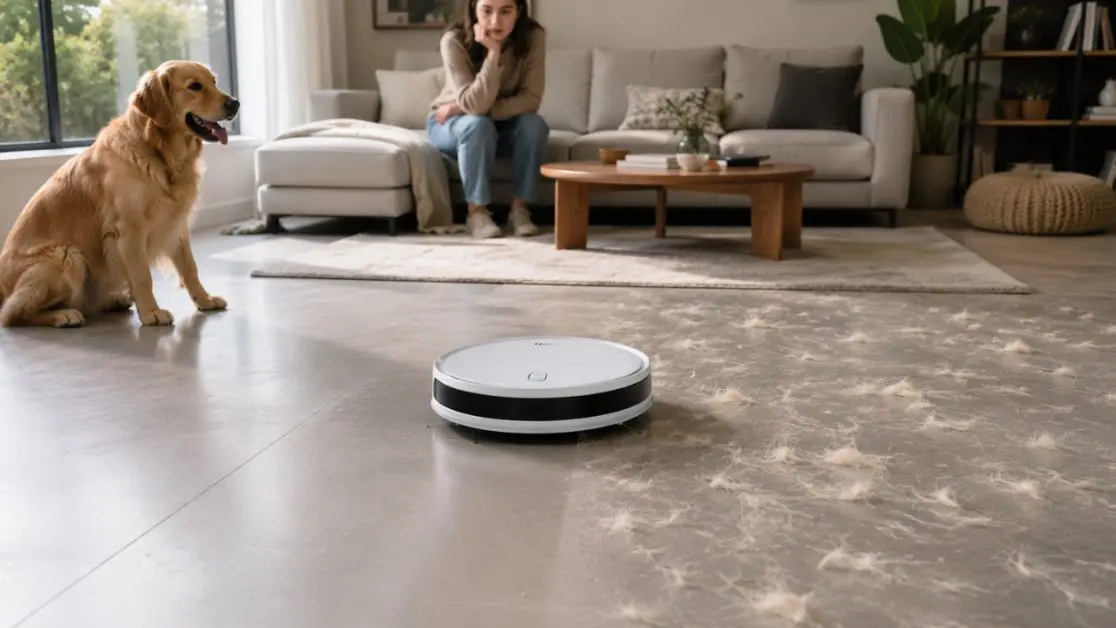
Pet owners face a different cleaning challenge.
Hair.
Dander.
Tracking.
Daily mess.
Many robot vacuum buyers forget to evaluate pet-friendly performance until after purchase.
That usually leads to disappointment.
Pet-Friendly Features Worth Looking For
- Strong suction
- Efficient navigation
- Frequent scheduling
- Smart mapping
- Easy dust disposal
Robot vacuum systems designed for pet households help maintain cleaner floors with less manual intervention.
Pet hair is predictable.
The cleaning system should be too.
Mistake #10: Ignoring Maintenance Requirements
The dream is “set and forget.”
Reality is different.
Every robot vacuum requires maintenance.
The question is how much.
Before Buying, Understand:
- Dustbin size
- Water tank capacity
- Filter maintenance
- Brush cleaning
- Emptying frequency
Some premium systems simplify maintenance through features like auto-empty stations that transfer collected dust into larger storage containers. The Haier CIVIC X11 PRO includes an auto-empty dust box system designed to reduce manual intervention.
Less maintenance means more consistency.
And consistency is what makes automation valuable.
The Real Buying Framework
Most people think they are buying a robot vacuum cleaner.
They are actually buying time.
Time not spent sweeping.
Time not spent vacuuming.
Time not spent thinking about cleaning.
That is why the best purchase decisions start with lifestyle rather than specifications.
Ask yourself:
- How complex is my home?
- How often do I clean?
- Do I have pets?
- How important is automation?
- Do I want basic cleaning or intelligent cleaning?
The answers matter more than any discount.
Because appliances succeed when they fit human behaviour.
A robot vacuum cleaner is not a machine that cleans floors.
It is a system that quietly removes one small responsibility from everyday life.
And the best technology often works that way.
You stop noticing it.
Because it is already doing its job.
Frequently Asked Questions
I’m buying my first robot vacuum. What’s the biggest mistake I should avoid?
The biggest mistake is choosing based on price alone. A robot vacuum is designed to save time through intelligent automation. If it lacks smart navigation, mapping, or reliable suction, you’ll likely spend more time rescuing or managing it than benefiting from it.
Why are cheap robot vacuums often disappointing?
Lower-cost models frequently compromise on navigation, obstacle detection, battery life, app controls, and cleaning consistency. Saving money upfront can lead to frustration and reduced usage over time.
How do I know whether I need a premium robot vacuum?
Consider your home rather than the price. Larger homes, multiple rooms, pets, carpets, children, and complex layouts usually benefit from premium features like mapping, stronger suction, and intelligent navigation.
Does navigation technology really matter?
Yes. Navigation determines how efficiently the robot cleans. Advanced systems clean methodically, avoid unnecessary repetition, and cover rooms more completely than basic random-navigation models.
Why does my robot vacuum keep missing areas?
Poor navigation, outdated sensors, or an unsuitable cleaning pattern are common reasons. Intelligent mapping helps the robot understand room layouts and clean more consistently.
Should I care more about suction or navigation?
Both matter. Strong suction removes dirt, while good navigation ensures the robot actually reaches every area efficiently.