
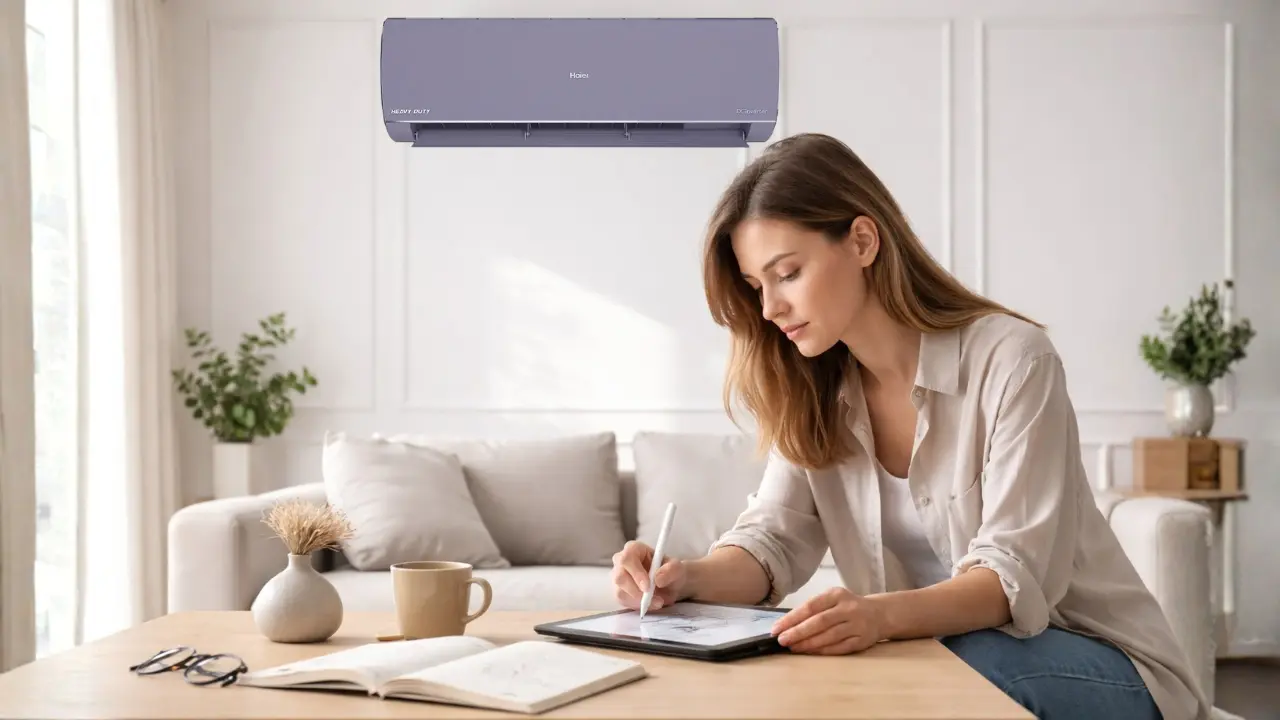

AC units using AI sense when people are around via clever sensors and learning algorithms, observing who’s in a space, how they move, and the surrounding conditions.
As the setup notices folks entering, exiting, or shifting location, it automatically fine-tunes air movement, heat levels, and power use. The outcome is straightforward: spaces cool down when that’s required, and power use drops when rooms are vacant.
Cooling technology is evolving.
No more noise.
Not bulkier designs.
More intelligent operation.
Picture stepping into a contemporary Indian lounge during May. A fan is turning overhead. An AC unit is running. Someone steps out onto the balcony to take a call.
Typically, the air conditioner continues to chill an unused area.
Power is squandered.
Utility costs keep rising.
Actual comfort sees no real gain.
Machine intelligence presents an alternative approach.
Cooling ought to trail after individuals, not vacant areas.
And this one fundamental change highlights why sensing human presence is a key advancement in contemporary air conditioning.
Why Cooling Empty Rooms Is a Hidden Energy Problem
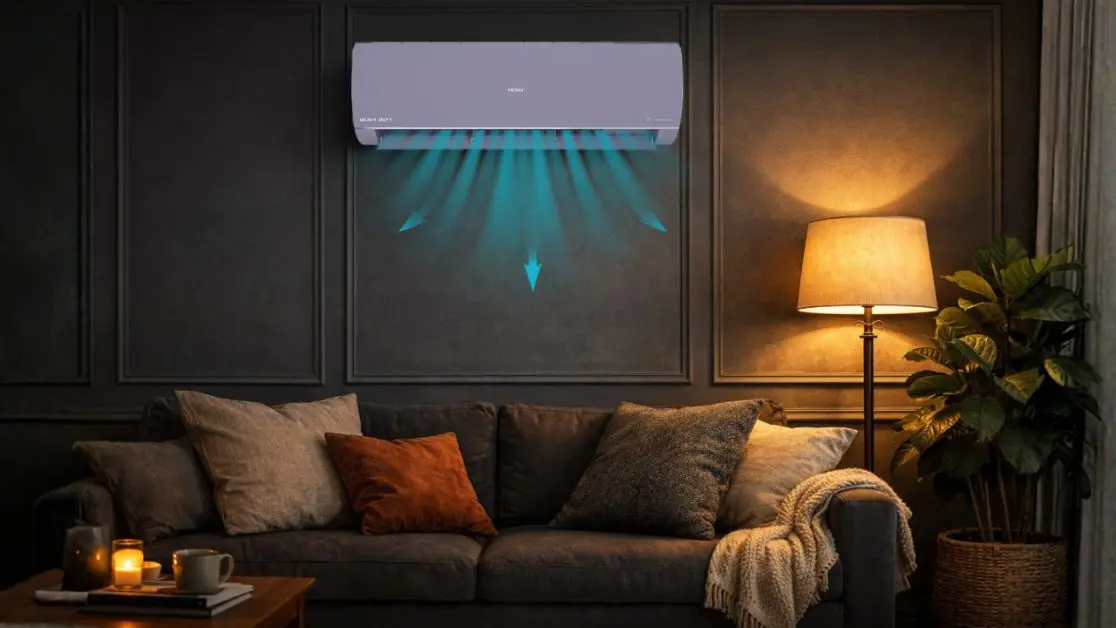
Most households rarely notice this pattern.
The AC is running.
But the room is empty.
It happens constantly.
- A child leaves the study room after finishing homework.
- Parents step into the kitchen for dinner prep.
- Someone pauses a movie to take a call.
- The family shifts from the living room to the bedroom.
The air conditioner continues cooling.
Traditional AC systems operate on fixed assumptions:
| Traditional Cooling Behavior | Result |
| Runs at a constant temperature | Power consumption stays high |
| Cools the entire room | Energy used even when nobody is present |
| Depends on manual adjustments | Human intervention required |
| Timer-based control | Often inaccurate for real usage |
In Indian summers, this matters.
According to the Bureau of Energy Efficiency (BEE), air conditioners can account for 40–60 percent* of household electricity consumption during peak summer months.
So a simple question emerges.
What if the AC knew whether someone was actually in the room?
That question led to the rise of AI-powered human detection in cooling systems.
How AI Human Detection Works Inside Modern ACs
At first glance, it sounds complicated.
Artificial intelligence. Sensors. Machine learning.
But the principle is surprisingly human.
The AC observes the room.
Then it learns.
Modern systems combine three types of intelligence.
1. Motion Sensors Detect Activity
AI-powered air conditioners use motion detection sensors to monitor movement across the room.
These sensors detect:
- Walking movement
- Body heat patterns
- Micro-motions such as sitting or standing
If the room becomes inactive, the system recognizes that no one is present.
Some systems can detect activity within 12 meters of distance, allowing them to monitor an entire living room or bedroom efficiently.
When inactivity continues, the AC automatically shifts into a lower power state.
2. Machine Learning Understands Usage Patterns
Sensors alone are not enough.
Intelligence comes from pattern recognition.
AI systems track usage patterns over time:
- When the AC usually runs
- How long the room stays occupied
- Preferred temperature settings
- Daily routines of household members
The system builds a personalized consumption model to optimize cooling automatically.
The result is subtle but powerful.
The AC stops behaving like a machine.
It begins behaving like an assistant.
3. Environmental Sensors Monitor Temperature and Conditions
AI cooling systems also track environmental conditions such as:
- Room temperature
- Humidity
- Outdoor weather changes
- Seasonal conditions
These variables allow the system to balance comfort and energy efficiency.
Instead of blindly running at full power, the AC constantly recalculates the best cooling strategy.
The principle is simple.
Comfort should adapt to people and conditions.
What Happens When the Room Becomes Empty
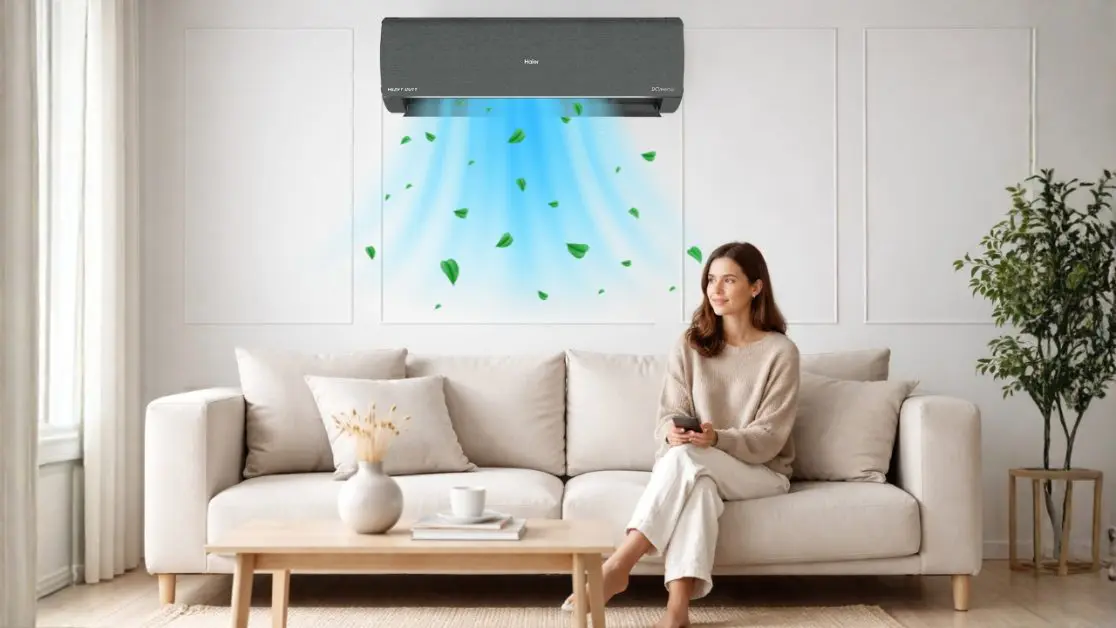
Here is where the real magic happens.
AI-powered air conditioners react instantly to absence.
Instead of running continuously, they adjust energy consumption automatically.
| Room Activity | AI Response |
| People detected | Full cooling mode |
| Reduced activity | Moderate cooling |
| No activity detected | Energy-saving mode |
| Long inactivity | Automatic shutdown |
Some advanced systems shift to low-energy cooling within 15 minutes and power down completely after extended inactivity.
This behavior prevents unnecessary energy usage without requiring manual intervention.
For households, the implication is clear.
Electricity savings happen quietly.
Target Cooling: Cooling the Person, Not the Room
Traditional air conditioners cool entire spaces.
AI cooling systems focus on people instead of empty areas.
This is known as target cooling.
Instead of spreading cold air evenly, AI directs airflow to where people are sitting or resting.
Imagine this common scenario.
You are sitting on the sofa watching a late-night cricket match.
The AC identifies your position and sends cool airflow directly toward the seating area.
The rest of the room receives minimal cooling.
The benefit is twofold:
- Faster comfort
- Lower energy usage
AI target cooling systems use room layout data and installation position to deliver airflow exactly where it is needed.
In other words:
Precision replaces excess.
Pre-Cooling: When AI Predicts Your Arrival
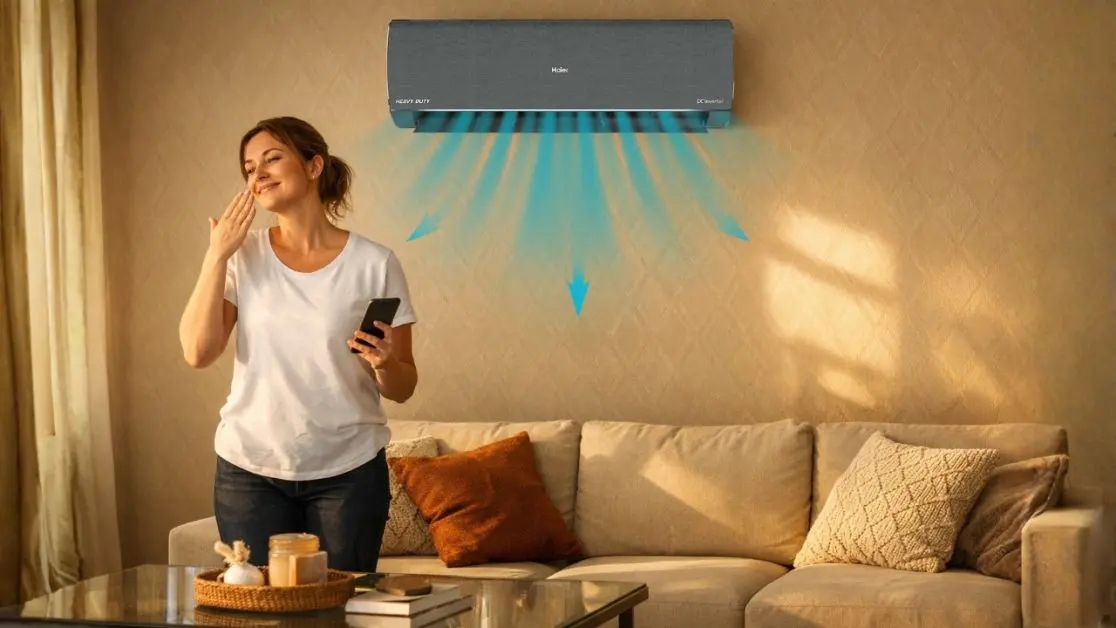
Human detection is not limited to sensing presence.
Advanced AI systems can also anticipate it.
This concept is known as AI pre-cooling.
Using geolocation signals from connected devices, the system recognizes when the user is approaching home.
For example:
- You are driving back from the office.
- Your phone enters a predefined geofence near the house.
- The AI predicts your arrival and starts cooling the room in advance.
By the time you step inside, the room is already comfortable.
Some systems activate this feature when the user enters a 100-meter proximity zone around the home.
Comfort arrives before you do.
And that changes how cooling feels.
The Real Benefits of AI Human Detection
Human detection in cooling systems is not just a technological upgrade.
It solves everyday problems.
Here are the three most practical outcomes.
1. Lower Electricity Bills
Energy savings happen automatically.
When cooling reduces during inactivity, electricity usage drops significantly.
Many AI-powered AC systems achieve measurable savings by shifting into optimized energy modes whenever full cooling is unnecessary.
2. Improved Comfort
Human detection also prevents overcooling.
The system balances temperature levels according to occupancy and environmental conditions.
This ensures the room never becomes excessively cold.
Comfort remains consistent.
3. Effortless Operation
Perhaps the biggest advantage is simplicity.
There is no need for constant remote control adjustments.
AI cooling systems automatically:
- Detect presence
- Adjust airflow
- Optimize energy consumption
Technology disappears into the background.
And that is exactly how good technology should behave.
Where Haier’s AI Cooling Fits Into This Story
Smart cooling systems today are evolving beyond simple temperature control.
One example is the AI-Atmox platform, which integrates human detection, energy optimization, and climate intelligence into a single system.
The platform combines multiple technologies:
- AI Human Detection
- AI Eco 2.0 energy management
- Electricity monitoring 2.0
- Target cooling
- Pre-cooling intelligence
Together, these features allow the system to monitor activity, adjust cooling, and manage electricity consumption automatically.
The goal is not simply cooling.
It is balanced climate control that adapts to human behavior and environmental changes.
When these systems work well, households experience something unusual.
The AC begins to feel almost invisible.
Comfort simply exists.
The Bigger Idea Behind Human-Centered Cooling
This shift reveals a deeper principle.
Technology becomes powerful when it understands people.
Think about the evolution of everyday devices.
Smartphones adapted to gestures.
Cars adapted to driving behavior.
Streaming platforms adapted to viewing habits.
Now cooling systems are adapting to human presence.
Instead of controlling machines, people live inside environments that respond intelligently.
A memorable insight emerges here.
The future of comfort is not colder air. It is smarter.
And smarter air begins with a simple question.
Who is actually in the room?
What This Means for Modern Indian Homes
India’s relationship with cooling is changing.
Cities are getting warmer.
Work-from-home routines are growing.
Electricity prices are rising.
In this context, intelligent cooling becomes more than convenience.
It becomes household infrastructure.
Modern air conditioners must do three things well:
- Detect human presence
- Adjust cooling dynamically
- Reduce unnecessary energy consumption
AI-powered systems are starting to deliver exactly that.
And the households benefiting the most are not the largest homes.
They are everyday apartments where living rooms, bedrooms, and workspaces constantly change throughout the day.
Smart cooling adapts to these rhythms.
The Insight Worth Remembering
Every technology eventually learns the same lesson.
Efficiency comes from awareness.
When a system understands what people are doing, it can make better decisions.
AI-powered cooling systems simply apply that principle to temperature.
They watch.
They learn.
They respond.
And quietly, almost invisibly, they solve one of the oldest household problems.
Cooling the room without wasting energy.
Because in the end, the goal is not just colder air.
The goal is comfort that understands you.
Frequently Asked Questions
Do I really need an AI-powered AC, or is my regular one enough?
If your AC runs even when rooms are empty or you constantly tweak settings, an AI AC removes that effort and cuts wasted energy automatically.
Will I actually save money, or is this just marketing?
Yes, especially in Indian summers where ACs dominate electricity use. Savings come from reduced runtime during inactivity, not magic, just smarter control.
I forget to turn off my AC all the time. Will I fix that?
Absolutely. It detects inactivity and either reduces cooling or shuts down, so you don’t rely on memory.
Is switching to AI AC worth it for a small apartment?
Even more so. Smaller spaces see frequent movement between rooms, and AI adapts cooling dynamically to that behavior.
Can my AC really learn my daily routine?
Yes. Over time, it tracks usage patterns when you use it, preferred temperatures, and room occupancy habits.
What is pre-cooling, and does it actually work?
Pre-cooling starts the AC before you arrive (via location detection), so your room is already comfortable.
Do I need to control everything through an app?
No. The goal is less control, not more the system automates most decisions.
What if multiple people are in the room?
Advanced systems adjust airflow distribution to maintain overall comfort rather than focusing on a single point.