
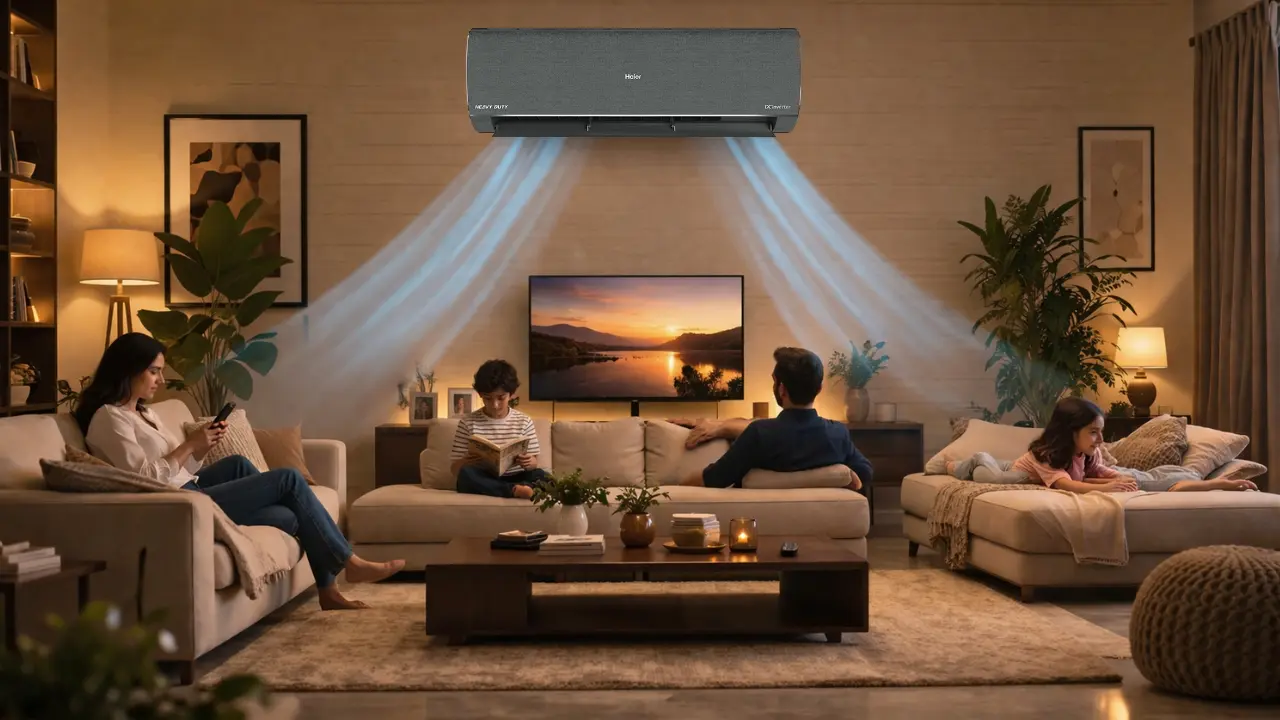

Human detection in ACs tracks actual presence and behavior, while motion sensors only detect movement.
The difference is simple but powerful. Motion sensors react. Human detection understands. This shift turns air conditioning from a switch-based system into an intelligent, energy-aware experience.
Haier India ACs do not use traditional motion sensors. They are built with AI-based human detection technology.
This comparison is meant to explain why human detection is a more advanced approach.*
The moment you notice the difference.
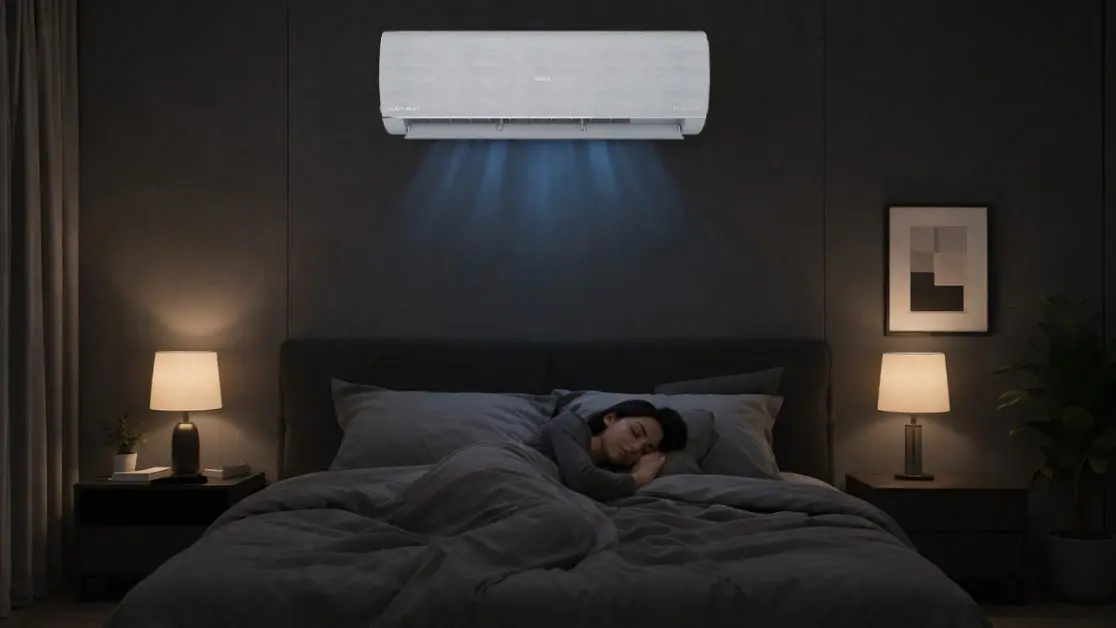
It is 10:45 pm.
The room is cool. You are lying still, scrolling your phone. No movement. Just presence.
A traditional motion sensor AC reads this as inactivity.
And then, quietly, it reduces cooling. Or switch modes.
You feel it immediately.
That small discomfort reveals a bigger truth.
Machines that detect movement are not the same as machines that understand humans.
What is a motion sensor AC really doing?
Motion sensors work on a simple principle.
Detect movement. Trigger action.
Nothing more.
How motion sensors typically work
- Use infrared technology to detect body heat movement
- Activate cooling when motion is detected
- Reduce or stop cooling when no motion is sensed
- Operate within a fixed angle or range
Where this works well
- When people constantly move around
- Living rooms during the day
- Offices with active environments
Where this fails quietly
- When you are sleeping
- When you are watching TV without moving
- When you are working long hours at a desk
Because stillness looks like absence.
And absence triggers energy saving.
The system optimizes for motion, not for comfort.
While many conventional ACs use motion sensors, advanced systems like those from Haier India rely on human detection for better accuracy and comfort.*
What is human detection in ACs?
Human detection moves one step ahead.
It does not just ask, “Is something moving?”
It asks, “Is someone present?”
According to the AI Atmox system, ACs with human detection use AI-powered sensors and behavioral learning to detect occupancy and adjust cooling automatically.
What human detection actually does
- Detects presence, not just motion
- Tracks occupancy patterns over time
- Differentiates between active and inactive presence
- Adjusts cooling intelligently without manual input
What changes in real life
- Cooling continues even if you are still
- AC shifts to energy-saving mode only when the room is actually empty
- No sudden discomfort during sleep or rest
It feels like the AC understands the room.
Because it does.
Motion vs Human Detection: The real comparison
The difference becomes clearer when you look at both side by side.
Core comparison table
| Feature | Motion Sensor AC | Human Detection AC |
| What it detects | Movement | Presence + behavior |
| Response type | Reactive | Pre-cooling + adaptive |
| Works during sleep | No | Yes |
| Energy efficiency | Basic | Intelligent |
| Comfort level | Inconsistent | Stable |
| Learning ability | None | Learns patterns |
The hidden system behind smarter cooling
Most people think cooling is about temperature.
It is not.
It is about timing and awareness.
Traditional system
- User enters room
- Switches on AC
- AC starts cooling
- User waits
Motion sensor system
- Detects movement
- Activates cooling
- Stops when no movement
Human detection system
- Detects presence
- Learns patterns
- Adjusts cooling dynamically
- Saves energy without interrupting comfort
This is the shift.
From control to understanding.
Why Indian homes expose this difference faster
Indian homes are not static environments.
They are layered.
Think about a typical day
- Morning rush with movement everywhere
- Afternoon empty rooms
- Evening relaxation with minimal movement
- Night sleep with complete stillness
A motion sensor works well only in one of these phases.
A human detection system adapts across all.
Add real constraints
- Rising electricity costs
- Long summers
- Multi-room usage patterns
- Power-saving habits
This is where intelligent systems matter more.
Because efficiency without awareness creates friction.
Three ways people unknowingly waste cooling

Most households do not realise how cooling inefficiency happens.
One pattern is empty room cooling
AC keeps running even when no one is inside.
Second pattern is overcorrection
AC cools aggressively, then shuts off suddenly.
Third pattern is manual dependency
People keep adjusting temperature, fan speed, or timers.
Human detection solves all three.
- Detects absence and saves power
- Maintains steady cooling instead of fluctuations
- Reduces need for constant manual control
The best systems remove decisions, not add more buttons.
Where human detection creates real value
This is not about features.
It is about moments.
Late night sleep
- No movement
- Motion sensors fail
- Human detection maintains comfort
Work-from-home days
- Minimal movement for hours
- AC stays consistent without interruption
Family living spaces
- People enter and leave frequently
- Cooling adjusts automatically
Energy savings
AI-based human detection systems can switch to energy-saving mode within minutes of inactivity and power off if no presence is detected, ensuring efficiency without effort.
Comfort stays. Waste disappears.
The role of AI in making this possible
Human detection is not just a sensor upgrade.
It is an intelligence layer.
As seen in AI-driven systems like AI Atmox:
- AC analyzes environment and adjusts cooling automatically
- Learns user habits over time
- Builds personalized energy patterns
- Balances comfort and electricity consumption dynamically
This changes how appliances behave.
They stop waiting for instructions. They start making decisions.
So which one should you choose?
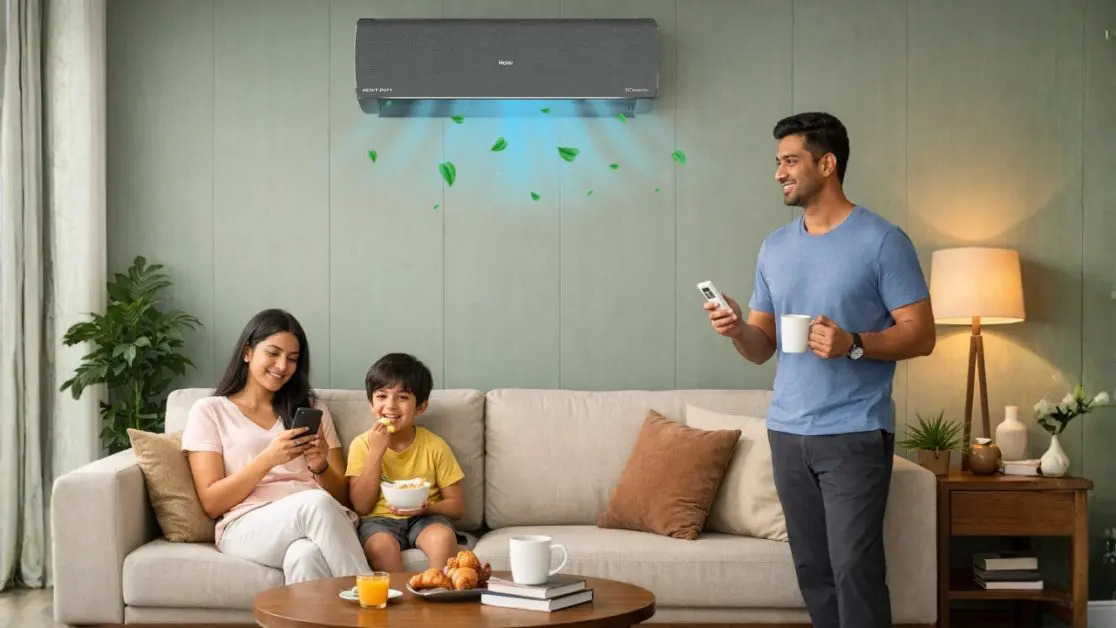
There are three clear options.
Option 1: Traditional AC without sensors
- Lowest cost
- Fully manual
- Least efficient
Option 2: Motion sensor AC
- Moderate efficiency
- Works in active environments
- Struggles with stillness
Option 3: Human detection AC
- Highest efficiency
- Adapts to real-life patterns
- Delivers consistent comfort
The choice is not technical.
It is behavioral.
Do you want your AC to react to you or understand you?
The bigger shift: appliances that think ahead
This is not just about ACs.
It is about how homes are evolving.
- Refrigerators that adjust cooling based on load
- Washing machines that optimise water and energy
- Air conditioners that learn and adapt
Every appliance is moving in the same direction.
From reactive to Pre-cooling.
From manual to intuitive.
The insight most people miss
People assume comfort comes from more power.
It does not.
Comfort comes from timing.
And timing comes from awareness.
Motion sensors gave machines eyes.
Human detection gives them context.
What this means for the future of your home
The homes that feel effortless are not the ones with more gadgets.
They are the ones where systems quietly do the right thing.
Without asking.
Without interrupting.
Without needing attention.
That is the real upgrade.
Not just cooling.
Understanding.
Frequently Asked Questions
Do I really need human detection in my AC, or is a motion sensor enough?
If your usage involves long periods of stillness (sleeping, working, watching TV), motion sensors will misread your presence. Human detection is better because it maintains comfort even when you’re not moving.
Why is my motion sensor AC not saving as much electricity as expected?
Because it only reacts to movement, not actual absence. It may keep running unnecessarily or shut off when you’re still, leading to inefficient cycles.
Is human detection worth the extra cost in India?
Yes especially with rising electricity costs and long summers. It reduces waste and avoids overcooling or undercooling, making it more cost-efficient over time.
I don’t want to keep adjusting my AC. What’s the best option?
Human detection ACs are ideal. They automate cooling decisions based on your behavior, reducing manual intervention.
How does human detection in ACs actually work?
It uses AI-powered sensors to detect presence, track patterns, and adjust cooling dynamically based on behavior not just movement.
Will the AC learn my daily routine over time?
Yes. AI-based systems analyze usage patterns (like sleep times, work hours) and optimize cooling automatically.
Can it differentiate between me sitting still and leaving the room?
That’s the key advantage. Human detection distinguishes presence from absence, unlike motion sensors.
Does this mean I never have to touch the remote again?
Almost. You may still use it occasionally, but most adjustments become automatic.