
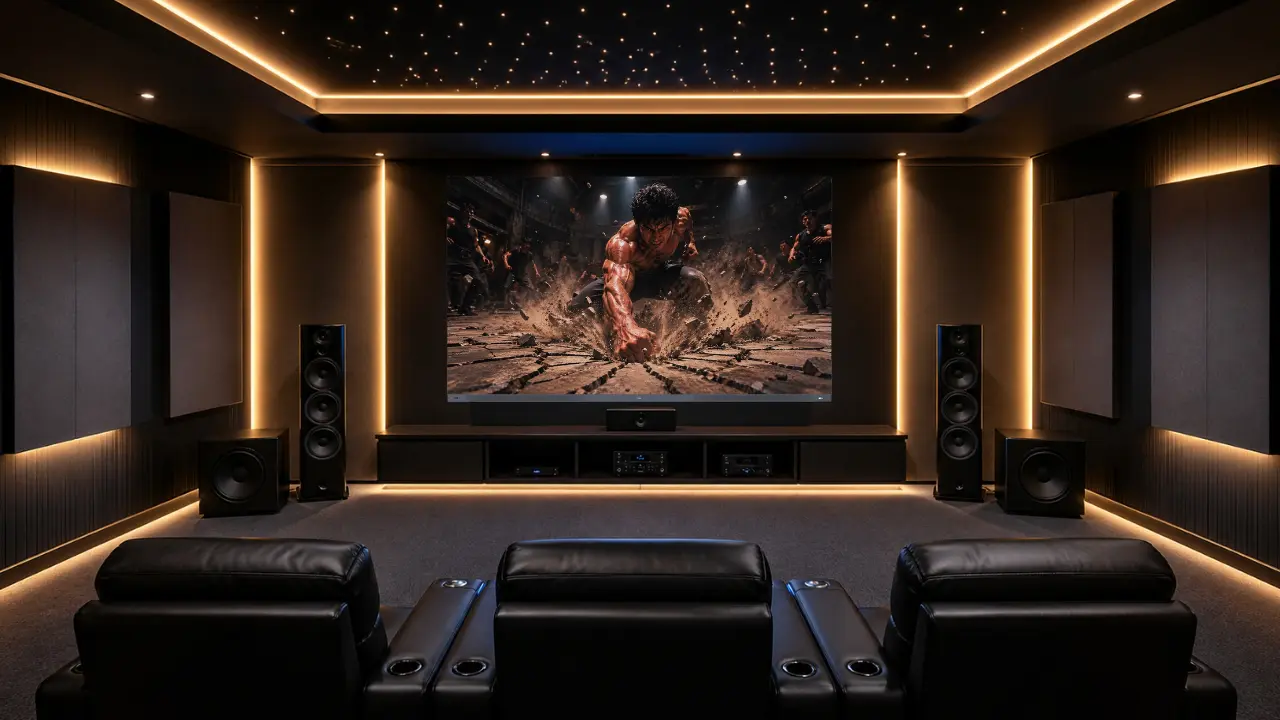

Sound is what turns watching into feeling.
It tells you where the ball is before you see it. It makes silence louder than explosions. And in sports and movies, sound is not supported. It is the experience itself.
Have you ever watched a match on mute?
India vs Pakistan. Final over.
You see the bowler run in. You see the batter swing.
But something is missing.
No crowd roar. No commentator tension. No heartbeat at the moment.
Just visuals.
Flat.
Because emotion does not travel through pixels alone. It travels through sound.
Sound is the invisible storyteller
Every scene you love is built on two layers:
- What you see
- What you hear
And most people underestimate the second.
A horror scene without a background score feels like a badly lit room.
A cricket match without crowd noise feels like a practice session.
An action scene without impact sounds like a rehearsal.
Sound is not decoration. It is direction.
It tells your brain:
- Where to look
- What to feel
- When to react
Why sound matters more in sports than you think
Sports is not just movement. It is a rhythm.
Think about a cricket match:
- The thud of the ball hitting the bat
- The appeal echoing across the stadium
- The commentator’s pitch rising in the final overs
These are signals.
Three layers of sports sound that shape your experience
1. The action layer
Ball hits. Shoes scrape. Bat cracks.
This gives realism. Without it, the game feels distant.
2. The crowd layer
Cheers, gasps, chants.
This creates scale. A stadium becomes a living thing.
3. The narrative layer
Commentary. Analysis. Reactions.
This builds context. You understand the stakes.
When all three align, the match feels alive.
Movies use sound to control your emotions
In films, sound is not reactive. It is intentional.
It is designed.
One scene. Three versions.
Imagine a simple scene:
A man walking down a dark alley.
- No sound → feels empty
- Light music → feels calm
- Heavy bass + echoes → feels dangerous
Same visuals. Different emotions.
Sound does not follow the scene. It defines it.
The science behind why sound feels so powerful
Your brain processes sound faster than visuals.
- Sound reaches you in real time
- Vision needs interpretation
That is why:
- You react to a loud noise instantly
- You take time to understand what you saw
This is also why surround sound feels immersive.
Because your brain uses sound to map space.
Why immersive audio changes everything
Traditional TV sound comes from one direction.
Modern sound systems do something different.
They place sound around you.
Two ways to experience sound
| Type of Sound | How It Feels | Limitation |
| Standard TV Audio | Front-facing, flat | Limited depth |
| Immersive Audio (Dolby Atmos) | Surrounding, layered | Requires advanced hardware |
With immersive sound:
- Rain falls above you
- A car passes behind you
- A stadium surrounds you completely
It stops being a screen. It becomes a space.
Why modern TVs are changing how we hear
There is a shift happening.
Earlier, TVs focused on pictures. Sound was secondary.
Now, sound is becoming a core feature.
For example, the Haier M80F Mini LED 165cm (65) Google TV Sound by KEF (H65M80FUX) integrates advanced sound engineering directly into the screen.
According to the product specifications:
- KEF audio delivers richer, clearer sound with deep bass
- Dolby Atmos creates immersive 3D surround sound
- 2.1 channel speakers provide fuller audio compared to standard TVs
This means you do not just hear sound. You feel where it comes from.
What actually makes “good sound” good?
Not all sounds are equal.
Most people focus on volume. That is a mistake.
Good sound is built on three things
1. Clarity
Can you hear dialogues clearly without raising the volume?
2. Depth
Do explosions feel full, not hollow?
3. Direction
Can you sense where sound is coming from?
A simple framework to choose sound for your home
Most people fall into one of these three categories.
One option is: Casual viewing
- You watch shows occasionally
- News, daily soaps, YouTube
What matters:
- Clear dialogue
- Balanced volume
Cost: Low
Benefit: Functional, no complexity
The second option: Sports-first households
- Cricket nights
- Football weekends
- Family viewing
What matters:
- Crowd sound
- Commentary clarity
- Dynamic range
Cost: Medium
Benefit: Feels like a stadium at home
The third option: Cinema lovers
- Movies every weekend
- OTT binge sessions
- Sound matters as much as visuals
What matters:
- Surround sound
- Bass depth
- Directional audio
Cost: Higher
Benefit: Theater-like immersion
Why sound is becoming a lifestyle decision
Earlier, sound was technical.
Now, it is emotional.
Think about modern Indian homes:
- Smaller spaces
- Smarter devices
- Shared experiences
You are not just watching content.
You are:
- Hosting friends for match nights
- Watching late-night thrillers alone
- Playing music while cooking
Sound shapes all of this.
The hidden system most people ignore
People upgrade TVs for resolution.
4K. HDR. Mini LED.
But they forget something.
The brain remembers sound more than sharpness.
You forget how crisp a frame looked.
You remember:
- The roar
- The silence
- The impact
That is the difference.
What this means for how you choose your next TV
Do not ask:
- How big is the screen?
- How sharp is the picture?
Ask instead:
- How does it sound when nothing is happening?
- How does it feel during peak moments?
Because that is where the experience lives.
A final thought worth remembering
A silent stadium is just a field.
A silent movie is just moving images.
Sound is what turns moments into memories.
And once you notice it, you cannot unhear it.
Frequently Asked Questions
Why do I feel like my TV experience is missing something even when the picture looks great?
Because your brain relies heavily on sound to create emotional engagement. Even with sharp visuals, flat audio removes tension, scale, and immersion.
Should I upgrade my TV for sound or just buy a soundbar?
If your current TV has weak built-in speakers, a soundbar is a quick upgrade. But newer TVs with integrated systems (like KEF tuning + Dolby Atmos) offer a more seamless experience.
Is immersive audio actually worth the extra money for someone like me?
If you watch sports, movies, or OTT content regularly, yes. It transforms passive watching into a spatial experience where sound surrounds you.
I mostly watch casually. Am I overthinking sound quality?
Not really. Even casual viewing benefits from clearer dialogue and balanced audio, reducing the need to constantly adjust volume.
What matters more to me long-term: picture quality or sound quality?
Picture impresses instantly, but sound creates lasting memory and emotional impact.
I tried watching a match on mute once. Why did it feel so dull?
Because you lost all three sound layers: action (bat hits), crowd (cheers), and narrative (commentary). Without them, the brain perceives the event as incomplete.
Why do I struggle to hear dialogues but explosions sound too loud?
That’s poor sound tuning. Good systems balance clarity (dialogue) with depth (effects) so you don’t need constant volume changes.
Does better sound really change family viewing experiences?
Yes. It makes shared moments more engaging, whether it’s cheering during a match or reacting to a thriller scene.
How does immersive audio make it feel like sound is coming from everywhere?
It uses spatial mapping, placing audio objects in a 3D environment so your brain perceives direction and distance.
Why does sound hit me emotionally faster than visuals?
Your brain processes sound in real time, while visuals require interpretation. That’s why sudden noises trigger instant reactions.
What makes TVs like the Haier M80F Mini LED 165cm (65) Google TV different?
They integrate:
KEF-engineered audio for clarity and depth
Dolby Atmos for spatial immersion
Multi-channel speakers for fuller sound
Do I still need external speakers with modern TVs?
Not always. High-end TVs now deliver near-theater experiences on their own, though enthusiasts may still upgrade.