
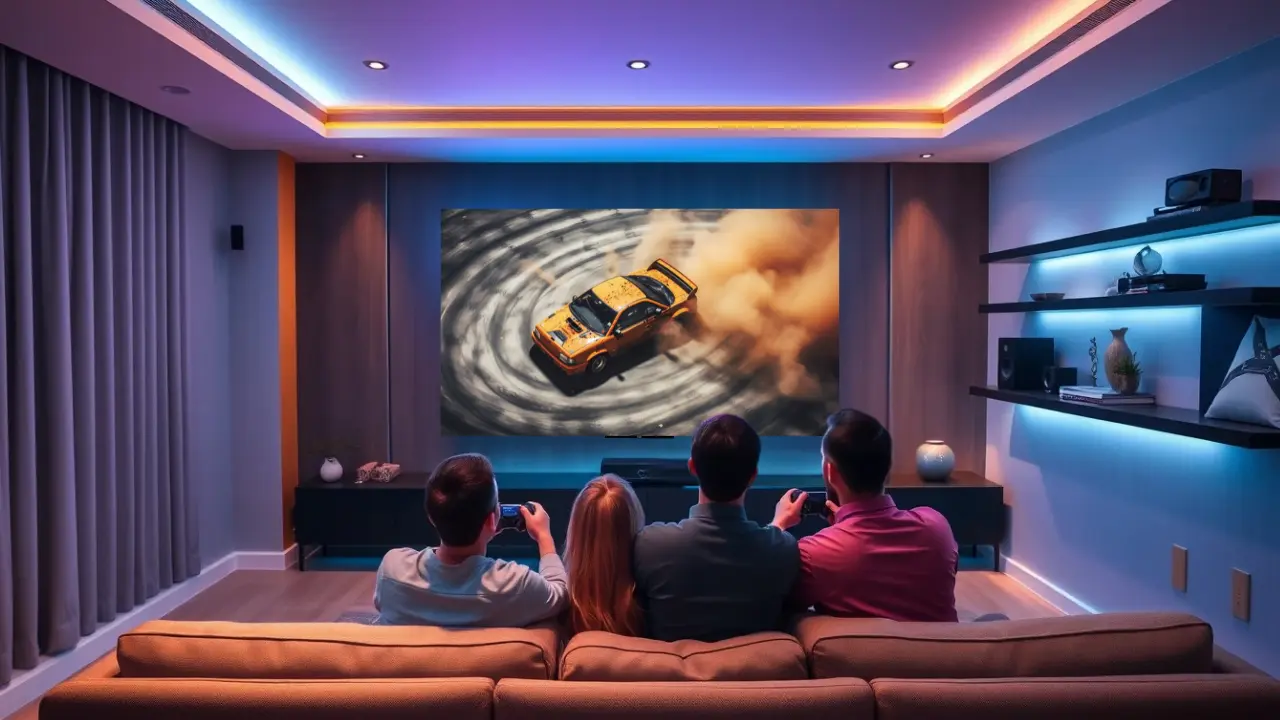

High refresh rate TVs are redefining gaming by delivering smoother motion, faster response, and more immersive visuals.
As gaming becomes a daily ritual in Indian homes, TVs with 120Hz and 144Hz refresh rates are no longer premium extras. They are becoming essential for fluid gameplay, reduced lag, and cinematic experiences that match modern expectations.
The evening that changed how we watch screens.
It is 10:30 pm.
Work is done. Dinner plates are still on the table. Someone picks up a controller. Another person scrolls through Netflix.
The TV becomes the center of two worlds.
Gaming. Streaming.
And suddenly, something feels off.
The game stutters during a fast chase. The football match looks slightly blurred. Movements are not as sharp as they should be.
That discomfort has a name.
Refresh rate.
What Is a High Refresh Rate TV and Why Does It Matter?

A high refresh rate TV updates the screen more times per second.
- 60Hz means 60 updates per second
- 120Hz means 120 updates
- 144Hz goes even further
More updates mean smoother motion.
Less blur. Faster response. Cleaner visuals.
This is not a technical upgrade. It is a perception upgrade.
Once you see smoother motion, you cannot unsee it.
The Difference You Actually Notice
| Refresh Rate | What You Feel | Real-Life Impact |
| 60Hz | Slight blur in fast scenes | Casual viewing, basic gaming |
| 120Hz | Noticeably smoother motion | Console gaming, sports |
| 144Hz+ | Ultra-fluid visuals | Competitive gaming, fast action |
Modern TVs like the Haier New M92 Series 164cm (65) QD-Mini LED AI Smart Google TV (H65M92FUX) deliver a 144Hz refresh rate, designed for fast-paced gaming and action-heavy content .
Gaming Has Changed. So Have Screens.
Gaming is no longer occasional.
It is daily.
India now has over 500 million gamers. Mobile leads, but console and big-screen gaming are rising fast.
Why?
Because the experience feels bigger.
- Larger screen
- Richer sound
- Shared gameplay
Gaming is moving from personal screens to living rooms.
And when that shift happens, performance expectations change.
The Hidden System Behind Gaming Experience
Most people think gaming quality depends on:
- The console
- The game
- The internet
But there is a fourth factor.
The display.
If the screen cannot keep up, everything else feels slower.
Why High Refresh Rate TVs Are Rising in India
This is not a trend. It is a response.
A response to how people now use their TVs.
1. Gaming Is Becoming Social Again
Friends gather. Controllers pass. Reactions get louder.
A laggy screen breaks the moment.
A smooth screen amplifies it.
2. Content Is Getting Faster
Think about daily viewing habits:
- IPL matches
- Action films
- Racing games
- Live streams
Everything moves quickly.
A 60Hz screen struggles.
A 144Hz screen keeps everything crisp.
3. Consoles Are Evolving
Modern consoles support 120Hz gameplay.
Pairing them with a 60Hz TV limits performance.
The system is capable. The screen becomes the bottleneck.
The Three Choices Every Buyer Faces
When choosing a TV for gaming, the decision is layered.
One option is: Stay with Standard TVs (60Hz)
- Lower cost
- Works for basic viewing
- Limited gaming performance
Cost: Economical
Trade-off: Motion blur and lag
The second option is: Upgrade to 120Hz TVs
- Smoother visuals
- Better for console gaming
- Balanced performance
Cost: Moderate
Benefit: Clear improvement in motion
The third option is: Choose 144Hz High Refresh Rate TVs
- Ultra-smooth gameplay
- Faster response time
- Future-ready
Cost: Higher upfront
Benefit: Maximum immersion and fluidity
The real decision is not budget. It is used.
What Makes High Refresh Rate TVs Truly Powerful
Refresh rate is just one part.
The real experience comes from systems working together.
1. Variable Refresh Rate (VRR)
VRR syncs the TV with the game’s frame rate.
Result:
- No tearing
- Seamless visuals
The Haier New M92 Series 189cm (75) QD-Mini LED Smart AI Google TV (H75M92FUX) includes AMD FreeSync Premium Pro for this purpose .
2. Auto Low Latency Mode (ALLM)
The TV switches to gaming mode automatically.
No manual setup.
Just instant responsiveness.
3. Game Mode Optimization
Dedicated modes reduce input lag and improve clarity.
This is not about brightness.
It is about reaction time.
4. AI Processing
AI enhances motion, color, and contrast in real time.
The Haier New M96 Series 254cm (100) QD-Mini LED AI Smart Google TV (H100M96FUX) uses an advanced AI Ultra Sense Processor to optimize every scene dynamically .
Why Refresh Rate Alone Is Not Enough
A high refresh rate without support features feels incomplete.
Think of it like a cricket team.
You need balance.
The Complete Gaming Stack
| Feature | Role in Gaming |
| Refresh Rate | Smooth motion |
| VRR | Eliminates tearing |
| ALLM | Reduces lag |
| AI Processor | Enhances visuals |
| HDMI 2.1 | Enables high-speed gameplay |
The Shift From Watching to Experiencing
Earlier, TVs were passive.
Now, they are interactive.
You play. You react. You engage.
A Moment That Explains Everything
A racing game.
At 60Hz, it looks fast.
At 144Hz, it feels real.
That difference is emotional.
Where Haier Fits Into This New Reality
Haier builds TVs that remove friction from everyday entertainment.
Take the lineup:
- Haier New M92 Series 164cm (65) QD-Mini LED AI Smart Google TV (H65M92FUX)
- Haier New M92 Series 189cm (75) QD-Mini LED Smart AI Google TV (H75M92FUX)
- Haier New M96 Series 254cm (100) QD-Mini LED AI Smart Google TV (H100M96FUX)
Each model integrates:
- 144Hz refresh rate
- AI-powered picture optimization
- Dolby Vision IQ for adaptive visuals
- Premium sound systems with Dolby Atmos
These are not feature lists.
They are solutions to everyday viewing friction.
What This Means for Indian Homes
This shift goes beyond gaming.
For parents
Smoother visuals reduce eye strain and improve clarity.
For working professionals
After long workdays, fluid motion feels calming.
For couples setting up homes
One screen handles everything.
Movies. Games. Streaming.
For Gen Z
Gaming is identity.
And identity demands performance.
The Cost of Ignoring This Shift
Skipping high refresh rate TVs comes with hidden trade-offs:
- Lag in gameplay
- Blurred motion
- Faster dissatisfaction
You save upfront.
You compromise daily.
The Bigger Pattern Behind This Trend
Every system evolves under pressure.
- Faster internet
- Faster devices
- Faster content
Displays must keep up.
Gaming is driving that shift.
The One Insight That Changes Everything
People do not upgrade TVs for specs.
They upgrade for feeling.
The feeling of control.
The feeling of immersion.
So What Should You Do Next?
Start with your usage.
- Do you play games regularly?
- Do you watch sports or action-heavy content?
- Do you want your TV to stay relevant for years?
If yes, the answer becomes clear.
The Future Is Not Just Sharper. It Is Smoother
4K made visuals sharp.
High refresh rates make them alive.
Sharpness shows the scene.
Fluidity pulls you into it.
That is why high refresh rate TVs are rising.
Not as a trend.
But as the new standard.
Frequently Asked Questions
Do I really need a 120Hz or 144Hz TV, or is 60Hz still fine for me?
If your usage is mostly news, casual OTT, and occasional YouTube, 60Hz is fine. But if you game, watch sports, or notice motion blur, 120Hz+ makes a visible difference immediately.
I mostly play on weekends. Should I still invest in a high refresh rate TV?
Even occasional gaming feels significantly smoother on 120Hz+. It’s less about frequency and more about experience quality when you do play.
Is a 144Hz TV overkill for someone like me who just owns a console?
Not necessarily. Modern consoles support up to 120Hz, and 144Hz TVs often come with better processing, VRR, and future-proofing.
Should I spend more now or upgrade later when I “need it”?
Waiting often means tolerating daily friction blur, lag, and stutter. If you already feel those issues, upgrading now improves everyday use.
What is VRR and why does everyone keep mentioning it?
Variable Refresh Rate syncs your TV with the game’s frame rate, eliminating screen tearing and stutter.
Do I need HDMI 2.1 for high refresh rate gaming?
Yes, for full 120Hz+ performance from consoles. Without it, you won’t get the maximum benefit.
What does ALLM actually do for me?
Auto Low Latency Mode automatically switches your TV to gaming mode with no manual tweaking needed.
Are AI features in TVs actually useful or just buzzwords?
In good implementations (like in Haier models), AI improves motion smoothing, contrast, and real-time scene optimization.
Which TVs already combine all these features well?
Models like the Haier New M92 Series H65M92FUX and Haier New M96 Series H100M96FUX integrate 144Hz, VRR, Dolby Vision IQ, and AI processing.