
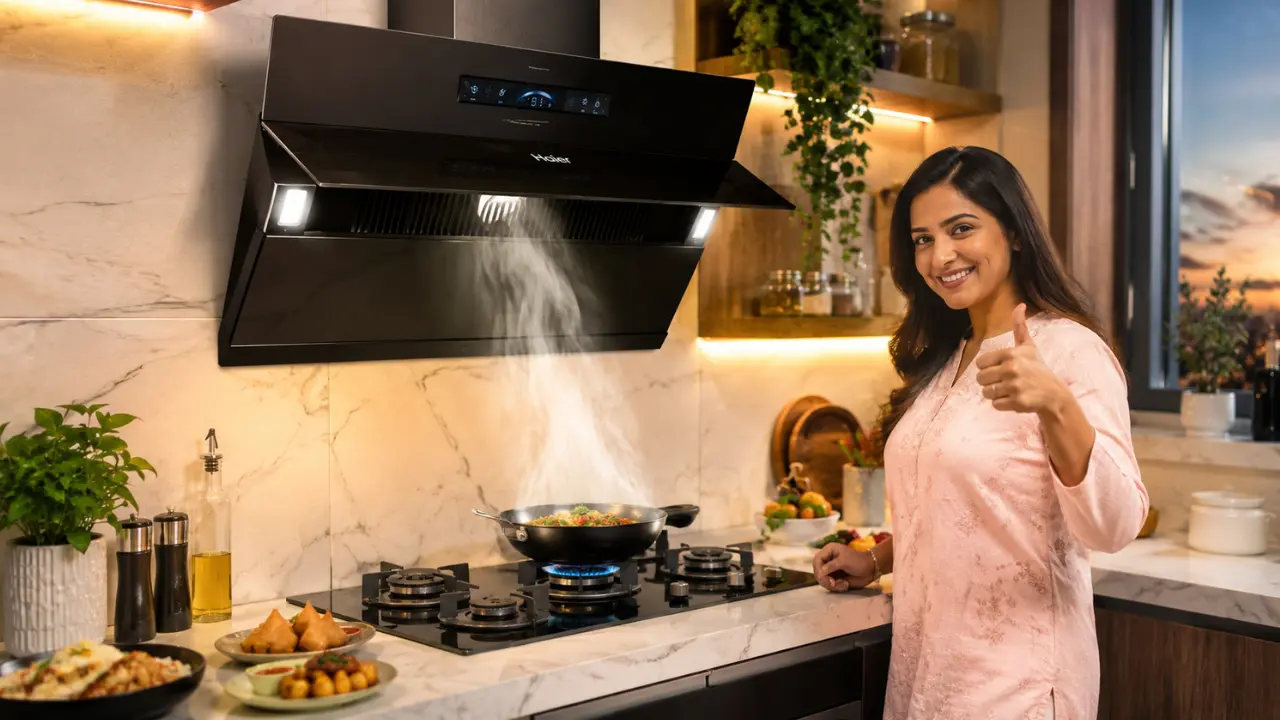

Modern kitchen safety is no longer optional. It is infrastructure.
Today’s kitchen handles more pressure than ever before. Open flames. High heat. Oil smoke. Heavy cookware. Children running around. Late-night cooking after exhausting workdays.
A modern kitchen is not just a cooking space anymore. It is a high-frequency operating system for the home.
And the smartest kitchens are not defined by luxury first.
They are defined by safety.
A kitchen at 8:30 pm reveals how modern homes really work.
Dinner is halfway done.
One burner is boiling milk. Another is frying onions. The pressure cooker whistles in the background. Someone opens the fridge. A child walks in asking for water. A phone rings.
This is not chaos.
This is a normal Indian kitchen.
And that is exactly why safety matters.
Most kitchen accidents do not come from dramatic mistakes. They come from small moments of overload. A slippery spill. Excess smoke. An unattended flame. Hot surfaces. Delayed cleaning. Gas leakage. Poor ventilation.
The danger hides inside repetition.
Systems fail quietly before they fail loudly.
That is the hidden truth modern kitchens force us to confront.
Why traditional kitchen thinking no longer works
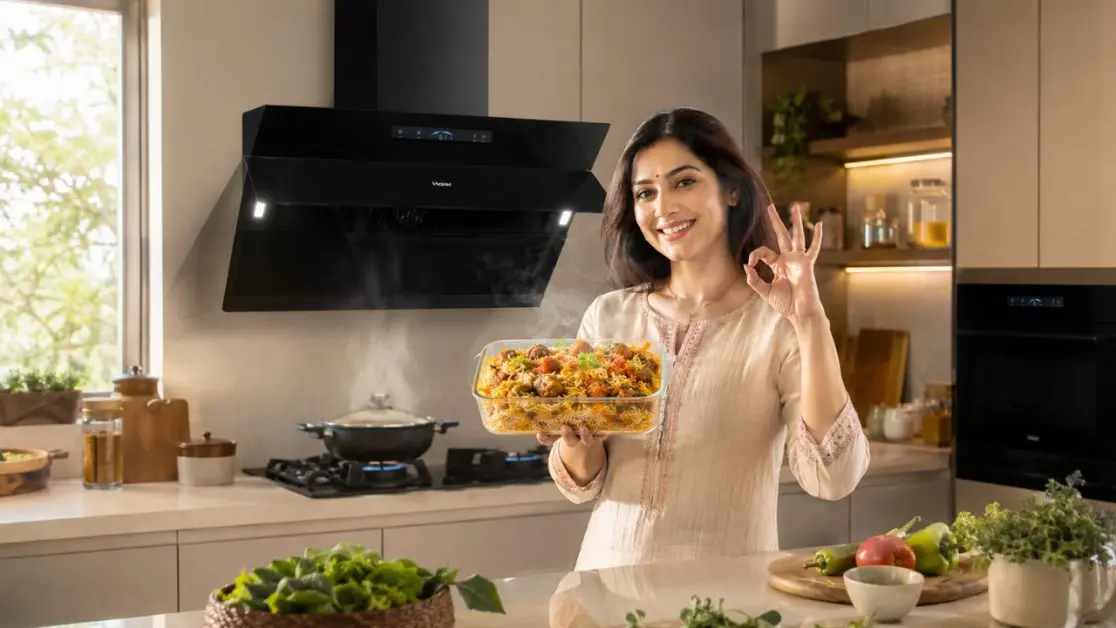
Older kitchens were built around one assumption:
Cooking is occasional.
Modern Indian homes prove the opposite.
Today’s kitchens operate almost continuously.
- Morning breakfast rush
- Afternoon reheating
- Evening tea
- Late-night quick meals
- Weekend batch cooking
- Festival preparation
At the same time, urban kitchens are shrinking.
Smaller layouts create higher heat concentration, lower airflow, and tighter movement spaces.
That changes everything.
Three invisible risks modern homes face
| Risk | What Causes It | Long-Term Impact |
| Smoke accumulation | Poor chimney suction | Respiratory discomfort, greasy walls |
| Flame instability | Low-quality burners | Fire hazards, uneven cooking |
| Surface overheating | Weak materials | Cracks, burns, appliance damage |
Safety is no longer separate from convenience.
The safest kitchen is usually the easiest kitchen to operate.
The real purpose of kitchen appliances has changed
People assume kitchen appliances exist to cook faster.
That is outdated thinking.
Modern appliances exist to reduce mental load.
A chimney is not just removing smoke.
It is protecting air quality.
An auto-ignition hob is not just convenient.
It reduces direct flame interaction.
A spill-proof surface is not aesthetic alone.
It reduces cleaning friction and accidental slips.
The best safety systems feel invisible because they remove problems before they become visible.
That is where modern kitchen design becomes interesting.
Why ventilation is one of the most underrated safety features
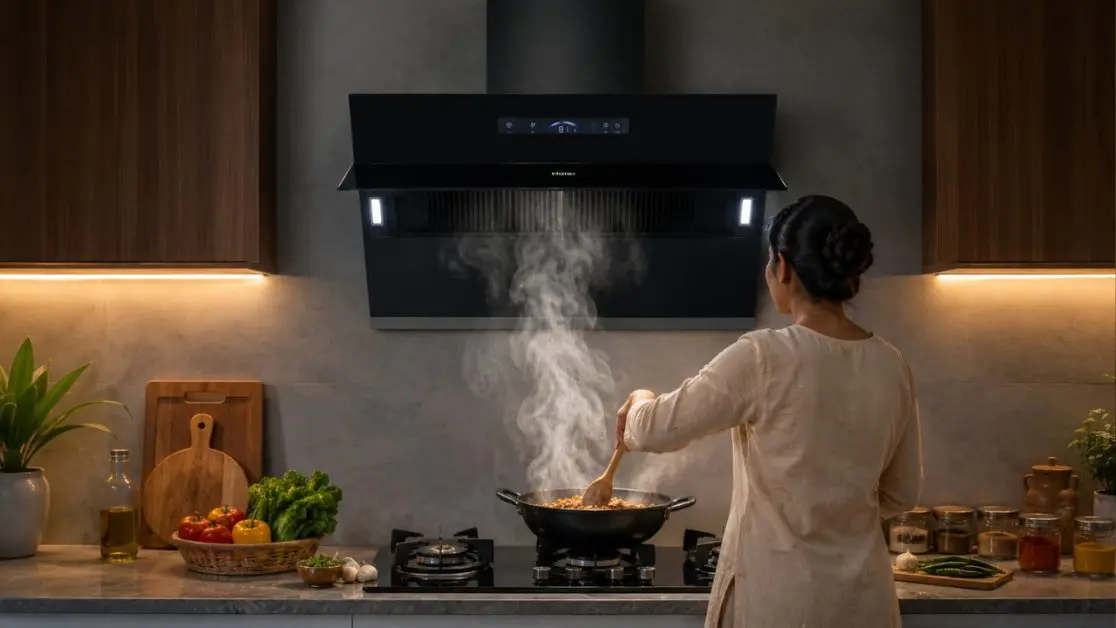
Walk into a kitchen after deep frying pakoras during monsoon season.
The walls feel sticky.
The air feels heavy.
The smell lingers for hours.
Most people think this is normal.
It is not.
It is accumulated particulate matter, oil residue, and trapped heat.
Poor kitchen ventilation slowly turns kitchens into high-friction environments.
What strong chimney systems actually improve
- Air circulation
- Heat removal
- Smoke extraction
- Grease reduction
- Long-term wall hygiene
- Breathing comfort during cooking
Modern chimneys are becoming less about luxury and more about environmental control.
Products like the Haier BLDC Chimney With 1650 M³H Suction Power Spin Clean Filterless (HIH-C1900-BLDC-IN) focus heavily on smoke-free cooking for Indian kitchens with high suction power and filterless operation.
That matters because Indian cooking is not light cooking.
Tadka, frying, grilling, mustard oil, repeated masala roasting. These create heavier smoke loads than many western kitchens are designed for.
A weak chimney struggles silently.
A strong chimney changes how the entire kitchen feels.
Safety improves when cleaning becomes easier
Here is something people rarely discuss:
Difficult cleaning creates unsafe kitchens.
Because delayed cleaning compounds risk.
Oil buildup affects airflow. Sticky surfaces increase bacterial growth. Grease near flames increases fire risk.
This is why self-cleaning systems matter more than people think.
The Haier Colour User Panel With 1650 M³H Suction Power Spin Clean Filterless Chimney (HIH-C1750-BLDC-IN) includes Heat Auto Clean and Cleaning Reminder features designed to reduce grease accumulation and maintenance delays.
That sounds technical.
But the human insight is simple.
People maintain systems that are easy to maintain.
The harder a kitchen is to clean, the less consistently it gets cleaned.
And neglected kitchens slowly become unsafe kitchens.
Why flame control changes everything in Indian cooking
Indian cooking depends heavily on flame precision.
High flame for tadka.
Low flame for simmering dal.
Medium flame for rotis.
One unstable burner disrupts the entire rhythm.
But safety enters the picture too.
Poor burner quality often causes:
- Uneven flames
- Gas wastage
- Delayed ignition
- Excess heat concentration
- Accidental flare-ups
This is why durable burner systems matter.
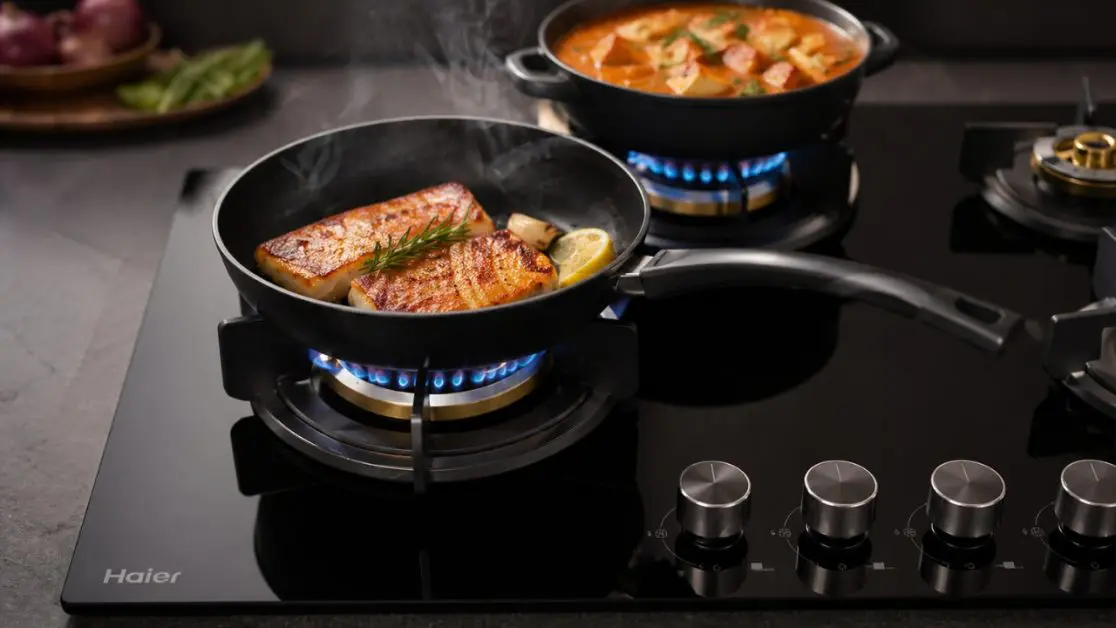
The Haier Auto Ignition Full Brass 5 Burner Hybrid Hob (HIC-Q89576F) uses full brass burners designed for durability, corrosion resistance, and heat retention. It also includes FFD in all burners and auto ignition support.
FFD matters because it automatically cuts off gas supply if the flame goes out unexpectedly.
That is not a flashy feature.
That is a household protection system.
And the most important safety features are usually the least glamorous ones.
The safest kitchens reduce decision fatigue
This is where modern appliance thinking becomes deeper.
Safety is not only about preventing accidents.
It is also about reducing exhaustion.
Late-night cooking creates mistakes because tired brains make slower decisions.
Modern kitchens increasingly solve this through simplification.
Three types of kitchen systems
1. Reactive kitchens
Problems get solved after they appear.
- Smoke fills the room first
- Oil spills stay longer
- Cleaning gets delayed
- Maintenance becomes irregular
2. Preventive kitchens
Systems reduce risk before escalation.
- Better suction
- Auto-clean reminders
- Spill-proof designs
- Safer ignition systems
3. Intelligent kitchens
Appliances actively optimize usage.
- Gesture controls
- Speed adjustments
- Heat management
- Automated cleaning cycles
The shift from reactive to preventive kitchens is one of the biggest changes in Indian homes.
And younger homeowners are driving it.
Modern kitchen safety is deeply emotional
This part gets ignored.
People talk about safety logically.
But families experience it emotionally.
Parents worry about children touching hot surfaces.
Couples worry about gas leakage while travelling.
Working professionals worry about forgetting appliances after exhausting days.
Safety creates emotional calm.
And calm changes how homes feel.
A kitchen without constant friction feels lighter.
Cleaner air improves mood.
Lower noise reduces irritation.
Fewer maintenance headaches reduce arguments.
The kitchen affects the emotional temperature of a household more than most people realise.
What should modern Indian households actually prioritise?
Not every home needs the biggest kitchen.
Not every family needs five burners.
But every modern kitchen benefits from systems that reduce risk consistently.
Prioritise these features first
| Feature | Why It Matters |
| Strong chimney suction | Removes smoke and oil particles |
| Auto ignition | Reduces flame handling |
| Toughened glass surfaces | Better durability and impact resistance |
| Flame failure protection | Prevents gas leakage |
| Filterless cleaning systems | Easier long-term maintenance |
| Low-noise motors | Better daily comfort |
One important pattern appears repeatedly:
The safest appliances usually become the most-used appliances.
Because ease creates consistency.
The Haier advantage is not one feature. It is systems thinking.
Good appliance brands sell products.
Strong appliance ecosystems reduce friction across everyday life.
That difference matters.
Haier’s kitchen appliances increasingly focus on combining:
- High suction efficiency
- Lower maintenance
- Gesture-based controls
- Safer burner systems
- Durable materials
- Long-term usability
Not as isolated features.
As connected systems.
The Haier BLDC chimney series also focuses on lower noise and lower maintenance through BLDC motor technology alongside high suction performance.
That reflects a broader truth about modern homes.
People no longer want appliances that simply function.
They want appliances that quietly reduce stress.
The future kitchen is not smarter because it has more technology
It is smarter because it removes more friction.
That is the real shift happening across Indian homes.
The best modern kitchens:
- Feel calmer
- Stay cleaner longer
- Require fewer reminders
- Reduce hidden risks
- Support tired people gracefully
Safety is not a separate layer anymore.
It is the foundation underneath comfort, hygiene, efficiency, and peace of mind.
And the homes that understand this early build kitchens that age better over time.
Because a modern kitchen is not judged by how impressive it looks on day one.
It is judged by how effortlessly it supports life every single day.
Frequently Asked Questions
Why does my kitchen feel exhausting even when I’m just cooking simple meals?
Modern kitchens handle constant multitasking cooking, cleaning, reheating, storage, ventilation, and family movement all at once. The exhaustion usually comes from friction:
Smoke buildup
Poor airflow
Slow cleaning
Uneven burners
Loud appliances
Constant maintenance
The safest kitchens reduce mental load by making everyday tasks smoother and more predictable.
How do modern kitchen appliances actually reduce stress?
Good appliances remove repetitive problems before they become frustrating. For example:
Strong chimneys reduce lingering smoke
Auto-clean systems reduce maintenance delays
Auto ignition reduces direct flame interaction
Low-noise motors reduce irritation during long cooking sessions
Modern kitchen safety is increasingly about emotional comfort as much as physical protection.
I cook late at night after work. What safety features matter most for tired users?
Late-night cooking increases the chance of small mistakes. The most helpful features are:
Auto ignition
Flame Failure Device (FFD)
Cleaning reminders
Spill-resistant surfaces
Strong ventilation
Low-noise operation
These systems reduce the number of decisions your brain has to manage while tired.
Is kitchen smoke actually harmful or just annoying?
Repeated exposure to oil smoke, grease particles, and trapped heat can affect:
Breathing comfort
Indoor air quality
Wall hygiene
Heat buildup
Long-term kitchen cleanliness
Indian cooking creates heavier smoke loads because of frying, tadka, grilling, and masala roasting.
Why does my kitchen still smell oily hours after cooking?
That usually indicates weak ventilation or insufficient chimney suction power. Oil particles remain suspended in the air and settle onto walls, cabinets, and surfaces.
A stronger chimney improves:
Air circulation
Heat removal
Smoke extraction
Grease reduction
Is a high-suction chimney really necessary for Indian kitchens?
In most modern Indian homes, yes.
Heavy cooking styles involving:
Mustard oil
Deep frying
Repeated tadka
Pressure cooking
Grilling
produce more smoke than lighter cooking environments.
High suction systems like the Haier BLDC Chimney With 1650 M³H Suction Power Spin Clean Filterless (HIH-C1900-BLDC-IN) are designed specifically for these conditions.