
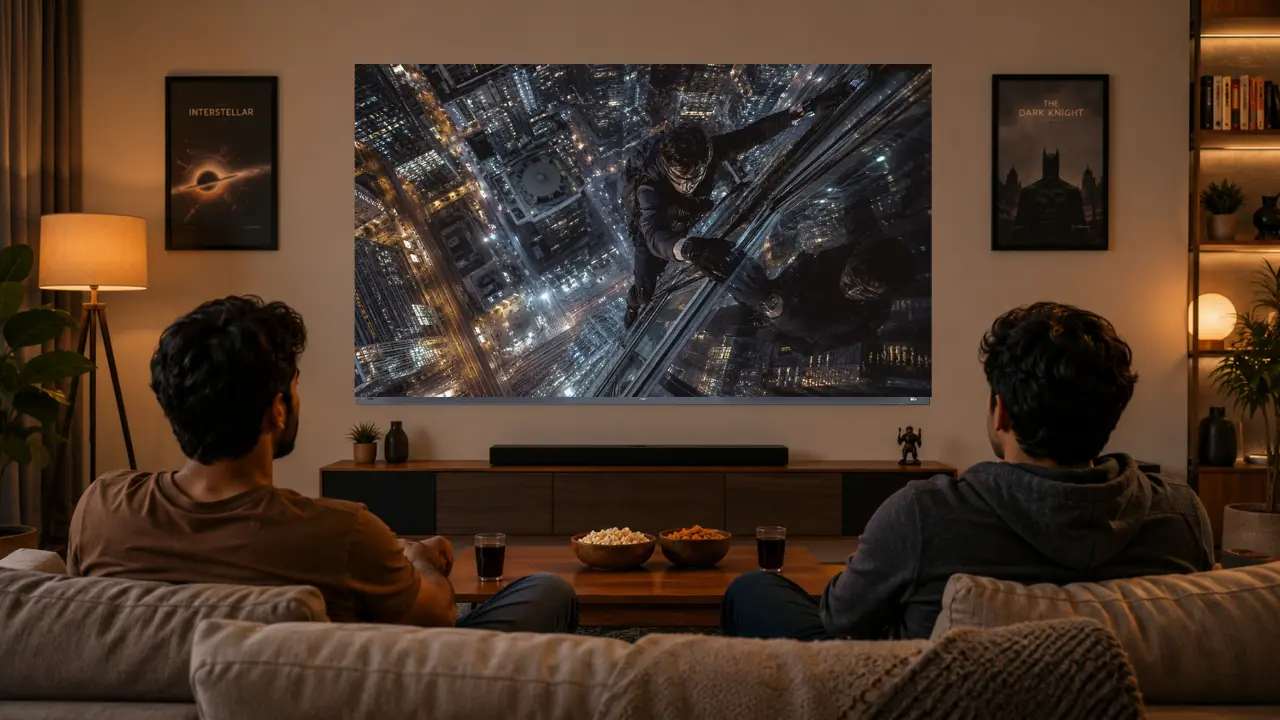

Not all smart TVs fail in the same way. That’s the real comparison.
Some TVs look stunning in a showroom but struggle in bright Indian living rooms. Some sound cinematic in ads but need a soundbar within a week.
Others become slow after software updates. The real difference between Haier and other smart TV brands is not just display quality or price. It is how the TV behaves after six months of cricket matches, OTT marathons, gaming nights, and everyday family use.
A smart TV is no longer a screen. It is the evening routine of the house.
The smart TV market changed when Indian homes changed.
Ten years ago, buying a TV was simple.
Pick a size. Check the price. Done.
Now the decision feels more layered because homes themselves have changed. Indian living rooms are now theatres, gaming zones, workspaces, YouTube classrooms, and weekend stadiums during IPL season.
A television today handles:
- Netflix binge sessions
- PS5 or Xbox gaming
- YouTube for children
- Fitness videos in the morning
- Screen casting from phones
- Music during dinner
- Video calls during festivals
One screen. Multiple expectations.
That is why comparing Haier vs other smart TV brands only on “picture quality” misses the point entirely.
The smarter question is this:
Which TV adapts best to real Indian usage patterns?
You can also explore how AI-powered TV systems are evolving in modern homes through Haier’s smart entertainment ecosystem.
Most buyers compare specifications. Experienced buyers compare friction.
The hidden system behind TV satisfaction is not brightness alone.
It is friction.
How many steps does it take to open apps?
Does the TV lag after updates?
Can parents use voice commands easily?
Does the sound feel thin during cricket commentary?
Can the TV handle sunlight in Indian apartments?
These small frustrations compound over time.
A television is like a kitchen knife. You only notice quality after repeated daily use.
Haier’s strategy feels different because it focuses on experience clusters
Many brands compete aggressively on one hero feature.
One brand pushes brightness.
Another pushes ultra-thin design.
Another focuses heavily on gaming.
Haier’s newer TV lineup takes a broader systems approach instead.
The Haier New M96 Series 254cm (100) QD-Mini LED AI Smart Google TV (H100M96FUX) integrates AI-based picture optimisation, gaming responsiveness, sound enhancement, and entertainment intelligence through its Ultrasense AI ecosystem.
Similarly, the Haier New M92 Series 189cm (75) QD-Mini LED Smart AI Google TV (H75M92FUX) and Haier New M92 Series 164cm (65) QD-Mini LED AI Smart Google TV (H65M92FUX) focus on balancing cinematic viewing, gaming support, and smart home integration together.
That matters because viewing experiences are interconnected.
A cricket match is not just motion clarity. It is also crowd sound, voice sharpness, colour vibrancy, and low glare during afternoon sunlight.
Systems win. Isolated features don’t.
For readers exploring larger entertainment setups, Haier’s premium QLED TV range also reflects how screen technology is evolving beyond traditional LED televisions.
Picture quality is no longer about “4K”
Almost every premium smart TV today offers 4K resolution.
That alone means very little now.
The real difference comes from how the TV handles:
- Contrast
- Motion
- Colour depth
- Bright room performance
- HDR optimisation
- Black levels
This is where technologies like QD-Mini LED and local dimming become important.
For example:
| Model | Display Technology | Local Dimming Zones | Refresh Rate |
| Haier H100M96FUX | QD-Mini LED | 2160 Zones | 144Hz |
| Haier H75M92FUX | QD-Mini LED | 576 Zones | 144Hz |
| Haier H65M92FUX | QD-Mini LED | 448 Zones | 144Hz |
That translates into:
- Deeper blacks
- Better HDR contrast
- Cleaner motion
- Improved detail in dark scenes
A regular LED TV often struggles here.
The difference becomes obvious during:
- Dark thriller shows
- Monsoon cricket matches
- High-speed racing games
- Nature documentaries
Good TVs show content.
Better TVs create an atmosphere.
Indian homes need brightness intelligence, not just brightness

Showroom comparisons are misleading.
Every TV looks stunning under controlled lighting.
Real homes are different.
Indian apartments often deal with:
- Harsh balcony sunlight
- Tube light reflections
- Open kitchen glare
- Mixed daytime and evening viewing
This is where Dolby Vision IQ and AI Ambient Sense matter.
The Haier New M92 Series 189cm (75) Smart AI Google TV (H75M92FUX) adjusts brightness and colour temperature dynamically depending on room conditions.
The Haier S90 QLED 254cm (100) Google TV Ultrasense AI (H100S90FUX) also combines Dolby Vision IQ with Comfort View technologies for reduced strain during long viewing sessions.
That sounds technical.
But the practical result is simple:
You stop constantly adjusting settings.
Convenience is invisible when it works well.
You can also interlink this section with blogs around AI-powered display technologies and smart home entertainment setups.
Sound is where many smart TVs quietly disappoint
This happens in countless homes.
The TV looks premium.
Then the dialogue sounds flat.
So users buy a soundbar later.
Most ultra-thin TVs compromise on audio because thin designs limit speaker space.
Haier has leaned heavily into integrated audio partnerships like KEF audio technology across premium models including:
- Haier H100M96FUX
- Haier H75M92FUX
- Haier H65M92FUX
- Haier H100S90FUX
Several models also feature:
- Dolby Atmos
- 2.1 channel speakers
- Subwoofer integration
- Total Sonic sound enhancement
For Indian homes, this matters more than brands realise.
Because families often watch together without external speakers.
And during cricket matches, weddings, or Bollywood films, sound creates half the emotion.
A weak speaker turns celebrations into background noise.
Gaming performance has become a mainstream buying factor
Gaming is no longer a niche.
Even casual users now connect consoles, gaming laptops, or cloud gaming services.
That changes what buyers expect from televisions.
Three features now matter significantly:
| Feature | Why It Matters |
| 144Hz refresh rate | Smoother motion |
| VRR | Reduces screen tearing |
| ALLM | Faster gaming response |
Haier’s premium TVs including the Haier New M96 Series H100M96FUX and Haier S90 QLED H100S90FUX support:
- 144Hz refresh rate
- VRR
- ALLM
- AMD FreeSync Premium Pro
- HDMI 2.1 eARC
This improves:
- Racing games
- Football gaming
- Fast shooter gameplay
- Sports streaming responsiveness
Many competing TVs still prioritise cinematic viewing while treating gaming as secondary.
That gap matters to younger buyers.
Especially Gen Z households.
You can internally link this section with gaming TV buying guides or blogs discussing refresh rates and gaming-ready TVs.
The operating system shapes the daily experience more than buyers expect
People underestimate software.
Until the TV becomes slow.
The operating system decides:
- App loading speed
- Recommendation quality
- Voice search reliability
- Update support
- Casting convenience
Haier’s latest premium TVs run on Google TV with Google Assistant integration and Chromecast built-in support.
That creates familiarity because many users already live inside Google’s ecosystem through:
- Android phones
- YouTube
- Gmail
- Google Photos
- Chromecast
The learning curve disappears.
That matters inside multi-generational Indian homes where parents and children share one television.
The best interface is the one nobody needs explained.
Bigger screens are changing how Indian families consume entertainment
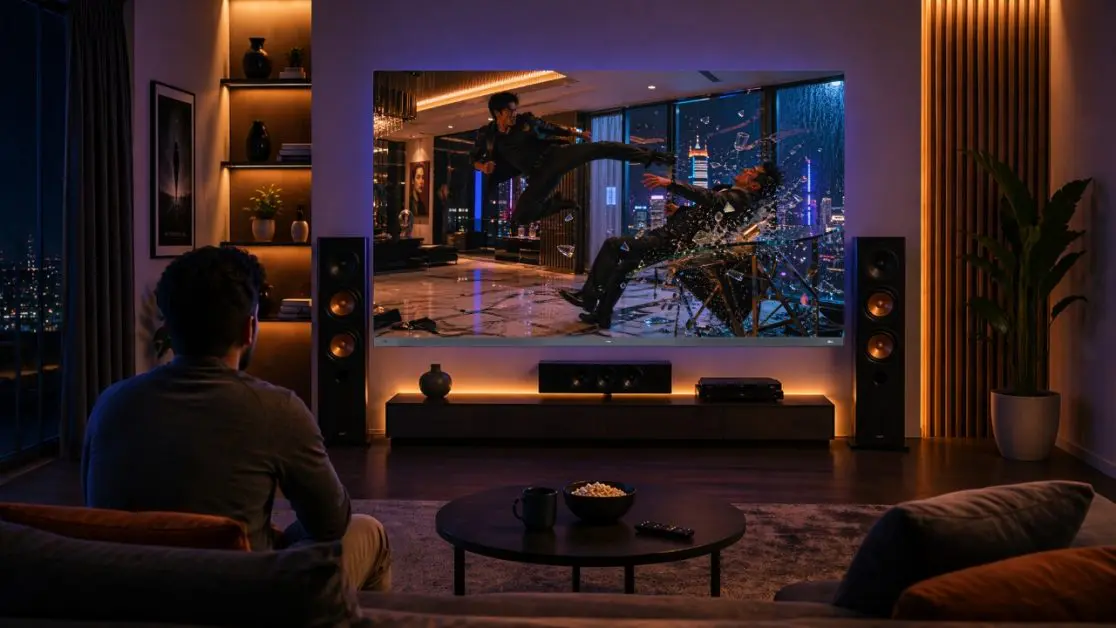
A major shift is happening quietly.
The 55 TV is becoming the new normal.
And 189cm (75) or 254cm(100) TVs are no longer luxury showroom pieces alone.
Premium big-screen adoption is rising because OTT content itself is becoming more cinematic.
The Haier New M96 Series 254cm(100) QD-Mini LED AI Smart Google TV (H100M96FUX) and the Haier S90 QLED 254cm(100) Google TV (H100S90FUX) reflect this shift directly.
This changes family behaviour inside homes.
People now:
- Invite friends for football screenings
- Watch IPL collectively
- Stream concerts
- Replace projectors entirely
Television has become a social infrastructure.
Not just electronics.
Price comparison without usage comparison creates bad buying decisions
This is where most online comparisons fail.
A cheaper TV is not cheaper if:
- It slows down quickly
- Needs external speakers
- Struggles in daylight
- Lacks future-ready gaming support
- Receives poor software optimisation
Likewise, an expensive TV is not automatically better if the user only watches YouTube casually.
The smarter approach is matching TV behaviour to household behaviour.
One option is value-first buying
Good for:
- Students
- Rental apartments
- Secondary bedrooms
Priority:
- Streaming apps
- Stable software
- Decent sound
The second option is entertainment-first buying
Good for:
- Families
- Weekend binge-watchers
- Sports lovers
Priority:
- Bigger screens
- Better sound
- Strong HDR performance
The third option is future-ready buying
Good for:
- Gamers
- Premium home setups
- Long-term users
Priority:
- HDMI 2.1
- 144Hz refresh rates
- AI picture optimisation
- Advanced dimming technologies
Different homes require different intelligence.
The real comparison is emotional, not technical
Nobody remembers RAM specifications during a family movie night.
They remember whether the experience felt effortless.
Whether the grandmother could use voice commands.
Whether the IPL final looked immersive.
Whether the children stopped fighting over screen casting.
Whether the sound filled the room naturally.
Technology disappears when it works properly.
That is the goal.
Haier’s recent smart TV strategy appears increasingly focused on reducing friction across the entire viewing experience rather than competing only on isolated specifications. Features like Ultrasense AI, Dolby Vision IQ, KEF audio integration, Google TV, AMD FreeSync Premium Pro, and advanced QD-Mini LED display systems show that shift clearly.
And that reflects a larger truth about modern homes.
People no longer buy televisions to “watch TV.”
They buy them to shape shared moments.
Because in many Indian homes, the television is still the one device that gathers everyone into the same room.
Frequently Asked Questions
Is Haier a Good Smart TV Brand for Indian Homes?
Yes especially for households that want balanced performance instead of one flashy feature. Haier newer QD-Mini LED and QLED TVs focus on reducing everyday friction like glare handling, laggy navigation, weak sound, and poor motion clarity during sports or gaming.
Why Do Some Smart TVs Feel Slow After a Few Months?
This usually happens because of:
Weak processors
Heavy software updates
Poor RAM optimisation
Cluttered operating systems
Haier’s newer Google TV models aim to keep navigation smoother through AI-based optimisation and Google ecosystem integration.
Which Matters More in Daily Life: Specifications or User Experience?
User experience matters more over time. Buyers initially compare:
Resolution
Refresh rate
Brightness
But long-term satisfaction usually depends on:
App speed
Voice search reliability
Audio quality
Remote responsiveness
Ease of casting
Bright room performance
I mostly watch IPL, Netflix, and YouTube. Do I Really Need a Premium TV?
Not always. If your usage is casual, a stable mid-range TV with decent sound and software is enough.
But premium TVs become worthwhile if you:
Watch sports regularly
Use OTT platforms heavily
Want cinematic HDR performance
Game on PS5/Xbox
Is QD-Mini LED Noticeably Better Than Regular LED TVs?
Yes, especially in dark scenes and HDR content.
QD-Mini LED TVs typically offer:
Better contrast
Deeper blacks
Cleaner highlights
More precise local dimming
Improved motion clarity
The difference becomes obvious during:
Thriller shows
Night cricket matches
Racing games
Nature documentaries
Why Do TVs Look Great in Showrooms but Disappointing at Home?
Showrooms use controlled lighting. Indian homes usually have:
Balcony sunlight
Tube light reflections
Open kitchen glare
Mixed daytime lighting
Technologies like Dolby Vision IQ and AI Ambient Sense help TVs adjust brightness dynamically based on room conditions.