

Haier leads in smart TV innovation because it designs televisions around real human behaviour, not just technical specifications.
Modern Indian households no longer use TVs for one thing. A television today handles cricket streaming, gaming, OTT marathons, YouTube learning, music sessions, and even work presentations.
Haier’s smart TV ecosystem understands this shift deeply through AI-powered visuals, immersive sound, gaming-focused performance, and intelligent user experiences that adapt naturally to everyday life.
The modern TV is no longer a screen. It’s the center of the home.
Walk into a typical Indian living room on a weekend.
Someone is watching IPL highlights.
Someone else is gaming.
A child is streaming cartoons.
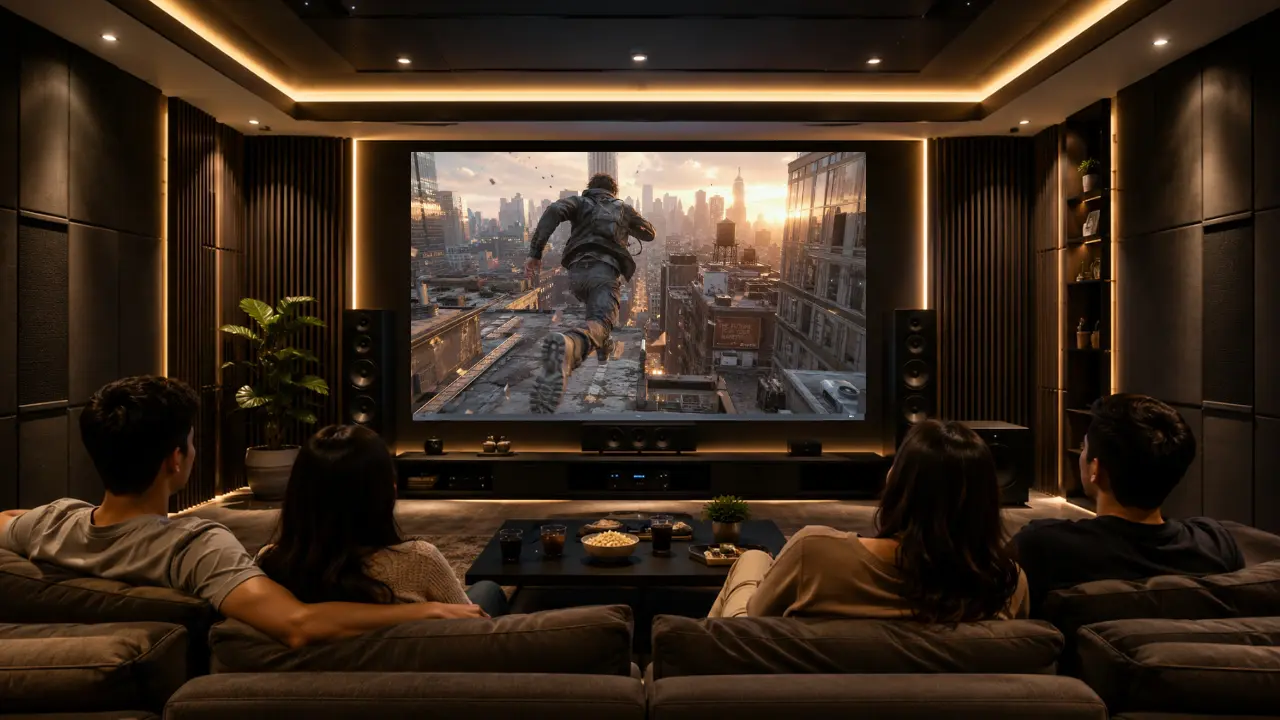
At night, the same television becomes a family cinema.
The role of television changed quietly.
And the brands leading smart TV innovation are the ones responding to this behavioural shift first.
For years, television brands competed on size alone. Bigger screens. Higher resolution. Thinner bezels.
But consumers matured.
Now people ask better questions:
- Does the picture adapt automatically?
- Does sound feel cinematic without external speakers?
- Does gaming look smooth?
- Does the interface feel effortless?
- Does the TV work naturally inside daily routines?
This is where Haier’s latest smart TV lineup stands out.
Models like the Haier New M96 Series 254cm (100) QD-Mini LED AI Smart Google TV H100M96FUX and the Haier New M92 Series 189cm (75) QD-Mini LED Smart AI Google TV H75M92FUX reflect a broader philosophy: technology should reduce friction, not create more of it.
That distinction matters more than most brands realize.
Why AI matters more than raw picture quality
Resolution stopped being enough years ago.
Almost every premium television now offers 4K.
The real differentiator today is intelligence.
How intelligently does the television react to content, motion, lighting, and viewing conditions?
Haier’s AI-powered ecosystem built around Ultra Sense AI Processor focuses heavily on this adaptive experience. These technologies dynamically optimize color, depth, motion clarity, and contrast based on scenes and room conditions.
That changes how entertainment feels in practical situations.
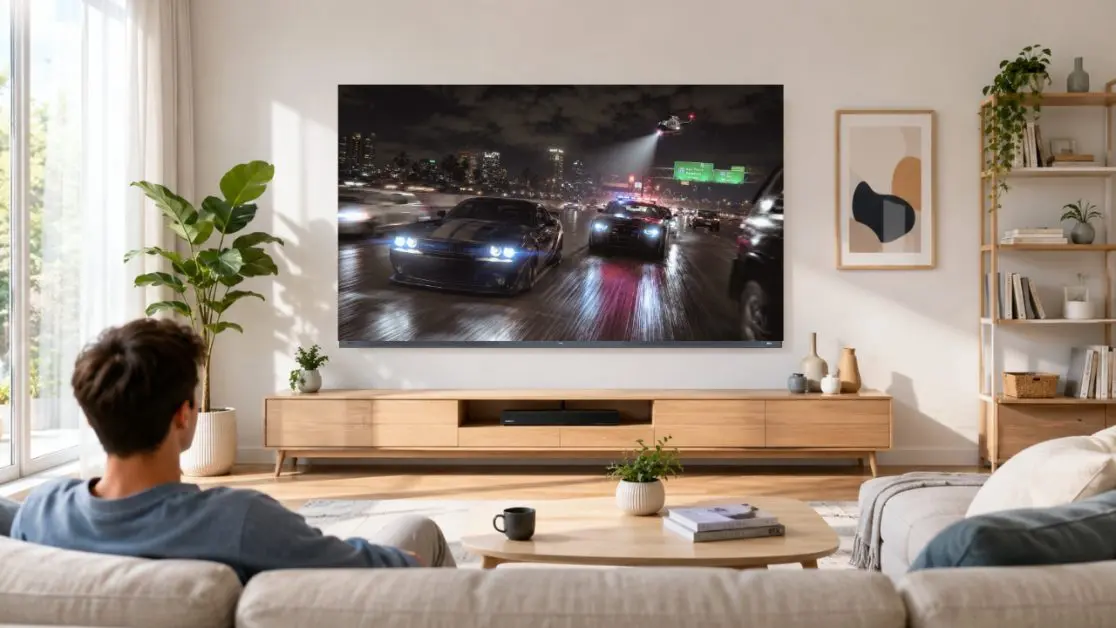
A cricket match and a dark thriller demand different processing
One option is static picture tuning.
The TV treats everything the same.
The second option is adaptive tuning.
The television recognizes sports, cinema, gaming, and animated content differently.
The third option is contextual intelligence.
The TV responds not only to content but also to room brightness and ambient conditions.
This is where features like Dolby Vision IQ and AI Ambient Sense become meaningful. They automatically adjust picture settings depending on environmental lighting.
A bright Delhi afternoon requires different brightness handling compared to a late-night movie session in a dark apartment.
Good systems understand context.
Great systems adapt automatically.
Mini LED technology changes how modern entertainment feels
There’s a reason premium television conversations increasingly revolve around Mini LED technology.
It solves an old television problem.
Traditional LED TVs often struggle to balance brightness and black levels simultaneously. Bright scenes lose depth. Dark scenes lose detail.
QD-Mini LED changes that equation.
The Haier New M92 Series 164cm (65) QD-Mini LED AI Smart Google TV H65M92FUX features 448 local dimming zones, while the Haier New M92 Series 189cm (75) QD-Mini LED Smart AI Google TV H75M92FUX offers 576 dimming zones.
The flagship Haier New M96 Series 254cm (100) QD-Mini LED AI Smart Google TV H100M96FUX pushes this further with 2160 dimming zones.
That translates into:
- Better shadow detail
- Richer contrast
- More cinematic depth
- Improved HDR performance
- More realistic color reproduction
Technology becomes powerful when it changes emotion, not just numbers.
That’s what Mini LED does well.
Gaming permanently changed television expectations
Gaming accelerated television innovation faster than movies ever did.
Modern viewers notice lag instantly.
Blur feels outdated.
Input delay feels broken.
Poor refresh rates feel cheap.
Haier’s premium smart TVs support:
- 144Hz refresh rate
- HDMI 2.1 eARC
- VRR
- ALLM
- AMD FreeSync Premium Pro
These features matter because entertainment consumption itself changed.
A television today serves multiple roles:
- Console gaming screen
- OTT streaming device
- Sports display
- Music system
- Smart home hub
- Casual workstation
The brands winning the category understand convergence early.
They build televisions as platforms instead of standalone products.
That’s a very different philosophy.
Sound became the hidden premium feature
Most televisions still focus heavily on visuals while ignoring audio quality.
But modern homes expose weak sound instantly.
Open kitchens absorb dialogue. Ceiling fans interfere with clarity. Apartment layouts create echo. Traffic noise competes constantly.
Consumers increasingly want cinematic sound without building complicated home theatre systems.
This is where Haier’s integration of Sound by KEF and Dolby Atmos-enabled speaker systems becomes important.
The Haier New M96 Series 254cm (100) QD-Mini LED AI Smart Google TV H100M96FUX even features a powerful 6.2.2 channel speaker system designed for more immersive spatial sound experiences.
Convenience became a premium category.
Consumers increasingly prefer:
- Fewer devices
- Cleaner setups
- Better integration
- Less cable clutter
- Strong built-in performance
The smartest technology simplifies life.
Not the opposite.
Voice control reveals where television is heading

Look carefully at how younger households interact with devices today.
Typing is declining.
The voice is rising.
People increasingly expect technology to respond conversationally.
Haier’s Google TV ecosystem and hands-free voice controls reflect this behavioural shift clearly.
Instead of navigating endless menus:
- Users ask naturally
- Recommendations improve
- Search becomes faster
- Smart devices integrate more smoothly
The hidden innovation here isn’t voice itself.
It’s decision simplification.
Streaming platforms created a new problem: too much choice.
Google TV attempts to reduce that friction through personalized recommendations and centralized discovery systems.
That’s an important shift.
Modern innovation increasingly revolves around reducing cognitive overload.
The television became part of interior design
Earlier televisions were functional objects.
Now they shape the visual identity of homes.
This matters especially in:
- Urban apartments
- Compact living spaces
- Modern modular interiors
- New homeowner setups
Slim profiles, minimal bezels, and immersive edge-to-edge displays increasingly influence buying decisions alongside technical performance.
The Haier New M92 Series 164cm (65) QD-Mini LED AI Smart Google TV H65M92FUX and larger M96 lineup reflect this shift toward cleaner premium aesthetics.
The television stopped being furniture.
It became architecture.
That changes how brands think about innovation entirely.
Sustainability is quietly entering the smart TV conversation
Another subtle shift is happening in appliance buying behaviour.
Consumers increasingly notice:
- Standby power usage
- Battery waste
- Product longevity
- Energy efficiency
Features like Haier’s Solar Remote show how small design choices contribute to larger sustainability thinking.
Innovation is rarely one giant breakthrough.
Usually it’s dozens of thoughtful improvements layered together over time.
That’s how ecosystems evolve.
Why Haier’s smart TV innovation feels aligned with modern Indian homes
India’s entertainment habits transformed rapidly.
OTT consumption exploded.
Gaming became mainstream.
YouTube replaced traditional learning for many households.
Regional streaming content surged.
Work-from-home blurred personal and professional spaces.
The television adapted into the center of this ecosystem.
That’s why features like:
- AI Scene Detection
- AI Color Boost Pro
- Dolby Vision IQ
- AI Ambient Sense
- KEF audio integration
- 144Hz refresh rates
- Google TV
- AMD FreeSync Premium Pro
feel relevant beyond marketing.
They solve real problems inside real homes.
And that’s ultimately why Haier continues strengthening its position in smart TV innovation.
Because the future of televisions isn’t just about better screens.
It’s about building experiences that fit naturally into the rhythm of modern life.
Frequently Asked Questions
I keep switching between Netflix, YouTube, cricket, and gaming. Why does a Haier smart TV feel easier for daily use?
Because Haier’s Google TV ecosystem, voice control, and AI recommendations help reduce endless searching and make content discovery feel more natural.
I get confused by too many picture settings. Can Haier TVs adjust automatically?
Yes. Features like AI Scene Detection, Dolby Vision IQ, and AI Ambient Sense help adjust brightness, contrast, color, and clarity based on content and room lighting.
I watch TV during the day and at night. Will Haier’s picture quality adapt to different lighting?
Yes. Dolby Vision IQ and AI Ambient Sense help adjust visuals depending on ambient light, so bright afternoons and dark movie nights both look better.
Why is QD-Mini LED important in Haier smart TVs?
QD-Mini LED improves contrast, shadow detail, brightness control, HDR performance, and color depth through precise local dimming zones.
I use my TV for console gaming. Why should I care about 144Hz, VRR, and ALLM?
These features reduce lag, screen tearing, and motion blur, making fast games feel smoother and more responsive.
Is Haier’s premium smart TV lineup good for gaming as well as movies?
Yes. With 144Hz refresh rate, HDMI 2.1 eARC, VRR, ALLM, and AMD FreeSync Premium Pro, Haier positions its TVs as entertainment platforms, not just movie screens.
I keep switching between Netflix, YouTube, cricket, and gaming. Why does a Haier smart TV feel easier for daily use?
Because Haier’s Google TV ecosystem, voice control, and AI recommendations help reduce endless searching and make content discovery feel more natural.
I get confused by too many picture settings. Can Haier TVs adjust automatically?
Yes. Features like AI Scene Detection, Dolby Vision IQ, and AI Ambient Sense help adjust brightness, contrast, color, and clarity based on content and room lighting.
I watch TV during the day and at night. Will Haier’s picture quality adapt to different lighting?
Yes. Dolby Vision IQ and AI Ambient Sense help adjust visuals depending on ambient light, so bright afternoons and dark movie nights both look better.
Why is QD-Mini LED important in Haier smart TVs?
QD-Mini LED improves contrast, shadow detail, brightness control, HDR performance, and color depth through precise local dimming zones.
I use my TV for console gaming. Why should I care about 144Hz, VRR, and ALLM?
These features reduce lag, screen tearing, and motion blur, making fast games feel smoother and more responsive.
Is Haier’s premium smart TV lineup good for gaming as well as movies?
Yes. With 144Hz refresh rate, HDMI 2.1 eARC, VRR, ALLM, and AMD FreeSync Premium Pro, Haier positions its TVs as entertainment platforms, not just movie screens.