
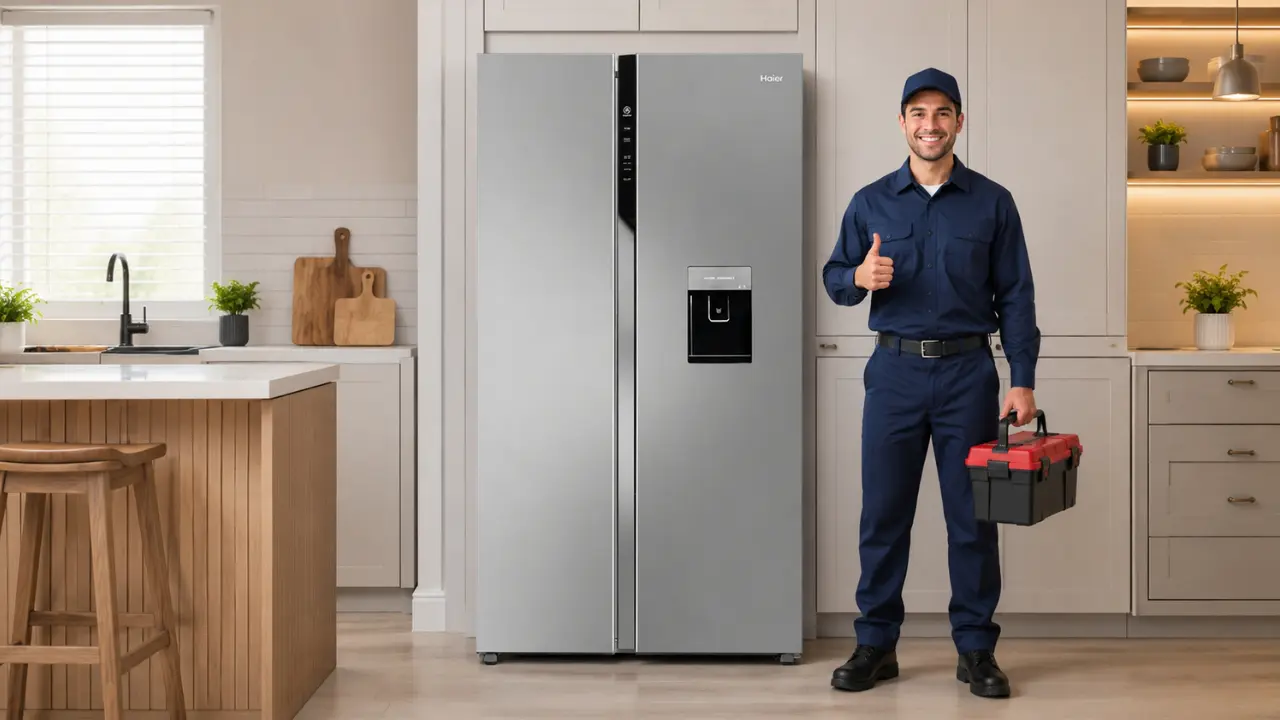

Buying a refrigerator is not just about capacity or colour anymore. Installation changes everything.
A refrigerator that fits perfectly inside a showroom can quietly become a daily frustration at home if ventilation, door clearance, power supply, or kitchen layout are ignored. The smartest buying decision often happens before the appliance enters the house.
A refrigerator does not live in isolation.
It lives between walls, cabinets, grocery habits, electricity fluctuations, family routines, and summer heatwaves.
That is the hidden system most buyers miss.
People spend weeks comparing finishes, star ratings, and storage capacity. Then installation day arrives and suddenly the real questions appear:
Will the doors open fully?
Is there enough side clearance?
Can the lift handle the appliance?
Will the voltage fluctuations damage the compressor?
Can the refrigerator breathe properly?
A good appliance improves life quietly.
A badly installed one creates friction every single day.
The kitchen decides more than the product does
Walk into most modern Indian homes and one pattern appears immediately.
Kitchens are shrinking. Appliances are growing.
Especially side-by-side refrigerators.
That changes the installation equation completely.
A 596L refrigerator may look elegant online, but dimensions behave differently inside real apartments. Narrow entrances, modular kitchens, overhead cabinets, and tight utility areas often become the real constraint.
That is why installation planning matters before purchase.
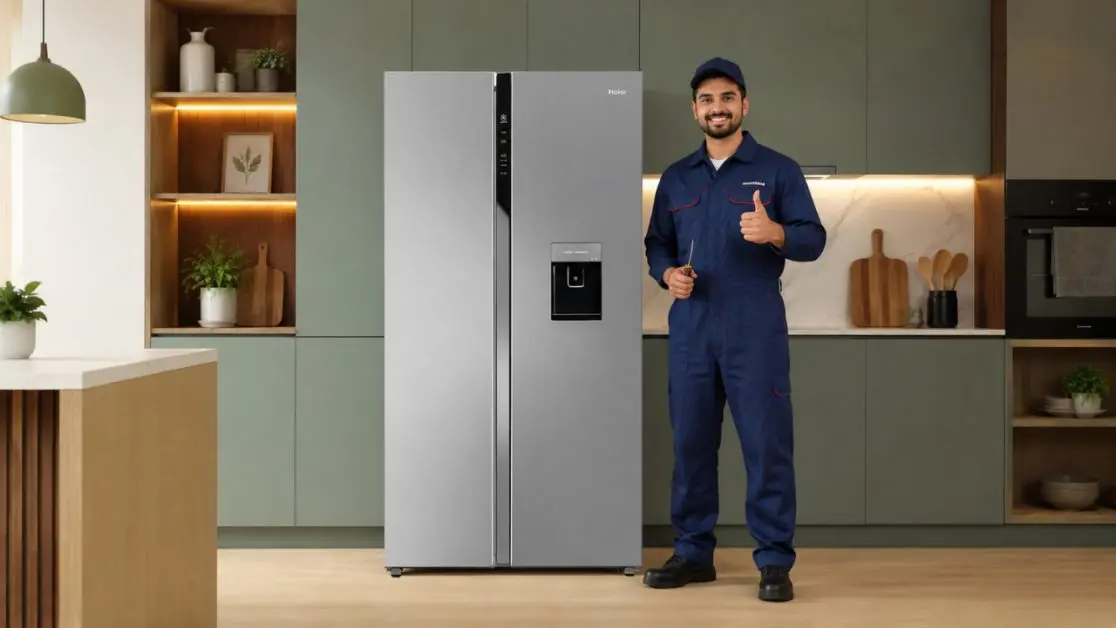
For example, refrigerators like the Haier 596L Ultramarine Steel 2 Door Smart Convertible SBS Refrigerator are designed for large-capacity modern households, but their placement works best when airflow and movement space are planned properly.
Because refrigerators are not furniture.
They are cooling systems.
And cooling systems need breathing space.
Measure three times. Buy once.
Most installation mistakes begin with one assumption:
“If it fits through the door, it will fit everywhere.”
Not true.
The first measurement is the entry path
Check:
- Main entrance width
- Lift dimensions
- Staircase turning radius
- Kitchen entry width
- Modular kitchen gaps
Large refrigerators often fail at corners, not doorways.
A refrigerator can technically fit inside the home and still become impossible to position correctly.
The second measurement is operating space
People measure body dimensions.
They forget movement dimensions.
You need space for:
- Full door opening
- Pull-out vegetable trays
- Cleaning behind the appliance
- Air circulation
- Water dispenser usage
That matters more with side-by-side models.
For instance, the Haier 596L side-by-side series has a width of approximately 90.5 cm and height of around 177.5 cm.
But operational comfort requires more than exact-fit placement.
A refrigerator squeezed tightly between cabinets works harder. Heat builds faster. Efficiency drops.
Machines struggle when airflow disappears.
Humans do too.
Ventilation is not optional
Many Indian kitchens treat refrigerators like built-in wardrobes.
Push it into the corner. Close every gap. Maximize space.
Looks neat.
Performs badly.
Refrigerators release heat constantly during operation. Without ventilation clearance, compressors work harder and electricity usage increases.
Most brands recommend:
- Rear clearance
- Side spacing
- Top ventilation gap
The exact spacing varies by model, but the principle never changes.
Airflow equals efficiency.
This becomes even more important in inverter refrigerators.
Modern models like Haier’s Expert Inverter Technology systems are designed for steady cooling and energy optimisation. But inverter efficiency depends heavily on installation conditions.
Technology cannot compensate for poor airflow forever.
The power supply tells a bigger story
Indian homes experience unpredictable voltage patterns.
Especially during summer.
Especially during peak AC usage.
Which is why stabilizer-free operation has quietly become one of the most useful refrigerator features today.
Not flashy. Useful.
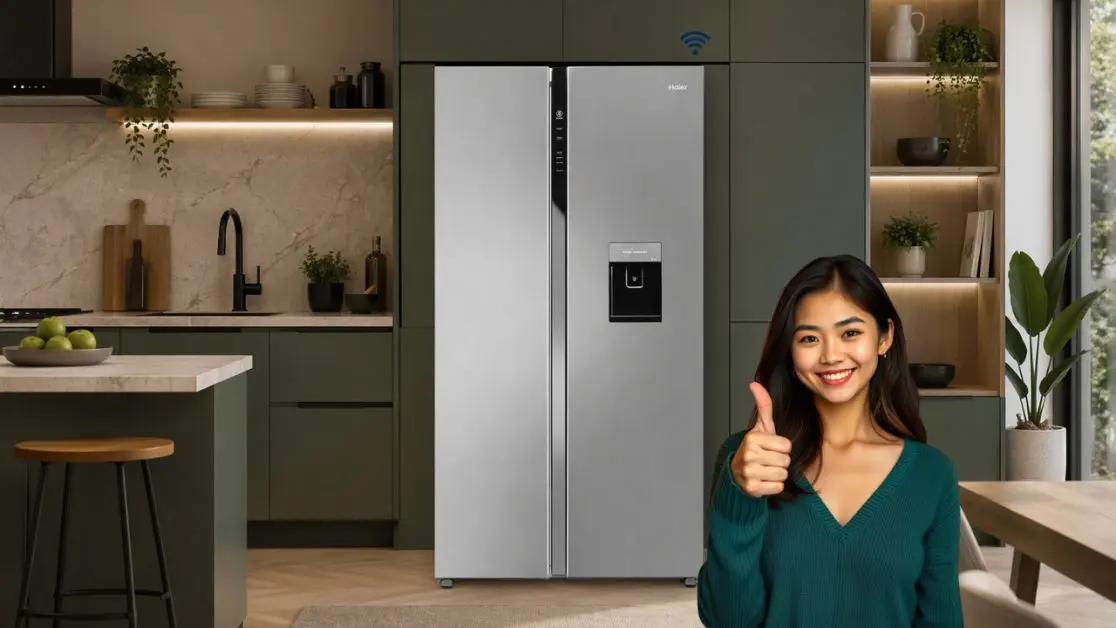
Models like the Haier 596L Smart Convertible SBS refrigerator series support stabilizer-free operation designed to protect against voltage fluctuations while improving efficiency.
But there is an important nuance here.
“Stabilizer-free” does not mean careless installation.
Before installation, check these electrical basics
- Dedicated socket availability
- Proper earthing
- Avoiding extension boards
- Plug point accessibility
- Voltage load on kitchen circuits
One overloaded kitchen line can quietly reduce appliance lifespan.
Electricity problems rarely look dramatic initially.
They look like slow inefficiency.
The right refrigerator depends on lifestyle, not trends
A side-by-side refrigerator is not automatically the best choice.
Neither is a double-door model.
The right refrigerator depends on how the household behaves.
That is the invisible layer most buying guides ignore.
One option is space-first buying
Large families.
Bulk grocery shopping.
Weekend meal prep.
Festival hosting.
These households benefit from larger convertible storage systems.
Convertible refrigerators become especially useful during seasonal usage shifts. Freezer-heavy during summer. Extra fridge space during gatherings.
Haier’s Convertible 100% Fridge Space feature allows freezer-to-fridge conversion depending on changing household needs.
The second option is convenience-first buying
Working professionals.
Couples.
Smaller households.
These users often value:
- Faster access
- Smart organisation
- Compact footprint
- Lower maintenance effort
Because efficiency is not only about electricity.
It is also about reducing decision fatigue.
The third option is lifestyle-first buying
This is where modern refrigerators evolved quietly.
Today’s buyers increasingly care about:
- Aesthetic finishes
- Hidden lighting
- Water dispensers
- Digital panels
- Smart connectivity
Not because these are luxury features.
Because homes became emotional spaces.
A refrigerator now sits visibly inside open kitchens and connected living spaces. It became part appliance, part architecture.
That shift matters.
Smart features only matter if daily life improves
A surprising number of people buy smart appliances they never fully use.
Not because the technology is bad.
Because the setup feels complicated.
Good smart technology disappears into routine.
That is the benchmark.
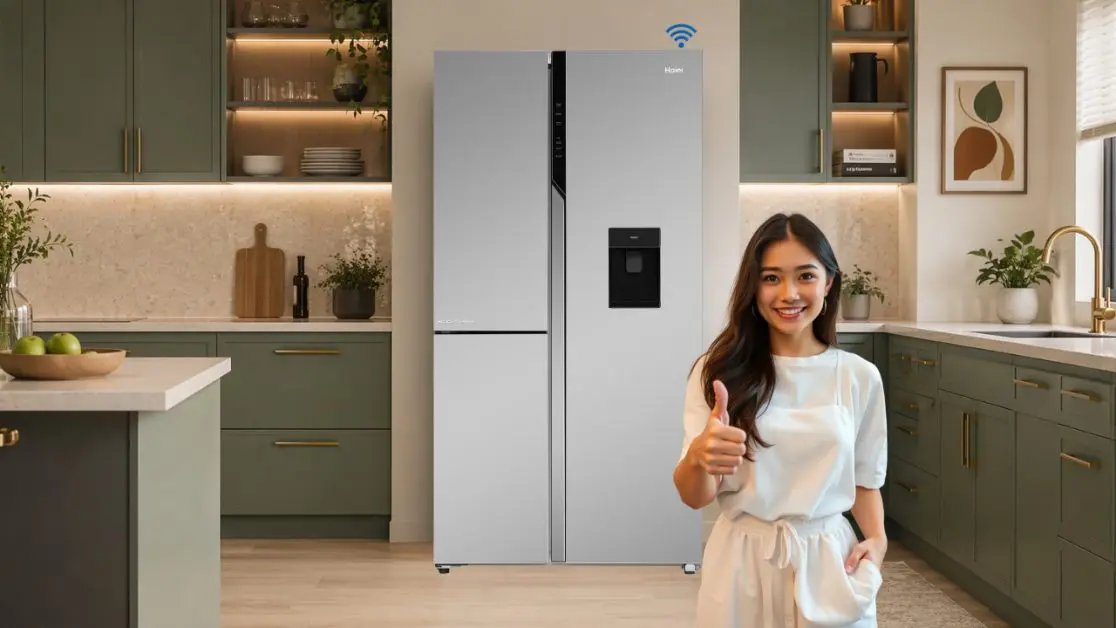
Features like Smart Connectivity and Smart Food Management inside Haier’s refrigerator ecosystem are designed around monitoring and control convenience.
But the real question is simpler:
Does the feature reduce friction?
That is the only technology question worth asking.
Useful smart refrigerator features often include
- Temperature control access
- Food tracking
- Motion-sensor displays
- Adjustable cooling zones
- Convertible compartments
- Energy optimisation
The best smart appliances feel invisible after two weeks.
You stop noticing the feature.
You notice the ease.
Installation day reveals whether planning happened
Most appliance stress happens during installation day.
And almost all of it is preventable.
Things people forget before delivery
- Removing old appliances early
- Checking floor leveling
- Confirming lift timing with society management
- Measuring modular kitchen projections
- Ensuring water dispenser access
- Keeping ventilation gaps clear
Small oversights create large inconveniences.
Especially in apartments.
Especially in metro cities.
A refrigerator installation is actually a logistics exercise disguised as appliance delivery.
The hidden cost of choosing only by price
Cheap appliances are rarely cheap long term.
But expensive appliances are not automatically valuable either.
The real calculation includes:
- Energy consumption
- Cooling consistency
- Repair frequency
- Food preservation
- Layout efficiency
- Noise levels
- Electricity behaviour
- Daily usability
People remember the purchase price first.
They remember convenience later.
Then convenience becomes the bigger memory.
Features like Deo Fresh Technology, ABT Pro antibacterial systems, and large-capacity cooling exist because refrigerators now solve lifestyle problems, not just storage problems.
Freshness became emotional.
Nobody wants food smelling stale after two days.
Nobody wants crowded shelves during festivals.
Nobody wants ice shortages during Indian summers.
Modern refrigerators are increasingly designed around these behavioural realities.
What smart buyers check before purchase
Here is the simplest framework.
Check the home first
Not the appliance.
Measure:
- Entry width
- Kitchen dimensions
- Ventilation space
- Plug point location
- Door opening area
Check household behaviour second
Ask:
- How often do groceries happen?
- Do you host often?
- Is frozen food usage high?
- Do you meal prep?
- Is storage flexibility important?
Check features third
Not first.
Because technology without context creates expensive confusion.
Useful features solve recurring problems.
Everything else becomes brochure decoration.
The refrigerator is not a purchase. The system is.
People think they are buying cooling.
They are actually buying smoother mornings.
Less food waste.
Better organisation.
Fewer interruptions.
Quieter kitchens.
More usable weekends.
That is why installation matters so much.
A refrigerator touches daily life more than most appliances people own. Hundreds of small interactions happen every month. Opening. Closing. Storing. Cleaning. Refilling. Reorganising.
Tiny frictions compound.
Tiny conveniences compound too.
And that is the real insight.
Good appliances do not impress people every day.
They stop bothering people every day.
That is the upgrade modern homes are actually searching for.
Frequently Asked Questions
What should I measure before buying a refrigerator?
Before buying a refrigerator, measure the kitchen space, entry door width, lift size, and door opening clearance. Many large refrigerators fit the kitchen wall but fail during delivery because of narrow entrances or staircase turns. Always leave extra space for ventilation and comfortable door movement.
How much ventilation space does a refrigerator need?
A refrigerator needs proper airflow around the sides, back, and top for efficient cooling. Poor ventilation forces the compressor to work harder, increasing electricity consumption and reducing long-term performance. Even premium inverter refrigerators perform poorly when squeezed tightly between cabinets.
Is stabilizer-free operation important in Indian homes?
Yes. Voltage fluctuations remain common across many Indian cities, especially during summer. Stabilizer-free refrigerators help protect the appliance from sudden voltage changes while improving energy efficiency and compressor life. It reduces one more layer of daily worry inside the home.
Are side-by-side refrigerators suitable for small kitchens?
Not always. Side-by-side refrigerators work best in homes with enough movement space and ventilation clearance. Smaller kitchens may feel cramped if door opening angles become restricted. The right refrigerator depends more on layout and household behaviour than trends.
What installation mistakes do most buyers make?
The most common mistakes include:
Ignoring ventilation gaps
Not checking entry dimensions
Using extension boards
Blocking full door opening
Installing near heat sources
Forgetting floor leveling
Small installation errors quietly reduce comfort every day.
Which smart refrigerator features are actually useful?
The most useful features are the ones that reduce friction in daily life. Features like convertible storage, smart connectivity, digital temperature control, antibacterial technology, and large-capacity cooling often make a noticeable difference in modern Indian households. Good technology should feel effortless after installation.