
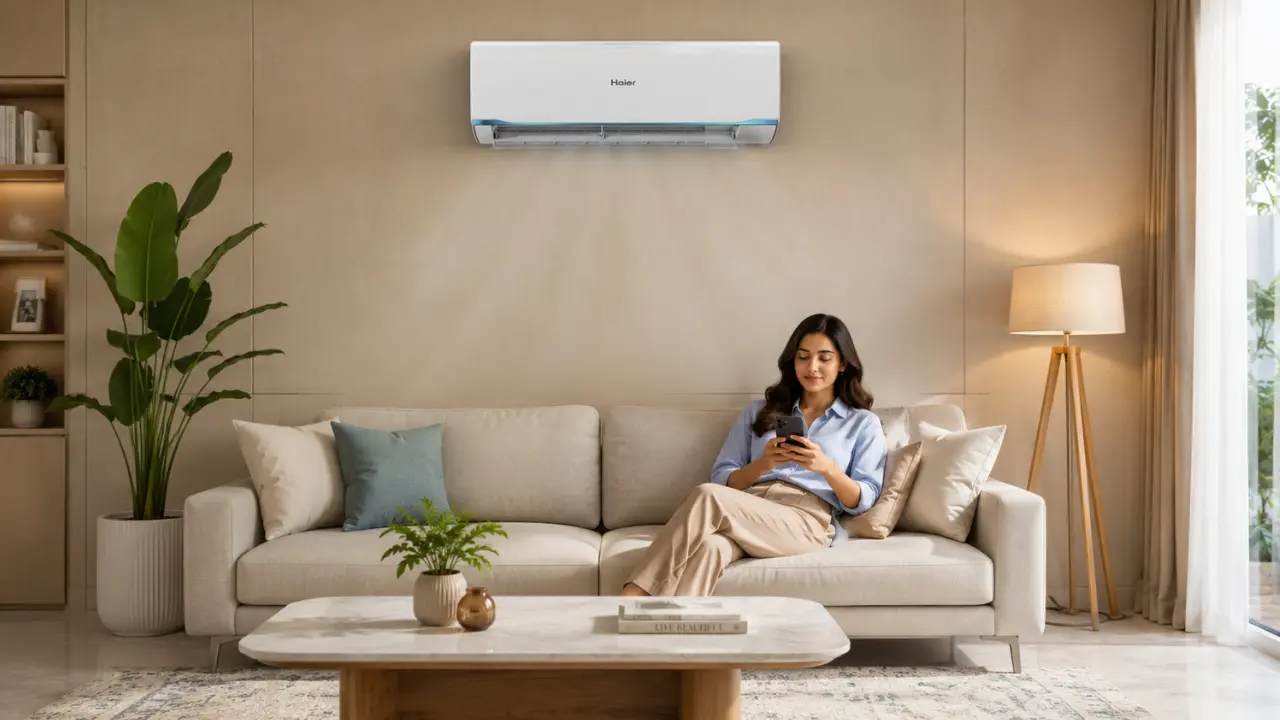

Smart cooling is no longer about temperature alone
An efficient air conditioner does not just cool a room faster. It understands how the room behaves.
That is the real shift happening in modern Indian homes.
Smart sensors inside today’s air conditioners track movement, humidity, room temperature, heat load, and usage patterns in real time. Instead of running at one fixed intensity all day, the AC adapts continuously. The result is simple: better comfort, lower electricity waste, and cooling that feels natural instead of mechanical.
A decade ago, people bought ACs for survival.
Today, they buy them for lifestyle stability.
And those are very different decisions.
At 2:30 PM, the living room heats up because sunlight hits the balcony glass directly.
At 11:45 PM, the room suddenly feels colder because outdoor temperatures drop.
At 6:15 AM, the AC is still running in an empty room because someone forgot to switch it off before leaving for a morning walk.
Traditional cooling systems react slowly to these shifts.
Smart sensor-based cooling responds instantly.
That changes everything.
Why Traditional Cooling Systems Waste More Energy

Most people assume an AC cools a room evenly.
It does not.
Rooms are dynamic systems.
Temperature changes every hour. Heat enters from windows. People move in and out. Curtains open. Fans run. Cooking increases indoor warmth. Laptops and televisions generate hidden heat.
But older cooling systems treat every moment identically.
That is where inefficiency begins.
The hidden problem is overcooling
Many homes are not uncomfortable because the AC is weak.
They are uncomfortable because the AC behaves blindly.
One part of the room becomes freezing cold while another corner still feels warm. The compressor keeps running aggressively even after comfort levels are reached. Electricity usage climbs quietly in the background.
Cooling without sensing creates waste.
Smart sensors solve this by continuously measuring room conditions instead of relying on fixed assumptions.
That difference sounds technical.
In reality, it feels deeply human.
How Smart Sensors Actually Work Inside Modern ACs
The phrase “smart cooling” often sounds abstract.
The mechanics are surprisingly practical.
Modern sensor-based air conditioners use small built-in sensors to monitor environmental conditions in real time. The AC then adjusts airflow, compressor speed, and cooling intensity automatically.
Not after ten minutes.
Immediately.
The three major systems smart sensors monitor
1. Temperature variation
Different parts of a room heat differently.
A sensor detects rising warmth near windows or crowded areas and adjusts cooling output accordingly.
This prevents uneven cooling.
2. Human presence and movement
Some advanced systems detect whether people are present inside the room.
If the room becomes empty, cooling intensity reduces automatically to save electricity.
It is similar to how modern cars dim unused systems to conserve fuel.
Small adjustment. Large impact.
3. Humidity levels
Indian summers are not only hot.
They are humid.
And humidity changes how the body experiences temperature.
A room at 24°C can still feel uncomfortable if humidity remains high. Smart sensors help maintain balanced indoor comfort by adjusting cooling behaviour based on moisture levels in the air.
Comfort is not mathematics.
It is perception.
Why Smart Sensor Cooling Matters More in Indian Homes
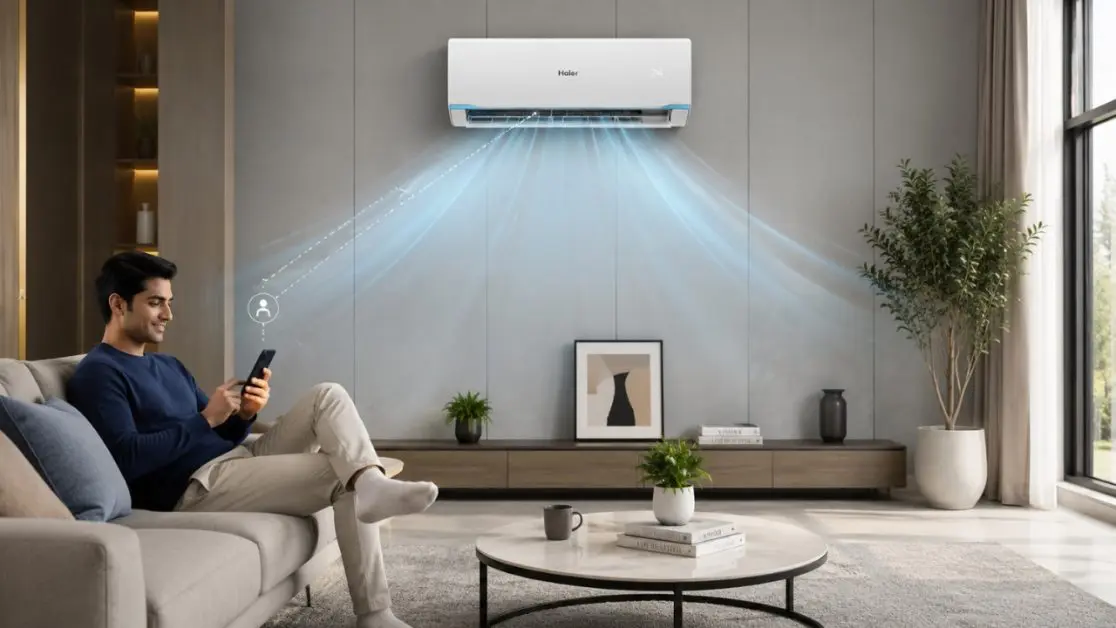
India creates one of the toughest cooling environments in the world.
Different cities behave differently.
A family in Jaipur faces dry heat.
A household in Mumbai struggles with humidity.
A Bengaluru apartment may need cooling only at night, while a Delhi home battles extreme afternoon heat for months.
One cooling pattern cannot solve all these realities.
That is why adaptive cooling matters.
Modern homes no longer follow fixed routines
There was a time when families used ACs only at bedtime.
That pattern is gone.
Today:
- People work from home
- Children study online
- Parents stream content late at night
- Kitchens generate more indoor heat
- Smaller apartments trap warmth faster
- Top-floor homes absorb extreme sunlight
Cooling systems now operate across changing schedules.
Which means efficiency depends on adaptability.
Not raw power.
“The future of cooling belongs to systems that observe before they react.”
That is the hidden principle behind sensor-driven AC technology.
The Real Energy Savings Come From Behavioural Intelligence
People often think energy efficiency means weaker cooling.
That assumption is outdated.
The smartest ACs cool aggressively when required and reduce unnecessary power usage when conditions stabilise.
That balance is where efficiency happens.
Three ways smart sensors reduce electricity consumption
One option is targeted cooling
Instead of cooling the entire room uniformly at maximum output, airflow adjusts based on actual heat zones.
This reduces compressor strain.
The second option is adaptive compressor control
Sensor-enabled inverter systems constantly regulate compressor speed based on room conditions.
This prevents repeated stop-start cycles that consume extra electricity.
The third option is occupancy-based optimisation
If fewer people remain inside the room, cooling intensity adjusts automatically.
Less waste. Better efficiency.
The important point here is subtle.
Energy savings do not come from weaker cooling.
They come from smarter decisions.
Why Sleep Feels Better With Intelligent Cooling
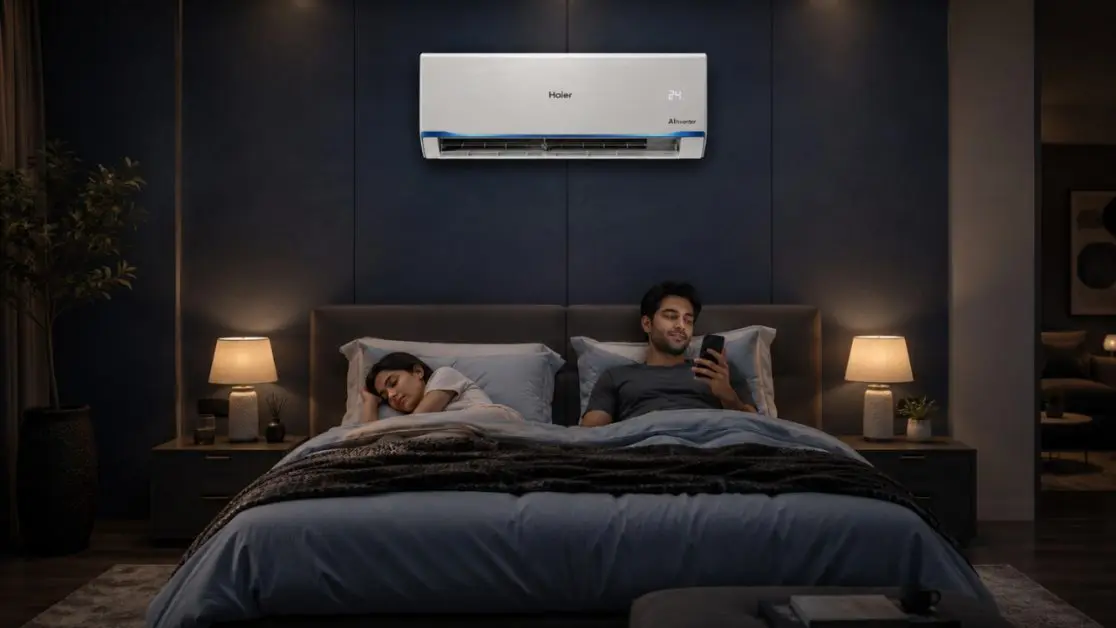
Most people notice smart cooling first during sleep.
Not during the day.
At midnight, the body naturally requires less cooling than it does at 8 PM. But traditional ACs continue operating at the same intensity unless someone manually changes settings.
That creates a familiar pattern:
- The room becomes too cold at night
- Blankets appear and disappear repeatedly
- Sleep quality breaks silently
- Electricity usage continues unnecessarily
Smart sensors help balance temperature changes automatically.
Some systems even reduce cooling intensity gradually during late-night hours based on room behaviour and ambient temperature shifts.
Better sleep is often an invisible technology problem.
Not a mattress problem.
Not a pillow problem.
A climate problem.
How AI and Smart Sensors Are Beginning to Work Together
Sensors collect information.
AI interprets patterns.
That combination is reshaping cooling systems rapidly.
Modern premium air conditioners increasingly combine sensor-based monitoring with intelligent cooling algorithms. Instead of responding only to current temperature, the system begins learning usage behaviour over time.
For example:
- When cooling demand usually rises
- Which rooms heat faster during afternoons
- How occupancy patterns change daily
- When power-saving adjustments are most effective
This creates a more predictive cooling experience.
Not reactive.
Predictive systems always feel more natural because they reduce friction before discomfort appears.
That is why intelligent appliances increasingly disappear into the background of daily life.
The best technology feels invisible.
Where Haier Fits Into This Shift Toward Smart Cooling
Haier India has steadily moved toward cooling systems designed around real household behaviour instead of just technical specifications.
That distinction matters.
Because most people do not experience an AC through compressor charts.
They experience it through sleep quality, electricity bills, afternoon comfort, and daily routines.
Haier’s smart air conditioning range increasingly focuses on adaptive cooling systems, intelligent airflow, inverter efficiency, and AI-powered climate control features designed for Indian conditions.
Products like the Haier 1.7 Ton 5 Star Desert Rose Air Conditioner reflect this broader shift toward sensor-driven comfort and energy-conscious cooling.
The interesting part is not the feature itself.
It is what the feature removes.
Less manual adjustment.
Less uneven cooling.
Less overthinking.
Good appliances reduce invisible stress.
That is why modern cooling systems increasingly feel less like machines and more like quiet infrastructure.
What Smart Cooling Teaches Us About Modern Living
Every generation redesigns comfort differently.
Earlier generations opened windows strategically.
Then came fans.
Then air conditioners.
Now comes intelligent climate management.
The shift is bigger than technology.
It reflects how modern life works.
People want systems that adapt without constant supervision. They want homes that quietly cooperate with their routines instead of demanding attention every hour.
That is why smart sensors matter.
Not because sensors are futuristic.
Because attention is expensive.
Every unnecessary remote adjustment is friction.
Every wasted cooling cycle is an invisible cost.
Every uncomfortable night affects the next day more than people realise.
The future of cooling efficiency is not about creating colder rooms.
It is about creating calmer homes.
And the smartest systems understand something important:
Efficiency is not just about saving electricity.
It is about reducing unnecessary effort from everyday life.
Frequently Asked Questions
Do smart sensors really reduce electricity bills?
Yes. Smart sensors help reduce unnecessary compressor usage, overcooling, and wasted runtime. The savings become more noticeable during long summer usage periods.
How do smart sensors improve cooling efficiency?
Smart sensors monitor room conditions like temperature, occupancy, and humidity in real time. The AC adjusts cooling automatically for better comfort and lower energy consumption.
Are smart sensor ACs useful for Indian summers?
Yes. Indian weather changes significantly across regions and seasons. Smart cooling systems adapt better to humidity, heat fluctuations, and varying occupancy patterns.
Do smart sensors make rooms cooler faster?
In many cases, yes. Sensors help direct cooling more intelligently based on heat concentration and room conditions rather than fixed airflow behaviour.
Is smart cooling only available in premium ACs?
Many modern inverter ACs now include some level of sensor-based optimisation. Advanced AI-driven systems are more common in premium models.
What matters more: tonnage or smart sensors?
Both matter. Correct tonnage ensures proper cooling capacity, while smart sensors improve how efficiently and intelligently that cooling is delivered.