
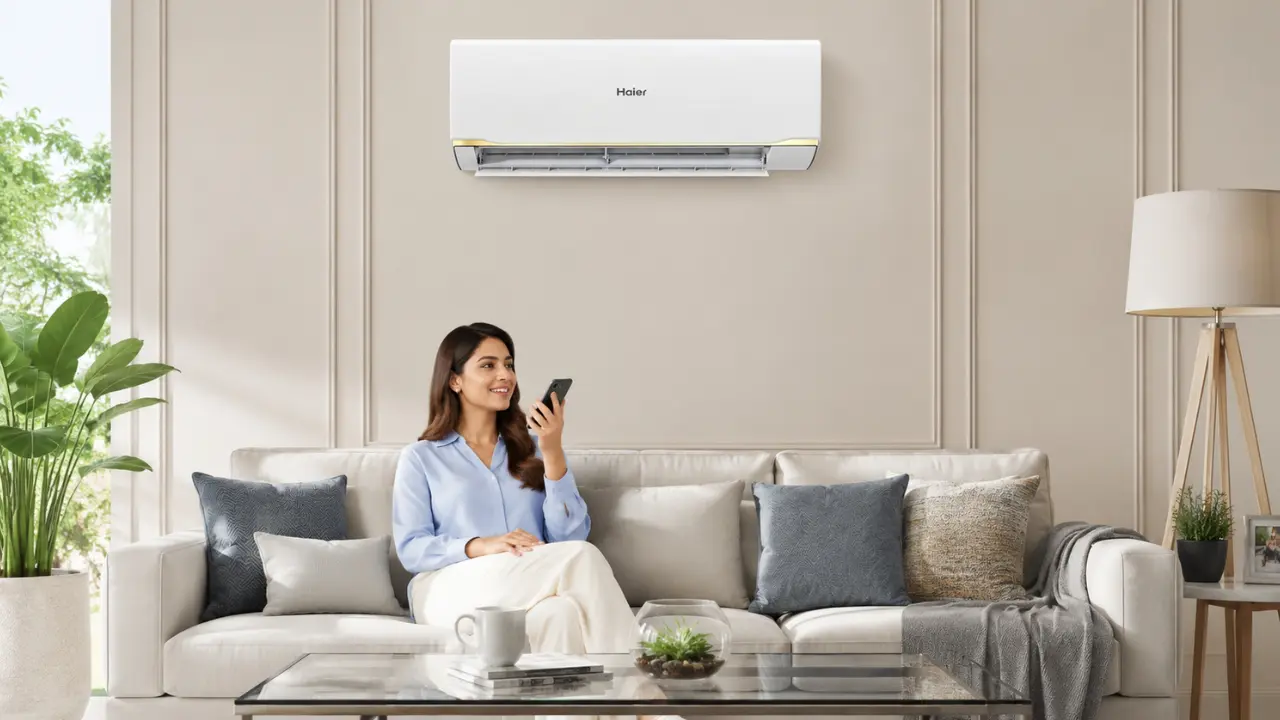

Yes. But not for the reason most people think.
AI cooling is not just about making a room colder faster. It is about reducing the invisible friction people experience every summer. Uneven cooling. Midnight temperature changes. High electricity bills. Constant remote adjustments. Smart AI-powered air conditioners solve behavioural problems, not just temperature problems. And in modern Indian homes, that shift matters more than raw cooling power.
At 2:13 AM, someone wakes up and lowers the AC temperature by two degrees.
At 4:07 AM, the same person pulls the blanket closer because the room suddenly feels too cold.
By morning, the AC had run all night at maximum power inside a room that did not actually need it.
This is how most cooling systems still work.
Not intelligently.
Reactively.
And that is the real question behind AI cooling.
Not “Does it cool better?”
But this:
Can an AC learn how people actually live?
That changes the entire conversation.
Most people do not need more cooling. They need better decisions.
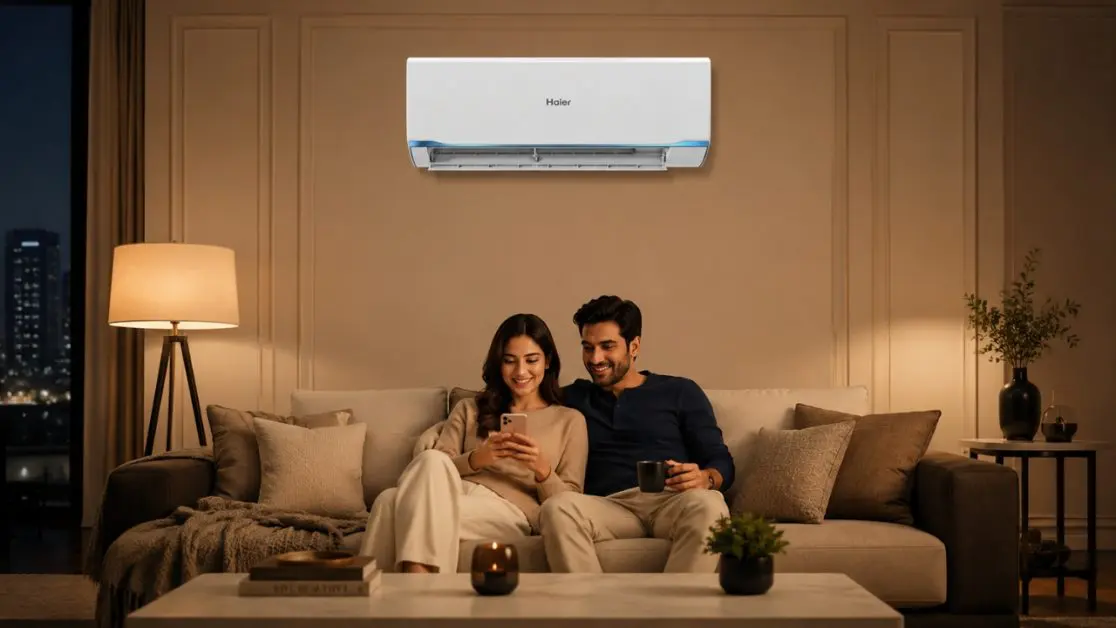
Traditional ACs follow instructions.
AI cooling systems interpret situations.
That sounds like a small difference. It is not.
One machine waits for commands.
The other observes patterns.
A room is never static. Sunlight changes. People enter and leave. Humidity shifts after rain. Curtains open. Laptops generate heat during work hours. Five people watching IPL create a different cooling load than one person reading quietly.
Yet many air conditioners behave as if every hour is identical.
That is the inefficiency.
Not the compressor.
The assumption.
The hidden system behind electricity bills
Most electricity waste does not come from cooling itself.
It comes from overcooling.
People often set temperatures lower because rooms cool unevenly. The AC compensates aggressively. Then the room becomes too cold. Then someone changes settings again.
This cycle repeats daily in Indian households.
AI cooling systems are designed to interrupt that loop.
Features like intelligent sensors, adaptive airflow, occupancy detection, and climate optimisation adjust cooling dynamically instead of mechanically.
In simple terms:
- Less guessing
- Fewer manual adjustments
- More consistent comfort
- Lower energy waste over time
Comfort becomes quieter.
That is the real innovation.
AI cooling works best in homes with unpredictable routines
Not every home uses an AC the same way.
That is why “best AC” conversations usually fail.
A bachelor working night shifts uses cooling differently from a family with school-going children. A couple working hybrid jobs creates different temperature patterns than retired parents at home all day.
AI cooling matters most where behaviour changes frequently.
Three types of households where AI cooling creates real value
1. Work-from-home households
Laptops run all day.
Rooms stay occupied longer.
Cooling demand becomes inconsistent.
AI cooling adapts gradually instead of blasting fixed airflow for hours.
The result:
- Better temperature stability
- Reduced power spikes
- Less fatigue from overcooling
A room that feels balanced improves concentration more than people realise.
2. Families with children or elderly members
Children kick blankets away.
Elderly users often feel colder faster.
Night-time temperature swings become uncomfortable.
AI-driven climate adjustment helps maintain steadier overnight conditions without constant remote changes.
Sleep quality improves quietly.
And most lifestyle upgrades worth paying for are invisible when they work correctly.
3. Homes in extreme Indian summers
Cities like Jaipur, Delhi, Nagpur, and Ahmedabad push AC systems hard.
Peak afternoon temperatures stress compressors, increase electricity use, and expose inefficient cooling patterns.
AI-based optimisation helps systems respond more intelligently during extreme heat instead of simply operating at maximum intensity all day.
That distinction matters during long Indian summers.
The smartest AC is not the one with the most features
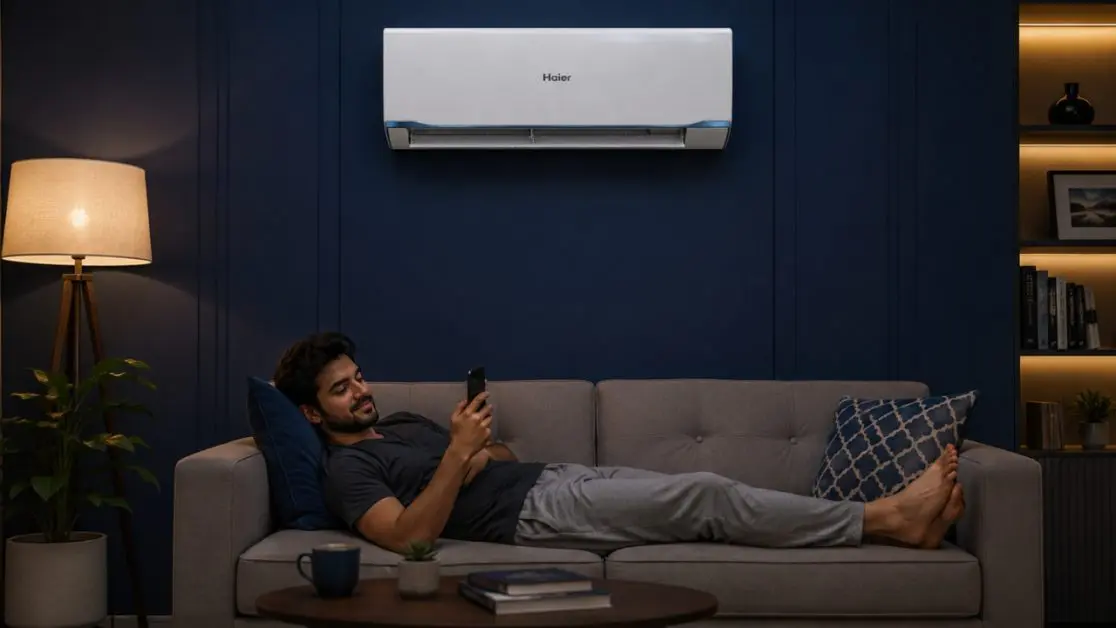
This is where many buyers get confused.
AI cooling is becoming a buzzword.
And buzzwords usually create noise before clarity.
Not every “smart” feature improves daily life.
Some features exist because they look impressive in showrooms.
Others quietly change how homes feel.
The second category matters more.
What actually makes AI cooling useful?
The most valuable AI cooling systems usually focus on four things:
- Adaptive temperature management
- Energy optimisation
- Sensor-based airflow adjustment
- Usage learning over time
Everything else is secondary.
A useful appliance reduces decision fatigue.
That is the benchmark.
Not how futuristic the app looks.
Why Indian homes are becoming ideal for AI cooling
India’s cooling habits have changed dramatically in the last five years.
Air conditioners are no longer occasional summer luxuries.
They are becoming infrastructure.
Like Wi-Fi.
Like refrigerators.
Like water purifiers.
And infrastructure behaves differently from lifestyle purchases.
People now expect:
- Faster cooling
- Lower electricity costs
- Smarter automation
- Quieter operation
- Better air management
The challenge is that Indian conditions are unpredictable.
Voltage fluctuations.
Dust.
Humidity shifts.
Extended heatwaves.
Crowded rooms during gatherings.
Static cooling systems struggle inside dynamic environments.
AI cooling exists because the environment itself became more complex.
Modern cooling is becoming behavioural technology
This is the bigger pattern most buyers miss.
Cooling used to be mechanical.
Now it is contextual.
An AI-powered AC does not simply cool air. It interprets usage patterns, environmental conditions, and occupancy behaviour simultaneously.
The appliance starts behaving less like a machine and more like a responsive system.
That is where the category is heading.
Is AI cooling actually worth the higher upfront cost?
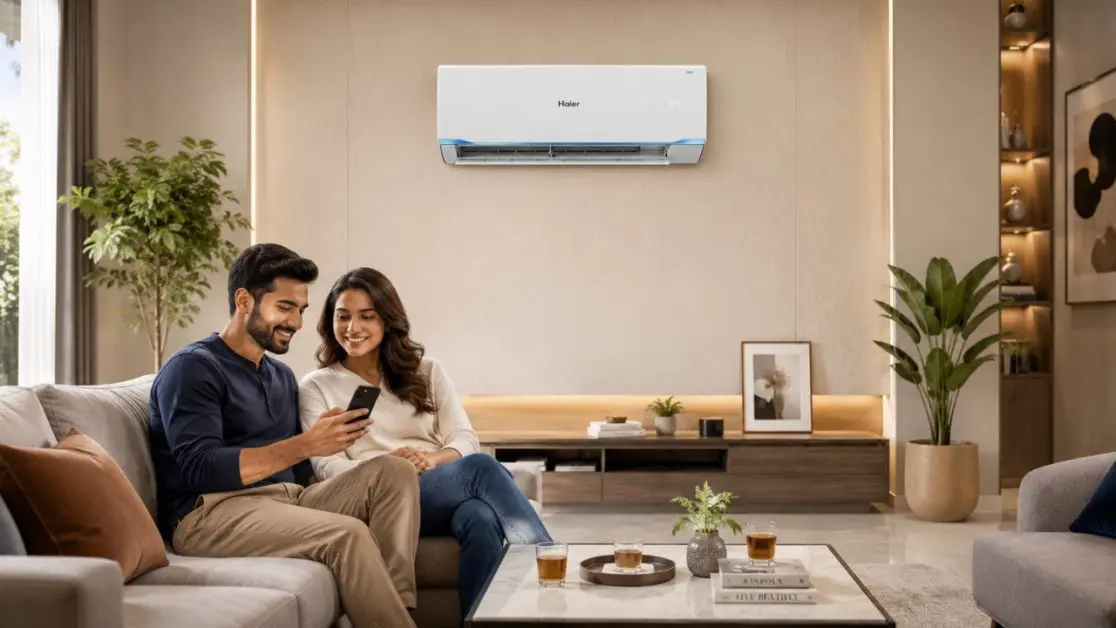
Short
For many Indian households, yes.
But not because of one feature.
Because small efficiencies compound daily.
Think about how often an AC runs during peak summer months.
Six hours.
Eight hours.
Sometimes twelve.
Tiny inefficiencies repeated every day become expensive habits.
The investment equation most people ignore
People compare AC prices once.
They experience electricity bills for years.
That changes the math.
A slightly more intelligent cooling system can reduce:
- Energy waste
- Manual adjustments
- Uneven cooling
- Compressor stress
- Excessive overnight usage
Over time, convenience itself becomes part of the value.
That is difficult to measure on a showroom sticker.
But easy to notice after one full summer.
Where Haier’s AI cooling approach fits into this shift
Some brands focus only on hardware performance.
The more interesting brands are designing around behaviour.
That distinction matters.
Haier India’s AI-driven air conditioning approach increasingly reflects how Indian households actually function today: dynamic schedules, changing occupancy, rising summer temperatures, and growing attention toward energy efficiency.
Models like the Haier 1.7 Ton 5 Star Desert Rose Air Conditioner and Haier 1.7 Ton 5 Star Gold Desert Rose Air Conditioner position cooling as a smarter home experience rather than a standalone appliance.
The interesting part is not aesthetics alone.
It is the attempt to reduce friction quietly.
Because the best smart appliances do not constantly announce themselves.
They disappear into routines.
One option is cheaper cooling. The second option is smarter cooling.
This is the real decision framework.
Option One: Traditional cooling systems
- Lower upfront cost
- Familiar operation
- Fixed cooling behaviour
- More manual intervention
This works well for predictable usage patterns.
Option Two: AI-powered cooling systems
- Higher initial investment
- Adaptive behaviour
- Better optimisation potential
- More responsive comfort management
This works better for dynamic modern households.
Neither option is universally correct.
But one aligns more closely with where homes are heading.
And that distinction matters long-term.
People rarely regret comfort that removes friction
That is the hidden truth behind most smart home technology.
Nobody talks daily about refrigerators preserving vegetables correctly.
But everyone notices spoiled food.
Nobody celebrates balanced room temperature every morning.
But everyone notices disturbed sleep.
The best home technology becomes invisible because it quietly prevents problems before people feel them.
AI cooling follows the same pattern.
It is not revolutionary because it looks futuristic.
It matters because it reduces tiny daily irritations people have accepted for years.
And modern living is increasingly defined by friction reduction.
The future of cooling is not colder air. It is a calmer living.
That is where this category is heading.
Not louder compressors.
Not more complicated remotes.
Not endless feature lists.
Smarter response systems.
Homes are becoming adaptive environments. Appliances are becoming behavioural technologies. Cooling systems are becoming intelligent enough to understand patterns instead of simply reacting to commands.
And once people experience that shift, traditional cooling starts feeling oddly mechanical.
Because the future of comfort is not about controlling machines constantly.
It is about creating homes that quietly understand how life actually moves inside them.
That is what makes AI cooling worth paying attention to.
Not the technology itself.
The reduction in everyday friction it creates over time.
Frequently Asked Questions
Is AI cooling actually worth paying extra for?
For many households, yes. The biggest benefit is not faster cooling but smarter cooling. AI-powered ACs can reduce unnecessary energy usage, maintain more consistent comfort, and minimize the need for constant manual adjustments. Over several years, those small efficiencies can add up.
How is an AI-powered AC different from a regular inverter AC?
A traditional inverter AC adjusts compressor speed to maintain temperature efficiently. An AI-powered AC goes further by analyzing occupancy patterns, environmental conditions, and usage habits to optimize cooling decisions automatically.
Will I save money on electricity with AI cooling?
Potentially yes. AI cooling helps reduce overcooling, unnecessary runtime, and inefficient temperature adjustments. Savings depend on usage habits, room conditions, and climate, but energy optimization is one of the main benefits.
Should I buy an AI AC if I only use my AC occasionally?
If your usage is limited to a few hours occasionally, the benefits may be less noticeable. AI cooling delivers the most value when the AC runs regularly throughout long summer periods.
Is AI cooling just a marketing buzzword?
Sometimes. Not every smart feature delivers meaningful value. The most useful AI cooling systems focus on adaptive temperature management, energy optimization, occupancy sensing, and learning usage patterns over time.